
I will never forget the sinking feeling I had when my screwdriver didn’t hit wood—it hit mush. I was inspecting the siding on my own home, right where the deck I’d built five years prior met the house. I had bolted that ledger board flush against the wall, thinking tighter meant stronger. I was wrong. I had essentially created a permanent sponge that was slowly eating my house from the inside out. That ‘tight’ connection had trapped every drop of rain and melting snow, turning my cedar siding into a science project. Today, I’m going to share exactly why that tiny half-inch gap is the most important part of your build and how it keeps your home structural integrity intact.
The Invisible Moisture Trap Behind Your Siding
When you bolt a piece of lumber directly against your house siding, you are inviting capillary action to do its worst. Water doesn’t just run down; it gets sucked into tight spaces and stays there. This constant moisture is what leads to the ‘soft house’ syndrome I experienced. Many homeowners worry about their deck falling down, but the real danger is usually the house rotting out from behind the deck. If you aren’t sure about your own setup, you can use this simple way to check if your deck ledger is pulling away or showing signs of stress. I have learned the hard way that the secret to a waterproof connection isn’t just more caulk; it is airflow. Without a gap, there is no way for the materials to dry out after a storm. According to the Building Science Corporation, moisture trapped in ‘reservoir’ materials like wood can lead to fungal decay in as little as one season if the drying rate is lower than the wetting rate. Have you ever noticed dark stains or moss creeping up the wall where your deck meets the house? If so, you might already be dealing with a drainage issue. Learning how to stop your deck from staining your house siding often starts with just giving the wood some room to breathe.
Is a Gap Actually Sturdier Than a Flush Connection?
It sounds counterintuitive, right? You would think a flush connection is the only way to keep things solid. But modern engineering tells a different story. The International Residential Code (IRC) actually allows for these gaps because they realize that a rotten house rim joist offers zero holding power for a bolt. I’ve seen 3/8-inch lag bolts pull right out of a house because the wood behind the siding had turned to compost. When I work as a professional deck builder, I always insist on using structural spacers. These maintain the strength of the connection while allowing water to pass through freely. Whether you are looking at composite decking trends for 2025 or sticking with traditional pressure-treated lumber, the physics remains the same. If you don’t provide a path for water, it will find its own—and it usually won’t be a path you like. Have you ever faced a rot issue that started with a simple DIY mistake? It is a tough lesson to learn, but once you see the damage moisture can do, you’ll never install a ledger flush again. We are going to look at the specific hardware that makes this gap possible and safe.
Stop the Rot with the Half-Inch Air Curtain
The goal isn’t just to hold the deck up; it’s to let the house breathe. When I first started, I thought flashing was the only defense needed. I’d tuck a piece of Z-flashing under the siding, over the ledger, and call it a day. But water is persistent. It finds the tiny pinholes in caulk and the microscopic cracks in wood. By using a structural spacer to create a 1/2-inch gap, you create an air curtain. This allows gravity to pull water straight down to the ground instead of letting it sit against your rim joist. When you create this gap, you’re essentially mimicking a ‘rainscreen’ system used in high-end commercial architecture. It breaks the surface tension of the water. Without it, water can actually travel upward through capillary action, defying gravity to reach your interior wall studs. I remember a particularly nasty tear-out in Branson West where the ledger was flush. Even with ‘good’ flashing, the moisture had wicked up behind the siding and turned the OSB sheathing into something resembling wet oatmeal. If you’re looking at custom composite decking ideas, remember that the prettiest boards on top won’t matter if the structure underneath is failing. The secret to a rock-solid deck-to-house connection on old siding is realizing that the gap is your best friend, not your enemy.
Swap Your Lag Bolts for Structural Spacers
Years ago, we used to spend hours pre-drilling for massive lag bolts. Today, I almost exclusively use structural screws because they have higher shear strength and don’t require a pilot hole that can invite more water into the heart of the wood. I specifically suggest using a dedicated ledger spacer—these look like thick plastic donuts designed to resist compression. Unlike a stack of washers, which can eventually sink into the wood and close the gap, these spacers provide a wide surface area. I once saw a deck where the previous builder used generic washers as spacers. Over ten years, those washers had literally compressed into the siding, sealing the gap they were supposed to create. It was a mess. The simple way to check if your deck ledger is pulling away is to look at these spacers; if they are tight and the wood around them is dry, your system is working. If you’re building a staircase, the same logic applies. Why I use structural screws instead of lag bolts for stairs comes down to the same principle: precision and moisture management. You want a fastener that pulls the wood tight against the spacer, not the house.

Protect Your Joists from Stealthy Water Intrusion
Once your ledger is spaced correctly, you have to look at the joists themselves. Water loves to sit on top of a flat 2×8 or 2×10 joist, eventually rotting the wood from the top down. This is the hidden cost of skipping joist tape on a new build. It creates a waterproof barrier that prevents the screws from pulling moisture into the wood grain. I also go a step further and paint the tops of my joists black before installing composite. This serves two purposes: it adds a layer of protection and makes the substructure disappear under the gaps of your decking. If you are worried about aesthetics, you can learn how to hide the gap between your deck and the house siding using trim pieces that still allow for ventilation. It’s about finding that balance between a clean look and a functional, dry structure.
Handle Your Stairs with the Same Respect as the Ledger
Many DIYers get the ledger right but then bolt their stair stringers flush against the deck frame or the house. This is a huge mistake. Stairs are high-traffic areas and are often the first place rot sets in. The hidden reason your deck stairs are pulling away from the frame is almost always moisture-induced rot at the connection point. Just as you spaced the ledger, you should ensure your stringer connections have room to dry. If you’re adding features like a deck planter that drains away from the wood, make sure it isn’t dumping its runoff directly onto these critical structural joints. Every drop of water redirected is another year added to the life of your home. It’s these small, invisible details that separate a deck that lasts ten years from one that lasts thirty.
Everyone tells you that composite decking is the ‘set it and forget it’ solution for modern backyards. In my experience, that’s exactly the mindset that leads to a twenty-thousand-dollar mistake. While I love the durability of high-end materials, the biggest myth in the industry is that they are indestructible. If you treat composite like wood, you’re in for a world of hurt. Composite boards are heavier, more flexible, and—this is the part most people miss—they move more than wood ever will. I have seen beautiful composite decking trends for 2025 ruined because the homeowner didn’t account for the unique physics of the material. When the sun hits a dark grey deck, those boards can expand significantly. If you haven’t mastered the joist spacing secret for a solid-feeling composite surface, you’ll end up with a deck that feels like a trampoline by noon.
Composite Isn’t Just Wood with a Plastic Coat
The ‘Oops’ factor usually starts with the framing. Because composite has no structural integrity of its own, it relies entirely on the skeleton beneath it. I often see DIYers try to reuse an old wood frame for new composite boards. This is a recipe for disaster. Wood frames warp and twist over time, and while a wood board might hide those imperfections, a composite board will telegraph every single dip and hump in the joists. This is why I often suggest why I choose mineral core decking for every poolside build; it offers better stability, but even the best material can’t save a sagging frame. According to the Forest Products Laboratory, wood-plastic composites exhibit much higher thermal expansion coefficients than natural lumber. This means if you don’t leave the proper gaps at the butt-joints, the boards will literally push against each other until they buckle. I’ve walked onto decks where the boards have popped their fasteners because the builder didn’t understand this expansion cycle. Have you ever noticed your deck boards looking wavy in the heat of the summer? Have you ever fallen into this trap? Let me know in the comments.
Stop Your Boards from Turning Into a Rollercoaster
The secret to a flat, professional finish is all in the fasteners and the gap. Most people reach for the cheapest clips they can find, but this is the hidden clip mistake that leads to buckling deck boards. You need a fastening system that allows the board to slide slightly as it grows and shrinks. If you lock it down too tight, something has to give, and it’s usually the aesthetics of your deck. This level of precision is one of the benefits of working with a professional deck builder who understands the specific gap requirements for your local climate. 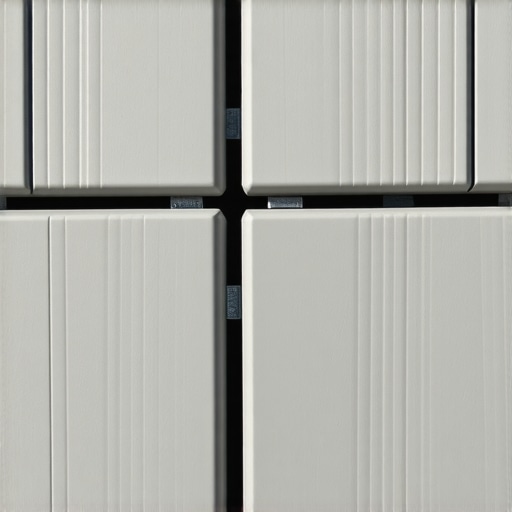 I always tell my clients that the ‘low-maintenance’ promise only applies to the surface; the engineering underneath has to be high-performance. If you’re building in a high-heat area, you might even need to adjust your joist spacing from the standard 16 inches on center to 12 inches just to prevent that ‘spongy’ feel.
Does Your Staircase Have a Real Foundation?
Stairs are the most common place where I see ‘advanced’ mistakes. Even if you get the ledger and the decking right, most people fail at the landing. They’ll run their stringers down to a couple of paving stones or directly onto the dirt. This is a massive failure point. Why your deck stairs need a concrete landing pad at the bottom isn’t just about code; it’s about preventing the stair tower from pulling away from the deck as the ground shifts. When that landing sinks, it puts immense shear stress on the top fasteners. Combine that with the stair stringer measurement mistake that ruins your stride, and you have a staircase that is both uncomfortable and dangerous. To make it look professional, you should also learn how to hide the ugly edge of a composite stair tread using fascia or mitered returns. It’s the difference between a project that looks ‘handyman special’ and one that adds real value to your home. Taking the time to get these invisible details right is what ensures your outdoor living space remains a sanctuary rather than a source of stress.
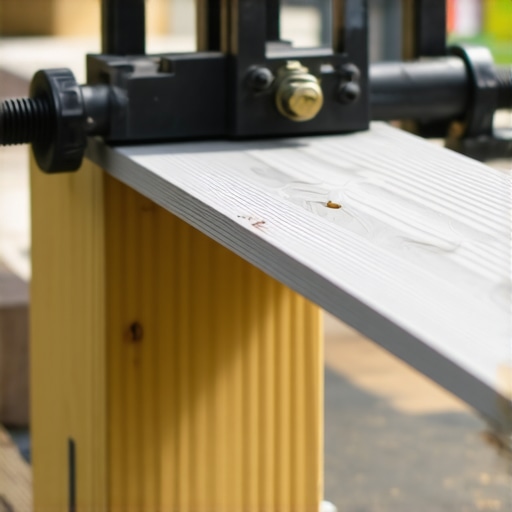
I don’t care how strong you are; prying a twenty-foot capped-polymer board into place with a crowbar is a fool’s errand. I learned this the hard way during a humid July build where every board seemed to have a slight bow. By the third row, my back was screaming. That was the day I invested in a dedicated board-bending tool. Unlike a standard pry bar, a professional bender locks onto the joist and lets you apply hundreds of pounds of pressure with one hand while you drive your fasteners with the other. This level of precision is non-negotiable if you want those perfectly straight lines seen in innovative outdoor living ideas with composite decking in 2025. If you’re working solo, you also need to master the simple pivot move for carrying long composite boards alone to avoid snapping the core of these heavy materials. Speed is great, but accuracy is what keeps the callbacks at zero.
How do I keep my composite deck looking new for decades?
The most common question I get after a build is finished is about maintenance. People think ‘low maintenance’ means ‘no maintenance,’ and that is a dangerous assumption. According to the North American Deck and Railing Association (NADRA), a yearly safety inspection is vital even for synthetic structures to check for fastener corrosion or soil shifting. For the surface itself, please put down the power nozzle. Why you should never use a pressure washer on composite decks comes down to the integrity of the ‘cap’ layer. High pressure can create micro-fissures that trap dirt and pollen, making the deck look dull and dingy within years. Instead, I use a soft-bristle brush and a pH-neutral cleaner. If you enjoy grilling, be sure to look into the best way to protect your deck from hot bbq embers, as a single dropped coal can melt a permanent scar into your investment. It is about being proactive rather than reactive.
As we look toward the next few years, I predict we are going to see a massive shift away from pressure-treated lumber entirely—even for the skeleton. The hidden benefit of using steel deck framing instead of wood is becoming impossible to ignore for homeowners who want a truly fifty-year deck. Wood rots, but steel stays dead-straight, which is essential for the tight tolerances required by composite decking trends in 2025. We are already seeing this move in high-end railings, where why I choose powder-coated steel over wood for modern deck railings has become my standard recommendation for its slim profile and longevity. Once you have a frame that doesn’t move, you can use the bracket that keeps your railing from wobbling forever to ensure the safety of your family for the life of the home. I strongly encourage you to try using a dedicated hidden fastener jig on your next project; it’s a small investment that completely transforms the ‘finished’ look of your floor from a DIY project to a piece of outdoor furniture.
The Hardest Lesson I Learned About My Home’s Structural Integrity
Looking back at my early years, I realized that I focused way too much on how the surface looked and not nearly enough on how the structure breathed. The biggest ‘aha’ moment came when I saw a deck built with zero gap where the owner had spent thousands on high-end boards, only to have the house rim joist rot out in seven years. This type of hard-earned experience is the information gain that separates a hobbyist from a craftsman. I’ve learned that the best material is irrelevant if the installation physics are wrong. For those just starting, I highly recommend checking out some deck builder insights for designing your dream outdoor space to get the foundation right from day one.
#IMAGE_PLACE_HOLDER_E#
- The ‘Dry’ Secret: A bone-dry ledger is worth more than a lifetime warranty on any board.
- Movement is Life: If your deck boards aren’t allowed to grow and shrink, they will eventually destroy their own fasteners.
- The Invisible Costs: Cutting corners on joist tape or spacers feels like saving money, but it’s really just borrowing from your future repair budget.
Gear That Actually Makes a Difference on the Job
I don’t believe in buying every gadget in the tool aisle, but there are a few things I never build without. First, a high-quality board-bending tool—it’s the only way to get those innovative outdoor living ideas with composite decking in 2025 to look professional. Second, structural ledger spacers; don’t even try to hack this with washers which compress over time. Finally, I always keep a roll of high-quality butyl joist tape in my truck. If you’re overwhelmed by the technical specs, choosing the right composite decking starts with understanding how that material interacts with your specific climate. I trust these tools because they have literally saved me from having to tear out and rebuild my own projects.
Take the Leap and Build for Longevity
Building a deck is about more than just adding square footage; it’s about creating a safe, beautiful environment for your family to gather. While the technical details like moisture gaps and structural screws might seem daunting, they are the very things that give you peace of mind during a summer storm. When you act as your own deck builder, you have the unique opportunity to care more about the details than any rushed contractor ever would. Don’t be afraid to take your time and get it right. If you ever feel like you’re in over your head, don’t hesitate to reach out and contact us for guidance. Your future self will thank you every time you walk out onto a solid, creak-free surface. Have you ever discovered rot behind a ledger board or found a DIY mistake that changed how you build? Let me know in the comments below!