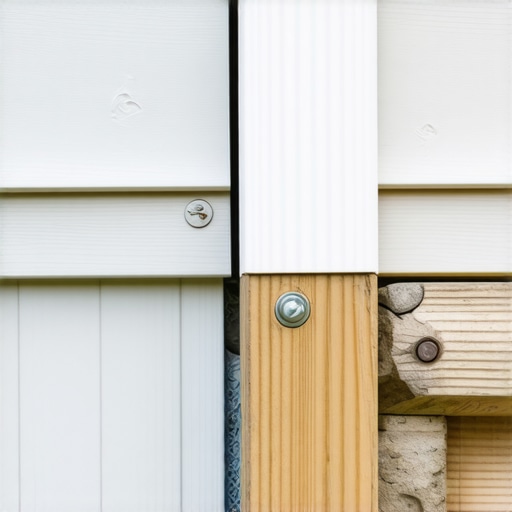
I remember the exact moment my stomach dropped while hosting a neighborhood barbecue three summers ago. The grill was hot, the music was loud, and the deck was packed with friends. As I walked toward the sliding glass door, I felt a slight, rhythmic shudder under my feet that shouldn’t have been there. It wasn’t an earthquake. When I peeked over the railing later that evening, I saw a sliver of darkness between the wood and the house siding—a gap that meant the entire structure was slowly but surely divorcing my home. It was the kind of discovery that keeps you up at night, especially since I fancy myself an experienced deck builder. I had missed the early warning signs, a mistake that nearly cost me more than just a few repair bills. Today, I want to show you exactly what to look for so you never have to feel that mid-party panic.
Your Ledger Board is the Only Thing Keeping You Upright
If you think of your deck as a bridge, the ledger board is the primary anchor point. It is the heavy piece of pressure-treated lumber that bolts the whole platform to your house’s rim joist. When it fails, the results are almost always catastrophic because it happens without much fanfare. Most folks spend all their time worrying about composite decking fading or stairs that creak, but the real danger is usually hidden behind the scenes. In my early days, I made the amateur mistake of assuming that if the bolts looked tight from the outside, the connection was solid. I didn’t realize that moisture could be rotting the house’s framing from the inside out, making those bolts essentially useless. Have you ever noticed a tiny gap between your deck and your siding, even if it’s just the width of a nickel?
Do I really need to crawl under there every season?
You might be thinking that a solid wood structure shouldn’t just fall off a house. It feels like overkill to be poking around with a flashlight every spring. However, the stats are sobering. According to the Consumer Product Safety Commission (CPSC), thousands of deck-related injuries are reported every year, and a significant portion of those are due to total structural collapse. The “simple” check we are doing today takes ten minutes but can save a lifetime of regret. We often focus on outdoor living aesthetics, but safety is the foundation. I’ve learned that using structural screws instead of old-fashioned lag bolts is a game changer, but even the best hardware can’t save a ledger that wasn’t flashed properly. You need to know why your deck ledger needs a tension tie to stay secure and how to spot the corrosion that turns steel into dust. If you find yourself needing to fix a deck that has started to pull away from the siding, the sooner you catch it, the cheaper the fix. Let’s get into the nitty-gritty of the visual cues you can spot from the comfort of your lawn chair before we grab the tools. [image placeholder]I once spent an entire Saturday helping a neighbor who thought his deck was simply “settling” because the stairs felt a bit bouncy. When we pulled back a single piece of vinyl siding to investigate, my heart nearly stopped. The previous owner had used 16d common framing nails to attach the ledger board to the house. Those nails were rusted down to the thickness of a toothpick, and the wood was so soft I could poke a screwdriver through it like butter. We had to support the entire frame with temporary jacks that afternoon just to prevent a collapse. It was a messy, expensive lesson in why the details of a deck builder‘s work matter more than the color of the composite decking on top. To avoid a similar disaster, you need to execute a three-step structural audit.
Inspect the Flashing Before the Rot Sets In
The biggest enemy of your deck is not weight, but water. If moisture traps itself between the ledger and your house, it will rot your home’s rim joist, leaving your bolts with nothing to grip. Look for a metal or plastic lip—called Z-flashing—tucked behind the siding and over the top of the ledger. If you see water stains on the inside of your basement or crawlspace directly behind where the deck attaches, your flashing has failed. You must understand the secret to a waterproof connection where the deck meets the wall to ensure that moisture is diverted away from the framing. Without this, even the most expensive outdoor living setup is a liability.
Why Structural Screws Beat Lag Bolts Every Time
In the old days, we used half-inch lag bolts that required a massive pilot hole and a lot of muscle. The problem is that these bolts can weaken the wood fibers significantly. Modern professionals have moved toward specialized fasteners. I personally prefer the reason we use structural screws instead of old-fashioned lag bolts because they have a higher shear strength and don’t require pre-drilling, which keeps the wood’s integrity intact. If you look under your deck and see rusted carriage bolts or, heaven forbid, nails, you need to retrofit the connection immediately. This is also a good time to how to keep your deck joists from rotting under the boards by applying joist tape to the top of the ledger, which adds another layer of defense against the elements.
Add Tension Ties to Prevent Catastrophic Separation
Even if your ledger is bolted tight, it can still pull away horizontally if enough people are dancing or if there is a heavy snow load. This is where tension ties come in. These brackets link the deck joists directly to the house floor joists, creating a continuous load path that makes the structure part of the house itself. You should know why your deck ledger needs a tension tie to stay secure and how to install them at least every few feet. I’ve seen decks that were perfectly bolted vertically but literally slid away from the house because they lacked this lateral support. Just as we never use nails for deck railing connections anymore because they pull out under pressure, we rely on these heavy-duty tension ties to keep the main platform from budging an inch.Most people think hiring a professional deck builder is just about getting someone to swing a hammer. In reality, we are managing a complex thermodynamic puzzle. A common belief among DIYers and even some contractors is that composite decking is a ‘zero-movement’ product because it is part plastic. This is a dangerous myth. In my experience, composite boards move significantly more than wood, but they do it in response to temperature rather than moisture. I’ve seen beautiful outdoor living spaces ruined because the builder butted the boards tight against the siding in the morning, only to have them buckle and warp into a wavy mess by the heat of the afternoon. You absolutely must understand why your composite boards are expanding more than expected to avoid this expensive mistake.
The Hidden Cause of That Annoying Deck Bounce
If you have ever walked across a deck and felt a rhythmic thud or a slight springiness, you are experiencing ‘harmonic deflection.’ Most builders look at the International Residential Code (IRC) span tables and see that 2×10 joists can span 14 feet, so they push it to the limit. However, the American Wood Council notes that meeting minimum code for strength does not guarantee a stiff floor. Even with the right lumber, skipping the internal blocking is the biggest ‘oops’ factor in the industry. Without solid blocking between the joists, the wood can twist and vibrate. If you want a floor that feels like a concrete slab, the structural reason your deck feels bouncy is usually a lack of mid-span lateral bracing. I always tell my clients that it is cheaper to add five extra pieces of blocking during the frame stage than to try and stiffen a finished floor later.
How do I prevent my stair stringers from cracking at the throat?
This is the advanced question I get from homeowners who have seen stairs fail prematurely. Most people assume the wood was just ‘bad,’ but it is actually a geometry problem. When you cut the notches into a stair stringer, you leave very little ‘meat’ left at the inside corner—this is called the ‘throat.’ If the stairs aren’t supported correctly, all the weight of a person walking down causes a stress fracture at that point. To prevent this, the reason your deck stair stringers are cracking is often a lack of proper bearing at the bottom. To fix this, we always double block the middle of a long stair run for stability. This takes the pressure off those notched corners and transfers it to the structure. We also make sure to use double joists under every composite seam when doing picture-frame borders to ensure the decking has a wide enough landing to stay flat and secure. Have you ever fallen into the ‘tight gap’ trap or noticed your deck growing in the sun? Let me know in the comments below!Beyond the structural framing and the tricky physics of expansion, there is a level of precision that separates a simple weekend project from a multi-generational investment. If you want to scale your vision from a basic platform to a multi-level masterpiece, you have to stop sketching on napkins and start using professional-grade planning methods. In my years as a deck builder, I have found that why a digital designer is the best move for planning a complex backyard deck cannot be overstated. It allows you to catch those heartbreaking “oops” moments—like a railing post blocking your favorite sunset view or stairs that land right in the middle of a drainage swale—long before you buy a single board of composite decking.
How do I keep my outdoor space from falling apart over the next decade?
The real work for a pro starts after the last screw is driven. I see so many homeowners invest tens of thousands into their outdoor living environment only to let it deteriorate through simple neglect. Maintenance in the modern era isn’t just about sweeping; it’s about understanding the chemistry of your materials. For instance, you need to know how to clean grease stains off composite without ruining the finish, especially if you have a built-in grill. If your yard is lush and wooded, you will also need to master the best way to clean pine needles out of deck gaps. If those needles sit and rot, they trap moisture against the wood frame, which is the primary cause of rot. The North American Deck and Railing Association (NADRA) recommends a structural health check every spring to look for loose connections or wood decay. You can significantly extend your deck’s life by learning how to protect your deck frame from rot for thirty years using joist tapes and proper ventilation. 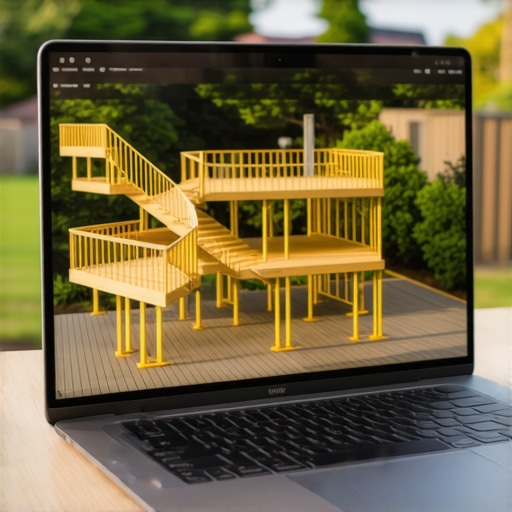
The Future of Outdoor Living is Steel
Looking toward 2025 and beyond, I predict a massive shift away from pressure-treated lumber for high-end substructures. We are already seeing the benefits of moving toward the hidden benefit of using steel deck framing instead of wood. Steel doesn’t warp, twist, or rot, and it provides a perfectly flat surface for composite decking, which is notorious for showing every imperfection in an uneven wooden frame. But regardless of your frame material, your deck lighting—the ‘jewelry’ of the build—needs to be high-quality. I have seen countless stairs become nighttime hazards because of a flickering power supply. You must understand how to choose the right deck lighting transformer to ensure your LEDs last for years rather than just a single season. I want you to try this one advanced move this weekend: crawl under your deck and inspect the post-to-beam connection for any signs of ‘crushing’ where the wood meets. If you see compression, it is time to install a structural tie-down to keep the assembly tight.
Building a space that lasts decades isn’t just about following a manual; it’s about internalizing the lessons that only come from years of seeing what fails. After thousands of hours on the job site, I’ve realized that the most expensive composite decking in the world is worthless if the frame beneath it is compromised. Let’s wrap up with the insights that will keep your home and family safe for the long haul.
The Small Oversights That Kept Me Up at Night
Experience is a brutal teacher, but it has taught me a few non-negotiables that every deck builder should live by. First, never underestimate the power of a single fastener. I’ve seen entire sections of stairs pull away because someone thought standard nails were ‘good enough’ for a high-traffic area. Second, I’ve learned that why picture framing your deck is more than just a style choice; it’s a structural move that protects the vulnerable end-cut grain of your boards from rot. Finally, always prioritize ergonomics. I found out the hard way that the stair tread depth that feels safest for kids and the elderly is the difference between a functional exit and a daily trip hazard. It’s these tiny measurements that define a professional build.
Invest in These Before You Cut Your First Board
If you are serious about DIYing this project or even just overseeing a contractor, there are a few resources you simply shouldn’t ignore. I always recommend checking the NADRA safety checklists every spring—they are the gold standard for structural health. When it comes to materials, be wary of the bargain aisle; the truth about cheap composite decking from big box stores is that it often lacks the UV inhibitors and core density required for a thirty-year lifespan. For my toolkit, a high-quality impact driver and a dedicated laser level are non-negotiable. If you run into a specific issue mid-build, knowing how to fix a loose railing post without tearing up the deck boards can save you an entire day of frustration and hundreds of dollars in wasted lumber.
Your Backyard Legacy Starts Beneath the Surface
At the end of the day, your deck is more than a platform—it’s the stage for your family’s most important outdoor living moments. Whether it’s a graduation party or a quiet morning coffee, you deserve the peace of mind that comes from knowing every bolt and joist was installed with intention. Use these deck builder insights for designing your dream outdoor space to guide your planning, but never let the beauty of the top boards distract you from the strength of the frame. You have the tools and the knowledge; now it’s time to build something that stands the test of time. Have you ever found a scary structural surprise under your own deck? Let me know in the comments below!