I remember standing on a ladder a few years back, sweating through my shirt as I struggled to align a heavy stringer with a socket wrench that kept slipping off the head of a rusted lag bolt. My forearms were on fire, and just as I thought I had it cinched down, the wood let out a sickening crack because I had slightly misaligned my pilot hole. It was a disaster. That was the day I realized that the old-school way of fastening stairs was holding me back. I was working as a deck builder trying to do things by the book, but the book was outdated. Today, I want to share why I made the switch to structural screws and how it will save your back, your time, and your sanity on your next outdoor project. [image_placeholder_1]
Toss the Drill Bits and Save Your Wrists
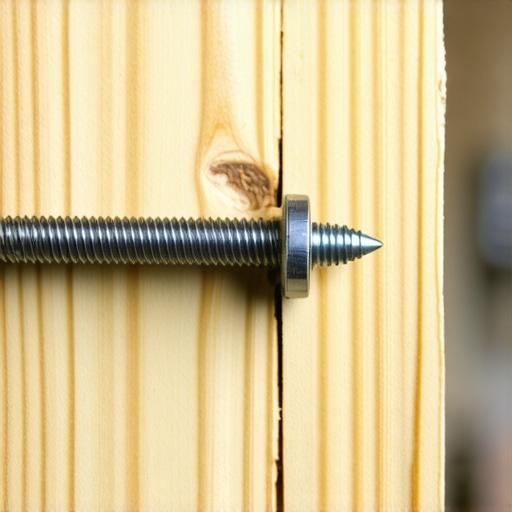
For years, we were told that if you wanted a rock-solid stair connection, you needed a fastener that looked like it belonged on a bridge. But those beefy lag bolts are a pain. You have to drill a pilot hole, then a clearance hole, then use a washer, and finally crank it in with a bulky impact or a hand wrench. It is exhausting. One of my biggest early blunders was skipping the pilot hole on a corner, which led to a split joist that I had to replace on my own dime. Structural screws, on the other hand, are heat-treated and designed to zip right into the wood without any pre-drilling. They have a built-in washer head that sits flush, which is crucial when you are trying to create a solid-feeling composite surface later on. Have you ever found yourself halfway through a project, staring at a snapped bolt and wondering if there is a faster, safer way?
Are these skinny screws really stronger than a beefy bolt?
It is the number one question I get from skeptical neighbors. It feels counterintuitive that a thinner screw could outperform a thick bolt, but the engineering is there. According to the American Wood Council’s NDS standards, modern structural screws are specifically engineered with higher shear strength and better withdrawal resistance than traditional lag bolts of the same size. They don’t just hold the wood; they pull the members together with incredible force. If you’ve ever noticed why stair treads need more than just screws to stay silent, you know that the tightening power of your hardware is everything. I even learned the hard way that using the wrong fasteners can lead to the measurement mistake of having your stringers shift over time. By switching to structural screws, you’re not just working faster; you’re building a staircase that actually stays where you put it.
Stop Struggling with Heavy Stringers and Start Clamping
First things first, you need to get your stringers positioned without fighting gravity. I remember a humid Tuesday in July where I tried to ‘eyeball’ the height of a four-step stringer while holding it with one hand and an old drill in the other. The stringer slipped, barked my shin, and I ended up with a staircase that was half an inch out of level. Now, I use a heavy-duty framing clamp to lock the stringer against the rim joist before I even touch a fastener. This is where the trick to cutting perfect deck stringers on the first try really pays off—if your plumb cuts are square, the clamp does the heavy lifting for you. Once clamped, you can step back, check for level, and ensure your transition to the green lawn is exactly where you want it.
The Staggered Pattern That Keeps Your Frame from Splitting
When you are finally ready to pull the trigger, the screw pattern matters more than the quantity. I once watched a helper put six screws in a perfectly vertical line on a rim joist. Within two seasons, the winter freeze-thaw cycle expanded the wood, and that vertical line became a giant crack that split the entire board. Instead, stagger your screws like the buttons on a zig-zag stitch. This distributes the tension across different grains of the wood. Using the bracket that makes your deck stairs feel rock-solid in conjunction with these screws is the ultimate ‘belt and suspenders’ approach, especially for high-traffic entryways. Drive your first screw two inches from the top, the next one three inches to the left, and the third one near the bottom. This triangular ‘footprint’ prevents the stringer from pivoting or pulling away under heavy loads.
Why You Should Swap the Drill for an Impact Driver
You also need to ditch the standard cordless drill for this phase. An impact driver uses a rotational hammering action that drives structural screws without stripping the T-star head or wrenching your wrist. I remember the first time I used a high-torque impact for this—I was amazed that I could drive a six-inch screw with one hand while maintaining a steady stance on the ladder. It changed the game for me as a professional deck builder because I was not physically exhausted by lunchtime. The impact driver ensures the built-in washer head of the screw sinks just deep enough to be flush, which is vital for achieving a solid-feeling composite surface when you eventually lay your treads.
Seal the Connection to Prevent Rot Long Term
While you are driving these in, think about the long game of moisture management. Every time you pierce the wood, you are technically inviting water to sit in the hole. I have seen decks where the hardware was still shiny but the wood behind it looked like wet cardboard after only five years. To avoid this, I always apply a small piece of butyl joist tape to the back of the stringer or the face of the rim joist before they meet. This is a key part of how to protect your deck frame from rot for thirty years. When the screw passes through the tape, it creates a rubberized gasket that seals the hole perfectly. Finally, do not forget the ‘squish’ factor. You want the head of that screw to slightly compress the wood fibers. If you leave it proud, it will eventually catch debris and moisture, leading you to search for the simple way to stop deck stairs from squeaking next summer. When I switched to this sealed-screw method, the first thing I noticed was the absolute silence—no more groaning wood, just a rock-solid staircase.I have seen guys go absolutely overboard with fasteners because they think it makes the stairs ‘sturdier.’ It is a classic mistake. Actually, over-drilling in a concentrated area can turn your rim joist into a perforated sheet of paper, significantly weakening the grain and inviting moisture to settle in. The real nuance that separates an elite professional deck builder from a hobbyist is understanding thermal expansion. Most people believe that once a deck is built, it stays the same size forever. That is a myth that leads to bowed boards and popped screws.
The Myth of the ‘Maintenance-Free’ Static Deck
Many homeowners choose custom composite decking thinking it is as stable as a concrete slab. In reality, composite moves significantly more than wood throughout the seasons. If you pin every board down without regard for the thermometer, you are going to see buckling or snapped fastener heads by next July. This is often why your composite boards are expanding more than expected and pushing against your home’s siding. Experts at the North American Decking and Railing Association (NADRA) point out that improper gapping is the most frequent cause of post-installation callbacks in the industry.
How do you handle expansion on a forty-foot span?
When you are working with long runs, you cannot just hope for the best. You need to know how to align deck boards perfectly across a 40-foot wide span by using breaker boards. A breaker board runs perpendicular to the rest of the decking, acting as a visual and structural ‘reset button’ for expansion gaps. Without this, a long run of boards will eventually ‘creep,’ leading to massive, uneven gaps at the ends that look amateurish. This attention to detail is what ensures a solid-feeling composite surface that stays aligned through heatwaves and freezes.
The Hidden Danger of Over-Fastening Your Stair Treads
Another ‘trap’ is thinking that more screws automatically equal more safety. If you over-fasten near the edge of a stringer, you remove the wood’s ability to flex and breathe. This leads to internal stress fractures that you won’t see until the stair literally fails under weight. Instead of just adding more hardware, focus on the substructure. This is why we always double block the middle of a long stair run for stability. It creates a rigid frame that allows the fasteners to do their job without carrying the entire structural load. Have you ever fallen into this trap of over-building only to see the wood split later? Let me know in the comments. Let’s keep digging into how these small framing moves prevent long-term headaches.
Beyond the layout and the heavy lifting, the secret to a deck that lasts is the data you use to build it. I have seen too many guys try to wing it with a pencil behind their ear and a rough sketch on a scrap of 2×4. That is exactly why a digital designer is the best move for planning a complex backyard deck. It allows you to see how every stair stringer and joist interacts before you even make your first cut. When you are building for a custom composite decking project, the margins for error are razor-thin. A digital plan ensures your stair tread depth is consistent to the millimeter, preventing that annoying ‘trip step’ at the top of the landing.
The One Tool That Never Leaves My Truck
If you asked me ten years ago, I would have said a hammer was my most vital tool. Today, it is my high-torque impact driver paired with a specific set of T-star bits. Standard Phillips heads are the enemy of progress in innovative outdoor living because they cam out and strip just when you are applying the most pressure. When I am driving six-inch structural screws into a rim joist, I need the tool to do the work, not my shoulders. This is especially true when I am trying to figure out how to install deck fascia boards so they dont buckle. A precision driver allows you to set the depth perfectly so the fascia can expand without popping the heads off.
How do I maintain my composite stairs over the long haul?
Maintenance is where most homeowners get bad advice. I once walked onto a job site where the client was using a gas-powered pressure washer on their expensive boards. I almost had a heart attack. That is why you should never use a pressure washer on composite decks; it can permanently etch the surface and void your warranty. Instead, stick to a soft-bristle brush and a mild detergent. According to the Simpson Strong-Tie Deck Connection and Fastening Guide, you should also inspect your structural connectors every spring to ensure no salt or moisture has compromised the metal. This simple check is a cornerstone of how to protect your deck frame from rot for thirty years. If you spot a rusted bracket early, it is a ten-dollar fix; if you wait five years, it is a five-thousand-dollar rebuild.
Why the Future of Decking Isn’t Made of Wood
I am seeing a massive shift in the industry toward materials that don’t warp or rot, no matter the weather. While we still use pressure-treated lumber for most frames, the hidden benefit of using steel deck framing is becoming impossible to ignore. Steel is perfectly straight, which means no more shimming joists to get a flat floor. It is the ultimate way to ensure a solid-feeling composite surface that feels like a kitchen floor. As we move toward 2025, I predict that light-gauge steel will become the standard for any professional deck builder looking to provide a lifetime guarantee. If you want to level up your next project, try this advanced move: use a butyl joist tape on every single horizontal surface of your frame before you lay your decking. It is a small step that separates the amateurs from the pros. Have you ever thought about how much longer your deck would last if the wood stayed dry year-round?
Beyond the layout and the heavy lifting, the secret to a deck that lasts is the data you use to build it. I have seen too many guys try to wing it with a pencil behind their ear and a rough sketch on a scrap of 2×4. That is exactly why a digital designer is the best move for planning a complex backyard deck. It allows you to see how every stair stringer and joist interacts before you even make your first cut. When you are building for a custom composite decking project, the margins for error are razor-thin. A digital plan ensures your stair tread depth is consistent to the millimeter, preventing that annoying ‘trip step’ at the top of the landing.
The One Tool That Never Leaves My Truck
If you asked me ten years ago, I would have said a hammer was my most vital tool. Today, it is my high-torque impact driver paired with a specific set of T-star bits. Standard Phillips heads are the enemy of progress in innovative outdoor living because they cam out and strip just when you are applying the most pressure. When I am driving six-inch structural screws into a rim joist, I need the tool to do the work, not my shoulders. This is especially true when I am trying to figure out how to install deck fascia boards so they dont buckle. A precision driver allows you to set the depth perfectly so the fascia can expand without popping the heads off.
How do I maintain my composite stairs over the long haul?
Maintenance is where most homeowners get bad advice. I once walked onto a job site where the client was using a gas-powered pressure washer on their expensive boards. I almost had a heart attack. That is why you should never use a pressure washer on composite decks; it can permanently etch the surface and void your warranty. Instead, stick to a soft-bristle brush and a mild detergent. According to the Simpson Strong-Tie Deck Connection and Fastening Guide, you should also inspect your structural connectors every spring to ensure no salt or moisture has compromised the metal. This simple check is a cornerstone of how to protect your deck frame from rot for thirty years. If you spot a rusted bracket early, it is a ten-dollar fix; if you wait five years, it is a five-thousand-dollar rebuild.
[image_placeholder_1]
Why the Future of Decking Isn’t Made of Wood
I am seeing a massive shift in the industry toward materials that don’t warp or rot, no matter the weather. While we still use pressure-treated lumber for most frames, the hidden benefit of using steel deck framing is becoming impossible to ignore. Steel is perfectly straight, which means no more shimming joists to get a flat floor. It is the ultimate way to ensure a solid-feeling composite surface that feels like a kitchen floor. As we move toward 2025, I predict that light-gauge steel will become the standard for any professional deck builder looking to provide a lifetime guarantee. If you want to level up your next project, try this advanced move: use a butyl joist tape on every single horizontal surface of your frame before you lay your decking. It is a small step that separates the amateurs from the pros. Have you ever thought about how much longer your deck would last if the wood stayed dry year-round?
The Expensive Lesson I Learned About Wood Memory and Stair Stability
Wood remembers where it grew. If you try to force a bowed stringer into place with just screws, it’s going to spend the next ten years trying to pull those screws out. This tension is often why your deck stair stringers are cracking at the throat; the internal stress eventually wins. I also learned that a squeak isn’t just an annoyance—it’s a warning of friction-induced rot. Understanding why your deck stairs squeak and how to silence them forever is about more than just peace and quiet; it’s about sealing those connection points so the wood doesn’t rub itself raw. Finally, never place a fastener closer than one inch to the edge of your lumber; under the pressure of summer expansion, that edge is the first place a split will start.
My Non-Negotiable Kit for Building Steps That Don’t Squeak
When I head to a job site, my truck is loaded with specific gear that ensures every step is safe and silent. First is the high-torque impact driver with a dedicated decking mode that prevents stripping the heads of structural screws. For those looking at innovative stairs solutions for safe outdoor deck access, I always recommend Simpson Strong-Tie tension ties to keep everything tight. I also rely on digital design software to prevent the structural failures that lead to a deck that has started to pull away from the siding. Finally, keeping a current guide on designing safe and stylish stairs for outdoor decks in 2025 ensures we meet all the latest safety codes while maintaining a modern aesthetic.
Take the First Step Toward Your Own Backyard Oasis
Building a deck is one of the most rewarding ways to transform your home into a sanctuary. It’s not just about the lumber or the fasteners; it’s about the morning coffee on the landing and the late-night talks on the stairs. With the right structural screws and a bit of expert technique, you can build something that stays solid for decades. By working with a skilled deck builder, you’re investing in a space that will become the backdrop of your family’s favorite memories. Have you ever noticed your stairs starting to pull away or squeak during a hot summer? Let me know your biggest stair-building headache in the comments below!