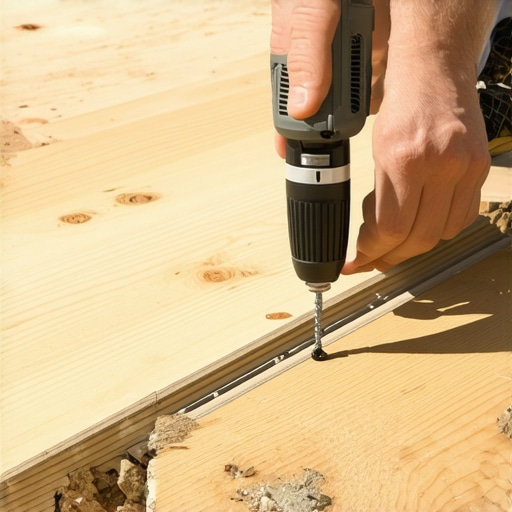
It was 11:45 PM, the house was silent, and I was on a mission for a midnight snack. Then it happened. Creeeee-ack. The sound of my back deck stairs didn’t just break the silence; it shattered it. I stood frozen, waiting for my golden retriever to start barking or my wife to ask who was sneaking around. It is a relatable nightmare for anyone with an outdoor space. That annoying, high-pitched rub makes your beautiful deck feel like a rickety pirate ship. I spent years as a deck builder thinking I could just out-muscle the noise, but I was wrong. Today, I am going to show you how to kill those squeaks for good so you can regain your late-night stealth and finally enjoy a peaceful evening outside.
Why Your Stairs Scream Every Time You Step
The culprit isn’t usually a loose board, at least not in the way you think. It is friction. When wood dries out or absorbs moisture, it moves. According to the USDA Forest Products Laboratory, wood can change dimension significantly based on relative humidity, and that movement causes the tread to rub against the stringer or the riser. Early in my career, I made the classic rookie mistake of thinking more fasteners equaled more silence. I once drove nearly two dozen screws into a single tread, only to find that why stair treads need more than just screws to stay quiet is a lesson learned in blood, sweat, and earplugs. The extra metal actually gave the wood more points to rub against as it expanded. You need a buffer, not just a tighter grip. If you are dealing with older wood, the fibers have likely compressed over time, creating a tiny gap that acts like a violin bow every time you apply weight.
Do I really have to tear the whole thing apart?
I know what you are thinking. “I do not have the weekend to rebuild my entire entryway.” The good news is that you usually do not have to. Most of the time, the fix involves addressing the specific gaps where the wood meets. Whether you are working with a skilled deck builder or tackling this as a solo DIY project, the physics remain the same. We need to stop the “micro-rub.” I have found the simple way to stop deck stairs from squeaking when you step often involves a combination of specialized construction adhesive and structural fasteners rather than standard nails that back out over time. Have you ever felt like your deck was judging your midnight snack choices with every noisy step? You are not alone, and it is time we silenced the judge once and for all. It starts with identifying the exact point of contact, which is where we will head next.Finding the exact location of a squeak is like being a detective in a creaky mansion. You need a partner for this part of the job. Have one person walk slowly up and down the steps while you crawl underneath with a high-powered flashlight. Look for even the slightest movement where the tread meets the stringer. If you see a tiny gap opening and closing like a fish mouth, you have found your ghost. Years ago, I worked on a massive wrap-around porch where every single step groaned. I thought I could solve it by just pumping standard wood glue into the gaps. It was a humid July afternoon, and the glue never set; it just oozed out like warm toothpaste, coating my hands and the homeowner’s patio in a sticky, useless mess. It did not stop the squeak—it actually acted like a lubricant for a few days, making the noise even weirder. That is when I realized that the reason we use structural screws instead of old-fashioned lag bolts or simple glue is about grip strength and resisting the shear force of a human foot. 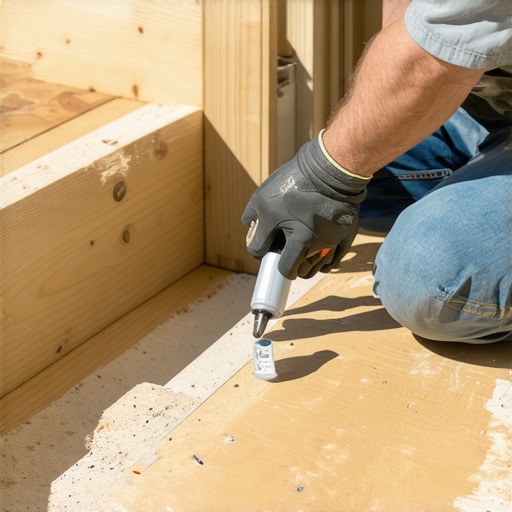
Kill the Friction with Structural Adhesives
Once you have spotted the gap, do not just drive a random nail through it. Nails are the enemy of silence because they have smooth shafts that love to slide back and forth inside the wood. Instead, use a high-quality polyurethane construction adhesive. Think of this like a permanent gasket. If you can get to the underside, run a thick bead along the joint where the tread meets the stringer. If you are working from the top because you cannot get underneath, you might need to back out the existing screws slightly to create enough space to inject the adhesive before tightening them back down. This creates a solid layer that prevents the wood-on-wood contact that causes that high-pitched rub.
Why You Should Reinforce the Bones
Sometimes the noise isn’t just the tread; it is the entire stair structure flexing under your weight. This is common when stringers are spaced too far apart or have weakened over time. Why your deck stair stringers are cracking at the throat is usually due to improper support, and that structural failure creates a massive amount of noise. To fix this, I often add “sister” blocks to the stringers. We also find that why we always double block the middle of a long stair run for stability is a game-changer for noise reduction. These blocks act like the internal bracing of a skyscraper, preventing the wood from twisting or swaying when you apply lateral pressure.
Upgrade Your Fasteners to Modern Standards
If you are working with choosing the right composite decking for durable low-maintenance outdoor areas, remember that composite expands and contracts differently than natural timber. Standard screws often “mushroom” the material or pull through. Use specialized composite screws that pull the material down tight without damaging the finish. For traditional wood, I swear by the bracket that makes your deck stairs feel rock solid. These metal connectors tie the tread to the stringer far better than any screw alone can, creating a mechanical bond that ignores changes in humidity and keeps those midnight snack runs completely silent.
The Low-Maintenance Lie We Have All Bought Into
Most homeowners think that choosing high-end materials means they can retire their work gloves forever. I see it every week: someone spends twenty thousand dollars on a new surface and then ignores it for five years. The biggest myth in our industry is that ‘maintenance-free’ means ‘care-free.’ In reality, the truth about maintenance-free decking claims is that while the boards won’t rot, they still act as a giant shelf for organic debris. If you let wet leaves and dirt sit in those gaps we just silenced, you are creating a localized greenhouse for mold. I once saw a gorgeous ‘low-maintenance’ deck where the owner had used a cheap rubber-backed mat. That mat trapped moisture and heat so effectively it actually warped the composite boards underneath. This is why learning how to choose a deck rug that doesn’t rot your boards or damage your finish is a nuanced step most people skip until it is too late.
Thermal Expansion is a Physical Law, Not a Suggestion
Here is a nuance that separates the pros from the weekend warriors: composite decking moves—a lot. While wood expands mostly in width, composite expands in length. If you install your boards tight against the house on a cool morning, they will literally buckle and ‘hump’ up by 2:00 PM when the sun hits them. I’ve seen entire railing systems pushed out of alignment because the builder didn’t account for this. If you are noticing your stairs starting to groan again after a season, it might be why your composite boards are expanding more than expected. You have to leave specific gaps at the end-to-end joints. To hide these necessary but ugly gaps, I always recommend why picture framing your deck is more than just a style choice; it provides a fixed perimeter that allows the interior boards to grow and shrink without showing raw cut edges or pushing against your siding.
Why does my deck still feel like a trampoline after an expensive upgrade?
I often get calls from frustrated homeowners who just had a skilled deck builder install new boards, but the floor feels ‘bouncy.’ They blame the material, but the culprit is almost always the skeleton. According to a study by the North American Deck and Railing Association (NADRA), a staggering number of decks are structurally deficient because the framing was designed for old-school wood, which is stiffer than modern composites. If your joists are 24 inches apart, your new boards will sag. You need to understand the structural reason your deck feels bouncy when you walk before you blame the surface. Usually, it requires adding mid-span blocking or even sistering joists to decrease the span. Don’t fall into the trap of putting a ‘Ferrari’ body on a ‘moped’ frame. It might look silent and sturdy in the photos, but the first time you host a party, the vibration will tell the real story. Have you ever fallen into this trap? Let me know in the comments.I’ve spent a lot of time talking about the ‘pretty’ side of decking—the boards and the finishes—but none of that matters if your frame turns into mulch within a decade. The biggest secret in my tool trailer isn’t a fancy saw; it’s a simple roll of butyl joist tape. If you want to know how to protect your deck frame from rot for thirty years, you start by sealing the top of every joist before the boards go down. This prevents water from sitting in the screw holes, which is exactly where rot starts. Even the American Wood Council (AWC) DCA 6 emphasizes the importance of proper flashing and moisture management to ensure the longevity of residential decks. When I first started as a deck builder, I skipped this. Five years later, I had to replace an entire set of stairs because the stringers had turned to sponges while the composite treads looked brand new.
The Modern Fasteners That Actually Hold
Beyond tape, your choice of metal matters. I’ve completely moved away from old-school hardware because the industry has evolved. This is why I use structural screws instead of lag bolts for ledgers and stair connections. They have a smaller diameter but higher shear strength, meaning you don’t have to drill massive, weakening holes into your framing. To get those boards down perfectly flat, I rely on a tool called the Camo Lever. It straightens warped boards with a flick of a wrist, ensuring your ‘picture frame’ borders are laser-straight and those annoying gaps stay consistent across the entire span.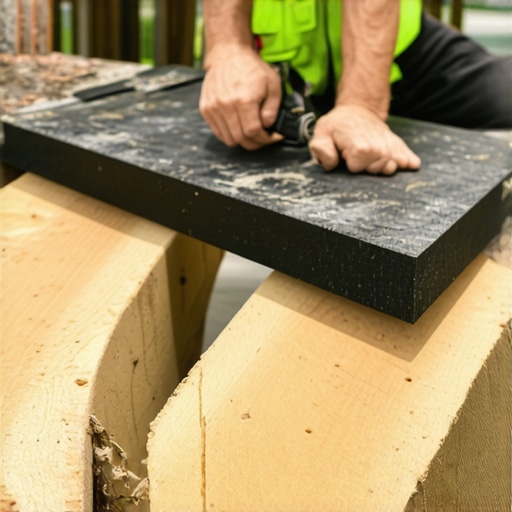
How do I keep my deck from looking like a relic in five years?
Maintenance isn’t just about the occasional power wash—it’s about managing the environment. I recommend a dedicated schedule: every spring, check the torque on your stair brackets and clear out the organic debris from the gaps. If you’re running lighting, ensure you’re using a high-quality system from the start. Knowing how to choose the right deck lighting transformer can save you from a flickering mess that requires tearing up boards to fix two seasons down the road. If you really want to scale your outdoor living, look at composite decking trends 2025. We’re seeing a massive shift toward ‘heat-reflective’ technology and integrated smart-deck features. In the future, I predict we’ll see boards with embedded sensors that can detect moisture buildup or structural shifting before it ever becomes a squeak. For now, focus on the mechanical details I’ve shared. My challenge to you? Grab a roll of butyl joist tape and a box of structural screws for your next minor repair. Once you feel the difference in stability and see the lack of water damage, you’ll never go back to standard nails again.
Hard-Won Truths from a Decade of Silent Stair Building
After years in the field, I have learned that silence in construction is a byproduct of respect—respect for the way wood moves and the way fasteners fail. One lightbulb moment for me was realizing that every squeak is actually a cry for help from a structure that is rubbing itself to death. If you ignore a noisy step, you are letting friction slowly chew away at your stair treads. Another hard truth: your deck is a living organism. It breathes, expands, and contracts. Fighting this movement is a losing battle; instead, you must guide it using the right buffers and flexible adhesives. Finally, the most important lesson? The ‘invisible’ work under the boards is always more valuable than the finish on top.
Gear That Never Leaves My Truck
If you are serious about a pro-level finish, you need more than just a hammer and some nails. I always keep a few rolls of butyl tape handy because how to keep your deck joists from rotting under the boards starts with that simple, waterproof barrier. For the heavy lifting, I rely on GRK structural screws; they have the bite and strength to pull even the most stubborn stringers into alignment. I also suggest using a high-quality polyurethane adhesive like PL Premium, which stays flexible even in freezing winters. Lastly, for planning, I swear by digital modeling. Why I never start a complex deck project without a digital 3D walkthrough first is simply because it catches those ‘bouncy’ structural flaws before I ever cut a single piece of wood.
Your Path to a Quiet Evening Under the Stars
You do not have to live with a deck that sounds like a haunted house. By focusing on structural integrity and modern fastening techniques, you can reclaim your outdoor living space and turn it into the peaceful sanctuary you deserve. Whether you are doing a quick weekend fix or planning a massive overhaul with a skilled deck builder, remember that the goal is longevity and comfort. Take a look at some innovative outdoor living ideas with composite decking in 2025 to see how far these materials have come. It is time to stop the squeak and start enjoying the silence. Have you ever discovered a surprisingly simple fix for a noisy deck board? Let me know in the comments!