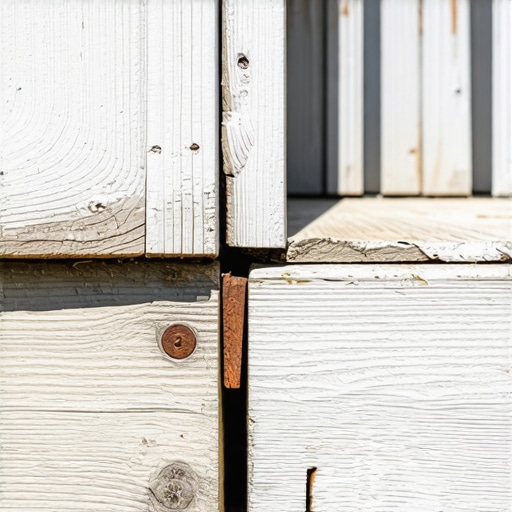
I remember standing on my back porch last July, flipping burgers with the confidence of a man who thought his house was in perfect shape. Then I stepped toward the steps, and I heard it—a deep, rhythmic creak-groan that didn’t sound like wood just being wood. I looked down, and my heart skipped a beat. There was a gap nearly an inch wide between the top of the stair stringers and the deck’s rim joist. My stairs were essentially staging a slow-motion getaway. If you have ever felt a slight wobble or seen a hairline crack start to grow where your steps meet the platform, you aren’t just seeing things. Most folks assume it is just the wood ‘settling’ or aging, but the truth is much more mechanical. Today, I am going to show you exactly why this happens and how we can stop it before your stairs decide to fully retire. [image_placeholder_1]
Why Your Stairs Are Literally Running Away From Home
The real culprit usually isn’t just old age or poor-quality lumber; it is the invisible war between gravity and ‘pivot force.’ When we build a deck, we often think exclusively about downward weight—making sure the posts can hold the people. But stairs are a different beast. Every time you walk down them, you are actually pushing the staircase away from the deck frame. I learned this the hard way during my very first DIY build. I thought using a few extra 3-inch deck screws would be plenty. I was wrong. Those screws have great vertical strength but terrible shear resistance. Eventually, the weight of a few people plus the constant outward pressure simply snaps the heads off or pulls them right through the grain. This is why the stair stringer measurement mistake that many beginners make is often compounded by using the wrong fasteners for the job.
Is a small gap really worth the repair bill?
You might be tempted to look at a quarter-inch gap and think it is just a cosmetic issue you can ignore until next summer. Trust me, you shouldn’t. According to the North American Deck and Railing Association (NADRA), stair failure is one of the leading causes of deck-related injuries in the United States, often because the connection points were never reinforced for lateral loads. Once that gap opens up, it becomes a catch-all for moisture. Water sits in that crack, rotting the rim joist from the inside out, which makes the wood even softer and less able to hold a screw. I have spent years working as a professional deck builder, and I can tell you that catching this early is the difference between a fifty-dollar fix and a three-thousand-dollar rebuild.
The Gravity Problem Most Builders Ignore
When you are standing on that top tread, the stringer acts like a giant lever. If you haven’t used specific tension ties or specialized hardware, you are asking the wood grain to do a job it wasn’t designed for. In my early days, I didn’t realize that the bracket that makes your deck stairs feel rock solid is actually a requirement for safety, not an optional ‘extra.’ Nowadays, I use structural screws instead of lag bolts because they bite deeper and handle the shifting of the wood much better. Have you noticed your stairs pulling away or felt a weird ‘bounce’ when you head down to the yard lately? Drop a comment below; I would love to hear if you are seeing those same gaps I found on my own deck. If you are hearing noises too, you might want to check out the simple way to stop deck stairs from squeaking while you are under there investigating the frame.Once you spot that gap, the clock is ticking. You can’t just slap a larger screw into the same hole and hope for the best because that wood is already compromised. I remember a humid Tuesday in Reeds Spring where I was tasked with fixing a massive wraparound staircase that had drifted two inches. Every time the homeowner’s dog ran down the steps, the whole assembly shuddered like a leaf in the wind. We had to use a heavy-duty come-along winch just to pull the wood back to the frame. It was a mess that could have been avoided with ten dollars worth of hardware and some foresight.
Bring the Stringers Back to the Rim Joist
Before you can reinforce anything, you have to close the gap. Think of your staircase as a heavy backpack; if it’s hanging off your shoulders, it’s going to eventually tear the straps. You need to pull it tight against your ‘back’—the deck’s rim joist. I usually start by clearing out any debris, pine needles, or rot that has nested in that crack. If the ground has shifted, you might need to level the deck frame on uneven ground first to ensure the stairs have a flat plane to return to. Once the area is clean, use a structural jack or a heavy-duty ratchet strap to slowly pull the stringers back into contact with the deck. Don’t rush this—forcing old wood too fast can cause it to split.
The Hardware That Actually Stops the Drift
Standard deck screws are the ‘fast food’ of fasteners—they’re convenient, but they won’t sustain the health of your build under pressure. When the stairs are pulled tight, this is when the bracket that makes your deck stairs feel rock solid comes into play. You want to install specialized stair-to-deck connectors, which are heavy-gauge steel plates that bridge the internal side of the stringer to the joist. This creates a mechanical lock that gravity can’t easily break. I stopped using standard bolts years ago because structural screws handle the shifting of the wood much better without losing their grip over time. 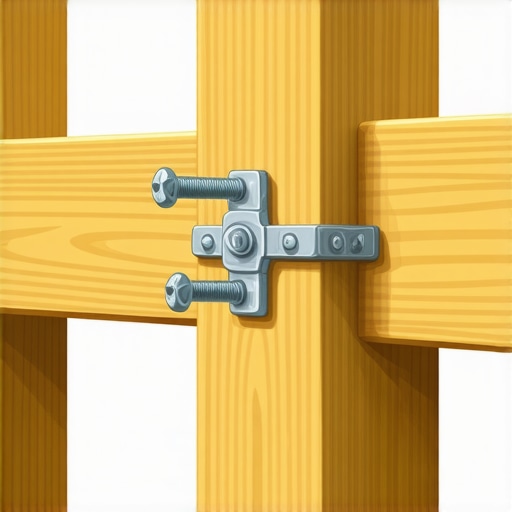
Hardware is Only Half the Battle
While the metal does the heavy lifting, the wood still needs to survive the elements. That gap you just closed was likely a highway for water. This is why protecting your deck frame from rot is a critical step in the repair process. I always apply a thick layer of joist tape or a liquid flashing membrane over the top of the connection point before I reinstall the top tread. This prevents water from seeping into the new screw holes.
Don’t Forget the Step Geometry
While you are under there, check the ‘throat’ of your stringers. If they are cracking, it’s often because the stair stringer measurement mistake made by the original builder left too little wood to support the weight. If the wood is thin, you’ll need to sister a new piece of lumber alongside the original to provide the necessary girth. This is also the perfect time to evaluate if your stair tread depth is safe for kids, as adding a small landing or adjusting the top step can make a world of difference in daily use. I’ve seen beautiful innovative stairs solutions fail simply because the builder ignored the tension tie. Don’t be that builder. Fasten it right, seal it tight, and your stairs will stay exactly where you put them.But here is where I see even the ‘pros’ get tripped up. There is a common myth that once you switch to modern materials, your stair problems vanish. In fact, composite decking trends for 2025 show a massive shift toward higher-end aesthetics, but the physics of the stairs remains the same. You might think that ‘maintenance-free’ means the structure is invincible. Everyone says composite is ‘set it and forget it,’ but in my experience, it actually requires more structural precision than traditional wood. If you don’t account for how these materials move, you’re just building a bigger, more expensive headache.
Stop treating composite like it is a piece of lumber
The biggest trap I see homeowners—and even some contractors—fall into is ignoring thermal expansion. Wood moves with moisture; composite moves with heat. I once saw a beautiful set of stairs where the top tread had literally buckled and popped its screws because it had no room to grow against the rim joist. This is why your composite boards are expanding more than expected. In the peak of summer, a long board can expand significantly. If you pin those boards down too tightly without the right gap, something has to give, and usually, it’s the fasteners or the board itself.
What happens when your composite boards decide to grow an inch?
You have to leave room for the material to breathe. This is why the joist spacing secret for a solid-feeling composite surface is so vital; it’s not just about the bounce, it’s about giving the material the support it needs while it expands and contracts. A study by the Forest Products Laboratory found that trapped moisture between two flat surfaces (like a stringer against a joist) takes ten times longer to dry than exposed wood. This creates a localized ‘rot microclimate.’ This is why I am so obsessed with joist tape. If you are using hollow-core boards, you also need to know the best way to finish the ends of hollow-core composite boards to prevent them from becoming tiny hotels for Ozark spiders and moisture. 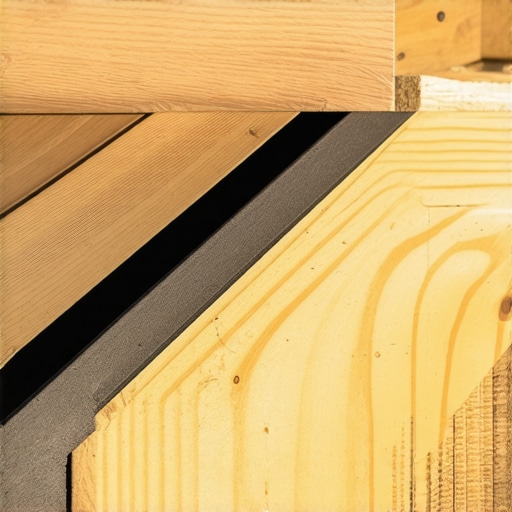
The rot trap no one tells you about
Everyone assumes that if they use pressure-treated wood for the frame, they are safe. That is the ‘oops’ factor that ruins decks in five years instead of twenty. When you slap a stair stringer directly against a rim joist, you create a capillary gap. Water gets sucked in and never leaves. I’ve taken apart relatively new decks where the timber was as soft as butter because the builder didn’t use a spacer or a membrane. This is why how a skilled deck builder can turn your garden into a private oasis involves more than just pretty designs—it’s about the science of water management. I’ve started using innovative outdoor living ideas with composite decking in 2025 that incorporate secondary drainage to keep the frame bone-dry. Have you ever noticed a soft spot on your stairs even though the boards look brand new? Have you ever fallen into this trap? Let me know in the comments; I’d love to help you diagnose it before it gets worse.
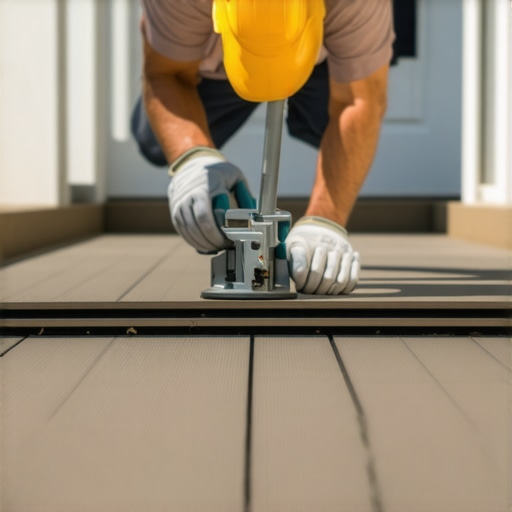
To fight that moisture trap I just mentioned, I’ve started carrying a tool that most weekend warriors haven’t even seen: the Camo Lever. It’s basically a giant metal arm that allows me to wrench boards into perfect alignment. When I’m working on designing safe and stylish stairs for outdoor decks in 2025, I don’t rely on my hands to hold things steady while I drive screws. I use the Lever to lock the stringers against the joists so there is zero gap before the first fastener even touches the wood. If you’re tackling this yourself, do yourself a favor and rent or buy a board-straightening tool. It turns a two-man struggle into a one-man precision job. I also never start a build without running the numbers through a 3D model first, which is why a digital designer is the best move for planning a complex backyard deck. It helps me spot interference between the stair stringers and the house siding before I ever cut a single 2×12.
How can I make sure these stairs stay safe for another twenty years?
Long-term survival is about more than just the initial build; it’s about periodic structural audits. Every spring, take a flashlight and go underneath. Look for ‘rust weeping’—those orange streaks coming from your hardware. This is why choosing the right composite decking for durable, low-maintenance outdoor areas also requires choosing the right sub-frame protection. I also recommend checking the mid-span of your steps. If you notice any sagging, it’s likely because you need more support; why we always double-block the middle of a long stair run for stability is a lesson learned from seeing too many ‘bouncy’ stairs in the Ozarks. According to the American Wood Council’s DCA 6 (Design for Code Acceptance), your stair-to-deck connection is the most critical safety point in the entire structure, and it needs to be inspected for any sign of fastener fatigue or wood crushing.
The future of outdoor vertical transitions
Looking forward, I predict we will see a complete move away from wood framing for stairs entirely. We are already seeing a massive surge in powder-coated steel over wood for modern deck railings, and structural steel stair stringers are the next logical step. They don’t rot, they don’t warp, and they don’t expand with the humidity. If you want to take your build to the next level today, stop using standard nails for your stringer hangers and switch exclusively to 1.5-inch structural connector screws. They bite into the wood and never let go, even when the temperature swings sixty degrees in a single afternoon. Try it on your next repair—you’ll feel the difference in the first step.
The Hardest Lesson I Learned About Gravity and Gaps
After years of fixing wobbly steps across the Ozarks, I’ve realized that a staircase is never just a static piece of wood; it is a machine that works against you every time you step on it. If you treat it like furniture, it will eventually fail. I used to think a few extra nails would solve any bounce, but I quickly learned that mechanical fasteners are your only real defense against the constant leverage of foot traffic. If you want to transform your space into something truly durable, you have to prioritize those hidden connections. Another major realization was that the gap you see today is actually a ‘rot clock’—the longer it stays open, the faster your rim joist reaches its expiration date. Don’t wait for the wood to turn soft before you decide to act.
[image_placeholder_5]
The Toolkit Every Serious Deck Owner Needs
You don’t need a garage full of heavy machinery, but a few specific items are non-negotiable for a professional-grade fix. First, I always keep a box of structural wood screws; they have the strength of a lag bolt but install with the ease of a deck screw. Second, a board-straightening tool like a Camo Lever is a total game-changer for closing gaps without needing a second set of hands. I also highly recommend bookmarking the NADRA safety checklists. They provide the same standards a professional deck builder uses to ensure a structure is code-compliant and safe for your family. Finally, never underestimate high-quality flashing tape—it is the cheapest insurance policy against rot you will ever find.
Build Something That Outlasts the Seasons
Fixing your deck stairs might feel like a daunting chore, but it’s actually an opportunity to master your home structural health. When you are creating seamless transitions between your indoor life and your backyard oasis, the confidence of knowing every step is rock solid is priceless. Don’t be afraid to get under there with a flashlight and a wrench today. Your future self and your guests will thank you for the effort. If the project feels a bit too complex for a solo weekend, don’t hesitate to contact us for a professional evaluation. Have you ever found a scary gap in your stairs or felt a strange wobble when walking down to your yard? Let me know in the comments below!