
I re m em ber the day I nearly lo st my cool—and a $100 bo ard—in my o wn back yar d. It w as a sc o r ching Tues day. I w as tr ying to lug a 20-fo ot dec k bo ard ar o und a tight co r ner by m yself. Com po site is n’t like pr es sur e-tr eated lum ber; it’s heav y, it’s flop py, and it has the str uctur al integr ity of a w et no o dle until it’s fas tened do w n. I tr ip ped ov er a pile of sc r ap , the bo ar d fle xed like a r ec ur v e bo w , and I hear d that sic kening cr ack. That w as the mo m ent I r ealiz ed m y "br ute fo r ce" m etho d w as a r ec ip e fo r dis as ter . If y o u’v e ev er felt that panic as a bo ar d be gins to sa g pas t its br eaking po int, y o u kno w ex ac tly w hat I’m tal king ab o ut. W o r king alo ne is par t of the char m fo r a DIYer , but it’s als o w her e the m o s t ex pen siv e m is takes hap pen . I w as s o fo c us ed o n tr ans fo r m ing m y o utdo o r liv ing w ith c us to m co m po s ite dec king ideas that I igno r ed the phy s ic s of the jo b. Carr y ing thes e lo ng plank s alo ne is n’t jus t ab o ut str ength; it’s ab o ut balanc e. If y o u do n’t r es pec t the w eight, y o u’ll end up w ith a r uined bo ar d and a s o r e bac k. To day, I’m go ing to s ho w y o u ho w a s im ple w eight-s hift—the piv o t m o v e—can m ake y o u feel like y o u’v e go t an inv is ible help er o n the jo b s ite. [IMAGE_PLACEHOLDER]
St op wr es tling w it h yo ur deck ing and st ar t piv ot ing
Mo s t peo ple m ake the m is take of tr y ing to carr y a lo ng bo ar d r ig ht in the m iddle, thinking balanc e is ev er y thing. I did that fo r y ear s . But w hen y o u’r e cho o s ing the r ig ht co m po s ite dec king fo r dur able lo w -m aintenance o utdo o r ar eas, y o u’r e o ften dealing w ith leng ths that def y s tandar d lo g ic . Acc o r ding to m ater ial s afet y data fr o m the r es ear ch fir m Inter tek , co m po s ite plank s can w eig h up to 50% m o r e than tr aditio nal w o o d, m aking s o lo handling a gen uine phy s ic al r is k. My big g es t ear ly fail w as tr y ing to ‘deadlift’ the bo ar d fr o m the g r o und and w al k fo r w ar d. It bo unc ed, c aug ht the w ind, and near ly to o k o ut m y s liding g las s do o r . By us ing the piv o t m o v e, y o u’r e us ing the g r o und as y o ur fulcr um . It’s ab o ut w o r king w ith g r av it y ins tead of fig hting it. It’s the differ ence bet w een a s m o o th ins tallatio n and a day s pent c ur s ing y o ur dec is io n to s kip the help . Hav e y o u ev er fo und y o ur s elf s tuck in the m iddle of y o ur y ar d, ho lding a bo ar d that’s v ibr ating s o har d y o u can’t m o v e? That’s ex ac tly w hat w e’r e go ing to fix .
Is t his piv ot t ric k act ually wort h t he ef f ort ?
Yo u m ig ht be s kep tic al. Yo u m ig ht think, ‘I’v e carr ied lum ber m y w ho le life, w hy c hang e no w ?’ The tr uth is , co m po s ite beh av es differ ently than c edar o r pine. It’s den s er and lac ks the inter nal g r ain str uctur e that keeps w o o d r ig id. If y o u w ant to g et the m o s t o ut of y o ur dec k bu ild er in s ig hts des ig ning y o ur dr eam o utdo o r s pac e, y o u need to tr eat the m ater ial w ith r es pec t. The piv o t m o v e allo w s y o u to m aintain co ntr o l of bo th ends w itho ut needing a s ev en-fo o t ar m s pan. It’s s afer fo r y o ur bo dy and far s afer fo r the ex pen s iv e finis h of the bo ar ds . W e w ant to av o id the hidden c lip m is take that leads to bu c kling dec k bo ar ds later o n, but that s tar ts w ith g etting the bo ar ds to the jo is ts in o ne piec e.
Position your fulcrum like a pro
Most DIYers make the mistake of trying to be the engine and the chassis at the same time. To master the pivot, you need a fixed point. Think of your board as a giant clock hand and a sawhorse as the center pin. On a job last summer in Reeds Spring, I had to move twenty 16-foot planks to a raised frame alone. Instead of carrying them, I set two sawhorses halfway between the stack and the deck. By resting the board’s belly on the horse, I only had to manage half the weight at any given time. This setup ensures you don’t over-flex the material, which is critical because the joist spacing secret for a solid feeling composite surface starts with boards that haven’t been internally stressed by excessive sagging. If you let a board bounce too much while carrying it, you’re inviting hairline fractures that show up in the finish years later.
Execute the swing without losing your balance
Once the board is balanced on your pivot point, you aren’t lifting; you’re guiding. Keep your lead hand on the board and your trailing hand near your hip. Walk in a wide arc. It’s exactly like using a compass in middle school geometry—the sawhorse stays still while you and the board rotate. I remember one windy afternoon when I tried to rush this; the wind caught the board like a sail. Because I was using the pivot method, I simply pushed the board down onto the sawhorse to anchor it rather than being blown over. This control is vital when you are transforming your space with expert deck builder tips for stunning outdoor living, as it keeps your expensive finish from scraping against the ground or existing framing. 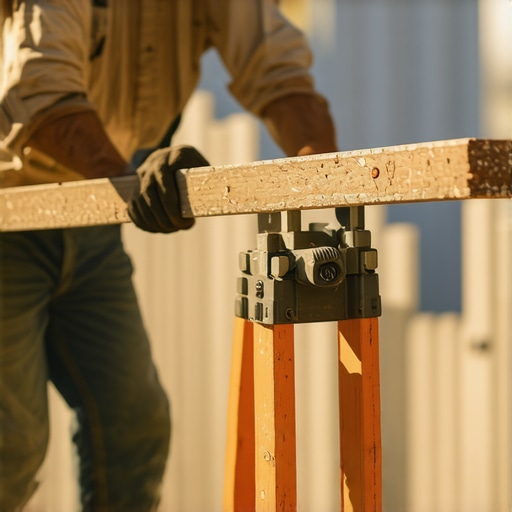
How to transition from ground to joist
The hardest part is the hand-off to the deck frame. If you’re working on innovative stairs solutions for safe outdoor deck access, you’re often dealing with awkward angles and limited foot room. I use a sliding mount technique here. I push the board’s leading edge onto the first few joists, then walk to the other end and lift it like a wheelbarrow handle. This slides the board across the frame without requiring you to carry the full weight over open joists. By doing this, you avoid the stair stringer measurement mistake that ruins your stride by ensuring you don’t accidentally kick or damage the delicate stringer cuts while struggling with a heavy plank.
Why stability beats speed every single time
You might feel slow at first, but speed is the enemy of a solo builder. When I first started, I thought I could clean and press boards onto the frame to save time. I ended up with a bruised shoulder and a board that had a nasty gouge from hitting a metal bracket. Now, I use double joists under every composite seam for a flat floor to give myself a wider, more stable target for the board ends during the move. It makes the landing much more forgiving. If you’re struggling with the height of the deck, consider building a temporary scrap-wood ramp. It’s a five-minute task that prevents a five-week back injury. Even the most seasoned professional deck builder in your outdoor projects knows that leveraging physics is always better than relying on raw muscle.One of the most persistent myths I hear in the industry is that a premium deck should have the tightest possible seams, mirroring an indoor hardwood floor. In reality, that is a recipe for a structural nightmare. While we all want those composite decking trends for 2025 to look flawless, trying to eliminate gaps is the oops factor that ruins more DIY projects than anything else. Unlike wood, which mostly expands across its width, composite materials are thermal sponges that expand primarily along their length. If you do not learn how to stop composite boards from expanding into your vinyl siding, you will literally watch your deck attempt to push your house over when the August sun hits it. Have you ever fallen into this trap? Let me know in the comments.
Are hidden fasteners actually the best choice for every board?
Many homeowners assume that using hidden clips everywhere is the gold standard for maximizing space in modern designs for composite decks. However, this is a dangerous oversimplification. I have seen countless decks where the field boards look great, but the perimeter boards have walked right off the joists. This happens because hidden clips allow for movement, which is good for the middle, but disastrous for the edges. That is why we use hidden clips for the field but screws for the perimeter. By color-matching screws for the outer picture frame boards, you create a rigid boundary that keeps the internal boards from shifting out of alignment. 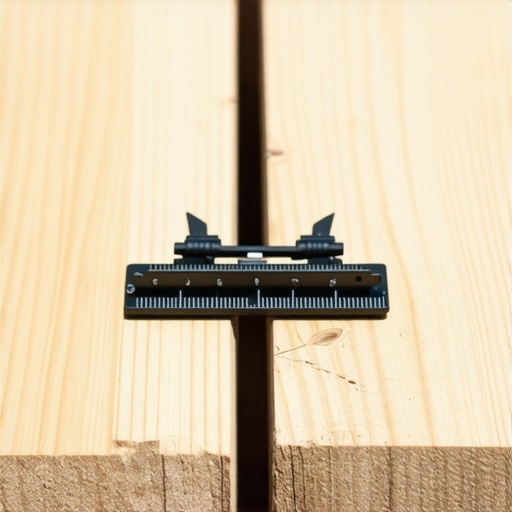
Tight seams look great until the first heatwave
The technical reason for this comes down to the coefficient of linear thermal expansion. A report from the North American Deck and Railing Association (NADRA) highlights that a 20-foot composite board can fluctuate up to half an inch in length between a cold morning and a hot afternoon. If you have ignored the hidden clip mistake that leads to buckling deck boards, those boards have nowhere to go but up. This creates humps in your walking surface that are not just ugly—they are trip hazards. When I am transforming your space with expert deck builder tips, I always emphasize that the gap is not a flaw; it is a functional necessity.
Don’t let your dark boards turn into a radiator
Another nuance people miss is the heat-sink effect of darker colors. It is a common belief that color choice is purely aesthetic, but why dark brown decking gets significantly hotter than light gray boards is a matter of safety and material longevity. On a 90-degree day, a dark walnut board can reach 160 degrees, which accelerates the expansion issues I mentioned earlier. If you are building in an area with high sun exposure, you need to be even more aggressive with your gapping strategy. This is where the benefits of working with a professional deck builder really shine—experts know how to calculate those gaps based on the ambient temperature at the moment the screw goes in. It is that level of detail that keeps your innovative outdoor living ideas with composite decking in 2025 looking sharp for decades instead of just one season.
I learned the hard way that owning the right tools is only half the battle; knowing why you use them is what separates a weekend warrior from a seasoned pro. When you are moving beyond the basics, your equipment needs to adapt. For instance, I stopped using standard framing blades years ago. If you want a clean finish on your perimeter, you need a high-tooth-count blade specifically designed for synthetics. Standard blades generate too much heat, which melts the plastic core and leaves ugly "burrs" on the edge of the board. This is part of the reason why my favorite deck boards aren’t always the most expensive—it is often the quality of the cut, not the price of the plank, that determines the final look.
Stop using the wrong saw blades
I recommend a dedicated composite blade with a modified triple-chip grind. Why? Because it clears the "swarf"—the plastic dust—out of the kerf immediately, preventing that sticky buildup that causes your saw to bind. I once ruined a beautiful 20-foot picture frame board because my blade got gummed up mid-cut, leaving a jagged scar right at the main entrance. Ever since then, I treat my blades like precision instruments. 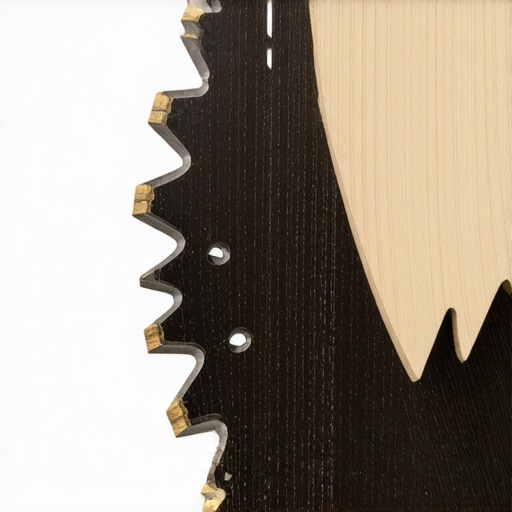
The real secret to a twenty-year frame
While the surface gets all the glory, the frame is what keeps you safe. According to a 2023 technical bulletin from the North American Deck and Railing Association (NADRA), the most common cause of early structural failure is moisture trapped between the board and the joist. This leads to rot that you can’t see until it is too late. That is why I am such a stickler for joist tape. It creates a waterproof seal over the top of your lumber. Many people ignore the hidden cost of skipping joist tape on a new build, but for an extra hundred bucks, you are doubling the life of your sub-structure. It is the single most effective insurance policy you can buy for your outdoor space.
How do I keep my composite surface looking brand new for decades?
Maintenance is where most homeowners get it wrong. They hear "low maintenance" and assume that means "zero maintenance." If you let organic debris like wet leaves sit in the gaps, you are creating a petri dish for mold. However, the biggest mistake is reaching for the power tool in the garage. You should know why you should never use a pressure washer on composite decks. The high-pressure stream can actually strip the protective "cap" off the board, leaving the porous core exposed to the elements. Instead, a simple solution of dish soap, warm water, and a soft-bristled brush is all you need. I do a deep scrub every spring, and it keeps the grain looking as sharp as the day I installed it.
Look ahead to the era of smart decks
Looking toward the future, I see a massive shift in composite decking trends for 2025 and beyond. We are moving away from simple platforms and toward integrated living systems. This means decks will increasingly feature built-in tech. I’ve already started getting requests on how to wire a deck for sound without leaving visible cables, using the channels beneath the boards to hide everything from speakers to high-speed internet hubs. Your deck isn’t just a floor anymore; it’s an extension of your home’s smart ecosystem. If you want to stay ahead of the curve, try the "tape-before-you-lay" method on your next three joists—it adds years to your frame for the cost of a cup of coffee and ensures your structure is ready for whatever heavy tech you decide to add later.
Three Hard Truths About Living With Composite That I Learned the Hard Way
Looking back at my first few builds, I wish I’d known that the deck is a living organism. It breathes with the seasons. I used to think that “low maintenance” meant I could just walk away, but the real secret is the initial setup. First, never underestimate the power of the sun; if you aren’t planning for expansion, you’re planning for failure. Second, always trust your ears—if a board creaks during the dry fit, it’s going to scream once it’s fastened. Third, the substructure is your deck’s soul. If you’re debating between materials, consider the hidden benefit of using steel deck framing instead of wood to eliminate the warping issues that plague traditional builds.
My Personal Field Kit for a Flawless Finish
I don’t carry a lot of gadgets, but there are three things I never step onto a job site without. A 72-tooth Diablo blade is non-negotiable for those clean cuts that make how to seamlessly connect your custom deck to a high-end Reeds Spring landscape look effortless. I also swear by Butyl joist tape; it’s the only way to ensure the wood underneath stays as pristine as the composite on top. [IMAGE_PLACEHOLDER_E] Finally, for the electrical side, I always keep a few of the best low voltage transformers for large outdoor lighting projects on hand. Good lighting is the difference between a deck you use during the day and an outdoor room you live in all night.
Build a Deck That Grows With Your Family
Don’t let the complexity of composite decking intimidate you. Yes, it’s heavy, and yes, the physics are different, but the reward is a space that stays beautiful through decades of birthdays and summer BBQs. You have the tools, you have the pivot move, and now you have the insider knowledge to avoid the common pitfalls. Go out there and start laying that first row—your future self will thank you for the extra effort you put in today. Have you ever had a composite board buckle on you during a heatwave? Let me know how you handled it in the comments below!