I’ll never forget the sound of that splintering cedar. It was three years ago, during the peak of a July heatwave, when my youngest daughter let out a scream that stopped my heart. She hadn’t fallen; she’d just stepped on a board that had cupped so badly near the pool edge that it caught her toe like a trap. I looked down at my “beautiful” wood deck and realized I’d spent more time sanding and staining it than actually swimming. That was the day I swore off organic materials for poolside builds. I’d made the classic mistake of thinking I could out-maintenance the Ozark humidity. We’ve all been there—choosing aesthetics over reality. [image_placeholder] Today, I’m going to show you why mineral-core technology is the only thing I trust when water is involved.
Why I finally quit the endless cycle of sanding and staining
If you have a pool, you have a moisture problem. It’s that simple. Most people start by choosing the right composite decking thinking any plastic-wood mix will do. I used to be one of them. But traditional composites still contain wood flour, and wood flour eventually drinks up water like a sponge. When that happens, the boards swell, the clips pop, and your “low maintenance” dream becomes a nightmare. For a truly bulletproof setup, we also always use stainless steel hardware for poolside deck frames to prevent the inevitable rust that comes with splashing chlorine. It’s about building a structure that doesn’t have an expiration date. According to data from the National Association of Home Builders, moisture decay is the primary cause of deck failure in humid environments, often reducing the structural life of a deck by nearly half. I’ve seen boards warp so badly they pulled the screws right out of the joists. Have you ever noticed your deck boards starting to “smile” or cup at the edges after a heavy rain?
Does mineral-core decking actually justify the higher price?
I get it. Your wallet is feeling the pinch just looking at the quote. You might be wondering if this is just a fancy marketing term for the same old plastic boards. The difference is in the “bone” of the board. Mineral-core products like Deckorators Voyage use ground-up minerals instead of wood fibers. This means zero thermal expansion. You won’t see those massive gaps opening up in winter or boards buckling against your house in the summer. Plus, they stay much cooler underfoot. We’ve learned the hard way why dark brown decking gets significantly hotter than light gray boards, but mineral-core technology adds an extra layer of protection against that midday sun. To get that “rock solid” feel, you also need to know the joist spacing secret for a solid feeling composite surface. If you’re tired of the bounce and the burn, it’s time to look at what’s actually inside your decking.Let’s talk about the skeleton. You can buy the most expensive mineral-core boards on the market, but if your frame rots out from under them, you’ve essentially built a Ferrari engine inside a rusty 1980s chassis. I learned this the hard way on a project near Table Rock Lake. We pulled up old boards to find the joists were literally turning into soil because water sat trapped in the gaps between the wood and the composite. Now, I never start a build without knowing how to protect your deck frame from rot for thirty years. It’s about building a foundation that actually matches the lifespan of your high-end decking.
Seal the skeleton before the first board goes down
Why I paint the tops of my joists black
One of my favorite tricks for a high-end look is dead simple: why I paint the tops of my joists black before installing composite. When you look through the gaps of a beautiful gray or light-colored deck, seeing bright pressure-treated green lumber is a total mood-killer. The black paint makes the structural elements vanish into the shadows, making the whole deck look like one solid, expensive surface. It’s the difference between a project that looks ‘built’ and one that looks ‘designed.’
The hidden cost of skipping joist tape
Think of joist tape as a raincoat for your deck’s skeleton. Without it, every splash from the pool seeps into every screw hole and sits there, rotting the wood from the inside out. I’ve seen five-year-old decks that had to be demolished because the owner wanted to save a few hundred dollars on tape. This is the hidden cost of skipping joist tape on a new build—you’re basically betting against the humidity of the Ozarks, and the weather always wins. 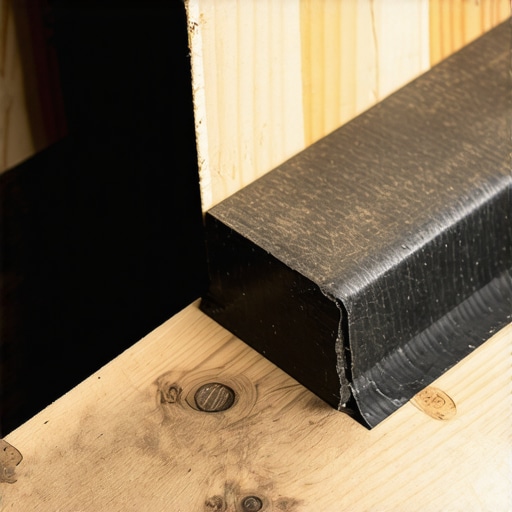
Master the art of the perfect mineral-core layout
Why we use double joists under every composite seam
To get that truly rock-solid feel underfoot, you need more than just premium boards. Most builders stick to a single joist at the seams where two boards meet. This creates a weak point where boards can dip or catch your toe when you walk over them. Why we use double joists under every composite seam for a flat floor comes down to providing a wider structural seat. When each board end has its own dedicated support, that annoying ‘bounce’ at the joints completely disappears.
Don’t let your fascia buckle in the summer sun
Mineral-core technology expands less than traditional wood-plastic composites, but your fascia—the vertical trim on the sides—is still a long, thin piece of material exposed to direct, brutal heat. If you don’t know how to install deck fascia boards so they don’t buckle in the heat, you’ll end up with wavy edges by August. We use oversized pilot holes and specific fastening patterns to let the material breathe without pulling away from the frame.
Build stairs that don’t bounce or squeak
Why I use structural screws instead of lag bolts for stairs
Stairs are the most used and abused part of any outdoor space. Old-school lag bolts tend to loosen over time as the pressure-treated lumber dries and shrinks, leading to that terrifying wobble. Why I use structural screws instead of lag bolts for stairs is simple: they have incredible drawing power and they never back out. For ultimate stability, I always look for the bracket that makes your deck stairs feel rock solid to ensure the stringers never pull away from the header.
The stair tread depth that feels safest for kids
Finally, let’s talk about ergonomics. A stair that is too narrow feels like climbing a ladder; one that is too wide ruins your natural stride. Through years of trial and error, I’ve found that the stair tread depth that feels safest for kids and the elderly is the secret to a comfortable transition from the pool deck to the lawn. It’s these small, calculated measurements that separate a generic build from a professional sanctuary.Most homeowners believe that once they switch to a premium mineral-core material, their job is done. But here’s the contrarian truth: a high-end composite deck actually requires more precision during the installation than a traditional wood one. Because these boards are engineered for rigidity and longevity, they are less forgiving of a subpar foundation. According to the North American Deck and Railing Association (NADRA), failing to account for the increased dead load of premium materials—which can be up to 30% heavier than cedar—is a leading cause of early structural fatigue in retrofitted decks. I’ve seen beautiful installs sag within two seasons because the builder didn’t realize deck builder insights designing your dream outdoor space must always start with the load-bearing math, not the color palette.
The myth that composite is maintenance-free
It’s a common belief that ‘composite’ means ‘indestructible.’ In reality, the way you fasten those boards determines if they’ll last thirty years or just three. One of the biggest ‘oops’ factors I see is relying solely on hidden clips without a locking strategy. In the brutal Ozark heat, boards expand, and without a fixed point, they can shift like tectonic plates. That’s why we use hidden clips for the field but screws for the perimeter. This hybrid approach pins the boards in place while allowing the rest of the board to breathe. If you don’t do this, you might find your gaps are half an inch on one side and zero on the other by August, a mistake that is nearly impossible to fix after the fact.
Can your old frame handle the weight of modern boards?
I often get asked if a simple ‘re-skin’ is enough to modernize a backyard. Usually, the answer is a hard no. Because mineral-core and high-end composites are significantly denser than softwood, your existing joists might not be up to the task. This is where why we always double block the middle of a long stair run for stability becomes a non-negotiable step. Without that extra internal bracing, the weight of the material creates a subtle ‘trampoline effect’ that eventually shears your fasteners and leads to that annoying creak.
Why your stair stringers might be a ticking time bomb
Stairs are where I see the most dangerous shortcuts. Most builders cut their stringers out of standard 2x12s without measuring the ‘throat’—the narrow part of the wood left after the steps are cut out. If that throat is too thin, the weight of the composite will eventually snap it. I’ve walked onto properties where why your deck stair stringers are cracking at the throat was visible from ten feet away, posing a massive liability. To avoid a catastrophic collapse, you need to reinforce those points with structural hardware rather than just nails. Beyond the immediate safety risk, there is the ‘stride’ issue. Even a quarter-inch error in riser height is the stair stringer measurement mistake that ruins your stride, creating a phantom trip hazard that your brain won’t see coming but your toes certainly will. Have you ever fallen into this trap of prioritizing the ‘pretty’ boards over the ‘boring’ framing? Let me know in the comments.If you’re serious about moving beyond DIY-grade results, you have to stop using DIY-grade tools. I used to think any old drill could handle a deck build, but once I switched to high-torque structural screws, I realized my hand-me-down tools were actually stripping the heads and compromising the grip. To get those stairs perfectly aligned, I rely heavily on digital modeling before I even saw the first board. I’ve found that why a digital designer is the best move for planning a complex backyard deck is no longer an optional luxury; it’s the only way to catch a framing conflict before it costs you three days of labor. For the actual assembly, my secret weapon is a specialized hidden-fastener jig. It ensures that every board is spaced to the millimeter, preventing that amateur ‘creeping’ effect where one side of the deck grows faster than the other. I always tell my clients that how to align deck boards perfectly across a 40-foot-wide span isn’t about luck; it’s about using a chalk line every three rows to check your math against the reality of the joists.
How do I keep a mineral-core deck looking new for decades?
The biggest threat to your investment isn’t the sun or the rain; it’s your own cleaning habits. I cannot stress this enough: put the pressure washer away. High-pressure water can actually etch the grain of even the toughest boards, creating micro-fissures where mold can take root. This is why you should never use a pressure washer on composite decks. Instead, a simple solution of mild soap and a soft-bristle brush is all you need. As noted in the Technical Performance Bulletin from Deckorators, mineral-core materials are specifically engineered to resist organic growth, meaning aggressive chemicals are often counterproductive. If you’re dealing with the local wildlife, you’ll also want to know the best way to clean bird droppings off dark brown composite boards without scrubbing away the finish.
Steel is the inevitable future of the Ozarks
Looking ahead to 2025 and beyond, I predict we are going to see a massive shift away from pressure-treated lumber entirely. The price of high-quality wood continues to fluctuate, but the performance of light-gauge steel remains superior. If you want a deck that is truly straight and level for thirty years, the hidden benefit of using steel deck framing instead of wood is becoming impossible to ignore. Steel doesn’t crown, it doesn’t rot, and it doesn’t twist. We’re already seeing more composite decking trends 2025 pointing toward these ‘forever frames’ as the new gold standard. My challenge to you? On your next project, try the double-joist technique for your seams. It’s a small structural change that yields a massive difference in how the deck feels under your feet. If you’re ready to stop guessing and start building something that lasts, check out deck builder insights designing your dream outdoor space to get your blueprints right the first time.
The Hardest Lesson I Learned About Poolside Durability
Building in the Ozarks taught me that moisture isn’t just a nuisance; it is an architect of destruction. My biggest ‘lightbulb moment’ was realizing that the gap between your boards isn’t just for drainage—it’s a breathing room for the entire structure. Even with mineral-core technology, which resists the worst of the swelling, the frame underneath is still living and moving. If you don’t allow for that airflow, you’re essentially building a mold-trap. Another hard-won insight: never assume a board is straight just because it came off a pallet. Use a string line for every third row. If you’re looking for inspiration to take your layout to the next level, I highly recommend checking out some custom composite decking ideas that play with patterns like herringbones or picture-framing to mask those structural necessities.
My Go-To Arsenal for a Rock-Solid Finish
I don’t step onto a job site without a few specific resources that ensure the project doesn’t just look good on day one, but stays safe for year ten. First, I always reference the NADRA (North American Deck and Railing Association) safety checklists; they are the gold standard for structural integrity. For the actual design phase, I’ve found that top stairs designs for modern outdoor spaces often require precise software modeling to ensure the risers are ergonomic and safe. I also swear by high-torque impact drivers and structural screws—standard wood screws simply can’t handle the density of mineral-core boards. Finally, if you ever find yourself inherited a deck with issues, knowing how to fix a loose railing post without tearing up the deck boards can save you a weekend of frustration and a lot of money in replacement materials.
Build a Sanctuary That Outlasts the Seasons
At the end of the day, your deck is more than just a collection of mineral-core boards and stainless steel fasteners; it is the stage where your family’s summer memories will play out. By choosing materials that don’t rot and focusing on a frame that can handle the humidity, you are buying yourself time. You’re trading a lifetime of sanding and staining for a lifetime of poolside relaxation. If the technical side feels overwhelming, remember that the benefits of working with a professional deck builder often include the peace of mind that comes with a structural warranty. Don’t be afraid to start small, but always build with the intention of never having to build it again. Your future self, sitting by the pool with a cold drink, will thank you for the extra effort you put into your outdoor living space today. Have you ever had a deck board fail on you unexpectedly? Let me know in the comments below!