
I remember the first time I sat down on my brand-new cedar deck, steaming coffee in hand, ready to soak in the Ozark sunset. I had spent weeks acting as my own deck builder, measuring twice and cutting once. But the moment my rear hit the chair, my heart sank. That sturdy top rail—the one I’d braced so carefully with the bracket that stops railing wobble—was sitting exactly at my eye level. I didn’t see the rolling hills; I saw a thick, stubborn piece of lumber. It was a classic rookie mistake, and it’s one I see homeowners make every single year. We follow the code to the letter, but we forget to account for the human element: where our eyes actually land when we’re actually relaxing. [image_placeholder]
The 36-Inch Trap That Ruins Your Morning Coffee
Building codes aren’t designed for aesthetics; they’re designed to keep you from falling. I once made the mistake of pushing a railing to 42 inches on a second-story project because I thought more height equaled more peace of mind. It was safe, sure, but it felt like sitting behind a prison fence. Most people don’t realize that according to the International Residential Code (IRC), you only need a 36-inch guard for most residential decks. That six-inch difference between a standard guard and a taller one is often the exact distance between seeing the lake and seeing a rail. When you’re planning innovative outdoor living ideas with composite decking, you have to think about the seated horizon. If you get it wrong, you’ve basically built a very expensive wall. Today, we’re going to solve this together. I’ll show you how to stay legal while keeping your sightlines wide open. We’ll talk about why I now choose powder-coated steel over wood for most of my modern builds.
Is a lower railing actually safe for my family?
I get this question all the time from folks worried about their grandkids or pets. People worry that if they don’t have a massive wall of wood, someone is going to tumble over. But safety isn’t about height alone; it’s about structural integrity. I actually stopped using standard wood for deck railings because those bulky balusters are the real view-killers. Have you ever felt like your deck railing was more of a barrier than a safety feature? If so, you aren’t alone. One of the best ways to fix this without compromising height is by installing glass balusters, which give you the protection of a wall with the invisibility of air. We’re going to look at three specific ways to reclaim your view without having to move your house or tear down your deck. Let’s find that sweet spot where safety meets scenery.
Stop Designing for People Who Stand Up
When most people talk to a deck builder, they’re standing in their backyard pointing at where they want the perimeter to go. But you don’t live on your deck standing up; you live on it sitting down. The first core technique I teach is the ‘Seated Horizon Check.’ Before you buy a single post, take your favorite outdoor chair—the one you plan to spend July 4th in—and place it on your existing deck or the lawn where the deck will be. Sit down. Have someone hold a tape measure up from the ground to 36 inches. If that 36-inch mark hits right between your eyes and the top of the horizon, you have a problem. I once worked on a project in Reeds Spring where the homeowner had a stunning view of a private pond, but his previous contractor built a massive 42-inch wooden guardrail. It was like looking at the world through a mailbox slot. We had to tear it down and rethink the entire profile to save his morning coffee ritual.
Find Your Magic Seated Number
The trick is to identify the ‘blind spot’ created by the top rail. If you are working with innovative outdoor living ideas with composite decking, you can often use slimmer, stronger materials that allow the top rail to be narrower. By keeping the rail at the legal minimum of 36 inches and using a low-profile cap, you drop that visual barrier below your chin. It’s the difference between feeling enclosed and feeling like you’re floating over your yard. 
Build a Railing That Stays Rock Solid Without the Bulk
The reason most DIY decks have those fat, 4×4 wooden posts and chunky balusters is because wood is weak in small dimensions. To get the strength required to pass a ‘pull test,’ people overcompensate with mass. This is why I almost exclusively recommend powder-coated steel over wood. Steel balusters can be as thin as 5/8 of an inch, while wood needs to be 1.5 inches or more. When you multiply that across a 20-foot span, the wood blocks out nearly 30% more of your view than steel does. Think of it like looking through a comb versus looking through a screen door.
The Secret to Eliminating Post Wobble
You cannot have a thin, elegant railing if the posts are shaky. A wobbly post is a sign of poor leverage. Instead of just toe-nailing posts to the deck surface—which is a recipe for disaster—I always use the bracket that keeps your railing from wobbling forever. These tension brackets tie the post directly into the joist structure, making a 36-inch rail feel as solid as a concrete wall without the visual weight. I remember a particularly messy job where we tried to skip the internal brackets on a wrap-around staircase. Every time someone leaned on the rail, the whole flight of stairs vibrated. We ended up pulling the boards back just to install the proper hardware. It was a lesson learned: structural integrity is what allows for aesthetic minimalism.
Why Glass is the Ultimate Visibility Cheat Code
If you truly refuse to see any lines at all, you have to look at installing glass balusters. People assume glass is a maintenance nightmare, but modern tempered glass stays surprisingly clean if you have good airflow. In that Reeds Spring pond project, we replaced the old ‘prison fence’ with 4-inch wide glass slats. Suddenly, the pond wasn’t a chopped-up image; it was a panoramic painting. The safety is still there—you can’t fall through it—but the visual barrier simply evaporates.
Let’s dig deeper into the mechanics. Most people believe that following local building codes is the finish line. In reality, code is the absolute bare minimum required by law to keep a structure from collapsing. When you’re looking at composite decking trends 2025 the ultimate guide for outdoor enthusiasts, you’ll notice that premium builds don’t feel like standard ones. They feel like an extension of the home’s interior, and that starts with the skeleton underneath.
16-Inch Spacing is the Enemy of a Premium Feel
Every general contractor will tell you that 16-inch on-center (O.C.) spacing for joists is fine. Technically, they are right. But if you are using composite, “fine” means “bouncy.” Unlike traditional lumber, composite boards are more flexible. If you want that rock-solid walk, you need to understand the joist spacing secret for a solid-feeling composite surface. By dropping that spacing to 12 inches O.C., you significantly reduce the deflection of the boards. I’ve seen homeowners spend $20,000 on high-end boards only to have the deck feel like a trampoline because they saved $300 on extra joists. If you’ve already built your frame and it feels soft, don’t panic; there is why your deck feels bouncy and the affordable fix to stiffen it up that usually involves mid-span blocking.
The Waterproofing Step You’re Probably Skipping
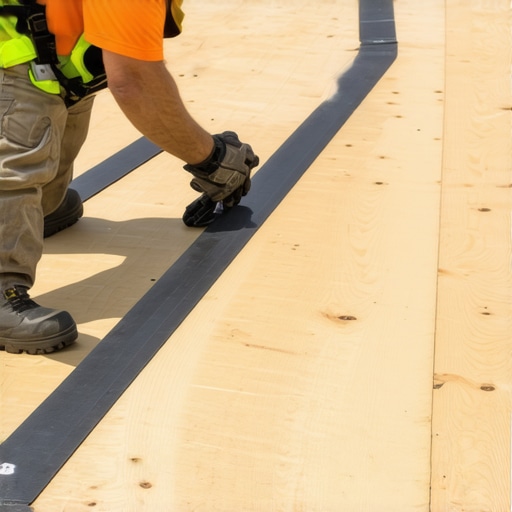
Here is the “oops” factor that kills decks in the Ozarks: moisture sandwiching. When you screw a composite board directly to a wooden joist, water gets trapped in that tiny gap. It can’t evaporate, and it eventually rots the top of your frame while the composite stays looking brand new. This is the hidden cost of skipping joist tape on a new build. A simple roll of butyl tape acts as a gasket, sealing the screw holes and keeping the wood bone-dry. While you’re at it, don’t forget the best way to seal the end cuts of pressure-treated lumber to prevent rot. Any time you saw a piece of treated wood, you expose the raw, untreated center. If you don’t brush on a preservative, you’re inviting decay into the heart of your structure.
Why your deck needs a dedicated circuit for that new outdoor fridge?
As we lean into innovative stairs solutions for safe outdoor deck access and fully functional outdoor kitchens, we often forget the power requirements. I’ve seen many DIYers tap into an existing exterior outlet for a new outdoor refrigerator. This is a massive mistake. A compressor kicking on can easily trip a circuit that is already shared with your living room TV or Christmas lights. Understanding why your deck needs a dedicated circuit for that new outdoor fridge is about more than just convenience; it’s about fire safety and preventing expensive food spoilage.
Don’t Let Your Stairs Turn Into a Safety Hazard
The most dangerous part of any deck isn’t the floor; it’s the stairs. According to data from the North American Deck and Railing Association (NADRA), stair failures are the leading cause of deck-related injuries. A common trap is relying solely on nails or a few lag bolts to hold the stringers to the frame. This is almost always the hidden reason your deck stairs are pulling away from the frame. The wood shrinks and expands, the fasteners loosen, and eventually, the whole unit detaches. I always insist on using the bracket that makes your deck stairs feel rock solid. These specialized metal connectors mechanically lock the stairs to the house or deck frame, ensuring they never budge. Have you ever fallen into the trap of following code but still ending up with a deck that felt “cheap” or shaky? Let me know in the comments.
Once the building inspector leaves and the dust settles, the real work begins—keeping that space looking as sharp as the day I handed over the keys. I’ve seen too many homeowners invest in choosing the right composite decking for durable low-maintenance outdoor areas only to ruin it in a single afternoon. The culprit? The pressure washer. It’s tempting to blast away the winter grime, but on composite, that high-pressure stream can etch the plastic and leave permanent scars. According to the official Trex Care and Cleaning Guide, you should never exceed a fan-tip pressure of 3100 PSI, but in my personal experience, you should never use a pressure washer on composite decks at high settings at all. I prefer a soft-bristled brush and a bucket of soapy water; it’s slower, but it protects the grain pattern I worked so hard to align.
My Favorite Tools for a Seamless Finish
Efficiency in the field comes down to the gear in your truck. For a truly professional finish, I’ve moved away from standard surface screws entirely for the main body of the deck. I rely on systems that allow me to drive fasteners into the side of the board or utilize specialized clips. This is why we use hidden clips for the field but screws for the perimeter. The center of your deck should be a smooth, barefoot-friendly plane, while the perimeter needs the sheer strength of a traditional screw to handle the expansion and contraction of the fascia. 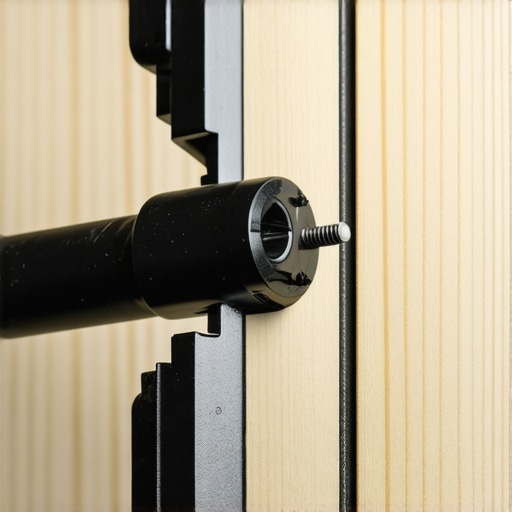
How do I keep my composite deck looking brand new for a decade?
Maintenance is mostly about managing the elements. In the Ozarks, we deal with extreme heat and a lot of local wildlife. If you’ve gone with a darker aesthetic, you’ve likely noticed why dark brown decking gets significantly hotter than light gray boards during a July afternoon. This heat doesn’t just bake your feet; it can bake in stains. I always keep a bottle of mild degreaser handy because knowing the best way to clean bird droppings off dark brown composite boards is the difference between a quick wipe and a permanent bleached spot.
Why Mineral Core is Changing the Game
Looking ahead, I’m seeing a massive shift in where this industry is going. We are moving away from wood-plastic composites and toward mineral-based materials. I’ve started choosing mineral core decking for every poolside build because it has virtually zero thermal expansion. You won’t see those unsightly gaps opening up at the ends of your boards when the temperature drops. As we look at composite decking trends 2025 the ultimate guide for outdoor enthusiasts, expect to see decks that feel more like interior stone floors than outdoor wooden platforms. If you’re currently in the middle of a build, I challenge you to try one thing: don’t just follow the minimum code for your joists. Tighten up that spacing and use the seated horizon check to save your view.
Lessons from a Decade of Coffee on the Deck
Over the years, I’ve realized that the best builds aren’t just about following a blueprint; they are about anticipating how you’ll feel in the space five years from now. First, don’t get hung up on the sticker price of individual items; why my favorite deck boards aren’t always the most expensive comes down to longevity and ease of installation, not just the initial bill. I’ve seen ‘cheap’ lumber cost a fortune in repairs just three seasons later. Second, consider the heat of the Ozark sun. One of my biggest takeaways was why we stopped using black railings for west-facing decks in the summer—they simply get too hot to touch. Finally, never overlook the foundation. If you spend all your budget on premium boards but ignore the post base mistake that causes modern decks to sink into the mud, your beautiful investment will eventually lose its level. It’s the small, structural choices that preserve your peace of mind.
Gear That Actually Simplifies Your Life
I never head to a job site without a specific set of tools and hardware that ensure a professional finish. For instance, I’ve found that why I use structural screws instead of lag bolts for stairs is because they offer significantly more bite with less risk of splitting the wood during those critical connections. If you’re planning on staying out late, don’t settle for hardware store solar caps; look into the best low voltage transformers for large outdoor lighting projects to ensure your lighting remains consistent across the entire perimeter. And for those working on tough Missouri terrain, mastering how to level a deck frame on uneven ground without using a laser is a skill that will save you hours of frustration and extra lumber costs.
Go Build Something You’ll Be Proud Of
At the end of the day, building a deck is about creating a sanctuary for your family and friends. It’s the stage for every summer barbecue and quiet morning reflection. Whether you decide to tackle this project as a DIYer or choose to enjoy the benefits of working with a professional deck builder, focus on the details that impact your daily comfort. When you prioritize the seated horizon and structural integrity, you aren’t just building a platform; you’re elevating your entire outdoor living experience. What’s the one view from your backyard you’re most excited to see once your new, low-profile railing is installed? Let me know in the comments below!