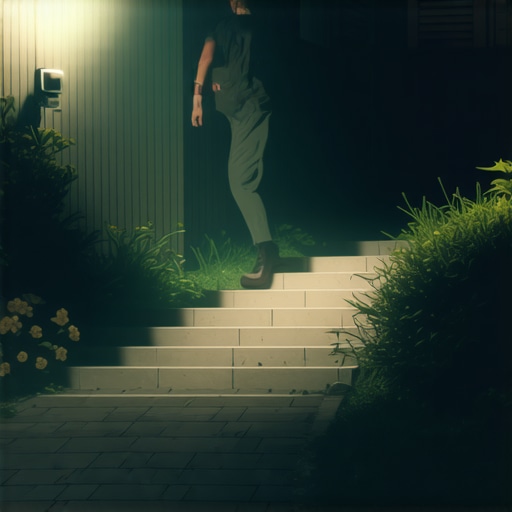
It happened on a Tuesday night. I was balancing a plate of ribs in one hand and a cold drink in the other, confidently navigating the path from my grill to the house. Then, the shadows played a trick on me. I thought I had reached the landing, but my foot found nothing but air. That jarring, bone-rattling thud when you hit a stair you didn’t see is something you never forget. It’s why I finally sat down and figured out a real solution for those treacherous backyard transitions.
That One Hidden Step You Always Miss in the Dark
We spend thousands on a beautiful custom composite decking project, yet we often treat lighting as an afterthought. I made the classic mistake of thinking a massive, blinding floodlight mounted 15 feet up on the siding would solve everything. All it did was create deep, pitch-black shadows where my feet needed to be. Today, I’m going to show you how to fix that for good using a motion-sensor hack that doesn’t require a degree in electrical engineering. [image_placeholder]
Is motion-sensor lighting actually worth the hassle?
I get it. You’re worried about every passing raccoon turning your backyard into a disco. But when you get the placement right—especially around lighting stairs for safety—it’s a total game changer. According to research from the Lighting Research Center, poor lighting placement often creates glare which actually reduces our ability to see hazards in the dark. By focusing on the transitions between your yard and your deck, you’re not just adding decor; you’re preventing a trip to the ER. My biggest early blunder was installing sensors that were too sensitive. I’d be sitting inside and see the lights flashing because a stray leaf blew by. I learned the hard way that positioning and zone control are everything. If you’ve ever felt like your deck stairs were more of a ladder than a walkway, you probably need to fix the rise or at least light it properly. Have you ever taken a tumble on your own deck because you couldn’t see the transition? I’d love to hear your story—tell me I’m not the only one who has had a close encounter with the patio floor. Now, let’s get into the specifics of how to light those transition zones without making your yard look like a construction site.
Stop Blinding Your Guests with Outdoor Interrogation Lights
I remember a Fourth of July party where I thought I’d be clever and mount a high-intensity halogen work light above the back door. Every time someone stepped outside, they were hit with a beam of light so bright they looked like they were in an interrogation room. My guests were literally shielding their eyes as they tried to navigate the steps. It was a disaster. That’s when I realized that lighting a deck is more like stage design than construction; you want to highlight the path, not the person. The first step to a functional system is moving away from overhead floodlights and toward low-voltage, localized sources. This approach is central to the best way to light stairs for safety without creating a glare. By keeping the light low to the ground, you illuminate the walking surface while keeping the night sky visible.
Pick a Color Temperature That Doesn’t Look Like a Hospital
Before you buy a single sensor, you have to talk about color. Many off-the-shelf LED motion lights have a blueish, ‘cool’ tint that makes a beautiful composite deck look like a sterile lab. To maintain that high-end feel, you need to learn how to pick the right deck lighting color temperature for a cozy feel. Aim for 2700K to 3000K. This warm amber glow mimics traditional incandescent bulbs and makes your outdoor space feel inviting rather than clinical. 
The Shin-High Placement Rule for Sensors
If you place your motion sensors too high, they’ll catch every bird and swaying branch. If you place them too low, they might miss a child or a pet. The sweet spot is about 18 to 24 inches off the deck surface—roughly shin-high. This height ensures the sensor picks up the movement of a human leg stepping toward the transition zone without being triggered by small debris. When you are designing safe and stylish stairs for outdoor decks in 2025, integrate these sensors into the stair stringers or the posts of your railing. For the lights themselves, I always recommend a ‘subtle glow’ approach. You can learn how to install deck lighting under the handrail for a subtle glow to provide constant visibility that brightens only when movement is detected.
Hide Your Wires Like a Pro
Nothing ruins a sleek deck design faster than a spaghetti mess of wires hanging from the joists. I spent three hours once trying to staple wires to the underside of a staircase only to have them sag the next week. Now, I treat wire management like an art form. Use the best low voltage transformers for large outdoor lighting projects to ensure you have enough power for long runs without voltage drop. When running cables, follow the same logic as how to wire a deck for sound without leaving visible cables—use the hollow spaces behind fascia boards or inside post sleeves. Before you finalize the wiring, ensure your stairs are stable; if the structure shifts, it can pinch and snap your wires. If you notice any movement, you might need to install the bracket that makes your deck stairs feel rock solid to prevent future maintenance headaches.Most homeowners—and even some contractors—believe that because composite decking is ‘engineered,’ it is more forgiving than wood. In my experience, the opposite is true. While wood has natural imperfections that mask a slightly uneven frame, composite is a snitch; it will highlight every 1/8-inch dip or crown in your joists. If you don’t take the time to ensure your substructure is perfectly level, those high-end boards will eventually look wavy. This is particularly noticeable at the stairs. I’ve seen beautiful projects ruined because the builder didn’t realize the joist spacing secret for a solid feeling composite surface is much tighter than traditional lumber.
Is your stair stringer spacing actually safe for composite treads?
According to the North American Deck and Railing Association (NADRA), structural failure in decks occurs most frequently at the stair-to-deck connection and due to improper stringer spacing. While code might allow for wider spacing with wood, composite often requires stringers to be set 9 to 12 inches on center to prevent that spongy, ‘diving board’ sensation. If you ignore this, you’ll likely run into the hidden reason your deck stairs are pulling away from the frame within two seasons. 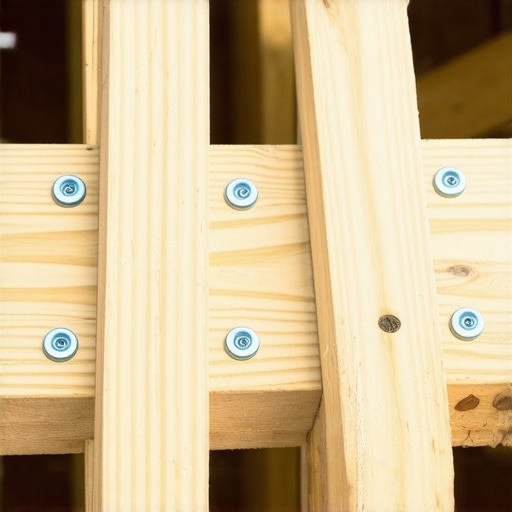 Beyond the spacing, there is the ‘oops’ factor of thermal expansion. I once watched a DIYer butt composite boards tight against the house siding in the winter. By July, the boards had expanded so much they buckled and popped the hidden fasteners right out of the tracks. You have to understand the hidden clip mistake that leads to buckling deck boards to avoid this. When working on the transitions between the yard and the deck, I always recommend creating seamless transitions where stairs are key elements. This involves more than just structural integrity; it’s about the visual flow. For instance, why we always double block the middle of a long stair run for stability is a nuance that separates a ‘deck builder’ from a true craftsman. It’s these small, hidden details—the extra blocking, the stainless hardware, the precise gap—that prevent your stairs from squeaking or swaying. Have you ever fallen into the trap of thinking a project was ‘finished’ only to realize the structural bounce was driving you crazy? Let me know in the comments. To truly elevate the project, I often suggest why your deck stairs should have closed risers for a modern look, which also provides a perfect mounting surface for the motion sensors we discussed earlier. By hiding the ‘guts’ of the stairs, you make the lighting pop even more. Always remember that the benefits of working with a professional deck builder often come down to these invisible technicalities that ensure your deck lasts 25 years instead of five.
The Specialized Tool Kit That Separates Pros from Amateurs
For years, I struggled with heavy lag bolts that required tedious pre-drilling and a massive impact wrench that would inevitably snap a head off when the wood got too dense. Then I discovered structural screws, and it changed my entire approach to framing. If you want to know why I use structural screws instead of lag bolts for stairs, it’s all about the superior shear strength and the specialized coating that prevents the metal from reacting with the chemicals in treated lumber. Another secret weapon in my truck is a dedicated depth-drive tool. This little attachment ensures every fastener is set to the exact same depth, providing the screw depth trick for a perfectly smooth deck surface that looks like a high-end interior floor. When you’re walking barefoot across your landing, you’ll thank me that there isn’t a single “proud” screw head waiting to catch a toe or snag a sock. 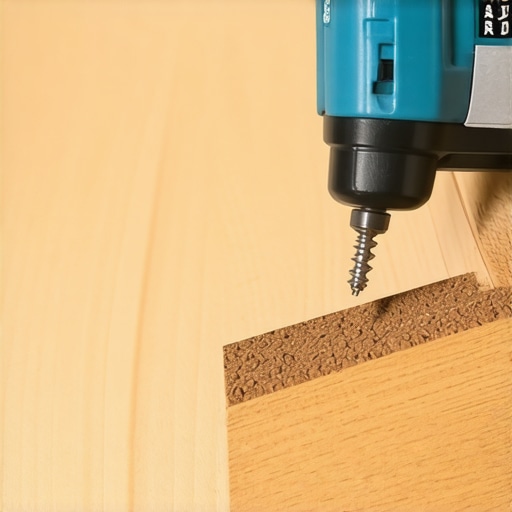
How do I keep my composite stairs looking new for decades?
The biggest myth in the outdoor living world is that composite is ‘no maintenance.’ It is actually ‘low maintenance,’ and understanding that distinction is the key to longevity. I’ve seen homeowners ruin a massive investment in ten minutes because they thought they could blast away spring pollen with a high-powered spray. You should never use a pressure washer on composite decks because the concentrated PSI can permanently etch the plastic cap, creating tiny scars that trap dirt forever. Instead, I stick to a soft-bristle brush and a pH-neutral soap. If you live in a high-moisture climate, your biggest enemy isn’t the sun; it’s the organic gunk that settles between the boards. Keeping those gaps clear ensures proper drainage and airflow, which is essential when you are choosing the right composite decking for durable low-maintenance outdoor areas. According to technical documentation from the AZEK Building Products research team, simply rinsing your deck twice a year prevents the micro-abrasions that lead to a dull, faded look.
The Shift Toward Mineral-Based Tech
Looking toward the future, I see the industry moving away from wood-flour composites entirely. Heat retention and thermal expansion have always been the Achilles’ heel of dark-colored decks, but new mineral-core technology is solving that. I am starting to choose mineral core decking for every poolside build because it provides nearly zero movement, meaning your miters stay tight and your stairs don’t develop those ugly gaps over time. This is a massive part of the composite decking trends 2025 the ultimate guide for outdoor enthusiasts. If your current stairs are already starting to feel a bit shaky, don’t wait for a structural failure to act. You can often fix a loose railing post without tearing up the deck boards by reinforcing the internal blocking. My advice for this weekend? Grab a flashlight and check the connection points where your stairs meet the deck frame. If you see even a 1/8th-inch gap, it’s time to tighten those structural fasteners before the party season begins.
Hard Truths About Backyard Transitions I Learned the Painful Way
Over the years, I’ve realized that the most common mistake is focusing on the ‘glow’ before the ‘foundation.’ If your stairs are noisy, no amount of motion-sensing LEDs will make them feel premium; you need to understand why your deck stairs squeak and how to silence them forever before you finalize the electrical. Additionally, I’ve found that the stair tread depth that feels safest for kids and the elderly often requires a bit more planning than standard code suggests. My biggest lightbulb moment? Realizing that the stair stringer measurement mistake that ruins your stride is often what causes those ‘near-falls’ in the dark, even when the lights are on. Don’t let a simple math error undermine your safety lighting.
My Go-To Toolkit for a Pro-Level Finish
When I’m outfitting a project for longevity, I lean heavily on a few specific resources. First, I’m increasingly moving away from standard materials and looking at why I choose mineral core decking for every poolside build—it simply stays flatter and tighter. Second, I always keep a box of structural screws on hand to ensure every joint is rock solid. Finally, I recommend consulting with a pro if you’re tackling a complex wrap-around; the benefits of working with a professional deck builder often pay for themselves in reduced maintenance costs down the road.
[image_placeholder]
Building More Than Just a Walkway
Your outdoor space is an extension of your home, and the transitions are where the real magic (or the real danger) happens. By taking the time to set up localized motion sensors and ensuring your substructure is as solid as your finish boards, you’re creating a sanctuary that lasts. As we look toward innovative outdoor living ideas with composite decking in 2025, safety and technology are becoming more integrated than ever. Now it’s your turn—grab a tape measure and check those steps. Have you ever struggled with getting your motion sensors to cooperate without lighting up the whole neighborhood? Let me know below.