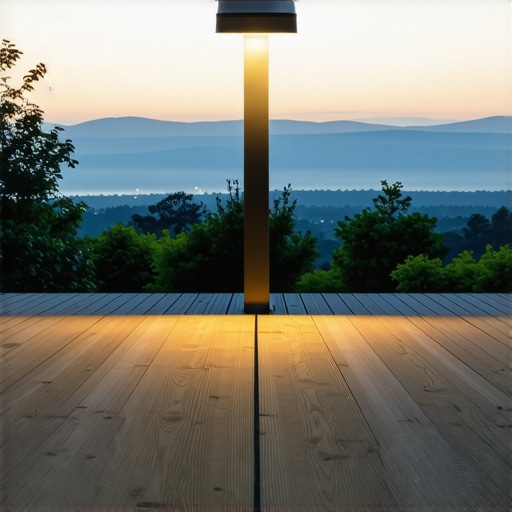
I remember standing in the pitch black of my backyard last October, squinting to see where my deck ended and the lawn began. My custom composite decking looked incredible during the day, but at night, those far posts near the garden were basically invisible. I actually tripped over a stray garden hose because I couldn’t see the transition. I spent a week researching how to pick the right deck lighting color temperature and calculating the cost of running low-voltage wires through 40 feet of rocky soil. It was a mess. One of my neighbors even suggested I just carry a flashlight every time I wanted to check the grill. I knew there had to be a better way to handle those remote corners of my outdoor living area without digging up my entire landscape.
Stop Digging Holes You Don’t Need
Let’s be honest: nobody actually enjoys trenching. My biggest mistake early on was thinking I could just “tough it out” and dig a narrow channel for hardwired lines. Halfway through, I hit a massive root from my favorite oak tree and realized I was about to spend a fortune on a low voltage transformer just to light up two distant posts. That’s when the lightbulb—well, the solar LED—went off. For distant posts, solar caps aren’t just a backup plan; they are the primary solution. They save your lawn from being sliced up and your wallet from a specialized electrician’s bill. Plus, modern solar technology has moved way past those flickering dollar-store stakes we all remember.
Can These Tiny Panels Really Last All Night?
I get the skepticism. Most people assume solar means dim, blueish light that dies by 11 PM. I used to think the same until I realized the secret is all about the battery capacity and the placement. According to the National Renewable Energy Laboratory (NREL), solar energy harvesting has become significantly more efficient in diffuse light conditions, meaning even a partially shaded post can often collect enough juice to stay lit for 6-8 hours. It’s not about having a mini-sun on your post; it’s about lighting stairs for safety without creating a blinding glare that ruins the vibe. [IMAGE_PLACEHOLDER]
Why Wireless Wins for Remote Outdoor Living
When you’re working with a professional deck builder, they’ll often push for hardwired because it’s “permanent.” But for that one lone post at the end of innovative stairs solutions, hardwiring is overkill. Solar caps give you the freedom to transform your outdoor living without the permanent commitment of buried copper that eventually corrodes or gets chewed by squirrels. Have you ever spent a whole weekend digging a trench only to find out you accidentally cut your irrigation line or reached a dead end? Let me know—I need to know I’m not the only one who has learned the hard way that sometimes, the sun really does provide the best solution.
A Practical Way to Light Your Yard Without a Trench
You don’t need to be a master electrician to turn a pitch-black corner of your yard into a usable space. The secret is treating your solar lighting project like a strategic game of chess rather than a chore. When I first tried to light up the back edge of my property, I just bought a pack of lights and stuck them everywhere. It was a disaster. Half of them never turned on because I didn’t respect the sun’s path. Now, I follow a three-step method: scout, select, and secure. This approach ensures your outdoor living space stays illuminated long after the sun goes down, without you ever having to touch a shovel.
Find Where the Sun Hits Your Deck Posts
Before you buy a single light cap, you need to watch your deck like a hawk for one full Saturday. Solar panels are like marathon runners; they need a solid “breakfast” of direct sunlight to finish their “night shift.” I once spent hours installing high-end caps on the posts near my tree line, only to realize the oak canopy blocked 90% of the light. By 8 PM, they were dead. Now, I mark the posts that get at least six hours of unobstructed light. If a post is in permanent shadow, that’s where you might actually need to consider the motion sensor lighting hack for safer backyard transitions or a small hardwired run. 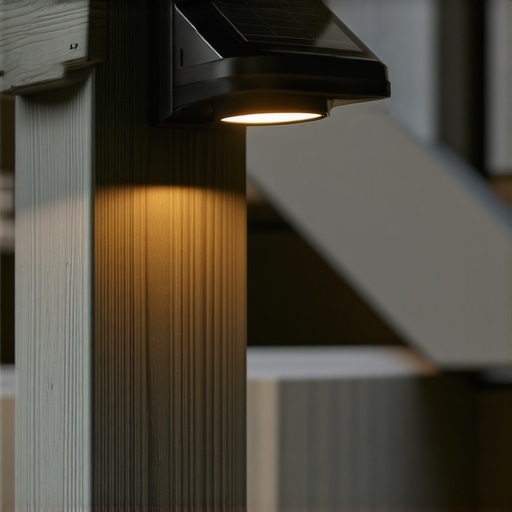
Choose Your Caps Based on Durability and Heat
When you are choosing the right composite decking for durable low maintenance outdoor areas, you also need to think about how those materials interact with the heat generated by lighting fixtures. I’ve seen cheap, thin plastic solar caps literally warp and discolor a beautiful composite decking post sleeve because they couldn’t handle the UV exposure. Look for caps with glass housings and replaceable lithium-ion batteries. Aluminum housings are even better because they dissipate heat and match the longevity of a professional deck builder installation. It’s better to buy four high-quality units that last five years than twenty cheap ones that end up in a landfill by next summer.
Secure the Connection for Long-Term Safety
One mistake I see constantly is homeowners just “setting” the cap on the post. Wind, squirrels, and heavy rain will knock those loose in a heartbeat. When designing safe and stylish stairs for outdoor decks in 2025, you want every component to feel solid. Use the small stainless steel screws provided with the kit. If you’re worried about stairs safety, specifically look for caps that throw light downward rather than outward. This is the best way to light stairs for safety without creating a glare that can momentarily blind you as you step down. I learned this when I nearly missed the bottom step because a bright, un-shielded solar cap was shining right in my eyes. Always aim the light where your feet are going to land, especially near the transition where your deck stairs need a concrete landing pad at the bottom to prevent tripping on uneven grass.
It’s easy to get caught up in the aesthetics of choosing the right composite decking for durable low maintenance outdoor areas, but there is a hidden nuance that most DIY guides completely ignore: the skeleton beneath the skin. Everyone says that 16-inch joist spacing is perfectly fine because that’s what standard building code requires. In my experience, if you want a deck that feels like solid ground rather than a trampoline, you need to ignore that “standard.” Composite boards are naturally more flexible than traditional pressure-treated lumber. When I’m working as a deck builder, I always tell people the joist spacing secret for a solid-feeling composite surface is actually dropping down to 12 inches on center. It adds a bit to your lumber bill, but it’s the difference between a high-end feel and a cheap, bouncy mess. Have you ever walked on a deck that felt a bit “soft” or springy? Let me know in the comments if you’ve fallen into this common trap.
The Thermal Expansion Trap That Wrecks Joists
The “oops” factor usually hits about six months after the project is finished, specifically when the seasons change. I call it the expansion trap. Unlike wood, which mostly shrinks as it dries, composite decking expands and contracts significantly with temperature fluctuations. A study published by the American Journal of Engineering and Applied Sciences notes that polymer-based composites can have thermal expansion coefficients significantly higher than natural timber. If you don’t account for this physics, you’ll end up making the hidden clip mistake that leads to buckling deck boards. I’ve seen beautiful installs literally rip their own stainless steel screws out because the homeowner didn’t leave a sufficient gap at the butt-joints or the house connection.
Why Does My Expensive Composite Deck Squeak Like an Old Porch?
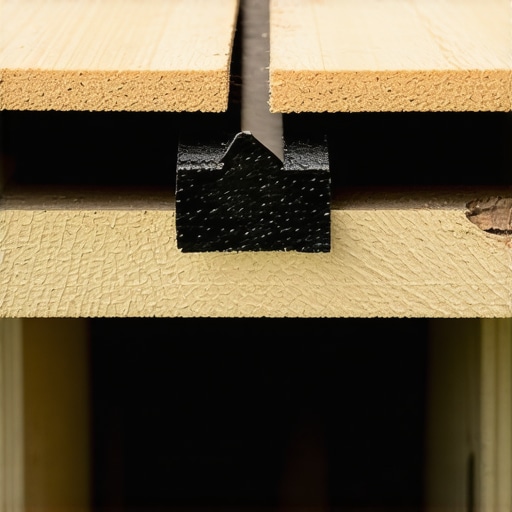
It is absolutely infuriating. You spend thousands on custom composite decking, yet every step sounds like a scene from a haunted house movie. This noise usually happens because of friction between the plastic-capped boards and the wooden joists. This is exactly why I paint the tops of my joists black before installing composite or apply specialized butyl joist tape. It’s not just for moisture protection; it acts as a silencer. If you skipped this step during the build, you are likely wondering how to stop your deck boards from creaking in the summer heat. Unfortunately, the fix is often much harder than the prevention, usually requiring you to back out fasteners and apply lubricants or tape after the fact.
Stop Your Stairs From Feeling Like a Ladder
When you are designing safe and stylish stairs for outdoor decks in 2025, you have to be even more critical of the framing than the surface. I’ve seen too many people use standard wood for deck railings or stair stringers that eventually fail because they aren’t supporting the weight of heavier, high-density composite treads. If you really want a professional-level finish, you need to understand why we use double joists under every composite seam for a flat floor. This prevents the ends of the boards from dipping or unevenly rising over time. Furthermore, keep an eye on your structural integrity; why your deck stair stringers are cracking at the throat is often a result of over-notching for stairs that weren’t designed for the load-bearing requirements of outdoor living today. Don’t let these invisible choices undermine your investment.
Stop Stripping Your Screws with a Dedicated Impact Driver
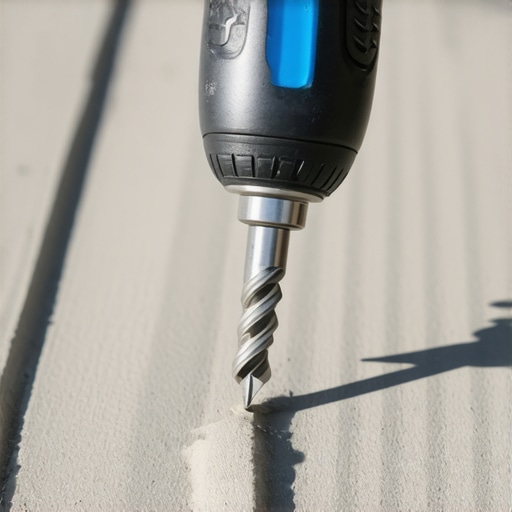
If there’s one thing I’ve learned from years of being a deck builder, it’s that your choice of power tools is just as important as the boards themselves. I see so many DIYers try to install an entire outdoor living space using a standard cordless drill. While a drill is great for making holes, it lacks the rotational torque necessary for driving long fasteners into high-density composite and pressure-treated framing. You’ll end up with cam-out—that annoying sound of the bit slipping and stripping the screw head. Switching to a high-quality impact driver changed my life. I personally recommend using one with a brushless motor for consistent power delivery, especially when you are working with a professional deck builder or aiming for that level of finish. Use a specialized depth-drive bit to ensure every screw is perfectly flush; the screw depth trick for a perfectly smooth deck surface prevents those tiny, sharp plastic burrs known as mushrooming.
How do I keep my composite deck looking brand new for a decade?
Maintenance for composite decking isn’t about labor-intensive staining; it’s about smart prevention. I’ve seen homeowners ruin a five-figure investment in twenty minutes because they thought they were being helpful. Rule number one: why you should never use a pressure washer on composite decks is the most important lesson you will learn. The high pressure can etch the surface, creating permanent scars and opening up the pores of the material to mold. Instead, a simple solution of mild soap and warm water with a soft-bristled brush is all you need. For tougher organic stains, like the best way to clean bird droppings off dark brown composite boards, focus on quick spot-cleaning rather than abrasive scrubbing. If things feel a bit wobbly over time, don’t panic. Knowing how to fix a loose railing post without tearing up the deck boards can save you an entire weekend of unnecessary demolition.
The Critical 10-Point Safety Check
Authority isn’t just about how the deck looks; it’s about making sure it stays standing. According to the North American Deck and Railing Association (NADRA), nearly half of the 60 million decks in the United States are over 20 years old and may be structurally compromised. Every spring, I take a flashlight and go underneath the joists. I’m looking for corrosion on the connectors and checking the ledger board—where the deck meets the house. This is the critical connection. If you see rust or wood rot there, that is a high-priority fix. I’ve found that using hidden fasteners for high traffic entryways not only looks better but also keeps the fastener heads protected from the direct elements, extending their lifespan compared to top-down screws.
Smart Technology is Changing the Way We Build
I believe the future of outdoor living is heading toward total integration. We are moving away from just lighting and toward experience management. Think integrated sensors that adjust the color temperature of your stairs lighting based on the time of night, or built-in drainage systems that turn the space under your deck into a dry, finished room. If you want to stay ahead of the curve, keep an eye on composite decking trends for 2025, which highlight the shift toward more sustainable, mineral-core materials that resist heat better than ever before. My advice? Start small by upgrading to hidden fasteners or a specialized depth bit on your next repair. You’ll be amazed at how much of a difference the right tool makes in the final professional feel of your space.
The Hardest Lessons from My Years in the Woodchips
After years of trial and error, I have realized that the most expensive materials cannot save a poorly framed structure. I used to think 16-inch centers were perfectly fine for every project, but the joist spacing secret for a solid-feeling composite surface is actually much tighter than the standard code requires. Another lightbulb moment for me was realizing that composite decking is essentially a living, breathing material; if you forget to account for thermal expansion, you will likely make the hidden clip mistake that leads to buckling deck boards when the summer heat hits. Finally, always remember that silence is a luxury. If you do not want your porch to sound like a haunted house, you have to learn why your deck stairs squeak and how to silence them forever before you lay down the final boards.
My Go-To Toolbox for a Professional Finish
To get that high-end look that neighbors envy, I always reach for my brushless impact driver—it is absolutely non-negotiable for driving deep fasteners without stripping the heads. I also rely heavily on the North American Deck and Railing Association (NADRA) for their safety checklists; they are the gold standard for ensuring a structure is sound. For a truly clean look, I never skip the screw depth trick for a perfectly smooth deck surface to avoid those ugly plastic burrs that can ruin the feel of bare feet on your new space. Lastly, if you are looking for inspiration for next season, I highly recommend checking out composite decking trends for 2025 to see how mineral-core technology is changing the game.
Your Outdoor Oasis Is Just One Board Away
Building your dream space is a marathon, not a sprint. Whether you are tackling this as a DIY project or working with a professional deck builder, the ultimate goal is to create a sanctuary where memories are made. Take your time with the hidden details—the joist tape, the structural screws, and the proper drainage—and you will be rewarded with a space that stays beautiful for decades. It is time to stop dreaming about your perfect outdoor living area and start making it a reality. If you ever feel overwhelmed by the technical side of things, don’t hesitate to contact us for expert guidance. Have you ever encountered a surprise under your old deck boards that almost derailed your entire project? Let me know in the comments below!