I was standing there, tongs in one hand and a plate of steaks in the other, when my neighbor stepped out onto my deck. My grill actually wobbled. Not a little vibration, mind you, but a full-on oscillating wave that made me grab the railing for dear life. It’s embarrassing. You invite people over for innovative outdoor living, and they end up feeling seasick. I realized then that why your deck feels bouncy isn’t always about the number of posts you have; it’s about how the frame handles the weight. If you’ve been dreading a massive renovation just to stop the sway, I have good news: we can tighten things up without pouring a single drop of concrete.
Your Deck Shouldn’t Feel Like a Waterbed
When a deck has that trampoline effect, most folks assume they need to call a professional deck builder to pour five more concrete footings. But let’s be real: digging holes is the worst part of any project. I once spent three days in the mud trying to fix a sag, only to realize I’d made the classic post-base mistake. I was treating the symptom, not the disease. The disease is usually excessive joist span or a lack of lateral stiffness. Have you ever felt like you were walking on a tightrope while just trying to get to your patio chair? Tell me, has your deck ever made your guests spill a drink just by walking past them?
Is a shaky frame actually going to collapse?
The short answer is: probably not immediately, but it’s telling you something is wrong. According to the American Wood Council, deck joists are designed to meet specific deflection limits, which is a fancy way of saying they shouldn’t bend too much under a normal load. When they exceed this, the wood starts to spring. It’s not just annoying; that constant movement can eventually pull fasteners loose. I’ve seen beautiful composite decking ruined because the subframe was too flexible, causing the boards to shift and creak. You might also notice issues with your outdoor stairs if the main platform is bouncing, as it puts extra stress on the connection points.
Stop the Sway with Strategic Mid-Span Blocking
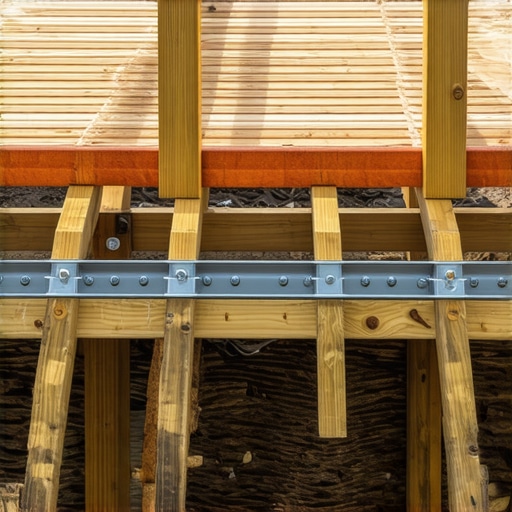
If you want to kill the bounce without touching a shovel, you need to talk about blocking. It’s the secret sauce I use whenever I want a rock-solid floor. By wedging short pieces of joist material between your existing joists, you force them to work together. Instead of one board taking your full weight, the entire section shares the load. It’s the same reason we always double block the middle of a long stair run for stability. This simple hardware-store fix turns a collection of individual boards into a single, rigid structure. It works even better if you’ve followed the joist spacing secret for your specific decking material. Grab your impact driver and some structural screws, because we’re about to turn that trampoline back into a solid floor.
Line Them Up for a Rock Solid Floor
If you want to kill the bounce, you have to stop the joists from acting like individual diving boards. I remember a project in Reeds Spring where the homeowner had a beautiful second-story view but a deck that felt like a trampoline. Every time his golden retriever ran to the railing, the patio table would rattle. We went underneath and installed staggered mid-span blocking. By cutting short blocks of 2×8 and wedging them tightly between the joists, we created a rigid skeleton. This forces the load to spread across five or six boards instead of just the one you are standing on. It’s the same logic behind why we use double joists under every composite seam for a flat floor. When you screw these blocks in, don’t just use random leftovers; use the same pressure-treated material as your frame and stagger them slightly so you can drive screws directly through the joist into the end of the block.
Beef Up Your Joists Without a Shovel
Sometimes blocking isn’t enough because the joists themselves are just too thin for the distance they are spanning. This is where sistering comes in. You essentially take a second board of the same size and bolt it directly to the side of the existing weak one. I once saved a deck that was built with undersized lumber by sistering every third joist. It felt like walking on a concrete sidewalk afterward. If you’re working with choosing the right composite decking, keep in mind that these materials are heavier than wood. They need that extra support. While you’re under there, it’s a great time to check for hardware issues; I always recommend why we always use stainless steel hardware to ensure those connections don’t rot out before the wood does.#IMAGE_PLACE_HOLDER_B#
Fixing the Sway That Makes You Dizzy
Vertical bounce is one thing, but that side-to-side wobble is what really unnerves people. This is lateral movement, and it usually happens because the deck isn’t braced diagonally. Think of a cardboard box with the top and bottom flaps open; it collapses easily until you tape it shut. To ‘tape’ your deck, you can install a diagonal brace across the underside of the joists. I prefer using a 2×4 or a specialized metal strap running from one corner of the frame to the opposite corner. This simple addition stops the frame from ‘racking’ or shifting out of square. It is a vital step when transforming your space into a safe environment for large gatherings.
Why Structural Screws Beat Standard Nails
If you’re still using 16d nails to hold your frame together, that might be your problem. Nails have great shear strength, but they back out over time as the wood shrinks and swells. This creates tiny gaps that lead to big creaks. This is why I never nail deck boards and prefer structural screws for the frame itself. These screws bite into the wood and pull the members together with incredible force. If you’ve ever wondered why your deck stairs squeak, it’s almost always a loose fastener or a lack of blocking. Using a high-quality structural screw ensures that the stiffening you do today stays tight for the next decade, even in the humidity of the Ozarks. Don’t forget to use the screw depth trick to keep everything flush so you don’t create trip hazards while trying to fix the stability.Most homeowners (and even some rookies) think that if a deck is bouncy, they just need to add more 6×6 posts. It’s the most common myth in the industry. But here’s the truth: you can have a post every four feet, and if your joists are undersized or your spans are too long for the material, you’re still going to feel that ‘diving board’ effect. In my experience, the stiffness of the frame is a product of geometry and connection strength, not just vertical support. This is particularly true when you’re transforming your outdoor living with custom composite decking ideas. Composite is heavy—sometimes twice the weight of cedar—and it lacks the structural rigidity of natural wood. If you don’t account for that dead load by shortening your joist spans or doubling up, your ‘sturdy’ frame will feel like a trampoline in six months. One major ‘oops’ factor I see constantly is the misuse of hidden fasteners. People love the clean look, but the hidden clip mistake that leads to buckling deck boards is a real project-killer. If those clips aren’t seated perfectly or the joist isn’t perfectly flat, the boards can slide slightly, which translates to a micro-vibration underfoot. You think it’s the frame, but it’s actually the surface shifting. Also, if you’re trying to build something truly permanent, consider the hidden benefit of using steel deck framing instead of wood. Steel doesn’t crown, it doesn’t warp, and it is exponentially stiffer than even the best pressure-treated lumber.
Can your hardware actually make the deck feel stiffer?
Absolutely. According to data from the North American Deck and Railing Association (NADRA), most deck structural issues stem from the connection points, particularly the ledger and the joist-to-beam interface. If your hangers aren’t fully nailed or you’re missing structural screws at the rim joist, the frame will ‘rack’ ever so slightly with every step. This movement absorbs energy and creates that ‘soft’ feeling. When I’m working as a professional deck builder, I insist on over-fastening these areas. I even go as far as why I paint the tops of my joists black before installing composite—not just for aesthetics, but to protect the wood from the moisture traps that eventually soften the grain and loosen the screws over time. #IMAGE_PLACE_HOLDER_C# Another nuance people miss is the interaction between stairs and the main deck. A poorly supported stringer acts like a giant lever, pulling on the rim joist every time someone climbs up. Avoid the stair stringer measurement mistake that ruins your stride and ensure your landing is rock solid. If the stairs move, the deck moves. It is all one interconnected system. Have you ever fallen into this trap where you fixed one thing only to realize the wobble was coming from somewhere else? Let me know in the comments.
Gear That Actually Makes a Professional Difference
I’ve spent thousands of dollars on tools over the years, but only a handful truly changed the game for my results. If you’re tired of fighting warped boards, the first thing I’d tell you to grab is a board-straightening tool like the Bowrench. It’s a simple lever that lets me pull even the nastiest, twisted pressure-treated joist into alignment while I’m driving home screws. This is how you achieve that professional finish where every line is laser-straight. When it comes to the actual deck surface, I’ve moved away from standard impact drivers for the final finish. I use a dedicated screw gun with a depth-setting nosepiece because mastering the screw depth trick is nearly impossible when you’re just ‘eyeballing’ it with a standard trigger. Consistency is what separates a DIY weekend project from high-end innovative outdoor living.
Stop Your Investment From Rotting From the Inside Out
Structural health isn’t a ‘set it and forget it’ situation. The biggest enemy isn’t the weight of the furniture; it’s the moisture trapped between your deck boards and the joists. I’ve seen 10-year-old decks that looked perfect on top but were basically compost underneath. This is the hidden cost of skipping joist tape on a new build. I use a high-quality butyl tape to cover the top of every single joist and beam. It creates a waterproof seal around every screw that penetrates the wood. If you’re working on an existing structure, you need to ensure proper airflow. Learn how to vent the space under your deck to prevent mold and wood rot. If air can’t move, the wood never dries out, and even the best stiffening techniques won’t save a frame that’s turned into a sponge. Make sure you also take the time to seal the end cuts of pressure-treated lumber every time you make a cross-cut. #IMAGE_PLACE_HOLDER_D#
How do I maintain my structural stability over time?
Once you’ve addressed the bounce, you need a routine checkup. I suggest a seasonal walkthrough to inspect the connections. Use the simple way to check if your deck ledger is pulling away from the house siding. If the ledger fails, the whole deck fails. Look for any signs of rust on fasteners and ensure your outdoor stairs aren’t beginning to pull away or sag at the base. According to the American Wood Council’s DCA 6 guide, ledger flashing is one of the most critical failure points—if you miss the seal at the wall, the rest of your maintenance won’t matter. Check for debris buildup between boards, which can trap water and cause the wood to soft-rot, eventually loosening your stiffening blocks.
The Next Evolution of Outdoor Living
Looking ahead, I predict we are going to see a massive shift toward pre-engineered steel frames and modular components. The labor cost of traditional wood framing is rising, and homeowners are getting tired of the maintenance. I’m already seeing robotic site-surveying tools that can map a backyard with millimeter precision, making the ‘shaky deck’ a thing of the past. For now, the best thing you can do is focus on the fundamentals of connection and protection. Go grab a roll of butyl joist tape and a few structural screws for your next repair—your feet will thank you for the extra decade of stability.
The Hardest Lessons I Learned About Deck Rigidity
After years of fixing frames that felt more like trampolines than floors, I realized that many of the ‘standard’ methods simply aren’t enough for the weight of modern materials. First, never assume that meeting the bare minimum building code will result in a stiff floor. Code is about preventing collapse, not preventing vibration. If you want a floor that feels like concrete, you have to overbuild. Second, I learned that the stair stringer measurement mistake that ruins your stride is often connected to the main deck’s sway; if the stairs aren’t anchored perfectly, they act as a lever that pulls on the whole structure. Finally, remember that wood shrinks. What is tight in July might be rattling by January if you didn’t use structural screws to keep those connections compressed.
Gear That Stops the Shake for Good
If you’re ready to dive under the boards, there are a few things I never go without. For one, I always keep a roll of butyl tape handy to avoid the hidden cost of skipping joist tape on a new build. It’s the only way to ensure your new stiffening blocks don’t rot out at the screw holes over time. I also highly recommend checking the resources at the North American Deck and Railing Association (NADRA) for their safety checklists. For the actual work, a Bowrench is your best friend for forcing warped joists into alignment before you lock them down with blocking. Finally, consider whether designing safe and stylish stairs for outdoor decks in 2025 requires extra lateral bracing—I find that a simple diagonal 2×4 on the underside of the stairs can fix a lot of ‘whole-deck’ wobble.
Your Path to a Rock-Solid Outdoor Sanctuary
Fixing a bouncy deck is about more than just structural integrity; it’s about the peace of mind that comes when your guests can walk across the boards without the patio table rattling. By focusing on blocking, lateral bracing, and high-quality fasteners, you’re not just repairing wood—you’re creating innovative outdoor living spaces that will last for decades. Don’t let a little sway keep you from enjoying your backyard. Grab your drill, get under there, and tighten things up. You’ll be amazed at how much better that first morning coffee tastes when the floor doesn’t move under your feet. Have you ever struggled with a deck that felt like a trampoline or wobbled when someone walked by? Let me know in the comments below!