It was 11 PM last Tuesday. I was trying to sneak out to the grill to check on some slow-smoking ribs without waking the kids. Every step I took sounded like a starter pistol. Creeeeeak. Pop. Groan. My beautiful outdoor space was betraying me. It’s embarrassing, isn’t it? You spend time and money creating stunning outdoor living only to have it sound like a rickety pirate ship. That noise doesn’t just ruin the mood; it makes you wonder if the whole thing was built on a prayer. I’ve spent years helping folks turn their backyards into sanctuaries, and let me tell you, a noisy deck is the fastest way to lose that ‘oasis’ feeling.
Stop Living with a Noisy Deck
I’ve been exactly where you are. In my early days, I thought the solution was ‘more is better.’ I pounded dozens of extra nails into the boards, thinking I could just brute-force the wood into submission. Big mistake. Why I never nail deck boards anymore is a lesson I learned through blistered hands and even louder squeaks. Those nails eventually work their way back out as the wood breathes, creating a gap that acts like a violin bow against the joist. We’re going to fix this today, and we’re going to do it without tearing the whole thing down. Whether you have traditional wood or you are following composite decking trends, the physics of the squeak are surprisingly similar.
Is a creaky deck actually dangerous?
This is the question I get most often from nervous homeowners. Usually, the noise is just a sign of friction, not an imminent collapse. However, it can point to underlying issues like stairs pulling away from the frame or joists that have started to crown. According to the USDA Forest Products Laboratory, wood can change dimensions by up to 10% depending on moisture levels. That constant swelling and shrinking is the heartbeat of your deck, but it shouldn’t be its voice. If the noise is coming from your steps, it might be because of a stair stringer measurement mistake that’s putting uneven pressure on the wood.
Finding the Source Before You Lose Your Mind
If you’ve ever felt like your deck stairs feel like a ladder, you know that structural issues feel different than noise issues. Creaks are usually a ‘fit and finish’ problem. We need to look at the joist spacing secret and how those boards are actually sitting on the frame. If you’re working with a skilled deck builder, they’ll tell you that silence is built from the joists up. Have you ever had a guest stop mid-sentence because your deck let out a piercing shriek? Tell me I’m not the only one who has felt that ‘quiet’ shame. We’re about to dive into the practical, hands-on steps to silence those boards for good.
Track the Squeak Like a Pro
Finding the noise is a two-person job. I call it the ‘deck dance.’ I have one person walk slowly across the surface while I’m underneath with a flashlight and a piece of chalk. When the wood groans, I circle the spot. Usually, it’s a gap between the joist and the board—a tiny canyon that allows the wood to vibrate. If you’re working on modern composite decks, this gap is often caused by thermal expansion. I remember a job last summer where a homeowner thought his frame was rotting, but it was just a few loose clips. Avoid the hidden clip mistake that lets boards shift; if those clips aren’t seated perfectly, your deck becomes a percussion instrument every time you walk to the grill.
Why Your Fasteners Are Failing You
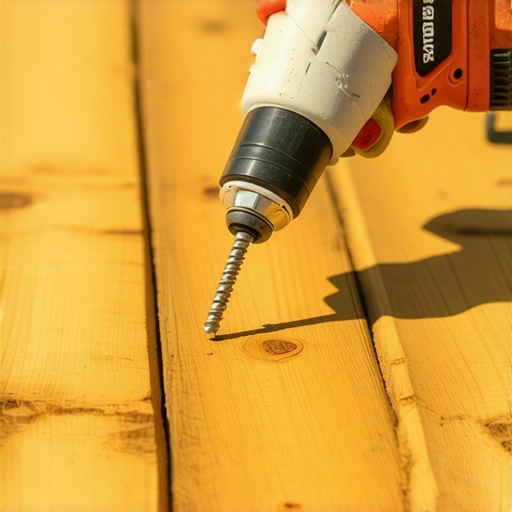
If you find a board that moves, don’t just reach for a hammer. Nails are the enemy of silence. They have smooth shafts that eventually lose their grip as the wood cycles through wet and dry seasons. Instead, you want to use high-quality screws with a reverse-thread feature. This pulls the board down tight and keeps it there. If you run into a rusted or snapped head, make sure you have the best tool for removing a single stripped deck screw before you start prying and damaging the wood. It’s about surgical precision, not brute force.#IMAGE_PLACE_HOLDER_B#
Stop the Friction with Joist Tape
The ‘secret sauce’ for a quiet build is something most DIYers skip because it adds an hour to the job. Joist tape creates a rubbery gasket between the pressure-treated frame and the decking. This prevents that wood-on-wood rubbing that sounds like a haunted house. While it’s easiest to install on a new build, you can often slide thin strips of flashing or specialized shims into noisy gaps in an existing structure. People often underestimate the hidden cost of skipping joist tape until they’re lying awake listening to the wind rattle their floorboards.
Fix Those Scary Stair Squeaks
Stairs are notorious for noise because they take the most impact. If your treads are groaning, it’s likely the connection between the stringer and the riser. I’ve found that swapping out standard fasteners for something beefier makes a world of difference. This is why I use structural screws instead of traditional bolts; they bite deeper and don’t wiggle loose over time. I once fixed a set of wrap-around stairs that sounded like a drum kit just by adding a few structural screws and a bead of subfloor adhesive in the joints. It wasn’t pretty work, but the silence was golden. You want your stairs as key elements of your home, not a warning system for when the teenagers are sneaking back in.
The Maintenance-Free Lie Most People Believe
If you bought into the idea that composite is ‘install and forget,’ I have some bad news. While you won’t be sanding or staining, the physics of these boards are actually trickier than wood. In my years as a professional deck builder, I’ve seen more failed composite decks than wooden ones, usually because people treat them like plastic lumber that never moves. Choosing the right composite decking is only half the battle; understanding how it breathes is the other. Unlike wood, which expands mostly in width as it absorbs moisture, composite expands significantly in length as it absorbs heat. Everyone tells you that 16-inch joist spacing is fine because that’s what the building code says. In my experience, if you want a premium feel, you need the joist spacing secret: drop it to 12 inches on center. This prevents the ‘spongy’ trampoline effect that makes even expensive boards feel cheap.
Will your boards buckle in the July sun?
Research published in the Journal of Materials in Civil Engineering highlights that Wood-Plastic Composites (WPCs) have a high coefficient of thermal expansion. If you butt those boards tight against each other on a mild 70-degree day, they will have nowhere to go when the thermometer hits 95. This is the ‘Oops’ factor that ruins stunning outdoor living spaces. You end up with ‘humping’—where the boards arch up off the joists because they are physically being crushed against the rim joist. To avoid this, you must master how to stop your deck boards from creaking and buckling by leaving precise expansion gaps according to the manufacturer’s temperature chart. #IMAGE_PLACE_HOLDER_C#
The Pro Trick for a Flawless Finish
One nuance that separates the pros from the weekend warriors is how we handle the aesthetics of those necessary gaps. I always recommend learning how to frame a picture frame border for your deck. Not only does it look high-end, but it also allows you to hide the cut ends of the boards, which are often porous and prone to staining. Another ‘secret’ is the visual prep beneath the surface. Why I paint the tops of my joists black is a step most DIYers skip because they think it’s extra work. But without it, the bright, yellow pressure-treated wood peeks through the dark gaps of your expensive composite, making the whole project look unfinished. This level of detail is what makes designing your dream outdoor space actually worth the investment.
Don’t Ignore the Foundation for Your Stairs
When we talk about innovative stairs solutions, the mistake I see most often isn’t the carpentry—it’s the ground. People build beautiful composite steps and then rest the stringers on a bed of gravel or directly on the grass. Over time, that soil settles, and suddenly your stairs as key elements of the home become a dangerous tripping hazard. This is why your deck stairs need a concrete landing pad. It provides a stable, level base that keeps the stringers from rotting and, more importantly, keeps them from shifting and causing those piercing squeaks that ruin the peace of your backyard. A skilled deck builder won’t even start the frame until that landing is poured. Have you ever fallen into the ‘maintenance-free’ trap and ended up with buckling boards or sinking stairs? Let me know in the comments, and we can figure out the fix together.I’ve learned that the difference between a deck that lasts thirty years and one that fails in five isn’t just the lumber; it’s the gear in your truck and the care you provide after the last screw is driven. I never start a build without my dedicated depth-control driver. It’s a specialized attachment that ensures every fastener hits the exact same level, preventing those annoying ‘trip hazards’ created by proud screw heads. If you’re tackling this yourself, mastering the screw depth trick for a perfectly smooth deck surface is non-negotiable. I use a depth-sensing nosepiece specifically because it prevents ‘mushrooming’—that ugly effect where composite material displaces and pushes up around the screw hole. It’s these small, technical wins that determine if your deck looks like a pro built it or if it was a rushed weekend job.
The Specialized Tools That Save My Knees and Your Boards
Beyond the driver, I swear by a board-straightener tool. Even the most expensive composite boards can have a slight crown or bow right out of the crate. Instead of fighting them with a pry bar, this tool locks onto the joist and let me pull the board into a perfect 3/16-inch gap with one hand. Efficiency is the name of the game. Using the right equipment is one of the primary benefits of working with a professional deck builder who has already invested thousands in niche hardware that you might only use once. #IMAGE_PLACE_HOLDER_D#
How do I maintain my deck so it looks new for a decade?
The ‘maintenance-free’ label is the biggest marketing spin in the industry. You still need to clean it, just differently than wood. Every spring, I tell my clients to put away the heavy machinery. You’ll understand why you should never use a pressure washer on composite decks the moment you leave a permanent, fuzzy scar in the expensive PVC coating. A simple garden hose, some pH-neutral soap, and a soft-bristle brush are your best friends. If you had a rowdy summer BBQ and dropped a burger, you need to know how to get grease stains off your composite deck before the midday sun bakes it into a permanent mark. Use a degreaser like Dawn dish soap immediately. According to technical bulletins from the North American Deck and Railing Association (NADRA), even the most durable synthetic decks require a yearly inspection of the ledger board and fasteners to ensure the house-to-deck connection remains water-tight and structurally sound.
Why the Future of Outdoor Living is Built on Metal
Looking ahead, the trend is moving toward total ‘rot-proof’ construction. We are seeing a massive shift away from pressure-treated lumber for the skeleton of the deck. I predict that within the next five to ten years, steel floor joists will become the standard for high-end builds. It’s why I choose powder-coated steel over wood for modern deck railings and increasingly for the frames themselves. Steel doesn’t warp, it doesn’t rot, and it stays perfectly flat forever, which is the only way to ensure your composite boards don’t develop those ‘waves’ over time. If you want to take a massive step toward a pro-level finish today, try the simplest trick in my book: why I paint the tops of my joists black. It’s a five-dollar can of paint that makes the entire substructure disappear, leaving only the beauty of your decking visible.
What I’ve Learned from Twenty Years of Deck Squeaks and Sorrows
After decades of building and fixing, a few things have become crystal clear. First, the ‘noise’ your deck makes is often the wood trying to tell you it was installed too tight or with the wrong fasteners. While many homeowners fear structural failure, a creaky board is usually just a symptom of seasonal movement. Second, never ignore the substructure; deck builder insights designing your dream outdoor space always start with what you can’t see. Lastly, if you are feeling overwhelmed, remember that the benefits of working with a professional deck builder often include a ‘silence guarantee’ that DIY projects might lack. It is about understanding the physics of the materials rather than just fighting them with more hardware.
The Gear That Lives in My Truck for Every Build
If you’re serious about a quiet, pro-level finish, you need more than just a hammer and a prayer. I never step onto a job site without my depth-control screw gun. This prevents ‘mushrooming’ and ensures the screw depth trick for a perfectly smooth deck surface works every single time. I also recommend keeping a dedicated removal kit nearby; having the best tool for removing a single stripped deck screw can save you an hour of frustration when a head snaps off mid-repair. For cleaners, I suggest skipping the heavy chemicals and sticking to simple biodegradable soaps that protect your durable low-maintenance outdoor areas without compromising the environment.
Reclaim Your Peace and Quiet
Your deck shouldn’t be a source of stress or embarrassment when you walk across it. Whether you are updating your current space or looking into innovative stairs solutions for safe outdoor deck access, the goal is always the same: a sanctuary where the only sounds are the grill sizzling and the conversation flowing. Taking these small, technical steps today ensures your outdoor living area remains a place of rest for years to come. If you hit a snag that feels bigger than a simple screw-turn, don’t hesitate to reach out via our contact page to get your project back on track. Have you ever discovered a ‘secret’ trick to stop a stubborn board from squeaking? Let me know in the comments below!