
I still remember the first big summer dinner on my new deck. I had spent weeks obsessing over the choice of composite decking, ensuring every board was perfectly aligned and the screw heads were hidden. The steaks were resting, the lighting was soft and bug-free, and the wine was flowing. But forty-five minutes in, I noticed a problem. My neighbor, Jim, was fidgeting like he was sitting on a bed of nails. My wife kept standing up to “refill the water,” and by 8:30 PM, everyone had retreated to the living room couch. I was crushed. I’d built a beautiful space, but I’d ignored the ergonomics of the long-linger dinner.
The Night My Dream Deck Failed the Comfort Test
I made a classic mistake: I bought my dining chairs based on a glossy photo in a catalog. They looked sleek. They matched the modern outdoor living style I was going for. What I didn’t realize is that “looking good” and “sitting well for three hours” are two entirely different animals. I had focused so much on the transition from the kitchen that I forgot that the deck itself is where the memories are actually made. If the chair height is off by even an inch, or the seat pitch is too upright, your guests won’t stay for dessert. They’ll be looking for any excuse to stand up and leave. Have you ever hosted a party where the “vibe” just felt off, only to realize later it was because your furniture was literally pushing people away?
Is obsessing over chair dimensions really necessary?
You might think I’m overcomplicating things. It’s just a chair, right? Wrong. According to researchers at the Cornell University Ergonomics Web, poor seating posture can lead to significant spinal disc pressure in as little as 20 minutes, making long-term comfort almost impossible without specific support. If you want those legendary outdoor dinners that last until the stars come out, you have to get the math right. Today, I’m going to share the exact dimensions I discovered after a very expensive and embarrassing trial-and-error process. We’ll talk about seat height relative to your table, the importance of “seat pan” depth, and why your deck railing height might actually dictate what kind of chair you need.
Avoid the Error of the Slouching Guest
Early on, I thought a deeper chair always meant more comfort. I bought these massive, deep-seated Adirondack-style dining hybrids. It was a disaster. My shorter guests felt like they were sinking into a hole, while the taller ones couldn’t get their knees under the table. It looked like a comedy sketch. That’s when I realized that deck dining is its own unique discipline. It’s not a lounge, and it’s not a stiff formal dining room. It’s a middle ground that requires precision. I’ve spent the last three seasons measuring, testing, and—honestly—annoying my friends by asking them to “rate their comfort” on a scale of one to ten. [image-placeholder] Now, nobody wants to leave the deck, and that is exactly the result we are aiming for today.
Calculate the Gap Between Your Plate and Your Lap
To get that restaurant-grade comfort on your deck, you must master the 12-inch rule. Standard dining tables sit at 30 inches, while chairs usually hover around 18 inches. This 12-inch clearance is the sweet spot for leg movement and posture. If you’re working with a skilled deck builder to create a custom dining nook, make sure they account for the thickness of your chosen material. I once installed a beautiful set of 2-inch thick stone pavers on a built-in bench, forgetting that the extra height would turn a standard table into a kids table for my adult friends. People were eating with their chins practically on the table because I ignored the math of the seat-to-table ratio.
Avoid the Knees to Chin Trap with Proper Seat Depth
Seat pan depth is where most DIYers fail. If a seat is too deep, the front edge cuts into the back of your knees, restricting blood flow. If it’s too shallow, you feel like you’re sliding off. Aim for a depth of 16 to 18 inches. When I was transforming my own outdoor living space, I tested four different prototypes before realizing that a slight 5-degree backward pitch in the seat pan makes a world of difference for spinal alignment. This small angle shifts the weight from your sit-bones to your thighs, allowing guests to stay comfortable through a three-course meal without the constant need to readjust. 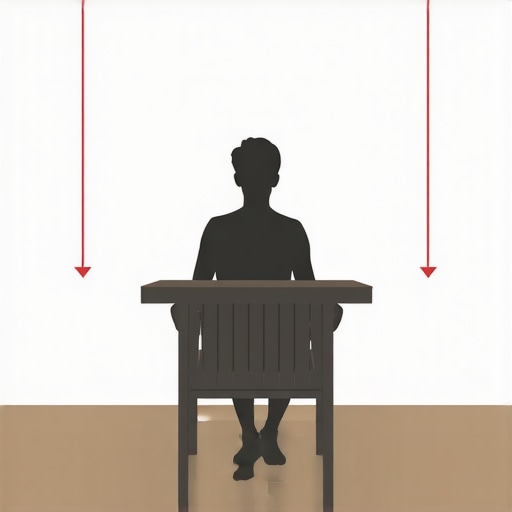
Line Up Your Sightlines with Your Railings
Your furniture height doesn’t just affect your legs; it dictates your view. If you choose bar height seating to see over the railing, but your deck railing height is set at 42 inches, the top rail might end up right at eye level. It’s like sitting in a movie theater behind the tallest person in the room. Before you commit to furniture, sit in a chair on your deck and mark where your eyes land. If the railing is in the way, you might need to consider a cocktail rail that serves as a flat surface for drinks while keeping the profile slim and the view unobstructed.
Build a Solid Foundation for Every Chair Leg
Nothing ruins a dinner faster than a wobbly chair. This often happens because the joist spacing under your composite decking is too wide, causing the boards to slightly flex under the weight of a seated guest. When I design for high-traffic dining areas, I tighten my joist centers to 12 inches rather than the standard 16. This creates a rock-solid floor that feels like an interior room. It also ensures that when people push back their chairs to head toward the stairs for safe deck access, the boards don’t groan or dip, maintaining that premium feel of a professionally constructed space. I learned this the hard way after a heavy guest nearly tipped over because a single board flexed just enough to catch the chair leg at a weird angle. Since that day, I never compromise on the substructure rigidity of the dining zone.
The Maintenance-Free Label is a Marketing Lie
Everyone tells you that choosing the right composite decking means you will never have to worry about your floor again. In my experience, that is only half-true. While you won’t be staining it every two years, the real nuance lies in how these materials react to the environment. Unlike traditional wood, composite expands and contracts significantly along its length. If your builder treats it like lumber and butts the ends tight on a 40-degree morning, those boards will buckle and warp by the time your first July barbecue rolls around. I’ve seen beautiful projects ruined because of the hidden clip mistake that leads to buckling deck boards. You aren’t just building a floor; you are building a living, breathing system that needs room to move. According to a study published in the Journal of Architectural Engineering, composite materials can experience linear expansion of up to 1/32 of an inch for every 10-degree Fahrenheit change. Over a 20-foot board, that’s a massive shift that can pop fasteners right out of the joists if not managed.
Does your builder check the thermometer before gapping?
Most homeowners assume a gap is just a gap, but an expert knows that the gap size must be calculated based on the ambient temperature during installation. If it’s 90 degrees out, you gap tight because the boards are already at their maximum expansion. If it’s a crisp autumn morning, you leave a larger gap to accommodate the summer swell. This is the difference between a deck that stays flat for twenty years and one that looks like a roller coaster after one season. Have you ever fallen into this trap of thinking your deck would stay perfectly flat forever? Let me know in the comments. 
The Staircase Mistake That Ruins Modern Transitions
When homeowners think about designing safe and stylish stairs for outdoor decks in 2025, they often focus on the railing and forget the tread itself. A common ‘oops’ factor is relying on the hidden flaw in pre-built deck stairs from big box stores. These mass-produced stringers rarely match the specific height of your deck, leading to a ‘bottom step’ that is either too tall or too short—a literal trip hazard that your brain won’t see coming. To create truly seamless transitions where stairs are key elements, you must custom-cut your stringers to ensure every single rise is identical to within an eighth of an inch. Furthermore, you need to know how to hide the ugly edge of a composite stair tread using fascia or picture-framing techniques. Without these advanced finishes, your expensive custom build will still have the raw, ‘unfinished’ look of a DIY project. It’s these small, technical details—the gapping math and the custom stringer rises—that separate a basic outdoor platform from a professional living space.
I’ve spent thousands on tools over the years, but if you asked me for the one thing that saves my sanity, it isn’t a fancy miter saw or a high-end laser level. It’s having the best tool for removing a single stripped deck screw on hand at all times. No matter how careful you are, one of those screw heads will inevitably round out at 4 PM on a Friday afternoon when you’re on the last board. Using the screw depth trick for a perfectly smooth deck surface ensures that your fasteners sit exactly where they should—just a hair below the surface without ‘mushrooming’ the composite material into an ugly bump. I personally use a depth-drive bit with a felt ring to avoid marring the finish, a tiny detail that makes a massive difference when the sun hits the deck at a low angle.
The Secret to Keeping Your Deck Looking Brand New
Maintenance-free is a marketing term, not a reality. Even the highest quality low-maintenance outdoor areas require a proactive approach. I make it a habit to do a ‘soft wash’ every spring. Don’t reach for the high-pressure power washer; you can actually etch the surface of your boards if you aren’t careful. Instead, a simple mixture of mild soap and a soft-bristle brush is usually enough. However, the real challenge comes during BBQ season. I’ve had many panicked calls about grease spatters. Knowing how to get grease stains off your composite deck immediately with an alkaline-based cleaner can save you from a permanent reminder of that one rogue burger. If you let it sit in the sun for a week, that oil will migrate into the embossed grain, and you’ll be looking at that spot for a long time.

How can I make my composite deck last for thirty years?
To hit that three-decade milestone, you have to look beneath the surface. According to the North American Deck and Railing Association (NADRA), the majority of deck failures occur at the ledger board or due to joist rot that starts from the top down. This is why I never build without using joist tape. The hidden cost of skipping joist tape is a deck frame that rots out while the composite boards on top are still perfectly fine. It’s a heartbreaking waste of money. I also find myself moving away from traditional layouts; using fewer post bases and more cantilevers this year has allowed me to create cleaner lines and reduce the number of potential rot points in the ground.
The Future of High-Performance Outdoor Living
Looking ahead, the industry is moving toward even more resilient materials. In my recent look at composite decking trends for 2025, it is clear that mineral-core technology is the next frontier. These boards don’t expand and contract like traditional PVC or wood-plastic composites, meaning those expansion gaps I obsessed over earlier become less of a technical headache. We are also seeing a shift toward ‘cool-deck’ technology that reflects heat rather than absorbing it. If you want to stay ahead of the curve, I recommend trying this advanced tip: next time you install a perimeter, use a double rim joist for picture frame borders. It provides a massive amount of extra ‘meat’ for your fasteners to grab, ensuring that your border boards stay dead-flat and perfectly aligned for the life of the project. If you’re ready to start your own build or need a pro’s eye on your plans, don’t hesitate to contact us to discuss your vision.
The Hardest Lessons from My Most Embarrassing Build
Looking back at that night with Jim and the cold steaks, I realized that a beautiful deck isn’t just about the architecture; it’s about the physics of human comfort. Here are the lightbulb moments that changed my approach to every outdoor living project:
- The Surface is Only a Facade: You can buy the most expensive boards, but if you don’t master the joist spacing secret for a solid feeling composite surface, the deck will always feel like a temporary stage rather than a permanent floor.
- Ergonomics Beat Aesthetics: If a chair looks like it belongs in a museum but makes your back ache, it’s a failed design. Always prioritize the seat-to-table ratio.
- Safety is Invisible: The best features are the ones you don’t notice, like how why your deck stairs should always have a mid-landing to break up a long climb and provide a sense of security.
[image-placeholder]
Tools and Resources That Never Leave My Truck
If you’re serious about taking your space to the next level, stop guessing and start using the right gear. I personally swear by these four essentials:
- Depth-Setting Bits: These are non-negotiable for achieving the screw depth trick for a perfectly smooth deck surface. It prevents the unsightly volcano effect where the material bulges around the screw.
- Joist Protection: I won’t build without joist tape. Understanding the hidden cost of skipping joist tape on a new build is the difference between a 10-year deck and a 30-year legacy.
- Advanced Fasteners: Switch from standard bolts to structural screws. I found that using structural screws instead of lag bolts for stairs makes for a much tighter, more durable connection.
- Expert Guidance: When in doubt, the benefits of working with a professional deck builder far outweigh the cost of fixing a structural mistake later.
Build a Space Where People Want to Stay
At the end of the day, we build these spaces to host the people we love. Whether you are maximizing space with modern designs for composite decks or just trying to fix a wobbly railing, the goal is the same: creating a sanctuary. Don’t let the technical jargon or the math of a 12-inch gap intimidate you. Every measurement you get right is an invitation for your guests to stay a little longer, talk a little deeper, and enjoy the outdoor living lifestyle you’ve worked so hard to create. If you’re feeling overwhelmed by the technicalities of composite decking or stair safety, we are here to help. Feel free to contact us and let’s turn your vision into a reality.
Have you ever had a deck project where the comfort math just didn’t add up? Let me know about your seating struggles in the comments below!