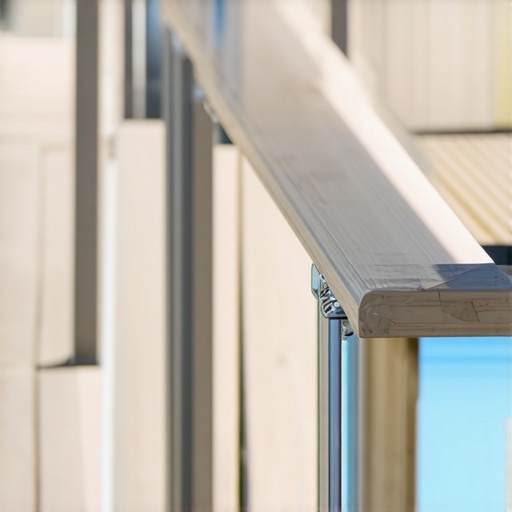
It was 4:00 PM on a Saturday, the grill was searing, and the Missouri humidity was thick enough to chew. I had just finished what I thought was a masterpiece of outdoor living. But as my buddy Dave leaned against the top tier of my new stairs, the middle cable didn’t just give—it sagged like a tired clothesline. It was embarrassing. I am a deck builder who prides himself on precision, and there I was, looking at a railing that looked like it had given up on life. That is the thing about stainless steel; it is beautiful and durable, but it is also a slave to the thermometer. Today, I am going to share the specific trick I learned the hard way so your view stays sharp and your tension stays true, no matter how high the mercury climbs.
Stop the Sag Before Your Next Backyard BBQ
We often talk about how to keep your deck cool enough for bare feet in July, but we rarely discuss what that heat does to the metal holding your safety barrier together. According to the American Iron and Steel Institute, stainless steel has a significant thermal expansion coefficient, meaning it physically expands as it absorbs solar radiation. In plain English? That means a 20-foot run of cable can actually grow by nearly an eighth of an inch when the sun bakes it. It does not sound like much until you realize that eighth of an inch is the difference between rock solid and a safety hazard.
Are these railings actually more trouble than they are worth?
I get this question all the time from folks looking into composite decking trends for 2025. They worry they will be out there with a wrench every Tuesday morning. I used to think the same. In fact, one of my biggest early blunders was over-tightening my cables in the dead of winter. I thought I was being proactive. Instead, when the temperature plummeted, the metal contracted so much it actually pulled the end posts inward, warping my beautiful frame. It was a costly lesson in physics. The key is not more tension; it is smarter installation. Have you ever walked out to your deck and noticed your railings looking a little loose compared to how they felt in the spring? You are not crazy, and your builder did not necessarily mess up—they just might not have known the spring-load trick. Getting the secret to installing cable railing without it sagging right involves understanding that your deck is a living, breathing thing. It moves. It shifts. If you do not account for that movement, especially in high-traffic areas or near your outdoor stairs, you are setting yourself up for frustration. I want to walk you through why standard tensioners often fail in extreme heat and the one hardware adjustment that changed the way I build forever. You do not need expensive tools; you just need to stop fighting the sun and start working with it.
Equip Your Railing with a Built-in Shock Absorber
The secret weapon in any professional deck builder‘s arsenal is a spring-loaded tensioning kit. Think of it like a shock absorber on a mountain bike. When the Missouri sun hits that stainless steel, the cable expands. In a standard system, the cable just goes limp. But with a spring-loaded system, the spring expands to take up that slack, maintaining a constant pull. I learned this the hard way on a project in Branson West where the deck faced the blazing afternoon sun. By 4:00 PM, the cables were sagging like wet noodles. We had to go back and swap every single end-fitting for spring-loaded versions. Now, that railing stays tight as a drum whether it’s 10 degrees or 110. Using the bracket that keeps your railing from wobbling forever at the corner posts provides the rigid foundation these springs need to work their magic. 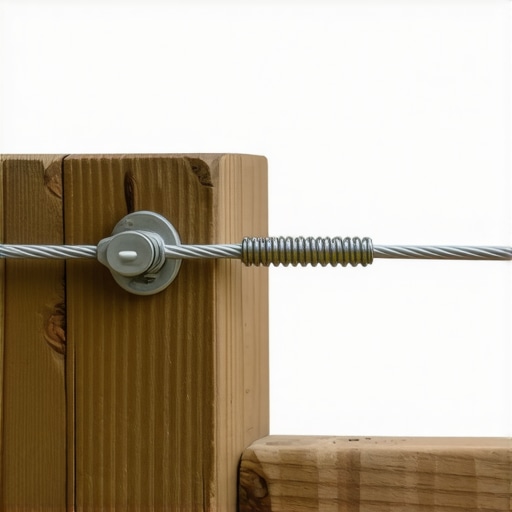
Brace Your Posts for High-Tension Loads
Most DIYers forget that cable railings are essentially trying to implode your deck. If you have ten cables tensioned to 200 pounds each, that is a literal ton of force pulling your end posts inward. If those posts aren’t anchored perfectly, they will lean, and your cables will sag no matter how much you tighten them. This is where the joist spacing secret for a solid-feeling composite surface comes into play; a rigid frame is the only way to support a rigid railing. I never trust standard 4×4 posts for end-runs anymore. I always double them up or use structural steel inserts. When I am securing these to the frame, I have found that using why I use structural screws instead of lag bolts for ledgers and posts is the only way to guarantee they will not budge over time. A lag bolt can loosen as the wood dries, but a structural screw bites and stays.
Tension Your Lines in the Right Sequence
Do not start at the top and work your way down. That is a rookie mistake that leads to uneven post-loading. You want to start with the middle cable, then go to the one just above it, then the one just below it. Think of it like tightening the lug nuts on a car tire. This spreads the pressure evenly across the post and prevents it from bowing. If you are working on stairs, this is even more critical because the angles change how the force is applied. When designing safe and stylish stairs for outdoor decks in 2025, keep in mind that the transition from the flat deck to the incline is where most tension is lost. You need to ensure your outdoor living space feels continuous, which means creating seamless transitions: stairs as key elements in outdoor living by using dedicated stair-tensioning hardware. These fittings are designed to pivot, so you are not fighting the metal as it goes down the slope.
Don’t Skip the Bottom Support
Finally, let’s talk about where those stairs meet the ground. If your stair stringers shift even half an inch, your railing tension is gone. This is exactly why your deck stairs need a concrete landing pad at the bottom. A solid footing keeps the entire assembly—frame, steps, and railing—in a fixed relationship. When you avoid the hidden flaw in pre-built deck stairs from big box stores and build your own reinforced carriage, you are creating a structure that can handle the 2,000+ pounds of tension required for a modern cable system. For those interested in composite decking trends for 2025, remember that the trend is moving toward over-built sub-structures to accommodate these high-tension, low-profile aesthetics in your composite decking projects.While most folks think the sag is just the cable stretching, I have found that 90% of the time, it is actually the wood post compressing or the frame shifting. People tell you to just tighten it more, but that is a dangerous game. In my experience as a deck builder, cranking those turnbuckles is exactly how you turn a straight railing into a curved bow. The International Code Council (ICC) requires guardrails to withstand a 200-pound concentrated load, but when you pre-load your posts with hundreds of pounds of cable tension, you are eating up your structural safety margin before anyone even leans on the rail.
Does your top rail need a structural backbone?
This is the advanced question I get from homeowners who want that ultra-minimalist outdoor living look. They want a tiny top rail to match the thin cables. My answer is that unless you are using a reinforced steel cap, a standard wood top rail will eventually buckle under the constant inward pressure. I have seen beautiful stairs ruined because the top rail was not beefy enough to act as a compression strut. This is why I never use standard wood for deck railings anymore; the stability just is not there for high-tension systems. 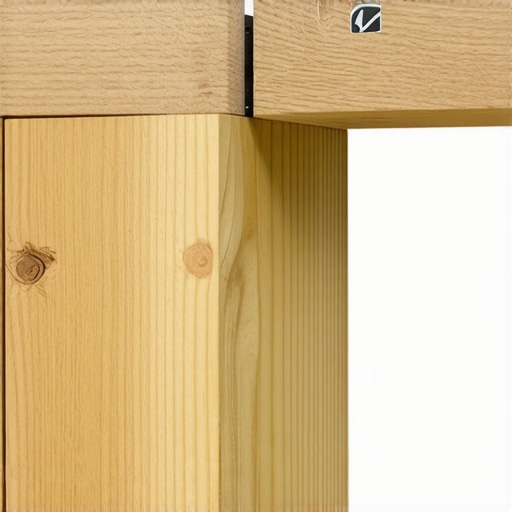
Beware of the Top Rail Trap
The biggest oops factor I see is forgetting that the top rail is doing the heavy lifting. In a cable system, the top rail is not just for your hands; it is a structural member that keeps the end posts from falling toward each other. If you do not use why I use structural screws instead of lag bolts for stairs and rail connections, the tension will literally pull the joints apart over three or four seasons. This is also the hidden reason your deck stairs are pulling away from the frame. The cables are essentially acting like a giant rubber band trying to collapse your composite decking masterpiece. Have you ever noticed your miter joints opening up on your railing? That is not just wood drying; that is tension winning the war against your fasteners. Have you ever fallen into this trap of over-tightening? Let me know in the comments. When choosing the right composite decking for durable low-maintenance outdoor areas, remember that the railing is only as good as the frame behind it. You need a builder who understands physics, not just aesthetics.To really dial in a professional finish, you can’t rely on your ‘calibrated elbow.’ I always bring out my Loos & Co. PT-1 tension gauge when I finish a project. Most folks think a tight cable is just one that doesn’t move when you poke it, but the pros know there’s a sweet spot. According to technical guides from Loos & Co., cable systems perform best when tensioned to approximately 20-25% of the breaking strength of the wire. If you under-tension, you get the sag I mentioned earlier. If you over-tension, you’re putting unnecessary stress on your composite decking frame. It’s a precision game that determines whether your outdoor living area feels like a custom build or a weekend DIY project gone wrong.
How do I keep my railing safe and shiny for years?
Maintenance isn’t just about the boards; it’s about the hardware. Even ‘stainless’ steel can tea-stain if you leave it alone in high-humidity environments. I recommend a simple pass with a citric-acid-based cleaner once a season to keep that luster. While you’re at it, check the tension. If you’ve been choosing the right composite decking for durable low-maintenance outdoor areas, the last thing you want is the metal failing while the boards look perfect. Use the post base trick that prevents rot at the concrete line to ensure your foundation stays rock solid, because the railing is only as steady as the ground it’s anchored to. If you ever run into a snag with old hardware, knowing the best tool for removing a single stripped deck screw can save you an entire afternoon of frustration.
Stop Guessing and Use the Right Hardware
I see many deck builder teams using standard pliers for crimping, but that’s a recipe for a cable slip. I exclusively use a hydraulic swaging tool. It applies 8 tons of pressure to the fitting, ensuring the metal literally fuses around the cable strands. This is vital on stairs where the downward force is constant. When you are creating seamless transitions: stairs as key elements in outdoor living, the hardware needs to be as robust as the aesthetics.
Predicting the Future of High-Tension Railings
Looking ahead to 2026, I suspect we’re going to see ‘smart’ tensioners hitting the residential market. Imagine getting a notification on your phone that the cables on your deck have dropped below the safety threshold after a particularly brutal winter freeze. We are already seeing this in commercial suspension bridges, and it’s only a matter of time before it trickles down to high-end residential composite decking projects. While you wait for the tech to catch up, focus on the basics of cleanliness. Knowing how to get grease stains off your composite deck is just as important as keeping the cables tight for that showroom look. For more expert advice, check out deck builder insights: designing your dream outdoor space. Don’t let your maintenance routine slip; go out there this weekend and give your tensioners a quarter-turn if they feel spongy.
The Ozark Physics Lesson That Cost Me a Full Re-Build
After years working as a deck builder, I have realized that the railing is often the most scrutinized part of any outdoor living project. One big lightbulb moment for me was realizing that ‘tight’ does not always mean ‘safe.’ If your frame can’t handle the pull, you are essentially building a giant bow and arrow that will eventually warp. I have also learned that stainless steel is a high-performance material that, much like a sports car, requires a ‘break-in’ period and a quick tune-up after its first full summer. Lastly, never underestimate the power of the Missouri sun; it can change the tension of a 20-foot run faster than you can flip a burger on the grill.
The Gear That Separates Pros from Weekend Warriors
I never head to a job site without my hydraulic swaging tool because manual crimpers simply do not offer the same long-term peace of mind against cable slip. For those currently planning their layout, I highly recommend looking into how a skilled deck builder can turn your garden into a private oasis by blending these industrial elements with natural surroundings. I also swear by the Loos & Co. tension gauge to ensure every line is within the ICC safety margins. If you are specifically tackling stairs, you must master the hardware basics, such as why I use structural screws instead of lag bolts for stairs, to ensure your end posts stay perfectly plumb under pressure.
Your View Deserves a Structural Backbone
Building a deck is more than just laying down composite decking boards; it is about creating a sanctuary where your morning coffee isn’t interrupted by a wobbly rail or a sagging cable. When you invest the time into a proper tensioning system and a reinforced frame, you are ensuring your outdoor living area remains a safe, high-value asset for decades. Don’t be afraid to over-engineer your substructure—your future self will thank you when the mercury hits triple digits and your view remains crystal clear and perfectly straight. For more inspiration on the latest aesthetics, check out transform your outdoor living with custom composite decking ideas. Have you ever noticed your railing feeling solid in the winter but getting ‘the sags’ once July hits? Let me know your experience in the comments below.