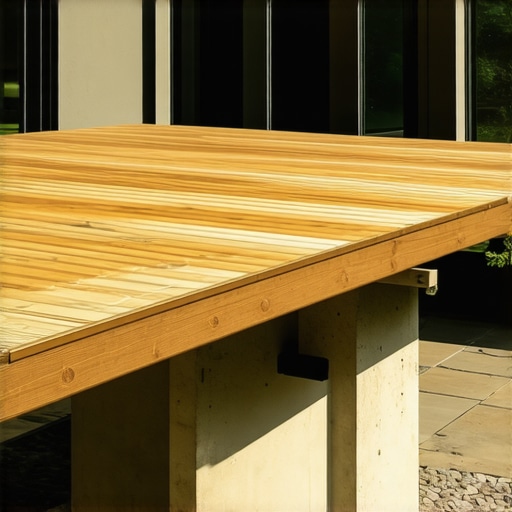
I remember looking out at my first big project—a gorgeous cedar deck—and feeling a pit in my stomach. It wasn’t the boards or the stairs. It was the “forest of legs” underneath. I had so many post bases drilled into concrete piers that the space under the deck looked more like a crawlspace than a patio. I’d followed the old-school rules to a fault, but I’d sacrificed every bit of my usable outdoor living space just to hold up some joists.
Stop Crowding Your Backyard With Extra Posts
That project taught me a hard lesson. More wood doesn’t always mean a better build. This year, I’m changing my approach. I’m leaning heavily into cantilevers—letting those joists hang out past the beam—and drastically reducing the number of posts that touch the ground. It’s cleaner, it’s faster, and honestly, it looks like magic. If you’re tired of your backyard looking like a construction site or you’re worried about why your deck post footings keep sinking into the soil, you’re in the right place. I’m going to show you how to get that “floating” look without compromising on safety. When I started as a deck builder, I thought safety meant more vertical support. I was wrong. My early decks were over-engineered eyesores. I once spent three days digging holes for a low-profile deck when I could have just cantilevered the joists over a single beam. It was a waste of my time and the homeowner’s money. Modern composite decking and better framing techniques allow us to push the limits of physics—safely. According to the American Wood Council, cantilevers are technically limited to one-fourth of the joist span, which is a surprisingly generous amount of “free” space that most DIYers completely ignore.
Will my deck actually stay attached to the house?
It’s the first thing everyone asks. If there aren’t posts at the very edge, won’t it tip like a seesaw? I get the fear. But here’s the reality: a well-executed cantilever actually helps distribute weight more effectively across the frame. When you combine this with the secret to a rock-solid deck to house connection, the whole structure feels significantly stiffer. You won’t get that “bounce” that makes guests nervous during a summer BBQ. Have you ever felt like your deck posts are just getting in the way of your garden or patio? We’re moving toward a sleeker aesthetic for composite decking trends in 2025. Whether you’re planning a wrap around staircase or a simple platform, understanding the balance between support and style is key. Let’s look at why this shift is happening and how it saves your foundation in the long run.
Pull Your Posts Back to Open Up the Ground
To achieve that sleek, floating look, you have to master the math of the overhang. Think of your joists like a playground see-saw. If your joist is 12 feet long, the standard rule of thumb allows you to hang up to one-fourth of that span past the beam. By pulling your beam and posts three feet back from the edge of the deck, you suddenly open up a massive amount of usable space underneath. I remember a project in Branson where the homeowner wanted a massive stone patio under their second-story retreat. If I had put the posts at the very edge, the patio would have felt like a cage. Instead, we cantilevered the frame, tucked the posts back into the landscaping, and the result was a wide-open outdoor living area that felt twice as large.
The Joist Spacing Secret for a Solid Surface
When you reduce the number of posts, you put more pressure on the remaining frame. This is where most DIYers fail. They use the maximum allowable spacing, and the deck ends up feeling like a trampoline. If you are planning on choosing the right composite decking, you need to tighten up your joist centers. I usually drop from 16-inch centers to 12-inch centers when I’m pushing a cantilever to its limit. This is the joist spacing secret for a solid feeling composite surface that prevents the boards from dipping or bouncing when you walk near the edge.
Stop Over-Engineering Your Foundation
You don’t need a forest of 4x4s to have a safe structure. In fact, fewer, larger posts are often better than many small ones. I once replaced a deck that had ten 4×4 posts holding up a simple 12×12 platform. It was a nightmare of rotting wood and sinking footings. We replaced it using just two massive 6×6 posts and a triple-ply beam. By using larger dimensional lumber for the beam, we increased the clear span between posts, which meant fewer holes to dig and fewer points of failure where your deck post footings keep sinking into the soil.
Swap Out the Lag Bolts for Structural Screws
If you want a frame that doesn’t wobble, stop using those old-school zinc lag bolts. I transitioned to structural screws years ago and never looked back. Whether I am securing a ledger or mounting a stringer, why I use structural screws instead of lag bolts for stairs comes down to shear strength and ease of installation. They bite into the wood and pull the members together with much more force than a bolt ever could. This is especially critical when you’re reducing post counts, as the connections at the beam and the house become the primary anchors for the entire deck’s stability. If you’re unsure about the math, the benefits of working with a professional deck builder include ensuring these load paths are correctly calculated so your “floating” deck stays exactly where it belongs.Everyone tells you that composite is a ‘forever material’ that requires zero thought once it’s down. In my experience, the opposite is true—composite requires more precision during the install than wood ever did. Wood is forgiving; it breathes and moves in ways we’ve understood for centuries. But composite is a different beast. I’ve seen $50,000 projects ruined because the builder didn’t respect the physics of plastic and wood fiber. This is where choosing the right composite decking becomes a technical decision, not just an aesthetic one.
Stop Believing the Maintenance-Free Myth
While you won’t be sanding or staining, the hidden nuance of innovative outdoor living ideas with composite decking in 2025 is heat management and expansion. The biggest ‘Oops’ factor I see with DIYers (and even some pros) is treating composite like pressure-treated lumber. If you butt these boards tight against a house or a picture-frame border without a gap, they have nowhere to go when the sun hits them. I’ve walked onto job sites where the boards have actually sheared their own fasteners off because of the pressure. This is the hidden clip mistake that leads to buckling deck boards. You aren’t just building a floor; you’re building a living, breathing engine of thermal energy.
Why is my expensive composite deck buckling in the summer?
It comes down to physics. A study by the North American Deck and Railing Association (NADRA) highlights that thermal expansion in PVC-capped composites can fluctuate significantly—sometimes expanding up to 1/8 of an inch over a 16-foot span depending on the temperature swing. If your deck builder didn’t use the correct gapping tools for the specific ambient temperature during the install, that ‘floating’ look will quickly turn into a wavy mess. I always tell my clients that the gap isn’t a flaw; it’s a feature. #IMAGE_PLACE_HOLDER_C#
Fix Your Stride Before You Cut the Wood
The same level of nuance applies to your stairs. People think building stairs is just a matter of basic subtraction, but the stair stringer measurement mistake that ruins your stride is far more common than you’d think. If your bottom step is a different height than your top step—even by a quarter-inch—your brain will notice it, and your knees will feel it. When designing safe and stylish stairs for outdoor decks in 2025, you have to account for the thickness of the final decking material on the landing. If you don’t, you end up with a ‘trip step’ that makes your beautiful outdoor living space feel dangerous. Most people think more stringers are always better, but if they aren’t perfectly aligned, you’re actually creating more points of friction and squeaking. This is often why your deck stairs feel like a ladder and how to fix the rise issues before they become permanent. Have you ever fallen into the trap of over-tightening your boards or missing that last stair measurement? Let me know in the comments below.If you want to avoid those headaches I just mentioned, you need to stop relying on standard carpentry tools for specialized composite work. I used to use a regular crowbar to force stubborn boards into place, but I quickly realized I was marring the edges of expensive material. Now, I swear by the Camo Lever. It’s a dedicated board straightener that locks onto the joist and lets you apply even pressure without damaging the board surface. It’s the difference between a project that looks like it was hacked together and one that looks like a professional deck builder handled it. When you are choosing the right composite decking for durable low-maintenance outdoor areas, remember that the tool is just as important as the board itself.
Ditch the Crowbar for a Dedicated Board Straightener
Precision doesn’t just look better; it lasts longer. If your gaps aren’t uniform, water won’t drain correctly, leading to debris buildup. This is why I also never skip joist tape. It’s a simple butyl adhesive that goes on the top of every joist before the decking. Considering the hidden cost of skipping joist tape on a new build, you’re looking at your frame rotting out 10 to 15 years before the composite boards ever fail. It’s a $100 investment that protects a $10,000 frame. According to the Trex Residential Decking Installation Guide, failure to provide adequate ventilation and protection for the substructure can void certain warranties, making these technical details legally significant.
Seal Every Cut to Stop Rot Before It Starts
Every time you cut a piece of pressure-treated lumber for your frame or stairs, you’re exposing the raw, untreated heartwood. I keep a small can of copper naphthenate on my belt and brush it onto every single end cut. If you ignore this, you’re essentially leaving the door open for fungus. Learning the best way to seal the end cuts of pressure treated lumber to prevent rot is the single most important habit for any builder. This also applies to the bottom of your stringers; if they sit on the ground, they will wick moisture. This is why your deck stairs need a concrete landing pad at the bottom to break that contact with the soil.
How do I keep my composite deck looking new for decades?
The biggest mistake people make is reaching for the power washer. I have seen countless homeowners …ruin their boards by blowing the wood grain apart or stripping the protective cap. Stick to a garden hose and a soft brush—it’s all you need.
The Reality Check Most Pro Builders Keep to Themselves
Looking back at decades of sawdust and sweat, I’ve realized that the ‘perfect’ deck isn’t about how much lumber you use, but how you manage the details. I used to think over-engineering was a badge of honor, but it’s actually a sign of insecurity. A smart builder understands that pulling posts back into the shadows doesn’t just create more outdoor living space; it creates a visual lightness that makes the whole structure feel modern. I also learned that the sound of a deck is just as important as the look. If you ignore the joist spacing secret for a solid feeling composite surface, you’ll end up with a high-end floor that sounds like a plastic drum. Don’t chase the cheapest bid; chase the builder who talks about water management and thermal expansion.
A Few Non-Negotiables for Your Tool Bag
If you’re tackling this yourself, your toolbox needs to evolve beyond the standard hammer and saw. I always tell my apprentices that the Camo Lever is the most underrated tool on the site—it saves your fingers and your expensive boards. For your frame, skip the big-box lag bolts and invest in structural screws; once you understand why I use structural screws instead of lag bolts for stairs, you’ll never go back. Finally, I never start a build without a fresh roll of joist tape and a bottle of copper naphthenate to seal those end cuts. These aren’t just suggestions; they are the difference between a 10-year deck and a 30-year legacy. #IMAGE_PLACEHOLDER_E#
Your Path to a Truly Modern Outdoor Oasis
Building a deck is one of the most rewarding ways to reclaim your backyard, but it requires a shift in mindset. Stop thinking about it as a platform and start thinking about it as a technical piece of engineering that happens to look beautiful. Whether you are designing safe and stylish stairs for outdoor decks in 2025 or pushing the limits of a cantilever, prioritize the physics of the build over the color of the boards. If the math feels daunting, remember that the benefits of working with a professional deck builder include peace of mind that your family is standing on a rock-solid foundation. Take your time, measure twice, and don’t be afraid to pull those posts back to let your garden breathe. Have you ever struggled with a wobbly deck or why your deck stairs feel like a ladder and how to fix the rise issues? Let me know your biggest build hurdle in the comments below.