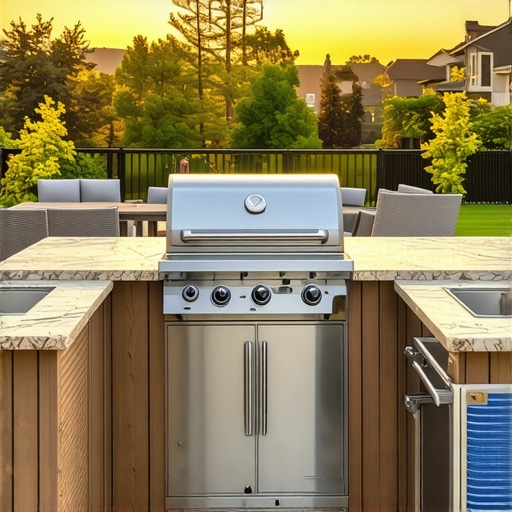
I remember the July 4th when I almost melted my vinyl siding. I had my massive three-burner grill shoved into the far corner of my old wooden deck, thinking I was being smart by keeping it ‘out of the way.’ Instead, I was trapped in a heat pocket, my guests had to dodge me just to reach the cooler, and the smoke was funneling straight through the screen door into the living room. It was a miserable, sweaty experience that taught me a hard lesson: a great deck isn’t just about square footage; it’s about the flow between the flame and the family. Most people treat the grill like a piece of patio furniture, but if you love to cook, that grill is the cockpit of your outdoor life. Today, I’m going to help you stop the layout madness. We are going to solve the problem of the ‘cramped chef’ and build a space where you can flip burgers without feeling like you’ve been exiled from the party. Have you ever spent an entire party staring at a grill lid while everyone else hung out on the other side of the yard? If so, you know exactly why we need to rethink this.
Make Your Deck a Chef’s Paradise Instead of a Crowded Mess
When I first started out as a professional deck builder, I made the mistake of placing the cooking station right in the middle of the main walkway. It looked great on paper, but in practice, it was a safety nightmare. People were constantly brushing past a 400-degree metal box. According to the National Fire Protection Association (NFPA), gas grills are involved in an average of 9,000 home fires per year, which is why your layout needs to prioritize both safety and movement. You want a dedicated ‘landing zone’ for your tools and plates, and ideally, you should be building a seamless transition from your kitchen to your deck to avoid the dreaded ‘threshold trip’ while carrying a heavy tray of ribs. Grease is another reality we have to face. I once ruined a gorgeous cedar floor because I didn’t have a plan for drippings, so now I tell everyone to learn how to get grease stains off your composite deck before they even fire up the burners. Better yet, incorporate a stone or metal mat area. If you’re planning on adding a heavy ceramic smoker or a stone oven, don’t just wing it; you need to know how to frame a deck for a heavy pizza oven so your joists don’t start screaming under the weight.
Do Dedicated Cooking Zones Really Add Property Value?
You might be worried that building a ‘grilling nook’ makes your deck less versatile for future buyers who might not share your obsession with charcoal. In my experience, it’s actually the opposite. A well-defined cooking zone makes the rest of the area feel more spacious. Using a smart lighting layout that makes a small deck look twice as big can help define these zones without needing physical walls. People love seeing a deck that has been designed with a purpose. It’s about creating a ‘destination’ in the backyard. Just remember to keep the heat away from the house and always look into the best way to protect your deck from hot bbq embers. In the next section, I’ll break down the specific dimensions you need to keep your guests safe and your eyebrows intact.
Give Your Spatula Some Breathing Room
Think of your grill station like the ‘line’ in a professional kitchen. You need a clear path for the ‘chef’ (that’s you) and a separate lane for the ‘servers’ (your hungry kids or guests). I recommend a minimum of 48 inches of clearance in front of the grill. Anything less and you’re basically playing a dangerous game of Tetris with hot grates. Last summer, I visited a client who had tucked a massive propane unit into a narrow alcove. I watched him try to shimmy past a hot smoker with a tray of jalapeño poppers and nearly clip his shoulder on the lid. We immediately redesigned that section using a picture-frame border to visually signal where the ‘hot zone’ ends. Learning how to frame a picture frame border for composite decking isn’t just about aesthetics; it creates a psychological boundary that keeps guests from crowding your workspace.
Stop the Shake with Better Substructure
A high-end grill or a ceramic smoker can weigh as much as a small motorcycle. If your deck feels like a trampoline every time you walk toward the burgers, your guests are going to feel uneasy. To get that ‘built-on-bedrock’ feel, you need to master the joist spacing secret for a solid feeling composite surface. I usually drop my joist centers to 12 inches rather than the standard 16 in the cooking zone. This prevents the boards from flexing under the concentrated weight of a heavy grill. While you’re at it, pay attention to the edges. If you’re using certain types of decking, make sure you know the best way to finish the ends of hollow core composite boards so you don’t end up with ugly, exposed ‘honeycomb’ holes right where everyone is standing to grab a plate.
Don’t Trip While Carrying the Brisket
The most dangerous moment of any BBQ is the transition from the deck to the yard while your hands are full. If your stairs feel like a vertical ladder, you’re asking for a disaster. I’ve seen too many ‘big box’ pre-cut stringers that make your stride feel awkward. For a truly professional feel, you should consider why your deck stairs should have closed risers for a modern look; it prevents pets or small objects from falling through and makes the staircase feel much more substantial. Always ensure your stairs lead to a solid base, and understand why your deck stairs need a concrete landing pad at the bottom to prevent the wood from rotting in the dirt and to provide a level surface for when you’re carrying that heavy cooler.
Light Your Grill Without the Blindside Glare
Cooking in the dark is a recipe for undercooked chicken. However, a massive floodlight will just make your deck feel like a prison yard. The trick is task lighting. You want the light focused on the grates, not in your eyes. When planning your electrical, focus on how to pick the right deck lighting color temperature for a cozy feel—aim for something warm (around 2700K to 3000K). This mimics the glow of a fire rather than the harsh blue of a warehouse. Finally, remember that grease is the enemy. When choosing the right composite decking for durable low-maintenance outdoor areas, look for capped polymers that won’t soak up burger drippings like a sponge. I once had to replace three boards on a brand-new cedar deck because a guest tipped a cup of marinade—composite saves you that heartbreak.I’ve seen plenty of DIYers and even some ‘pros’ fall into the trap of thinking a more expensive board fixes a bad design. It doesn’t. In reality, the most common mistake I see isn’t about the boards at all—it’s the stairs. Everyone thinks stairs are a simple weekend project, but in my experience, they are the most complex structural element of the entire build. Most people grab pre-cut stringers from the local hardware store and call it a day. However, the hidden flaw in pre-built deck stairs from big box stores is that they rarely account for the specific height of your landing, leading to the stair stringer measurement mistake that ruins your stride. When you are designing safe and stylish stairs for outdoor decks in 2025, custom-cutting every stringer is the only way to ensure a consistent rise and a professional finish.
Why do your composite boards buckle even with hidden fasteners?
Many homeowners assume that hidden fasteners are just for looks. While they do make for a sleek surface, using the wrong clip or over-tightening can lead to the hidden clip mistake that leads to buckling deck boards during the first summer heatwave. Composite decking is essentially a giant thermometer; it expands and contracts significantly based on ambient temperature. If you don’t leave room for the material to ‘breathe’ at the butt-joints, those beautiful boards will warp or ‘mushroom’ around the screws. This is why the benefits of working with a professional deck builder in your outdoor projects go far beyond aesthetics—it’s about technical precision. According to the North American Deck and Railing Association (NADRA), nearly half of the 60 million decks in the U.S. are in need of repair or replacement, often due to these subtle structural oversights. Another trap is the ‘forever’ myth of composite. People think it’s maintenance-free, so they ignore the framing. But if you aren’t accounting for the hidden cost of skipping joist tape on a new build, your pressure-treated frame will rot out from under your 50-year boards in less than a decade. I’ve personally pulled up ‘perfect’ 5-year-old composite to find the joists underneath looking like Swiss cheese because water sat in the screw holes. Finally, stop using hardware-store nails for your surface. The reason I never use nails for deck boards anymore is simple: they lack the withdrawal strength to handle the movement of heavy composite. Another nuance often overlooked is the connection to the house. Why your ledger board needs a gap from the house siding is actually about moisture management, not just airflow. Trapped water is the number one deck killer. I also see people ruin a million-dollar view by choosing the wrong railing. If you feel like you’re in a cage while sitting in your grill-side chair, why your deck railing height might be blocking your best view becomes an expensive lesson in planning. Have you ever fallen into this trap or noticed your deck boards creaking and shifting after a hot day? Let me know in the comments.
Don’t Settle for Standard Hardware
When you’re deep in the trenches of a build, you quickly realize that the difference between a ‘good’ deck and a ‘lifetime’ deck is the metal holding it together. I used to rely on standard galvanized lag bolts, but I’ve since moved on. The reason I use structural screws instead of lag bolts for stairs is simple: they have incredible shear strength and don’t require pre-drilling, which means I’m not creating extra entry points for moisture. While I’m at it, I also carry the best tool for removing a single stripped deck screw—usually a high-torque extractor—because nothing ruins your flow like a stubborn head snapping off in the middle of a picture-frame border. These small tool choices reflect the same philosophy of the benefits of working with a professional deck builder in your outdoor projects; we focus on the points of failure you haven’t even thought of yet. I also make it a point to use the bracket that keeps your railing from wobbling forever, because a grill station feels a lot less premium if the safety rail shakes when you lean on it to flip a steak.
How do I keep my composite deck looking brand new for decades?
The biggest mistake I see homeowners make is reaching for the power washer as soon as the spring pollen hits. Why you should never use a pressure washer on composite decks is a lesson in physics; that high-pressure stream can actually etch the surface of the boards, making them more porous and prone to deep-seated stains. Instead, stick to a soft-bristled brush and a mild detergent. If you’ve been hosting a lot of summer BBQs, you’ll need to know how to get grease stains off your composite deck immediately—hot water and Dawn dish soap are usually your best friends here. According to technical documentation from the Forest Products Laboratory, moisture entrapment is the primary driver of structural decay, so keep your deck clear of wet leaf piles and debris. This focus on long-term care is what helps how a skilled deck builder can turn your garden into a private oasis that stays pristine year after year.
Prepare for the 2025 Wave of Smart Decks
Looking ahead, I see a massive shift toward integrated tech. We aren’t just talking about a stray speaker anymore; innovative outdoor living ideas with composite decking in 2025 will include built-in heating elements under the boards and fully automated lighting zones. When setting up these systems, you’ll need the best low-voltage transformers for large outdoor lighting projects to ensure your ‘smart’ features actually stay powered throughout the night. This evolution toward ‘intelligent’ outdoor spaces means the structural integrity of your frame is more important than ever. I highly recommend you take five minutes this weekend and try the simple way to check if your deck ledger is pulling away from the house. Catching a gap early is the difference between a quick bolt-tightening and a total structural failure. Don’t wait until the next party to realize your deck’s foundation isn’t ready for the weight of the future.
Hard-Won Lessons from the Front Lines of the Grill Zone
Over the years, I’ve realized that the most expensive materials in the world can’t save a poorly planned layout. One lightbulb moment for me was realizing that the ‘grill footprint’ isn’t just the size of the machine; it includes the two feet of space behind it for the lid to swing open and the three feet in front for the cook to stand without their backside hanging over the stairs. I also learned the hard way to check the prevailing wind direction before bolting down a permanent station. There is nothing worse than realizing your ‘dream kitchen’ funnels smoke directly into your guest’s faces all night. Finally, remember that while you might be the master of the flame, the benefits of working with a professional deck builder in your outdoor projects include spotting these technical flow issues before you even buy your first board.
My Private Toolkit for a Lifetime Build
If you want a deck that stands the test of time, you need the right gear and the right fasteners. I never step onto a job site without the best tool for removing a single stripped deck screw because even one stuck head can halt your progress for an hour. For structural connections, I’ve moved away from old-school hardware because the reason I use structural screws instead of lag bolts for stairs is about superior shear strength and moisture protection. I also highly recommend looking into technical guides from the North American Deck and Railing Association (NADRA) to stay updated on safety codes. And if you value your substructure, don’t ignore the hidden cost of skipping joist tape on a new build—it is the cheapest insurance policy you can buy against wood rot.
Take the Tongs and Start Building
The transition from a basic backyard to a culinary destination doesn’t happen by accident. It’s about merging safety with style, whether you are designing safe and stylish stairs for outdoor decks in 2025 or simply rearranging your furniture to create a better flow. Your deck should be more than just a place to stand; it should be a place where memories are made over perfectly seared steaks and sunset views. By focusing on the small details—from joist spacing to lighting temperature—you ensure that how a skilled deck builder can turn your garden into a private oasis becomes your reality every single summer. What’s the one thing that drives you crazy about your current grilling setup? Let me know in the comments below!