
I stood there, barefoot, and felt the instant regret of a $15,000 mistake. My neighbor had just finished his ‘ultra-premium’ deck, and it looked like a million bucks—until the Missouri sun hit it. Within ten minutes, his dark, mahogany-style boards reached a temperature that could probably sear a steak. I’d spent months telling him to look at mid-range options, but he fell for the marketing. He thought ‘more expensive’ meant ‘better living.’ It doesn’t. In fact, many of the projects I’ve worked on as a deck builder prove that the middle of the catalog is where the real value hides. Today, I’m going to show you how to find that sweet spot where durability meets your budget without sacrificing the look.
Stop Paying for the Name and Start Looking at the Core
I made a massive mistake early in my career. I used to think that if a board cost eight dollars a linear foot, it must be twice as good as the four-dollar option. I was wrong. I once installed a top-tier capped composite for a client that looked incredible but was so heavy it required 12-inch joist spacing, driving the framing costs through the roof. When choosing the right composite decking, you have to look at the practicalities of your specific yard. For instance, did you know that dark brown decking gets significantly hotter than light gray, regardless of how much you paid for it? It’s a physical property of color, not a reflection of the price tag. Have you ever felt like you were being upsold on ‘luxury’ features that didn’t actually change how you used your outdoor space?
Will a Mid-Range Board Actually Last Twenty Years?
The biggest fear I hear is that if you don’t buy the ‘top of the line,’ you’ll be replacing the deck in five years. That’s simply not the case anymore. According to the North American Deck and Railing Association (NADRA), the longevity of a modern deck is often determined by the structural protection used during framing rather than the brand of the surface board. Most mid-tier composites now carry 25 to 30-year warranties. The ‘premium’ version usually just adds deeper wood-grain textures or more variegated colors—things that look nice, but don’t necessarily keep the rot away. When you transform your outdoor living, focus on the specs that matter, like moisture resistance and slip ratings, rather than just the shine on the surface.
Get the Skeleton Right Before the Skin Goes On
When you are transforming your space, the “wow” factor comes from the boards, but the “woah” factor—that feeling of a rock-solid floor—comes from what is underneath. Think of composite decking like a high-end suit on a guy who skipped leg day; it might look sharp, but it will not hold up under real pressure.
Tighten Your Joists to Stop the Composite Flex
Most homeowners assume 16-inch centers are the gold standard for everything. They are not. Composite boards are far more flexible than traditional lumber. If you want that premium feel without the premium price tag, use the joist spacing secret for a solid-feeling composite surface: drop your spacing to 12 inches on center. It adds a small amount to your lumber bill, but it completely eliminates the spongy, trampoline-like walk that makes a mid-range deck feel cheap. I once built a 400-square-foot platform where the client insisted on 16-inch spacing to save a few bucks on pressure-treated 2x10s. When we finished, the boards flexed so much underfoot that I ended up crawling underneath for two full days to add mid-span blocking just to stiffen the floor. Do yourself a favor and overbuild the frame from day one. 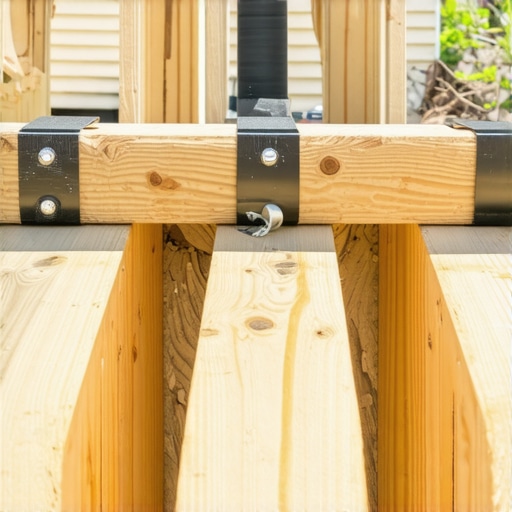
Protect the Wood or Pay for it Later
Water is the silent killer of deck frames, especially in humid climates. Even the most skilled deck builder cannot stop gravity, but you can redirect it. Use joist tape on every single horizontal surface of your frame. If you ignore the hidden cost of skipping joist tape, water will eventually get trapped between the composite board and the wood, rotting your frame long before the boards themselves ever wear out. While you are at it, ensure you know the best way to seal the end cuts of pressure-treated lumber. Leaving raw, cut ends exposed is like leaving a front door open for rot and termites.
Build Stairs That Actually Feel Like Stairs
Nothing screams amateur work like a set of stairs that feels like you are climbing a vertical ladder. Your stairs are the primary gateway to your outdoor living area, and they must be effortless to navigate.
Nail the Rise and Run on the First Try
The biggest headache in any build is the stair stringer measurement mistake that ruins your walking rhythm. You want a consistent rise of about 7 inches and a tread deep enough for a grown adult’s foot. To keep the structure from wobbling over time, I have completely stopped using old-school lag bolts for the ledger connection. Instead, use structural screws instead of lag bolts because they offer superior shear strength and do not loosen as the wood dries and shrinks. For maximum stability, especially on multi-level yards, install the bracket that makes your deck stairs feel rock solid at the top connection point. This prevents the stringers from pulling away from the rim joist, which is where nearly all stair failures begin.The assumption that ‘maintenance-free’ means ‘carefree’ is the fastest way to ruin a high-end build. Most homeowners—and frankly, many general contractors—believe that because the boards are plastic-capped, the laws of physics do not apply. They do. In fact, the biggest contrarian truth I have learned is that the tighter you make your deck look on day one, the worse it will look on day 300. People love the look of tight butt-joints, but they forget about thermal expansion. If you do not account for how the material grows in the sun, you are inviting the boards to heave and warp. I see the hidden clip mistake that leads to buckling deck boards in nearly half of the repair calls I get.
Why do my boards keep buckling even with the right hardware?
The answer usually is not the hardware; it is the lack of air. A common myth is that you should seal up the bottom of your deck to keep out critters or for ‘cleaner’ aesthetics. This is a trap. Without proper airflow, the temperature and moisture differential between the top of the board (baked by the sun) and the bottom of the board (trapped in a damp crawlspace) causes the material to cup. You must learn how to vent the space under your deck to prevent mold and wood rot. A study by the Forest Products Laboratory suggests that trapped moisture under semi-enclosed structures can accelerate the decay of the underlying frame by up to 40%, even if the surface looks pristine. 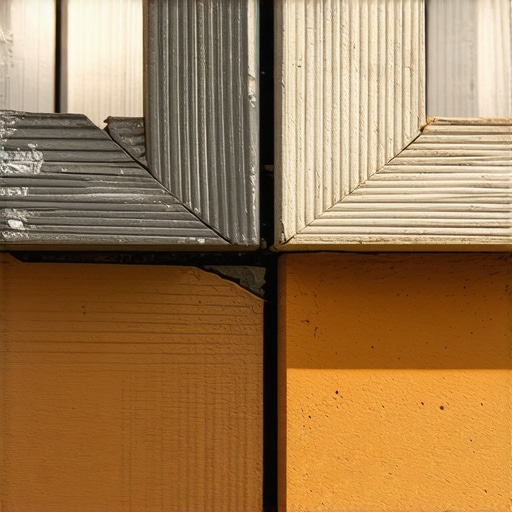 Another nuance that separates a DIY job from a deck builder with years of scar tissue is how you handle the edges. I have stopped using standard wood for certain parts of the project altogether. For example, why I stopped using cedar for modern deck railings comes down to the expansion rates. Wood and composite move at different speeds. When you bolt a rigid wood railing to a floating composite surface, something is going to crack. It is better to use metal or dedicated composite systems that ‘play nice’ together. If you are building near a pool, the ‘premium’ PVC boards are not always enough. That is why I choose mineral core decking for every poolside build; it offers the best dimensional stability when things get wet and hot. Finally, watch out for the fascia trap. Many people install long runs of trim without realizing that heat makes them expand like a bellows. If you do not know how to install deck fascia boards so they dont buckle in the heat, you will end up with a wavy mess by July. Have you ever fallen into this trap or seen a deck that looked great until the first heatwave? Let me know in the comments below.I’ve spent thousands on fancy gadgets, but the tool that actually saved my reputation as a professional deck builder is a simple hidden fastener jig. If you’ve ever seen ‘mushrooming’—those ugly little volcanoes of plastic where a screw enters a board—you know why I’m obsessed with this. I personally use the Camo Marksman Pro because it forces the screw into the edge of the board rather than the face. It keeps the surface smooth enough for bare feet and prevents water from pooling in screw holes.
The Tools That Separated the Pros from the Weekend Warriors
In my early years, I thought brute force and a bigger hammer solved everything, but longevity is built with precision. Using a high-quality hidden fastener system does more than just look pretty; it allows the boards to expand and contract without stressing the fasteners. When I am transforming your space, I look for tools that minimize the number of penetrations on the top of the board. This is especially critical if you are trying to align deck boards perfectly across a 40-foot wide span. One slight misalignment at the start can turn into a three-inch gap by the time you hit the other side.
How Do I Keep My Deck Looking New for 25 Years?
The biggest lie in the industry is that composite is ‘maintenance-free.’ It is low-maintenance, not ‘no-maintenance.’ I always tell my clients that you should never use a pressure washer on composite decks. I’ve seen 3000 PSI tip-heads peel the protective cap right off a $100 board like it was an orange. Instead, grab a bucket of warm water and a soft-bristle brush. According to the Trex Care and Cleaning Guide, simple dish soap like Dawn is the gold standard for breaking down oils without damaging the UV inhibitors in the plastic. If you’re dealing with localized issues, knowing the best way to clean bird droppings off dark brown composite boards will save you from permanent staining. 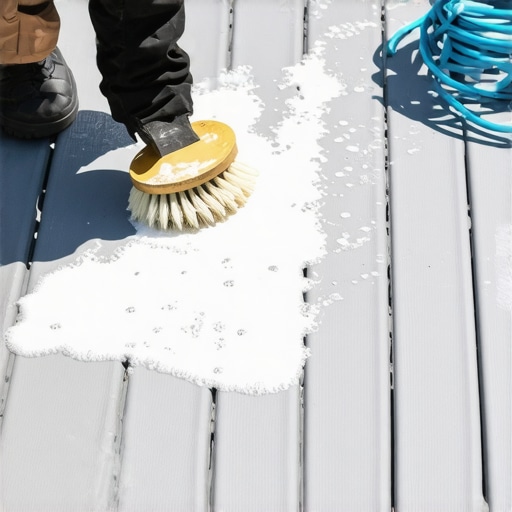
Smart Tech and Sustainable Cores Are the New Normal
Looking ahead, I see composite decking trends for 2025 shifting toward ‘smart decks.’ We are moving beyond just boards and into integrated tech. I am already getting requests to wire a deck for sound without leaving visible cables, turning the structure itself into a tech hub. We will soon see boards with built-in sensors that can alert you to structural shifts or moisture buildup in the frame. If you want to elevate your space right now, I challenge you to try one thing: go buy a roll of joist tape and apply it to just one section of your frame during your next repair. Once you see how it seals the wood, you’ll never build a deck without it again. We aren’t just building platforms; we are building legacies, and that starts with the tools and care you provide after the last screw is driven.
The Brutal Truths Only a Decade of Sawdust Can Teach
I’ve spent more time on my knees checking level than I care to admit, and if there’s one thing I’ve learned, it’s that your deck is a living organism. It moves, it breathes, and it reacts to the Missouri humidity just like we do. Here are the lightbulb moments that changed how I approach every skilled deck builder project.
- Thermal expansion is a force of nature. I used to think a 1/8-inch gap was plenty. Then I saw a 20-foot board buckle like a wet noodle in July because it had nowhere to go. Now, I always leave room for the material to grow, especially near the house siding.
- The frame is the real investment. You can replace a stained board in an afternoon, but you can’t fix a rotting rim joist without tearing the whole thing apart. Spend the extra money on joist tape—your future self will thank you.
- Never skimp on stair blocking. Bouncy stairs feel unsafe and cheap. I’ve discovered why we always double block the middle of a long stair run for stability is the difference between a staircase that feels like a ladder and one that feels like a grand entrance.
- The color is more than an aesthetic choice. I still see people choosing dark colors for full-sun decks and then wondering why they can’t walk barefoot. Always check the solar reflectance index before you fall in love with a swatch.
My Hand-Picked Kit for a Flawless Finish
You don’t need a truck full of tools, but you do need the right ones for choosing the right composite decking and installing it correctly. These are the items that never leave my tool bag. First, get a hidden fastener system like the Camo Marksman. It completely eliminates the “mushrooming” effect where the plastic bits stick up around the screw head. Second, swap old-fashioned lag bolts for structural screws. They are faster, stronger, and don’t require pre-drilling in most cases. Finally, keep a bottle of simple dish soap nearby. It’s actually better than many expensive chemical cleaners for keeping your boards looking new without stripping the finish.
Build a Space Where Your Best Memories Can Happen
At the end of the day, a deck isn’t just a collection of plastic and pressure-treated pine. It’s where you’ll host birthday parties, drink your morning coffee, and watch the sunset after a long week. When you use the joist spacing secret for a solid-feeling composite surface, you aren’t just building to code; you are building for comfort. Don’t be afraid to get your hands dirty and take the time to do it right. The pride you feel when you step onto a solid, beautiful surface you built yourself is worth every drop of sweat. It’s time to stop dreaming about that outdoor oasis and start laying the first joist. What is the one thing holding you back from starting your deck project this weekend? Let me know in the comments below!