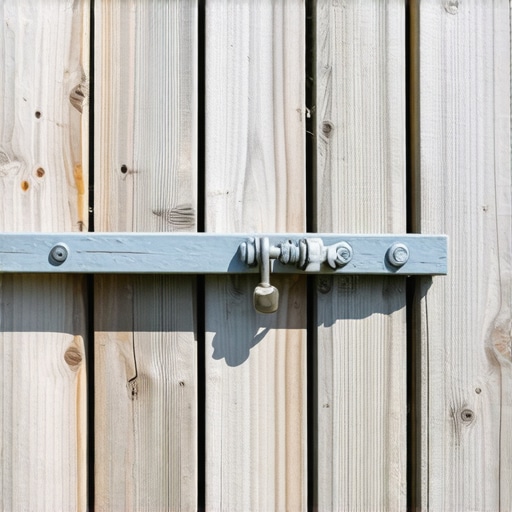
I remember the exact moment I realized my deck gate had officially surrendered to gravity. It was mid-July, and I was hosting a BBQ. I tried to swing the gate open with a platter of ribs in hand, only to have the wood scrape harshly against the deck boards. I had to do that awkward ‘gate-lift’ maneuver—you know the one—where you basically have to bench-press the gate just to get it to clear the latch. It’s embarrassing, and frankly, it makes your whole outdoor living space feel a bit… well, broken.
My battle with the stubborn wooden gate
Before I learned the right way to handle this, I made a classic rookie move. I figured the screws had just come loose, so I grabbed my impact driver and cranked them down until the wood started to splinter. Spoiler alert: it didn’t help. Within two weeks, the gate was dragging again. I even considered ripping the whole thing off and starting over, but I knew there had to be a better way than spending another sixty dollars on heavy-duty hinges that would probably just sag again anyway. If you’ve been trying to build a gate that actually lasts, you know the struggle is real.
Does this really work without buying new hardware?
I get it. You’re skeptical. You think if the gate is leaning, the metal must be bent. But here is the secret: wood is heavy, and gravity is relentless. Most of the time, the problem isn’t the hinge itself—it’s the geometry. According to the American Wood Council, wood can expand and contract significantly with moisture, but the real killer is the lack of diagonal support. Today, I’m going to show you how to pull that gate back into a perfect square using tension and a few clever tricks I’ve picked up as a professional deck builder.
Why your gate gave up on you
The main reason gates fail isn’t usually the hardware; it’s the lack of a proper ‘load path.’ Without a diagonal brace or a tension cable, the weight of the outer edge of the gate pulls down on the top hinge and pushes against the bottom one. Over time, the wood fibers compress, and the whole frame turns into a trapezoid. I used to think I could just level an uneven deck frame and the gate would follow suit, but gates are their own beasts. Have you ever found yourself lifting your gate with your knee just to get it to lock? Drop a comment below if you have—I suspect I’m not the only one who has suffered through a ‘lift-and-latch’ summer.
If you’re already looking at composite decking trends for 2025, you might even be dealing with heavier materials that sag even faster. But don’t worry, we are going to fix this without a trip to the hardware store for new hinges, using the same logic that keeps your railing from wobbling.
The first thing I do when I walk up to a dragging gate is check for ‘racking.’ This is just a fancy way of saying the rectangle has turned into a parallelogram. If you want to fix this permanently, you need to install a diagonal brace. But here is the catch that trips up most DIYers: the direction of the brace matters more than the material. You want the brace to run from the bottom hinge corner up to the top latch corner if you are using a tension-style fix (like a cable), or from the top hinge corner down to the bottom latch corner if you are using a compression-style fix (like a 2×4). It’s like the difference between pushing a car and pulling one—both get you to the gas station, but you have to stand on the right side to be effective. One time, I was working on a project where the homeowner had installed three different braces, all going the wrong way. The gate looked like a messy spiderweb of wood, yet it still scraped the deck. I stripped it all back, cut a single piece of pressure-treated lumber at a 45-degree angle, and notched it into the frame. The moment I kicked the bottom of the gate into place and tightened the screws, the sag vanished. It’s that ‘aha’ moment that makes being a professional deck builder so satisfying.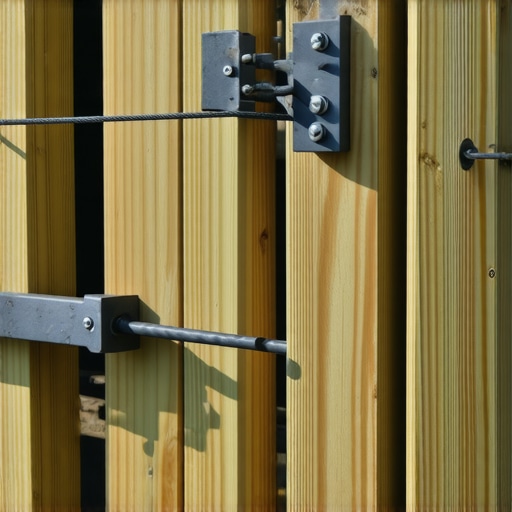
Stiffen the post before you blame the gate
Sometimes the gate is fine, but the post it hangs on is bowing under the weight. This is common if you’ve recently added heavy composite decking or if your deck stairs are putting extra lateral pressure on the frame. If you can move the post with your hand, no amount of gate-fixing will help. You need to stiffen that post by tying it back into the joist structure. I usually use a heavy-duty tension tie—the same bracket that keeps your railing from wobbling forever—to lock the post to the rim joist. It turns the post from a wet noodle into a solid anchor for the hinges.
Leverage the power of the turnbuckle
If your wood is already too warped for a simple timber brace, a small turnbuckle kit is your secret weapon. You attach one end to the top hinge side and the other to the bottom latch side. As you twist the middle of the turnbuckle, it literally pulls the bottom corner of the gate upward. I used this trick on a massive gate in a sloped Ozark yard where the ground was constantly shifting. Because the soil in our area can cause hardscaping projects to fail, having an adjustable fix means the homeowner can just give the turnbuckle a half-turn every spring to keep things perfect. It’s a lot easier than wondering why your deck stairs feel like a ladder because the gate won’t open wide enough to reach them safely. Focus on creating that diagonal lift and you will never have to bench-press your gate again.
Most homeowners think the solution to a sagging gate is to buy the biggest, heaviest black-iron hinges they can find. I call this the ‘Hardware Fallacy.’ In reality, adding five pounds of decorative steel to the far side of a gate only increases the rotational torque on the hinge post. You aren’t fixing the sag; you’re literally feeding the monster. If you want a gate that stays true, you need to think like an engineer, not a blacksmith. The real trick isn’t more metal—it’s smarter fastening. This is the same logic behind the reason I never use nails for deck boards anymore; you need the mechanical grip of a screw to resist the constant pulling force of gravity. Have you ever fallen into this trap of over-buying hardware? Let me know in the comments. 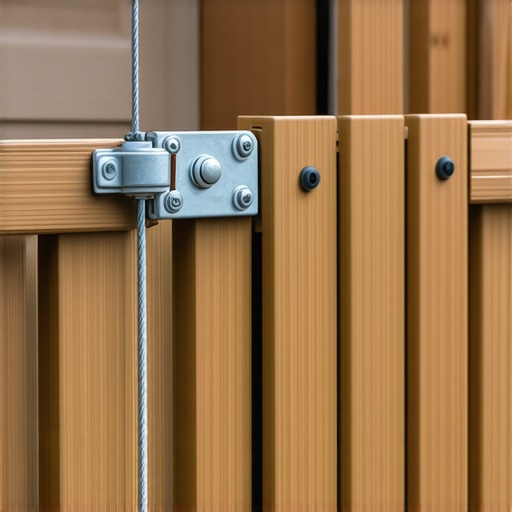
Why composite materials fail differently than natural wood
If you are following the latest composite decking trends for 2025, you might notice your gate acting even more temperamental than a cedar one. Composite is beautiful and low-maintenance, but it lacks the internal structural rigidity of natural grain. According to researchers at Washington State University’s Composite Materials and Engineering Center, wood-plastic composites (WPC) have a different modulus of elasticity, meaning they are prone to ‘thermal creep’—a slow, permanent deformation under sustained weight. If you build a composite gate frame without an internal aluminum or steel sub-frame, it will eventually droop, no matter how many braces you add. It’s similar to the hidden clip mistake that leads to buckling deck boards; if you don’t account for the way the material moves, the material will eventually move you.
How wide is too wide for a single-swing gate?
I often get asked if a five-foot wide gate is a good idea for moving furniture. The short answer? Only if you enjoy constant maintenance. Any gate wider than 42 inches puts immense stress on the hinge post. If you absolutely need a wider opening, I recommend a double-drive gate system or a heavy-duty caster wheel. Without these, the leverage acting on the post is enough to pull even a 6×6 out of plumb over a single season. I’ve seen homeowners try to compensate by using massive lag bolts, but why I use structural screws instead of lag bolts for stairs applies here too—structural screws provide better shear strength without the risk of splitting the post core.
Watch out for the ‘pre-built’ trap in outdoor projects
Finally, avoid the temptation of those pre-assembled gate or stair kits. They are built for the ‘average’ deck, and as any professional deck builder will tell you, no deck is average. Using them is like buying the hidden flaw in pre-built deck stairs from big-box stores: the rise and run are rarely perfect for your specific grade, leading to trips and gate-drags. Custom framing is the only way to ensure the diagonal brace is perfectly notched to the load. Take the extra hour to cut your own members; your BBQ guests—and your lower back—will thank you next summer.
The tools that keep me from coming back to fix things
It’s one thing to build a gate that works on day one; it’s another to build one that still latches when your kids are in college. In my experience, the difference between a ‘one-season gate’ and a ‘ten-year gate’ comes down to the quality of your fasteners and your willingness to spend five minutes a year on upkeep. I’ve found that even the best-laid plans can go sideways if you don’t have the best tool for removing a single stripped deck screw tucked into your tool bag. If you’ve ever had to back out a rusted, headless screw from a hinge while the sun is beating down on you, you know that frustration is avoidable with the right extractor.
When I’m finishing a gate or a set of stairs, I’m obsessive about the little things. For instance, using the screw depth trick for a perfectly smooth deck surface ensures that no screw heads are standing proud to catch a toe or collect water, which is the primary catalyst for rot in wood frames. And speaking of water, why I always paint the cut ends of pressure-treated lumber isn’t just about aesthetics—it’s about sealing the vascular system of the wood so it doesn’t suck up moisture like a straw at the exact point where it meets the hinge hardware.
How do I maintain my gate and stairs over time?
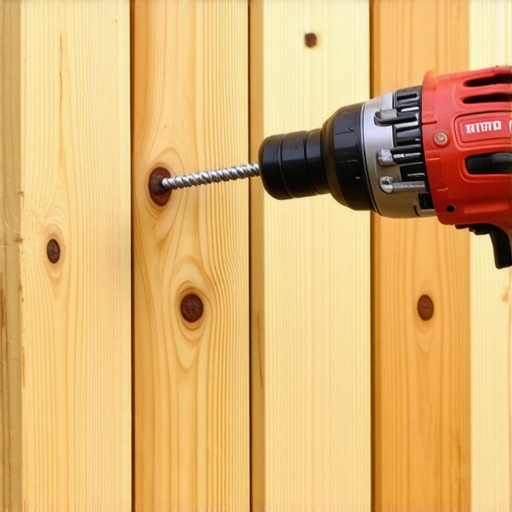
The secret isn’t a heavy-duty power washer—in fact, I’ve explained before why you should never use a pressure washer on composite decks because it can etch the surface and invite mold. Instead, the best maintenance is ‘The Annual Walkthrough.’ Every spring, I take a T25 bit and check the tension on every structural screw. I look specifically for the hidden reason your deck stairs are pulling away from the frame, which is often just the wood shrinking as it dries. A quick tighten of the ledger bolts or a quarter-turn on your gate’s turnbuckle prevents minor gaps from becoming major structural failures. According to the North American Decking and Railing Association (NADRA), regular inspections are the single most effective way to prevent the deck collapses that affect thousands of homes each year.
The future of smart outdoor access
Looking ahead, I suspect we’re going to see a massive shift toward integrated sensors and automated gate hardware. As we lean into composite decking trends for 2025, we’re already seeing manufacturers experiment with gate latches that alert your smartphone if they aren’t fully engaged. This is a game-changer for parents and pet owners. While the materials are becoming more ‘set it and forget it,’ the technology is becoming more ‘stay connected.’ High-end custom composite decking ideas will soon include built-in lighting and security that treats the deck gate like the front door of the home.
I want you to try one specific thing this weekend: go out to your deck and check the end grain of your gate’s bottom rail or your stair stringers. If it’s raw, unsealed wood, grab a small can of end-cut solution or even a bit of exterior paint and coat it. That five-minute job is the most ‘professional’ move you can make to ensure your innovative stairs solutions stay safe and functional for the long haul. If you’re feeling stuck or your gate has truly seen better days, don’t hesitate to contact us for a professional evaluation.
What the Big Box Stores Don’t Mention About Gate Sag
One of the hardest lessons I learned early on is that a gate is a living thing. It breathes with the humidity and fights gravity every second of its life. I used to think that beefing up the wood was the answer, but more wood just means more weight. The real lightbulb moment for me was realizing that rigidity comes from geometry, not mass. Don’t just add more lumber; add tension or a compression brace to redirect the force. Another secret? Most ‘heavy duty’ hinges sold at local retailers are designed for aesthetics, not for the actual lateral load of a wide gate. This is why how a skilled deck builder can turn your garden into a private oasis involves more physics and engineering than most DIYers expect. A gate that swings perfectly isn’t an accident—it is a calculated victory over gravity.
The Three Things Always in My Truck for Gate Repairs
If you’re ready to tackle this repair once and for all, there are a few tools and resources I swear by. First, always keep a box of structural screws; they have the shear strength that standard deck screws simply lack. Second, I highly recommend checking out the latest guides on deck builder insights designing your dream outdoor space to understand how gate placement affects the overall traffic flow of your yard. Finally, if you are planning an upgrade, look into choosing the right composite decking for durable low-maintenance outdoor areas. Using these specific materials can reduce the warping that leads to gate failure in the first place, ensuring your entry points remain as sturdy as your main deck frame.
Reclaim Your Backyard Peace
Fixing that dragging gate is about more than just convenience—it is about the pride you feel when your home functions exactly the way it should. Whether you are installing a new latch or designing safe and stylish stairs for outdoor decks in 2025, taking the extra hour to do it right the first time saves you a dozen weekends of frustration down the road. You have the knowledge now to move past the ‘quick fix’ and into a permanent solution. Every expert deck builder tip for stunning outdoor living starts with a solid foundation and a gate that swings free. Go grab your tools and make this the summer you stop lifting your gate and start enjoying it. Have you ever had to do the ‘gate-lift’ maneuver just to let a guest into your backyard? Let me know in the comments how you fixed it!