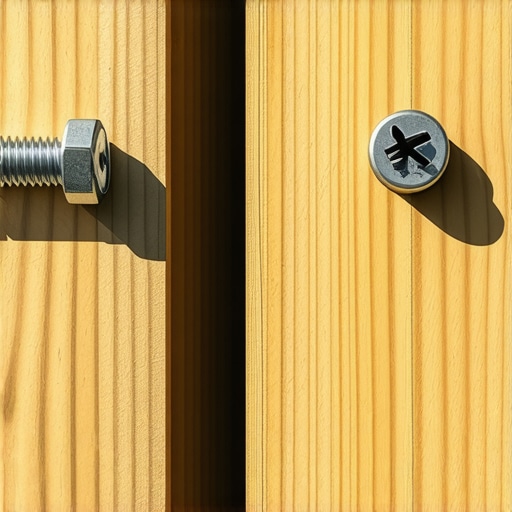
I’ll never forget the afternoon I nearly fell off a ladder because a massive lag bolt caught a knot and sent my drill spinning like a propeller. My wrists felt the vibration for a week. Back then, I thought bigger is better. I assumed those beefy bolts were the only way to ensure a rock-solid deck to house connection. But after splitting several expensive pressure-treated boards and spending half my day pre-drilling holes like a madman, I realized I was working way too hard for a result that wasn’t even superior.
Why I Threw Away My Lag Bolts and Never Looked Back
Building a deck should be about the joy of creating a space for summer BBQs, not about wrestling with outdated fasteners. When I first started out, lag bolts were the industry standard. They were thick, galvanized, and required a socket wrench and a lot of sweat. But then I discovered structural screws. The first time I used them, I felt like I was cheating. [IMAGE_PLACEHOLDER] No pre-drilling? No impact wrench needed for every single one? It changed everything about how I approach the design of an outdoor space. The real lightbulb moment happened when I saw a ledger board fail on a neighbor’s house because they hadn’t spaced their lags correctly, causing the wood to check and split. Structural screws, with their slimmer profile and high-tensile strength, distribute that load much more effectively. Have you ever had a drill kick back on you while trying to force a lag bolt into a tight corner?
Are these thinner screws actually strong enough for a heavy deck?
It’s the most common question I get from skeptical DIYers. “But they look so small!” I get it. We’re conditioned to think that girth equals strength. However, modern engineering tells a different story. According to the ICC-ES evaluation reports, high-performance structural screws often meet or exceed the shear strength of a standard 1/2-inch lag bolt while being significantly easier to install. Just like how I stopped using nails for deck boards because screws simply provide better withdrawal resistance, I’ve moved away from lags for the same reason: precision and reliability. The beauty of these fasteners is that they are heat-treated for incredible strength and coated to resist the chemicals in modern pressure-treated lumber. When you are trying to transform your outdoor living area, you want a connection that isn’t just good enough but is specifically designed for the task at hand. We’re going to dive into the specific math and the exact brands I trust in the next section, but first, let’s look at why the physics of a screw beats the brute force of a bolt every single time.
The Engineering That Makes Structural Screws Better
Structural screws work on a principle of high-thread engagement. While a lag bolt is essentially a giant, blunt nail with some threads at the end, a structural screw is precision-machined from heat-treated steel. When you drive one into a rim joist, it isn’t just sitting there; it is biting aggressively into the grain. This is why I always explain to clients that why I use structural screws instead of lag bolts for stairs is about more than just speed—it is about long-term stability. The screw pulls the two pieces of lumber together with a clamping force that a lag bolt, which often loses its grip as the wood dries and shrinks over the seasons, simply cannot match.
Drive Them Straight Without the Pre-Drilling Headache
One of the biggest time-wasters in old-school deck building was the drill-bit dance. You would have to find a bit slightly smaller than the lag, drill four inches deep, then swap to a socket. With structural screws, you skip the bit entirely. The tip of a high-performance structural screw is designed to self-bore, essentially acting as its own drill bit as it enters the wood. When you are designing safe and stylish stairs for outdoor decks in 2025, this precision allows you to place fasteners exactly where the engineering calls for them without worrying about the wood checking or splitting.
Fixing the Reeds Spring Trampoline Stairs
I once took on a repair for a family whose deck stairs were literally pulling away from the frame. It was a safety nightmare. The previous installer had tried to use heavy-duty nails and a couple of half-inch lags that had actually caused the stringers to split right down the middle because they didn’t pre-drill correctly. I backed those out and replaced them with specialized structural screws. Because of the slimmer profile and the way the threads are spaced, I was able to bridge those splits and pull the stringer tight against the header again. It solved the hidden reason your deck stairs are pulling away from the frame without having to rebuild the entire carriage. The client was shocked that a handful of skinny screws could make the stairs feel like a concrete slab.
Setting the Right Spacing for Maximum Shear
You cannot just wing it with placement. Even though these screws are incredibly strong, their performance depends on the staggered pattern. For a standard ledger board, I usually follow a staggered pattern that ensures no single grain line in the wood is carrying all the stress. When you are trying to achieve a solid-feeling composite surface, you need the underlying skeleton to be perfectly rigid. This also applies to the transition point where the stairs meet the ground. I always tell DIYers that why your deck stairs need a concrete landing pad at the bottom is to prevent the stringers from sinking, which can put a massive, unintended shear load on your structural screws at the top connection. Use a high-torque impact driver with a T-star bit; it prevents stripping and ensures you can drive the head perfectly flush with the wood surface every single time.
Despite what most weekend warriors believe, more isn’t always better. In fact, over-engineering is just as dangerous as under-building. Most homeowners assume that if they buy the most expensive boards, the deck will last forever. That’s a dangerous myth. In my years as a deck builder, I’ve seen $20,000 worth of material ruined because someone didn’t account for simple physics. Let’s talk about the ‘tight joint’ obsession. Everyone wants their composite deck to look like interior hardwood, with zero gaps. But if you don’t account for thermal expansion, you’re setting yourself up for disaster. I’ve seen beautiful installs turn into a roller coaster of warped plastic because of the hidden clip mistake that leads to buckling deck boards. When you’re choosing the right composite decking for durable low-maintenance outdoor areas, you have to look at the manufacturer’s gapping charts. It isn’t a suggestion; it’s a requirement. This is especially true when you transform your outdoor living with custom composite decking ideas that involve complex patterns like picture framing. If those mitered corners don’t have room to breathe, they will push against each other with enough force to shear the screws right off the joist.
Is there a limit to how many stringers you should use for composite stairs?
This is where the ‘over-engineering’ trap kicks in. Many DIYers think that if three stringers are good, six must be better. While you need support to prevent a bouncy feel, adding too many stringers without proper airflow creates moisture traps. According to research by the North American Deck and Railing Association (NADRA), nearly 30% of deck failures are linked to wood rot caused by trapped moisture in over-built or poorly ventilated sub-frames. When you are designing safe and stylish stairs for outdoor decks in 2025, you need to balance structural rigidity with drainage. Using the joist spacing secret for a solid-feeling composite surface is about precision, not just adding more wood.
The Ledger Gap That Saves Your Foundation
Speaking of moisture, the biggest ‘oops’ factor I see involves the ledger board. Most people slap the ledger directly against the siding and call it a day. That is a recipe for rot. I always advocate for why your ledger board needs a gap from the house siding. Even with high-end flashing, water finds a way to get trapped. By creating a drainage plane, you ensure that the house’s ‘skin’ can dry out. It’s a small nuance that separates a pro build from a weekend project that fails in five years. This is the kind of detail that defines innovative outdoor living ideas with composite decking in 2025. Neglecting this leads to the drainage gap error that traps rot against your house siding, which is a structural nightmare to fix. Don’t forget the stairs, either. Many people fall for the hidden flaw in pre-built deck stairs from big-box stores, which often use lower-grade lumber that isn’t rated for the same soil contact as your main posts. I also tell my crew that why I never use plastic shims for stair stringers is about long-term compression; those little plastic pieces fail under the weight of five people standing on the stairs at once. Have you ever fallen into this trap? Let me know in the comments.
The Gear That Makes the Pro Difference
I don’t care what the guys in the big-box aisles say; you need a dedicated high-torque impact driver if you’re serious about your joints. I personally lean on the Milwaukee M12 FUEL Surge because of the hydraulic drive. It is significantly quieter than a standard impact, which is a lifesaver for your hearing and your neighbors, but it also provides a much smoother torque delivery. This is vital when you are driving 6-inch structural screws into a rim joist, as it prevents the metal from overheating and snapping. Using the right tool is the first step in deck builder insights designing your dream outdoor space. If you are struggling to get into those tight corners under the joists, I recommend a right-angle attachment. It is a absolute lifesaver when you need to stop your deck from creaking every time someone walks by adding extra bracing or blocking after the decking is already down.
How can I keep my deck looking brand new for ten years?
The secret isn’t a pressure washer. In fact, please keep that thing away from your composite boards. High-pressure water can etch the surface and permanently ruin the wood-grain texture. Instead, I use a simple mix of Dawn dish soap and warm water with a soft-bristle deck brush. For stubborn spots, especially if you are wondering how to get grease stains off your composite deck after a summer burger flip, use a degreaser specifically rated for PVC. I have found that choosing the right composite decking for durable low-maintenance outdoor areas pays off here—higher-end brands have a much more resilient “cap” layer that resists fading and staining much better than the budget options.
Where Deck Building is Headed in 2026
Looking ahead, I see the industry moving away from pressure-treated lumber for the substructure entirely. Steel framing is becoming the new gold standard for those who want a truly “lifetime” deck. According to the American Wood Council’s (AWC) Design for Code Acceptance (DCA 6), while traditional wood frames are the current baseline, steel offers a level of precision and longevity that wood simply cannot match. It won’t rot, it won’t warp, and it allows for massive spans that open up innovative outdoor living ideas with composite decking in 2025. We are already seeing more homeowners ask for steel to avoid the “corrugated” look that wood joists can get over time.
The Advanced Move for Professional Results
One advanced move I’ve started doing on every single build is using the hidden cost of skipping joist tape on a new build to your advantage. It is a butyl tape that goes on top of the joist before the boards are laid. It seals around every screw, preventing water from seeping into the screw hole and rotting the wood from the inside out. If you really want to elevate your home top stairs designs for modern outdoor spaces, try this: paint the tops of your joists black before you tape them. This is a subtle version of the lighting trick that highlights the grain of your wood by creating a dark shadow line in the gaps that makes the deck colors truly pop. Give it a shot on your next project; the visual depth it adds is worth every penny of the tape cost.
The Hardest Lessons Learned Under the Joists
After decades of swinging a hammer, the biggest realization I’ve had is that precision beats power every single time. It took me years to realize that over-fastening actually weakens the wood by causing unnecessary stress fractures. When you are maximizing outdoor space with inspiring deck and stair ideas, focus on the quality of the connection rather than the quantity of the bolts. If you find yourself fighting the wood, step back; today’s structural fasteners are designed to glide in, not be hammered into submission.
The “Good Enough” Trap and Why It Fails
The most dangerous words in construction are “that looks solid enough.” I’ve seen decks that looked like tanks fall apart because of micro-cracks from oversized lag bolts. The lightbulb moment for me was realizing that a thinner, high-tensile screw allows the wood to expand and contract naturally. This is the difference between a deck that lasts ten years and one that lasts thirty. [IMAGE_PLACEHOLDER_E]
The Toolkit That Never Leaves My Truck
If you are feeling overwhelmed by the technical specs, don’t just guess. I personally rely on the NADRA (North American Deck and Railing Association) for the most up-to-date safety guidelines; they are the gold standard for understanding load-bearing requirements. For the physical work, I trust the Milwaukee Surge impact driver because it provides smooth, hydraulic torque that won’t snap heads off. For technical layouts, always keep a digital copy of the AWC DCA 6 handy; it is the “cheat sheet” that every professional deck builder uses to stay within code. Lastly, never skip butyl joist tape—it is the cheapest insurance policy you will ever buy for your frame.
Bring Your Dream Deck to Life
Building a space for your family to gather is one of the most rewarding projects you can undertake. By choosing modern materials and staying ahead of the composite decking trends for 2025, you aren’t just building a platform; you’re creating a decade of memories. Don’t let the technical details intimidate you—take it one joist at a time, and never be afraid to reach out for professional advice if a connection doesn’t feel right. Your future outdoor living area is worth the extra care today.
Have you ever had a deck board split right when you thought you were finished? Let me know your biggest DIY headache in the comments below!