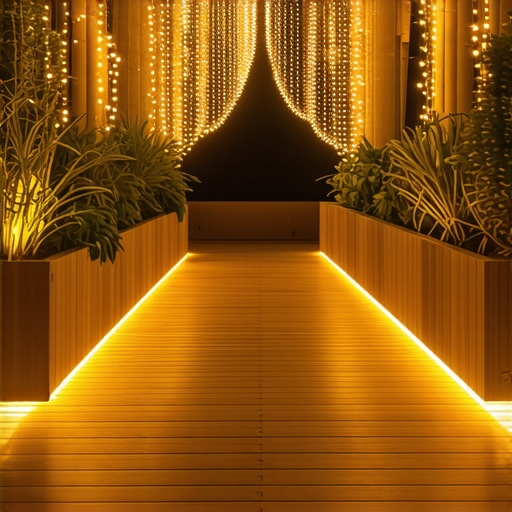
I remember the first time I hosted a summer barbecue on my new 10×10 deck. It was a classic ‘postage stamp’ design—functional but tiny. I had hired a skilled deck builder to ensure the structure was rock solid, but as soon as the sun dipped below the Ozark tree line, the space felt like it shrank by half. I flipped on the single, massive floodlight over the back door, and the result was depressing. The center of the deck was washed out in a blinding glare, while the corners vanished into a pitch-black void. It felt like standing on a lonely island in the middle of a dark ocean. That night, I realized that my deck wasn’t small because of the square footage; it was small because I hadn’t told the eyes where the boundaries actually were. Since then, I’ve spent years experimenting with composite decking and various luminaires to find the perfect balance. Today, I’m going to share the exact lighting layout that uses visual trickery to push back the dark and make your cozy deck feel like a grand veranda.
Stop Shrinking Your Space with Harsh Floodlights
The biggest mistake I made early on was thinking that more light equals more space. It’s actually the opposite. One high-intensity light source creates ‘flat’ vision. When you have one bright spot and deep shadows everywhere else, your brain can’t perceive depth. This makes the edges of your outdoor living area disappear. To fix this, we need to think in layers. By spreading smaller, softer lights around the perimeter, we can define the ‘walls’ of your outdoor room. I once tried to save money by just using string lights, but they only lit the top of everyone’s heads, leaving the floor—the most important part for perception—completely dark. It looked cluttered rather than expansive. According to the American Lighting Association, layered lighting is essential for creating depth because it prevents the flattening effect of single-source illumination, allowing the eye to travel across different focal points.
Does fancy lighting really make a difference on a budget?
You might be wondering if you really need to invest in a complex system for a small area. The answer is a resounding yes, but ‘complex’ doesn’t have to mean expensive. Even a few well-placed riser lights on your outdoor stairs can instantly ground the space and make it feel larger. When you see the floor glowing at the edges, your brain registers that the usable space continues further than it thought. Have you ever felt like your deck disappears into the woods the moment the sun sets? It’s a common frustration, and usually, the culprit is a lack of vertical light. We need to pick the right deck lighting color temperature to ensure the transition from the house to the yard feels seamless rather than clinical.
Pushing Back the Dark to Create Infinite Borders
The secret to the ‘twice as big’ look is perimeter highlighting. If you light up the railing posts or the very edge of the deck boards, you are effectively pushing the darkness back. This creates a visual ‘horizon line’ for your deck. I prefer using low-voltage LED caps on every other post. It creates a rhythm of light that draws the eye outward. In my early builds, I made the mistake of only lighting the area closest to the door, which made the back edge feel like a dangerous cliff. By spreading the light, you invite guests to move toward the edges, effectively increasing the ‘livable’ feel of every square inch. We’re going to dive into how to position these fixtures without causing glare, ensuring your small deck remains the best seat in the house long after twilight.
Nail the Foundation with Recessed Riser Lights
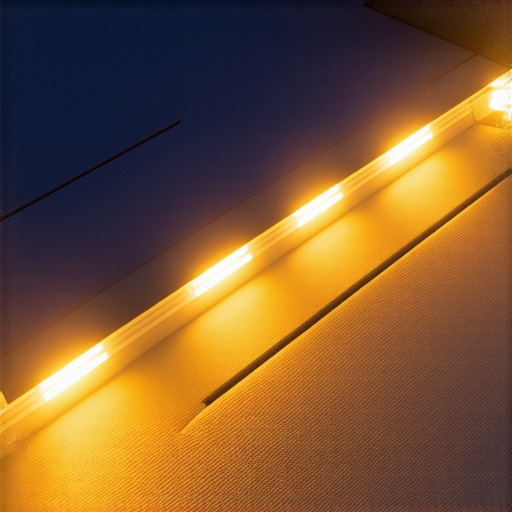
The transition between your house and the ground is where most small decks feel the most claustrophobic. If you can’t see where you’re stepping, your personal space ends at your toes. I’ve found that installing small, recessed LEDs directly into the outdoor stairs is the most effective way to ‘ground’ the structure. It’s like the floor-level lighting in a movie theater; it defines the path without screaming for attention. When I worked on a tiny 8×10 project in Reeds Spring, the homeowner felt the space was a ‘death trap’ at night. We added four simple riser lights, and suddenly, the yard didn’t feel like a black hole—it felt like a reachable destination. This is the best way to light stairs for safety while simultaneously making the deck floor appear to extend downward and outward.
Hide the Source to Eliminate the Blind Spot
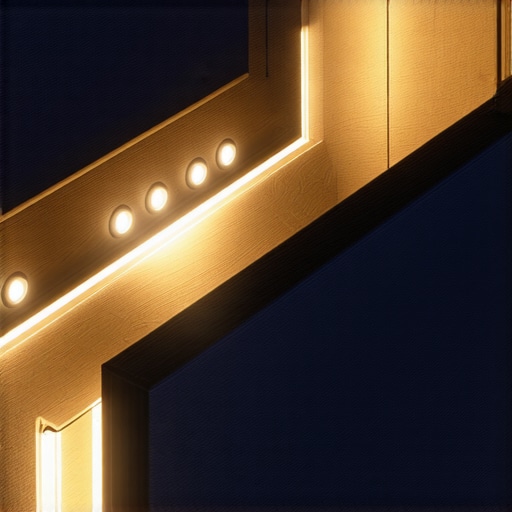
One of the biggest ‘aha’ moments in my career as a skilled deck builder came when I stopped putting lights on top of the posts and started hiding them underneath. If you can see the lightbulb, you’ve already lost the battle against glare. High-mounted lights constrict your pupils, making everything beyond the railing look even darker than it actually is. Instead, I recommend learning how to install deck lighting under the handrail for a subtle glow. This creates a wash of light that hits the composite decking boards but keeps your eyes in the ‘dark-adapted’ zone. I remember a specific 12×12 build where we used a cocktail rail that stays perfectly level to house a continuous LED strip. The result was a soft, architectural halo that made the railing seem like it was floating. It completely removed the feeling of being ‘caged in’ by the dark.
Borrow Space from the Yard to Blur the Boundaries
If your lighting stops at the edge of your deck boards, your living space stops there too. To make a small deck feel massive, you have to ‘borrow’ the surrounding landscape. This is where connecting your custom deck to a high-end landscape becomes your best design tool. By placing one or two low-voltage spotlights on a nearby tree or a piece of shrubbery, you draw the eye past the railing. When your brain sees a lit-up oak tree twenty feet away, it registers that entire twenty-foot gap as part of your ‘room.’ I once experimented with this on my own small porch by simply aiming a 3-watt uplight at a large rock feature. It instantly turned a cramped sitting area into a wide-open outdoor living experience. You are essentially painting the boundaries of your property with light rather than letting the darkness dictate your limits. For the best results, use the best low-voltage transformers to ensure your deck and landscape lights are perfectly synced in brightness.
The Symmetry Trick for Narrow Balconies
For narrow spaces, symmetry is your best friend to avoid a cluttered look. If you have a long, skinny deck, don’t just light one side. This creates a ‘tunnel’ effect that makes the space feel even tighter. Instead, place lights in a staggered pattern on opposite sides. This zigzag of light forces the eye to move back and forth across the width of the deck as you look down its length. I’ve used this trick on dozens of inspiring deck and stair ideas to make a walkway feel like a grand gallery. By keeping the light levels low and the spacing consistent, you create a sense of rhythm that makes the distance feel intentional and expansive rather than cramped and accidental. Just be sure to highlight the grain of your wood or composite boards to add that extra layer of texture that catches the light and adds perceived depth to the surface.
Most homeowners—and honestly, a few contractors I’ve met—believe that to make a staircase safe, you need to blast it with as much light as possible. This is a massive mistake. In my years as a professional deck builder, I’ve seen ‘over-lighting’ cause more accidents than under-lighting. When you use high-wattage bulbs, you create a high-contrast environment. Your eyes adjust to the bright center of the step, leaving the edges in a pitch-black ‘shadow trap.’ This is where the stair tread depth that feels safest becomes irrelevant because you literally cannot see where the tread ends and the riser begins.
The Shadow Trap Most Pros Overlook
The ‘Oops’ factor I see most often involves the placement of overhead lights relative to the railing. If a light is positioned behind a person walking down the stairs, their own body casts a long, dark shadow over the very steps they are trying to navigate. This is particularly dangerous with composite decking, which can have a slight sheen that reflects glare back into your eyes while the shadows hide the depth of the step. The Illuminating Engineering Society (IES) emphasizes that ‘light uniformity’ is the gold standard for safety; having a consistent, low-level glow is far superior to having ‘bright spots’ followed by ‘dark spots.’ If you want to avoid this, stop looking at the ceiling and start looking at the floor. Using a subtle side-light or riser-mounted LED is the only way to ensure the walking surface is clear without blinding the person using it.
Why is your composite decking expanding more than the manufacturer promised?
This is a question I get from advanced DIYers who followed every instruction but still see their boards buckling. The ‘hidden nuance’ here isn’t just the heat—it’s the ventilation and the friction of the fasteners. People often assume that innovative outdoor living ideas just involve aesthetics, but the physics of the substructure is where the battle is won. If you don’t account for the ‘thermal bridge’ between the dark boards and the joists, the boards will move more than the specs suggest. I’ve found that using double joists under every composite seam provides the necessary stability to prevent that unsightly ‘waving’ effect in the summer. Furthermore, if you ignore the hidden clip mistake that leads to buckling deck boards, you are essentially pinning the board in place and forcing it to warp when it tries to grow in the sun. Have you ever fallen into this ‘more is better’ lighting trap or seen your boards move unexpectedly? Let me know in the comments. Let’s dig deeper into how we can fix the structural issues that might be making your outdoor space feel less than premium.
Fixing those structural issues starts with the right hardware. Most people reach for old-school lag bolts when they are working on stringers, but as a professional deck builder, I can tell you that’s a recipe for a split board. I’ve switched entirely to using structural screws. They have a smaller diameter but significantly higher shear strength, which means they don’t require the aggressive pre-drilling that often weakens the structural wood. This is the same reason using the right bracket for your stairs is non-negotiable. If you want that ‘rock-solid’ feel when you walk out with a heavy tray of drinks, you need to stop treating your deck like a temporary structure and start treating it like a piece of high-end furniture.
Stop Blasting Your Deck with High Pressure
I see it every spring: a well-meaning homeowner brings out a 3000-PSI pressure washer and proceeds to etch permanent scars into their expensive boards. You should never use a pressure washer on composite decks. The high pressure can delaminate the ‘cap’ layer of the board, leaving it porous and prone to staining. Instead, I use a soft-bristle brush and a simple mixture of Dawn dish soap and warm water. For stubborn spots, specifically on darker colors, knowing the best way to clean bird droppings can save you hours of frustration without ruining the finish. If you want to go a step further, I highly recommend a ‘soft wash’ system that uses low-pressure chemical application rather than raw mechanical force.
How do I maintain my outdoor lighting and stairs for years to come?
Maintenance isn’t just about cleaning the surface; it’s about protecting the invisible components that keep the system running. Every autumn, I go around my deck and apply a tiny dab of dielectric grease to every lighting socket. This prevents moisture from corroding the pins during the wet months. According to National Electrical Code (NEC) Article 411, low-voltage lighting systems must be installed with specific attention to secondary circuit protection and burial depth to ensure long-term safety. If you skip this, your beautiful cozy lighting will start flickering by the third season. I also suggest checking if your deck ledger is pulling away from the house once a year. It only takes five minutes but can prevent a catastrophic failure.
Looking Ahead to the AI-Powered Backyard
Looking forward to 2025 and beyond, I predict we’re going to see a massive shift toward AI-integrated innovative outdoor living ideas. We are already seeing motion sensors that don’t just flip on a switch, but gradually ‘ramp up’ the brightness as you walk toward the stairs. This creates a much more natural, high-end experience that reduces eye strain. Eventually, your deck will likely adjust its own lighting temperature based on the time of year and the surrounding foliage colors. If you’re building now, make sure you use the best low-voltage transformers that are compatible with smart-home hubs. It’s a small upgrade now that prevents your system from becoming a dinosaur in three years. My challenge to you: pick one lighting zone this weekend—maybe just the stairs—and swap out those harsh bulbs for a warmer, recessed LED. Your eyes and your guests will thank you.
Lessons I Learned the Hard Way Under a Half-Moon
After decades of sawdust and late-night wiring, I’ve realized that the best deck builder insights don’t come from a manual, but from sitting on a finished deck at 10 PM. First, I learned that ‘safety’ lighting doesn’t have to look like a prison yard; soft, indirect light is actually safer because it doesn’t create blinding glare that causes temporary night blindness. Second, never underestimate the power of a dark corner to make a large space feel tiny; if you can’t see it, your brain assumes it isn’t there. Finally, the best investment you can make isn’t always the most expensive board, but the hardware that holds it all together—like choosing structural screws instead of lag bolts for long-term peace of mind and structural integrity.
Tools That Won’t Let You Down When the Rain Starts
When you’re building for the long haul, there are a few things I never compromise on. For any project involving more than five fixtures, you need to invest in the best low-voltage transformers to handle the load without flickering or burning out during a humid Ozark summer storm. I also swear by 12-gauge landscape wire; it’s beefier than the standard stuff and prevents voltage drop at the far end of your run. For the structure itself, I always point homeowners toward inspiring deck and stair ideas that prioritize airflow, as stagnant air is the true enemy of even the most high-end composite decking.
#IMAGE_PLACEHOLDER_E#
Claim Your Evenings Back from the Shadows
Your outdoor living area is more than just a collection of boards and bulbs; it is the backdrop for your family’s best memories, from quiet morning coffees to vibrant summer celebrations. Whether you are upgrading an existing porch or starting fresh with a new project, remember that you are in control of the atmosphere. Don’t be afraid to experiment with different lighting layouts until the space feels exactly right for your lifestyle. Taking the time to work with a professional deck builder can ensure your vision becomes a durable, safe, and beautiful reality. Now, I want to hear from you. Have you ever tried a lighting trick that completely changed how you used your outdoor space? Let me know in the comments below!