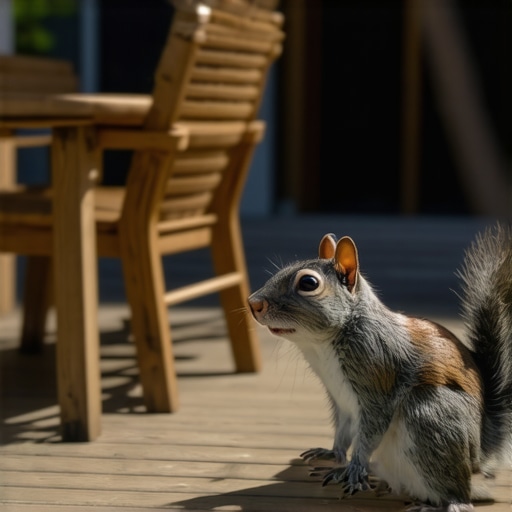
I remember sitting on my deck one crisp Saturday morning, coffee in hand, ready to enjoy the sunrise. My peace lasted exactly four seconds. That is when I noticed the corner of my brand-new teak side table—the one I had saved up for months to buy—looked like it had been fed through a wood chipper. A squirrel was perched right there, staring me down while nonchalantly grinding its teeth into the wood. It was personal. I felt like a failure; I had spent so much time working with a professional deck builder to create a beautiful space, only to have it become a literal snack for the local wildlife. If you have ever felt that surge of adrenaline and frustration at the sight of wood shavings on your patio, you are not alone. Today, I am going to share the exact strategies that actually worked for me, so you can stop being a victim to these fuzzy-tailed chainsaws.
When My Backyard Sanctuary Turned Into a Wood-Chewing War Zone
The truth is, we invest a lot in our innovative outdoor living ideas, but we often forget that nature does not always play by our rules. When I first started my battle against the squirrels, I made a classic amateur mistake: I thought a little bit of diluted hot sauce sprayed on the furniture would be the end of it. It was not. In fact, the next time the wind picked up, I managed to pepper-spray myself while the squirrels seemingly enjoyed the extra spice on their cedar appetizer. It was a messy, tearful realization that half-measures do not work when you are dealing with animals that are biologically programmed to gnaw. According to experts at the University of Nebraska-Lincoln, a squirrel’s incisors grow up to six inches per year, which means they aren’t just chewing to be annoying—they are chewing to survive. This is why using indoor furniture on an open deck is an even bigger risk, as softer woods and fabrics are even easier for them to destroy in a single afternoon. Have you ever walked out to find your favorite chair armrest completely vanished overnight?
Do these home remedies actually keep the rodents away?
It is easy to get skeptical when you see a list of ‘hacks’ like hanging old CDs or using peppermint oil. I certainly was. After my hot sauce disaster, I questioned if anything short of a full-time security guard would protect my investment. But the real solution lies in understanding their behavior. Just like you would take steps to stop your deck from becoming a playground for raccoons, managing squirrels requires a multi-pronged approach that targets their sense of smell, taste, and their need for better alternatives. We are going to look at how to create a perimeter that actually holds up, even when you aren’t there to wave your broom at them. Before you give up and move back indoors, let me show you the combinations of deterrents and design choices that turned my deck back into a place for humans, not a buffet for rodents.
Stop the Gnawing with Bitter Science
After my hot sauce debacle, I realized I needed a system that did not wash away with the first Ozark drizzle. The first thing you have to do is stop treating your deck like a DIY kitchen experiment. While peppermint oil might smell nice to you, it is basically a spa treatment for a determined rodent. Instead, look for commercial-grade taste deterrents containing denatonium benzoate. This is the bitterest chemical compound known to man, and unlike my homemade pepper spray, it is designed to bond with wood fibers. I applied this to the undersides of my railings and the edges of my stairs, and the result was immediate. I watched a squirrel take one confident bite of a stair tread, recoil as if it had just licked a 9-volt battery, and spend the next ten minutes wiping its face on the grass. It was the first victory I had in months. However, chemical deterrents are only part of the secret to making your deck furniture last through the seasons. You have to combine taste with physical obstruction if you want a long-term solution.
Swap the Buffet for Something They Can’t Bite
If you are tired of the constant maintenance of wood, the most effective ‘set it and forget it’ strategy is to remove the incentive entirely. This is why many homeowners are moving toward choosing the right composite decking for their renovations. Squirrels chew wood because it is soft enough to yield to their teeth but hard enough to sharpen them. Composite materials, especially those with a high-density capping, are simply not satisfying for them to gnaw on. When I finally replaced my chewed-up cedar balusters, I realized why I stopped using cedar for modern deck rail designs in favor of aluminum or composite. Metal railings are the ultimate deterrent; a squirrel trying to sharpen its teeth on powder-coated aluminum is like a human trying to chew on a manhole cover. It just doesn’t happen.
Reinforce the Vulnerable Spots with Metal and Plastic
Not everyone can replace their entire deck tomorrow, so you have to get tactical with the structure you have. Focus on the ‘lead-in’ points where squirrels transition from the ground to your living space. I once had a 6×6 support post that was being systematically whittled down to a toothpick. To fix it, I didn’t reach for a spray; I reached for hardware cloth. I wrapped the base of the post in a fine, galvanized steel mesh and tucked the edges tightly. To make it look less like a construction site, I used a high-quality trim piece to cover the mesh. You can also use clear polycarbonate shields—the kind used for corner guards in high-traffic hallways—screwed directly onto the corners of your posts. I tried this on my main stair run, and the squirrel’s confusion was priceless. It couldn’t get a grip on the slick surface and eventually gave up. While you are at it, ensure your stairs are structurally sound; using the bracket that makes your deck stairs feel rock solid ensures that no matter how much nature tries to vibrate or gnaw at your structure, the joints stay tight. You should also take this time to inspect the skeleton of your deck. Learning how to keep your deck joists from rotting is just as important as stopping the squirrels, as soft, rotting wood is even more attractive to nesting rodents and insects.
The common wisdom says that switching to composite is a ‘one and done’ fix for wildlife issues. In my experience, that is a dangerous oversimplification. I have seen homeowners spend thousands on materials only to ignore the nuances of the joist spacing secret for a solid-feeling composite surface, which leads to boards that flex and create gaps—literal handholds for squirrels. If your deck builder cuts corners on the subframe, nature will find the weak point. Even worse is the ‘Oops’ factor of sealing your deck too tightly. Many people think that closing off every inch of the underside of their stairs is the best way to stop your deck from becoming a playground for raccoons or squirrels. However, without proper airflow, you are creating a humid microclimate that invites disaster. According to research from the Forest Products Laboratory, restricted ventilation accelerates fungal decay and actually makes the remaining wood softer and easier for rodents to chew through. Have you ever fallen into this trap of over-sealing your structure only to find a bigger mess a year later? Let me know in the comments.
Is Your Staircase Stringer Secretly Inviting Rot and Rodents?
Beyond just the chewing, we have to talk about the structural nuances of stairs. A major mistake I see is when the stair stringer measurement mistake that ruins your stride also leaves the ‘throat’ of the stringer too thin. This causes hairline cracking over time, and those cracks are like neon signs for carpenter ants and nesting squirrels. When you work with a skilled deck builder, they know to use structural fasteners that prevent the wood from splitting as it dries. This is why using structural screws instead of lag bolts for stairs is a game-changer; it keeps the joints so tight that there is no ‘give’ for a squirrel to get its teeth into. 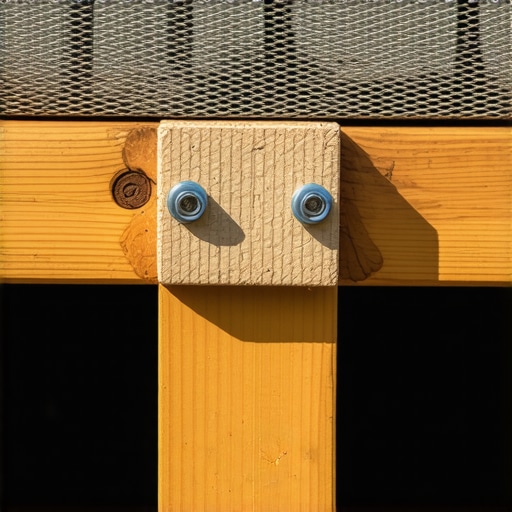 Also, do not forget the importance of how to vent the space under your deck properly. It sounds counter-intuitive to leave openings when you are fighting pests, but a dry deck is a resilient deck. When you combine a high-quality material like the best composite decking for high-traffic entryways with smart, breathable framing, you are not just deterring animals; you are building a structure that outlasts their interest.
To keep that structure in peak condition, I have stopped relying on generic hardware store kits and started treating my deck like a high-performance machine. The first tool I never step onto a job site without is a dedicated end-cut sealer. Even if you are using composite for the surface, your framing is likely pressure-treated wood. I have found that learning the best way to seal the end cuts of pressure treated lumber is the only way to stop rot from creeping in where the squirrels have already done their damage. This is not just my opinion; according to the North American Deck and Railing Association (NADRA), over 40 million decks in the U.S. are past their original life expectancy, and structural failure almost always begins at these unprotected connection points. When the wood softens from moisture, it becomes an open invitation for rodents to start nesting.
The Fastener Strategy That Keeps Squirrels and Squeaks Away
I am often asked why I do not just use standard deck screws for everything. The truth is, squirrels and temperature swings are a brutal combination for cheap fasteners. I have shifted my entire approach to a hybrid method: using hidden clips for the field but screws for the perimeter. This allows the composite boards to expand and contract naturally without warping, which prevents those tiny gaps that squirrels love to use as leverage for their teeth. If you have noticed your stairs making noise every time you step outside, it is likely a hardware issue. I recommend investigating why your deck stairs squeak so you can silence them before the movement causes structural loosening. For my own projects, I have found that stainless steel hardware is the only way to go if you want a deck that lasts thirty years instead of ten.
How do I maintain my outdoor sanctuary over time?
Maintaining a high-end deck is less about heavy labor and more about consistent, specialized care. You should never, for instance, reach for a high-pressure nozzle to clean your surface. I’ve seen beautiful finishes ruined in seconds because someone didn’t realize why you should never use a pressure washer on composite. Instead, focus on targeted cleaning. If you have overhanging trees, you will eventually deal with birds, and knowing the best way to clean bird droppings without scratching the capping is vital for preserving that deep, rich color. For the long haul, I predict we are going to see a massive shift toward fully integrated smart-decks. In composite decking trends for 2025, we are already seeing boards with built-in sensors to detect moisture levels in the joists. If you want to stay ahead of the curve, start by upgrading your current hardware. Go out this weekend and check your ledger board—if you see even a millimeter of a gap, contact a professional immediately to discuss tension ties before the next big storm hits.
I remember sitting on my deck one crisp Saturday morning, coffee in hand, ready to enjoy the sunrise. My peace lasted exactly four seconds. That is when I noticed the corner of my brand-new teak side table—the one I had saved up for months to buy—looked like it had been fed through a wood chipper. A squirrel was perched right there, staring me down while nonchalantly grinding its teeth into the wood. It was personal. I felt like a failure; I had spent so much time working with a professional deck builder to create a beautiful space, only to have it become a literal snack for the local wildlife. If you have ever felt that surge of adrenaline and frustration at the sight of wood shavings on your patio, you are not alone. Today, I am going to share the exact strategies that actually worked for me, so you can stop being a victim to these fuzzy-tailed chainsaws.
When My Backyard Sanctuary Turned Into a Wood-Chewing War Zone
The truth is, we invest a lot in our innovative outdoor living ideas, but we often forget that nature does not always play by our rules. When I first started my battle against the squirrels, I made a classic amateur mistake: I thought a little bit of diluted hot sauce sprayed on the furniture would be the end of it. It was not. In fact, the next time the wind picked up, I managed to pepper-spray myself while the squirrels seemingly enjoyed the extra spice on their cedar appetizer. It was a messy, tearful realization that half-measures do not work when you are dealing with animals that are biologically programmed to gnaw. According to experts at the University of Nebraska-Lincoln, a squirrel’s incisors grow up to six inches per year, which means they aren’t just chewing to be annoying—they are chewing to survive. This is why using indoor furniture on an open deck is an even bigger risk, as softer woods and fabrics are even easier for them to destroy in a single afternoon. Have you ever walked out to find your favorite chair armrest completely vanished overnight?
Do these home remedies actually keep the rodents away?
It is easy to get skeptical when you see a list of ‘hacks’ like hanging old CDs or using peppermint oil. I certainly was. After my hot sauce disaster, I questioned if anything short of a full-time security guard would protect my investment. But the real solution lies in understanding their behavior. Just like you would take steps to stop your deck from becoming a playground for raccoons, managing squirrels requires a multi-pronged approach that targets their sense of smell, taste, and their need for better alternatives. We are going to look at how to create a perimeter that actually holds up, even when you aren’t there to wave your broom at them. Before you give up and move back indoors, let me show you the combinations of deterrents and design choices that turned my deck back into a place for humans, not a buffet for rodents.
Stop the Gnawing with Bitter Science
After my hot sauce debacle, I realized I needed a system that did not wash away with the first Ozark drizzle. The first thing you have to do is stop treating your deck like a DIY kitchen experiment. While peppermint oil might smell nice to you, it is basically a spa treatment for a determined rodent. Instead, look for commercial-grade taste deterrents containing denatonium benzoate. This is the bitterest chemical compound known to man, and unlike my homemade pepper spray, it is designed to bond with wood fibers. I applied this to the undersides of my railings and the edges of my stairs, and the result was immediate. I watched a squirrel take one confident bite of a stair tread, recoil as if it had just licked a 9-volt battery, and spend the next ten minutes wiping its face on the grass. It was the first victory I had in months. However, chemical deterrents are only part of the secret to making your deck furniture last through the seasons. You have to combine taste with physical obstruction if you want a long-term solution.
Swap the Buffet for Something They Can’t Bite
If you are tired of the constant maintenance of wood, the most effective ‘set it and forget it’ strategy is to remove the incentive entirely. This is why many homeowners are moving toward choosing the right composite decking for their renovations. Squirrels chew wood because it is soft enough to yield to their teeth but hard enough to sharpen them. Composite materials, especially those with a high-density capping, are simply not satisfying for them to gnaw on. When I finally replaced my chewed-up cedar balusters, I realized why I stopped using cedar for modern deck rail designs in favor of aluminum or composite. Metal railings are the ultimate deterrent; a squirrel trying to sharpen its teeth on powder-coated aluminum is like a human trying to chew on a manhole cover. It just doesn’t happen.
Reinforce the Vulnerable Spots with Metal and Plastic
Not everyone can replace their entire deck tomorrow, so you have to get tactical with the structure you have. Focus on the ‘lead-in’ points where squirrels transition from the ground to your living space. I once had a 6×6 support post that was being systematically whittled down to a toothpick. To fix it, I didn’t reach for a spray; I reached for hardware cloth. I wrapped the base of the post in a fine, galvanized steel mesh and tucked the edges tightly. To make it look less like a construction site, I used a high-quality trim piece to cover the mesh. You can also use clear polycarbonate shields—the kind used for corner guards in high-traffic hallways—screwed directly onto the corners of your posts. I tried this on my main stair run, and the squirrel’s confusion was priceless. It couldn’t get a grip on the slick surface and eventually gave up. While you are at it, ensure your stairs are structurally sound; using the bracket that makes your deck stairs feel rock solid ensures that no matter how much nature tries to vibrate or gnaw at your structure, the joints stay tight. You should also take this time to inspect the skeleton of your deck. Learning how to keep your deck joists from rotting is just as important as stopping the squirrels, as soft, rotting wood is even more attractive to nesting rodents and insects.
The common wisdom says that switching to composite is a ‘one and done’ fix for wildlife issues. In my experience, that is a dangerous oversimplification. I have seen homeowners spend thousands on materials only to ignore the nuances of the joist spacing secret for a solid-feeling composite surface, which leads to boards that flex and create gaps—literal handholds for squirrels. If your deck builder cuts corners on the subframe, nature will find the weak point. Even worse is the ‘Oops’ factor of sealing your deck too tightly. Many people think that closing off every inch of the underside of their stairs is the best way to stop your deck from becoming a playground for raccoons or squirrels. However, without proper airflow, you are creating a humid microclimate that invites disaster. According to research from the Forest Products Laboratory, restricted ventilation accelerates fungal decay and actually makes the remaining wood softer and easier for rodents to chew through. Have you ever fallen into this trap of over-sealing your structure only to find a bigger mess a year later? Let me know in the comments.
Is Your Staircase Stringer Secretly Inviting Rot and Rodents?
Beyond just the chewing, we have to talk about the structural nuances of stairs. A major mistake I see is when the stair stringer measurement mistake that ruins your stride also leaves the ‘throat’ of the stringer too thin. This causes hairline cracking over time, and those cracks are like neon signs for carpenter ants and nesting squirrels. When you work with a skilled deck builder, they know to use structural fasteners that prevent the wood from splitting as it dries. This is why using structural screws instead of lag bolts for stairs is a game-changer; it keeps the joints so tight that there is no ‘give’ for a squirrel to get its teeth into. Also, do not forget the importance of how to vent the space under your deck properly. It sounds counter-intuitive to leave openings when you are fighting pests, but a dry deck is a resilient deck. When you combine a high-quality material like the best composite decking for high-traffic entryways with smart, breathable framing, you are not just deterring animals; you are building a structure that outlasts their interest.
To keep that structure in peak condition, I have stopped relying on generic hardware store kits and started treating my deck like a high-performance machine. The first tool I never step onto a job site without is a dedicated end-cut sealer. Even if you are using composite for the surface, your framing is likely pressure-treated wood. I have found that learning the best way to seal the end cuts of pressure treated lumber is the only way to stop rot from creeping in where the squirrels have already done their damage. This is not just my opinion; according to the North American Deck and Railing Association (NADRA), over 40 million decks in the U.S. are past their original life expectancy, and structural failure almost always begins at these unprotected connection points. When the wood softens from moisture, it becomes an open invitation for rodents to start nesting.
The Fastener Strategy That Keeps Squirrels and Squeaks Away
I am often asked why I do not just use standard deck screws for everything. The truth is, squirrels and temperature swings are a brutal combination for cheap fasteners. I have shifted my entire approach to a hybrid method: using hidden clips for the field but screws for the perimeter. This allows the composite boards to expand and contract naturally without warping, which prevents those tiny gaps that squirrels love to use as leverage for their teeth. If you have noticed your stairs making noise every time you step outside, it is likely a hardware issue. I recommend investigating why your deck stairs squeak so you can silence them before the movement causes structural loosening. For my own projects, I have found that stainless steel hardware is the only way to go if you want a deck that lasts thirty years instead of ten.
How do I maintain my outdoor sanctuary over time?
Maintaining a high-end deck is less about heavy labor and more about consistent, specialized care. You should never, for instance, reach for a high-pressure nozzle to clean your surface. I’ve seen beautiful finishes ruined in seconds because someone didn’t realize why you should never use a pressure washer on composite. Instead, focus on targeted cleaning. If you have overhanging trees, you will eventually deal with birds, and knowing the best way to clean bird droppings without scratching the capping is vital for preserving that deep, rich color. For the long haul, I predict we are going to see a massive shift toward fully integrated smart-decks. In composite decking trends for 2025, we are already seeing boards with built-in sensors to detect moisture levels in the joists. If you want to stay ahead of the curve, start by upgrading your current hardware. Go out this weekend and check your ledger board—if you see even a millimeter of a gap, contact a professional immediately to discuss tension ties before the next big storm hits.
The Hardest Lesson I Learned About Backyard Defense
One thing I wish someone had told me early on is that nature is relentless but predictable. If you leave a soft wood edge exposed, it will eventually be chewed. I discovered that upgrading to a capped material is the only real ‘permanent’ shield. When you are choosing the right composite decking for durable areas, you are essentially removing the tree-like texture that squirrels crave. Another lightbulb moment? Check your structure for hairline gaps. I found that cracking at the stair stringer throat was not just a safety issue—it was a perfect nesting invitation for smaller rodents. Keep your joints tight, and the local wildlife will look elsewhere for a home.
Tools That Stop the Teeth for Good
If you are ready to get serious, stop looking in the kitchen pantry and start looking at professional-grade solutions. Here is what stays in my defense toolkit: #IMAGE_PLACEHOLDER_E#
- Denatonium Benzoate Sprays: This is the gold standard for taste deterrents. It is the bitterest substance known to man, and it stays on the wood longer than any pepper-based DIY mix.
- Galvanized Hardware Cloth: A roll of 1/4-inch steel mesh is your best friend. Wrap your post bases and hide it behind decorative trim for an invisible, bite-proof barrier.
- High-Efficiency Lighting: Squirrels hate feeling exposed. Using a lighting setup that highlights the grain or keeps the perimeter bright can often be enough to make them scurry back to the safety of the trees.
Reclaim Your Peace and Quiet
You did not build a deck to spend every morning chasing away rodents with a broom. By combining smart material choices with tactical deterrents, you can finally enjoy that sunrise without the sound of gnawing wood in the background. If the damage is already done, do not panic—it is just an opportunity to upgrade. Use these deck builder insights to plan a structure that is as tough as it is beautiful. Your outdoor living space should be your sanctuary, not a squirrel’s cafeteria. What is the weirdest thing a squirrel has tried to chew on your patio? Let me know in the comments below!