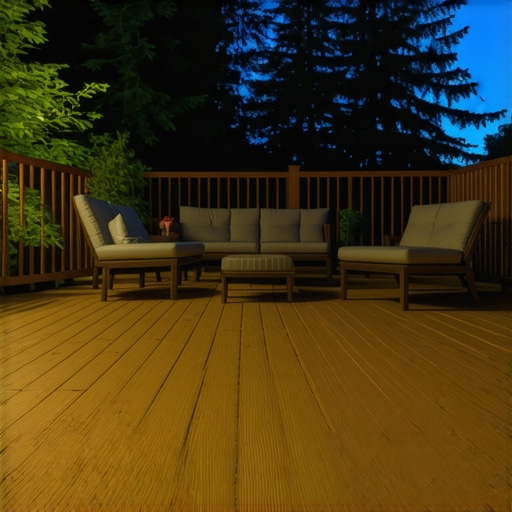
I woke up at 3:00 AM last Tuesday to the sound of what I thought was a small child dragging a heavy garbage can across my patio. Heart pounding, I peered through the glass door, only to see a massive raccoon comfortably seated in my favorite Adirondack chair, casually shucking a stolen ear of corn. It looked at me with zero fear, as if I were the intruder. My beautiful outdoor living space had become a 24-hour diner for the local wildlife, and honestly, it felt personal. If you have spent time and money on composite decking trends in 2025 to create a sanctuary, the last thing you want is a group of masked bandits leaving muddy paw prints and foul-smelling surprises all over your investment. We are going to fix that today with some hard-won wisdom.
Why Your Backyard Retreat Is Actually a Raccoon Hotel
Let us be real: we build these spaces for ourselves, but we often inadvertently design them to be raccoon paradise. When I first started working as a professional deck builder, I focused entirely on the aesthetics and the structural integrity—making sure the frame was solid and the stairs were safe. What I completely missed was how much raccoons love the dark, cozy voids we leave underneath our structures. I made the classic mistake of leaving the area under my own joists wide open, thinking a few lattice panels would be enough of a deterrent. I was wrong. Within a month, a mother raccoon had moved in, and the mess was enough to ruin any summer BBQ. You have to think like a tenant, not a homeowner, to see where your deck is vulnerable.
Can You Really Outsmart These Little Geniuses?
You might be skeptical because you have tried the fake owls or the scented sprays before. I certainly was. Raccoons are incredibly clever; according to the Humane Society of the United States, these animals can solve complex locks in fewer than ten attempts and can remember those solutions for up to three years. They are not just pests; they are highly motivated engineers looking for a dry place to stay. If you are worried that your deck is too high or too open for them to bother with, think again. They see every nook as a potential nursery. Whether you are currently venting the space under your deck to prevent rot or just trying to keep the trash cans safe, the structural approach is the only one that lasts. Have you ever found yourself in a midnight standoff with a raccoon on your own property? I would love to hear your horror stories in the comments. Let us get into the practical steps to shut down the buffet for good.
Build a Fortress Underground with Hardware Cloth
To stop a determined raccoon, you need to think beyond the surface level. A few years back, I helped a homeowner who had tried to save twenty bucks by using standard chicken wire to wrap the base of their stairs. Within three nights, a raccoon had used its paws to peel that wire back like the lid of a tuna can. It was a mess of bent metal and angry wildlife. Since then, I only recommend 1/2-inch or 1/4-inch galvanized hardware cloth. Think of this as a chain-mail suit for your deck frame; it is far more rigid than chicken wire and resists the constant gnawing and pulling that raccoons are known for.
Dig Deep to Stop the Tunneling
Raccoons are surprisingly good at digging, especially if they smell a cozy nesting spot under your professional deck builder’s handiwork. You cannot just staple the mesh to the bottom of the joists and call it a day. You need to dig a trench at least 12 inches deep around the entire perimeter. Attach the hardware cloth to the deck frame, run it straight down into the trench, and then bend the bottom 6 inches outward in an ‘L’ shape. This ‘apron’ technique is the secret sauce. When a raccoon tries to dig down at the base of the deck, they hit the horizontal mesh and give up because they cannot figure out they need to back up six inches to get under it. While you are down there, it is the perfect time to learn how to protect your deck frame from rot for thirty years by ensuring the mesh does not trap damp debris against your lumber.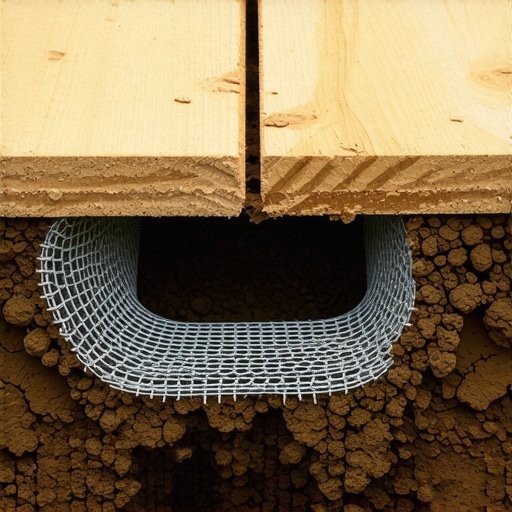
Seal the Risers on Your Stairs
The underside of your stairs is like a grand entrance for a raccoon. If you have open risers—the vertical gaps between steps—you are basically providing a ladder into the dark void beneath the structure. To shut this down, you need to install solid risers. When we are designing safe and stylish stairs, we use the same composite material as the treads for a seamless look. If you prefer the open-air look, you must back those openings with the same hardware cloth used on the perimeter. Make sure you use the bracket that makes your deck stairs feel rock solid to ensure the additional weight of the risers or mesh does not cause any sagging over time.
Don’t Forget to Let the Wood Breathe
One of the biggest mistakes DIYers make when sealing off their deck is turning the underside into a sealed oven. If you block all airflow to keep out the critters, you will end up with a mold factory. You need to integrate ventilation into your critter-proofing strategy. I like to use decorative metal vents or leave small, mesh-covered gaps at the top of the lattice. This keeps the raccoons out while allowing for proper airflow, which is critical if you want to prevent mold and wood rot. It is a delicate balance between a fortress and a functional structure, but getting it right means your composite decking remains a sanctuary for you, not the local wildlife.Most homeowners fall for the ‘magic spray’ trap. They think a bottle of predator urine or high-concentration peppermint oil is the silver bullet. I have seen people spend hundreds on these solutions only to have the raccoons literally use the spray bottle as a chew toy. The National Wildlife Federation notes that raccoons are incredibly adaptable and quickly become habituated to non-lethal deterrents that do not present a real physical threat. If a deterrent does not provide a physical barrier or an immediate negative consequence, a clever raccoon will ignore it within forty-eight hours. Real expertise in outdoor living means acknowledging that biological ‘hacks’ are no substitute for structural integrity.
Why Peppermint Oil and Store-Bought Sprays Almost Always Fail
The primary reason these deterrents fail is that they do not address the root cause: the desire for shelter. A mother raccoon is highly motivated to protect her young, and a little peppermint smell is not going to outweigh a dry, safe nesting spot. One major ‘oops’ factor I see often is when people focus so much on the perimeter that they ignore the connection point where the deck meets the house. This is a massive mistake. If there is even a two-inch gap between your ledger and the siding, a young raccoon can squeeze through. I have spent a lot of time showing clients how to fix a deck that has started to pull away from the siding specifically because that gap became a raccoon expressway into the home’s crawl space.
How Do Raccoons Exploit Hidden Gaps in High-End Decking?
It sounds crazy, but these animals are strong enough to exploit the thermal expansion of your boards. If you did not follow the joist spacing secret for a solid feeling composite surface, your boards might flex more than intended. A determined raccoon can wedge its paws into a gap and pull with surprising force. I once saw a heavy-duty fascia board buckled because a raccoon was trying to pry its way into the joist cavity. This is why we use double joists under every composite seam; it provides extra surface area for fasteners to bite into, making it nearly impossible for a critter to gain the leverage needed to pull a board loose. 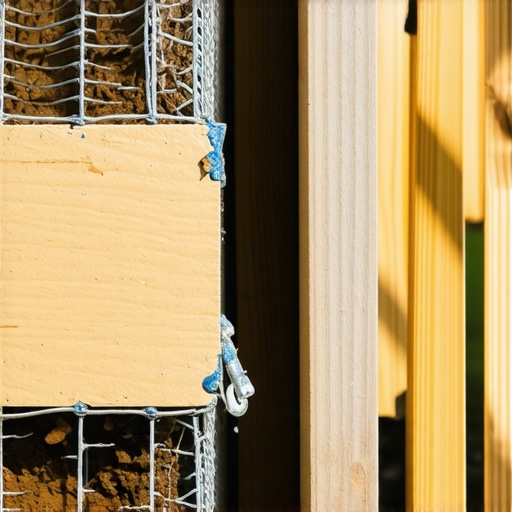 Another common mistake is ignoring the stair stringers. People seal the sides but leave the ‘throat’ of the stringer accessible from the back. To truly silence the area and keep it secure, you should look into the simple way to stop deck stairs from squeaking when you step, which often involves blocking that also serves as a permanent physical barrier. Have you ever fallen into the trap of thinking a ‘natural’ repellent would solve a structural problem? Let me know in the comments.Once you have built the physical barrier, the game shifts from defense to preservation. I have seen stunning outdoor spaces become structurally unsound because the owner focused on the raccoons but forgot about the microscopic enemies: fungi and moisture. If you are choosing the right composite decking for durable low-maintenance-outdoor areas, you are already halfway there, but the wooden skeleton underneath still needs your help. I always insist on using butyl joist tape on every single project. According to the American Wood Protection Association (AWPA) Standard U1, wood used in applications like deck framing must meet specific preservative retention levels (like UC3B for exterior above-ground use), but even treated lumber can rot if water sits in the screw holes. The tape acts as a gasket, sealing the hole as the screw passes through. It is a small step that adds decades to the life of your frame.
My Must-Have Gear for a Bulletproof Build
I do not go to a job site without a dedicated 12-inch auger bit for my cordless drill. When you are digging that trench for the hardware cloth apron, doing it by hand with a spade is a recipe for a sore back and a sloppy job. The auger lets you chew through roots and rocky soil with surgical precision. I also swear by a high-torque impact driver over a standard drill; it ensures your fasteners are seated perfectly without stripping the heads, which is critical when you are working in tight spaces under the stairs. 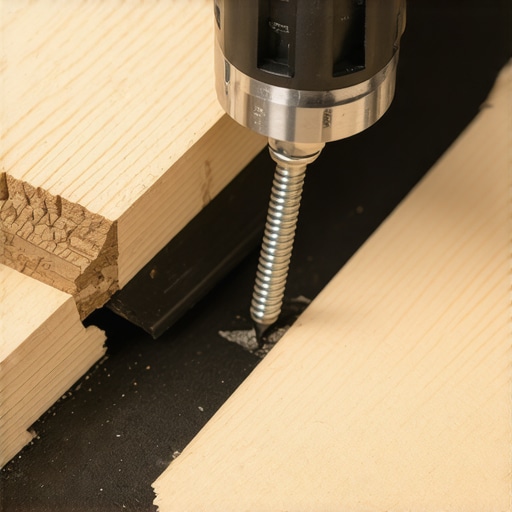 I am also a huge advocate for aesthetics meeting function, which is why i paint the tops of my joists black before installing composite boards. It hides the bright green of the pressure-treated wood and makes the gaps between your boards disappear into a clean, dark shadow line.
How can I ensure the barrier stays intact over time?
Maintenance is not just about the big stuff; it is about the routine. Every spring, I take a flashlight and do a perimeter crawl. I am looking for any signs of ‘scuffing’ on the hardware cloth or areas where the soil has washed away from my ‘L’ shaped apron. If you see signs of digging, don’t just fill the hole with dirt; throw in some heavy river rock to discourage the critter from trying that exact spot again. You also need to keep the surface clean to prevent organic material from falling into those gaps. Even if you have the best composite decking for high traffic entryways, accumulated leaves and needles can trap moisture against the frame. I also keep a specific guide handy for the best way to clean bird droppings off dark brown composite boards because high-acidity waste can eventually dull the finish if left for months. Looking ahead, I predict we will see more ‘smart’ decking integrated with low-voltage sensors that can alert your phone if a board is being tampered with or if moisture levels under the joists hit a critical threshold. For now, the best tech is a solid build and a watchful eye. I highly recommend you try the ‘apron’ trench method on your next weekend project; it is the single most effective way to win the war against burrowing pests once and for all.
Hard Truths from a Professional Who Thought He Could Outsmart Nature
Looking back at my early days, I realize I spent way too much time looking for easy buttons instead of looking at the blueprint. One of the biggest lessons I learned is that raccoons aren’t the only ones looking to move in; often, if you have a raccoon problem, you might also be making the specific framing moves that stop carpenter ants from nesting in your deck. Pests of all sizes look for the same thing: stability and shelter. I also learned that good enough is an invitation for trouble. If a mesh isn’t galvanized, it will rust out in two seasons, leaving a hole just large enough for a determined mother to squeeze through. It’s about more than just pests, though; it’s about structural peace of mind. For example, making sure why your deck ledger needs a tension tie to stay secure is just as vital as the critter-proofing itself, because a shifting deck creates new gaps for wildlife to exploit.
The Minimalist Toolkit for a Raccoon-Proof Perimeter
I don’t believe in over-complicating things with fancy gadgets. To get this job done right, you only need three specific items. First, a heavy-duty pair of aviation snips for the hardware cloth—standard wire cutters will just hand you a blister. Second, a high-quality cordless impact driver to ensure your fasteners are flush and tight. Finally, I always suggest looking at maximizing outdoor space with inspiring deck and stair ideas for every budget to see how you can hide these structural reinforcements behind beautiful fascia or landscaping. I trust these tools because they have survived hundreds of installs where cheap alternatives failed within the first hour. When you work with the right gear, the job stops being a chore and starts being a craft.
#IMAGE_PLACEHOLDER_E#
Take Back Your Sanctuary Today
Your backyard is meant for relaxation, not for a midnight wrestling match with a trash panda. By following these structural steps, you aren’t just building a barrier; you are protecting an investment. When a skilled deck builder turns your garden into a private oasis, they are thinking about how that space will function ten years from now. That longevity starts with keeping the critters out and the wood dry today. Whether you are using high-end composite decking or traditional timber, the peace of mind that comes from a secure perimeter is priceless. Don’t wait until the next 3:00 AM wake-up call to take action. Have you ever had a persistent animal try to claim your deck as their own? I would love to hear your story in the comments below!