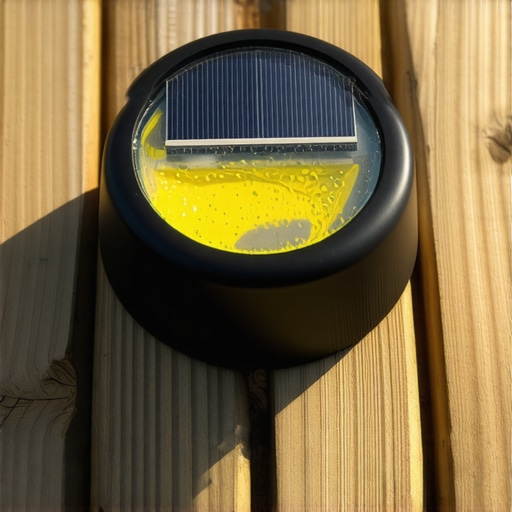
I remember standing on my brand-new composite deck back in 2021, holding a cold drink and admiring the soft glow of twelve brand-new solar post caps. I felt like a genius. I had saved hundreds by skipping the hardwired transformer and the messy trenching. But by the time the next spring rolled around, half of them were flickering like a dying candle, and the other half were as dark as a coal mine. It wasn’t just a fluke; it was a pattern of failure that almost made me give up on outdoor lighting altogether. If you’ve ever felt that spike of frustration when your “maintenance-free” lights go dark after a single Missouri winter, you aren’t alone. Today, we’re going to peel back the plastic housing and look at exactly why these units fail and how you can actually make solar work for your space without throwing money away every twelve months. Have you ever gone out for a late-night BBQ only to find your stairs are a complete black hole? I’d love to hear how many sets of lights you’ve tossed in the trash over the years.
The Brutal Reality of Cheap Solar Components
I’ve spent years working as a professional deck builder, and I see this happen every single season. Homeowners invest in gorgeous innovative outdoor living ideas, only to finish the project with $15 light kits that aren’t built to survive a heavy rainstorm, let alone a freeze-thaw cycle. The biggest mistake I made early on was assuming a “weather-resistant” sticker meant the seal was actually watertight. It isn’t. Moisture seeps into the battery compartment, corrodes the lead-outs, and turns your investment into a paperweight. When I’m planning the lighting layout that makes a small deck look twice as big, I now insist on higher-grade housings because the “big box” specials are designed for a disposable lifecycle. The Department of Energy notes that most consumer-grade solar batteries are only rated for about 500 to 1,000 charge cycles, which means even in perfect conditions, they are nearing the end of their life by the time your second summer rolls around.
Is Solar Lighting Actually a Waste of Money?
It’s a fair question to ask when you’re staring at a dead post cap. The truth is that solar isn’t a waste, but our expectations usually are. We expect a tiny, two-inch photovoltaic cell to power a bright LED for eight hours after a cloudy day. It’s just not mathematically possible. Even the solar cap lights I prefer for those hard-to-reach spots require a specific maintenance routine that most people skip. If you aren’t cleaning the oxidation off the panels or swapping the cheap factory batteries for high-capacity NiMH versions, you’re essentially setting a timer for when they’ll fail. We want the convenience of low-maintenance outdoor areas, but even solar needs a five-minute check-up twice a year to keep the current flowing.
Ditch the Cheap Batteries Immediately
The very first thing I do when a box of solar lights arrives at a job site is open the battery hatch and toss the included generic cells. Think of those factory batteries like the “starter” ink cartridges that come with a new printer; they are meant to get you through the first few days, not a lifetime. I replace them with high-capacity NiMH (Nickel Metal Hydride) rechargeable batteries. These are much more resilient to the deep discharge cycles that happen during the shorter days of winter. This small switch often keeps lights burning until 2:00 AM instead of fizzling out by dinner time. While you are at it, make sure you know how to pick the right deck lighting color temperature for a cozy feel because mixing cool white solar lights with warm interior lights creates a jarring visual clash.
Apply Your Own Waterproofing
Even the most expensive solar caps have a weak point: the seam where the solar panel meets the plastic housing. It’s like a tiny sunroof on a car that wasn’t sealed properly. Over time, heat expansion and freezing contraction create micro-gaps. I use a tiny bead of clear exterior silicone to seal that perimeter. I learned this the hard way on a multi-level project in Nixa. We had installed thirty solar caps to top off some beautiful composite railings, and after one heavy spring thunderstorm, I got a call that half of them looked like miniature aquariums. Twelve of them had visible condensation trapped inside the plastic lens, and they were dead within a week because the water shorted the tiny circuit boards. Now, I consider a tube of silicone just as important as the lights themselves. If you are also looking at how to install deck lighting under the handrail for a subtle glow, you’ll find that a little extra weatherproofing goes a long way in protecting the LED strips from the elements. 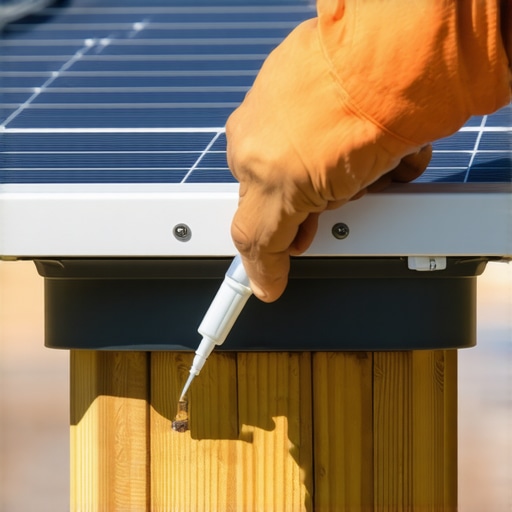
Solve the Stairway Shadow Problem
Stairs are the most dangerous part of any outdoor space, and solar lighting often fails here because the treads are often tucked away in shadows. When designing safe and stylish stairs for outdoor decks in 2025, you have to be honest about how much sun your steps actually see. If your steps are shaded by the house or a large tree, standard solar risers won’t work. In these cases, I look for innovative stairs solutions for safe outdoor deck access that utilize a remote solar panel. You can mount the small panel on a sunny railing post and run a thin, discrete wire down to the stairs. This ensures the batteries actually charge. It’s a bit more work, but it’s the only way to avoid the “dark step” gamble every night. This is especially vital when you need the secret to making narrow deck stairs feel wider, as consistent lighting on the edges provides the visual cues our brains need to navigate the space safely.
Clean the Panels Like You Clean Your Windows
We often talk about the best low-voltage transformers for large outdoor lighting projects as the “gold standard,” but if you stick with solar, your maintenance is your transformer. Pollen, dust, and bird droppings act like a dimmer switch on your solar panels. If the panel can’t see the sun, it can’t feed the battery. A simple wipe-down with a damp microfiber cloth every few months can increase your charging efficiency by 20%. I’ve seen lights that looked completely broken come back to life just because we wiped away a thick layer of Ozark pollen. It’s the simplest repair in the book, yet 90% of homeowners never do it.
Let’s dig deeper into why even high-end solar setups fail when the installation isn’t truly pro-grade. While the common advice is to just ‘buy better lights,’ that’s only half the battle. In my experience, most homeowners fail because they treat solar as a ‘set it and forget it’ technology, when in reality, it requires a more nuanced approach to physics and placement than traditional hardwired systems. Everyone says solar isn’t bright enough for safety, but I’ve found that’s a total myth—the real problem is usually light pollution or poor sensor calibration that tricks the unit into thinking it’s still daylight.
Stop blaming the sun and start checking your sensors
One of the most common mistakes I see when working with a professional deck builder is the placement of solar caps within the ‘cone of light’ from a main porch light or a streetlamp. If your solar light is ‘seeing’ another light source, the internal photocell won’t trigger the battery to discharge. Over time, a battery that stays fully charged without ever cycling through a discharge will develop what’s known as voltage depression, effectively killing its capacity. It’s a paradox: by keeping your porch light on to be ‘safe,’ you are actually killing your backup solar system. If you want innovative outdoor living ideas with composite decking in 2025 to actually work, you have to create ‘dark zones’ where your sensors can actually do their job.
Why does my solar light flicker like a strobe?
This is a question I get from advanced DIYers all the time. It usually isn’t a broken bulb; it’s a sign of a failing capacitor or a battery that can no longer provide a steady current. When the voltage drops below a certain threshold, the LED tries to pull power, the voltage dips further, the circuit shuts off, the voltage recovers slightly, and the cycle repeats. According to research from the Fraunhofer Institute for Solar Energy Systems, even a 5% shadow covering a small photovoltaic cell can reduce total power output by as much as 50%. This means that a single overhanging leaf or a bit of bird debris can be the difference between a steady glow and a flickering mess. Have you ever fallen into this trap? Let me know in the comments.
The stair design secret that solar can’t fix alone
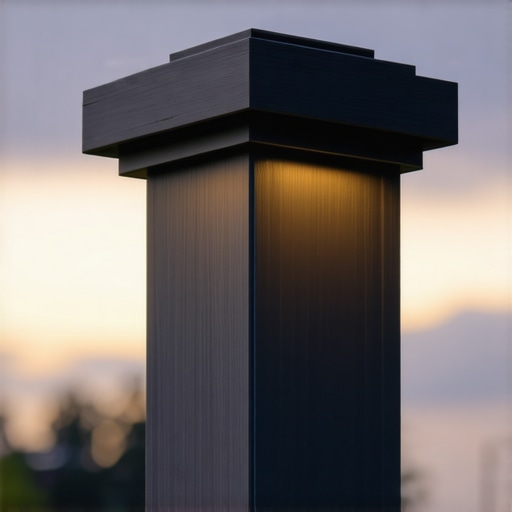
I’ve seen too many people try to cover up structural issues with pretty lights. No amount of solar power will fix a wobbly step. Many homeowners ignore the hidden flaw in pre-built deck stairs from big box stores, which is often a lack of proper support for the riser lights. If your stairs aren’t rock solid, the vibration from every footstep will eventually rattle the delicate soldering inside your solar units. When designing safe and stylish stairs for outdoor decks in 2025, you need to ensure you have a solid foundation. I always tell my clients that why your deck stairs need a concrete landing pad at the bottom isn’t just about the wood; it’s about creating a vibration-free environment for your lighting technology. If your deck surface is bouncy because you missed the joist spacing secret for a solid feeling composite surface, your lights will be the first thing to break. Even the smallest hidden clip mistake that leads to buckling deck boards can create enough movement to snap a solar panel’s thin wiring over a single season.
Why my toolkit looks different than yours
If you want your deck to look as good in ten years as it does today, you need more than just a bucket of soapy water. I’ve found that having the best tool for removing a single stripped deck screw in your junk drawer is a total lifesaver for when you need to access the subframe. When I’m designing safe and stylish stairs for outdoor decks in 2025, I also prioritize longevity by choosing why I use structural screws instead of lag bolts for stairs. These screws don’t just hold better; they prevent the micro-shifts that eventually snap the delicate wires in your solar riser lights. I even keep a small bottle of specialized cleaner on hand because knowing how to get grease stains off your composite deck immediately after a BBQ prevents the oils from bonding with the capping material.
The future of integrated outdoor tech
As we look ahead, the composite decking trends 2025 suggest a massive shift toward ‘smart’ solar. We are moving away from standalone plastic caps and toward units that sync via Bluetooth to ensure every light on your modern designs for composite decks turns on at the exact same lumen level. I’m also seeing more homeowners choose mineral core decking for every poolside build because it handles the heat reflection of high-efficiency solar panels better than traditional PVC. According to the Illuminating Engineering Society (IES), the industry is moving toward ‘warm-dimming’ technology in solar, which mimics the natural sunset, a feature previously only available in high-end hardwired systems.
How do I maintain my lighting and deck over time?
The secret isn’t a massive annual overhaul; it’s a series of two-minute habits. Every spring, I check the seals on my solar housings. If you notice any fogging, pop the cover and let it dry before resealing with silicone. For the deck itself, choosing the right composite decking for durable low-maintenance outdoor areas is only half the battle. You still need to ensure that the drainage gap error that traps rot against your house siding isn’t being clogged by leaves, which can create a humid microclimate that kills your electronics. If you are maximizing outdoor space for every budget, focus your maintenance dollars on the stairs and high-traffic entryways first. For example, why I always use hidden fasteners for high-traffic entryways isn’t just about looks; it makes it much easier to wipe down the surface without snagging your cloth on screw heads. I challenge you this weekend to grab a tube of clear exterior silicone and seal just one of your flickering solar post caps—you’ll be amazed at how a five-cent fix can revive a twenty-dollar light.
The Solar Truths No One Mentions in the Instruction Manual
After years of trial and error, I’ve realized that solar success isn’t about luck; it’s about anticipating the environment. First, the shadow patterns in your yard change drastically between July and December, meaning a light that works in summer might starve for power in winter. Second, the structural foundation matters more than you think; if you are dealing with the hidden flaw in pre-built deck stairs from big box stores, the constant vibration from a loose frame will eventually kill your delicate electronics. Finally, the “set it and forget it” mindset is a trap. I’ve learned that creating seamless transitions where stairs are key elements in outdoor living requires a proactive maintenance plan to keep the path safe and the sensors clear of debris.
#IMAGE_PLACE_HOLDER_E#
My Go-To Kit for Outdoor Tech Maintenance
I don’t leave the shop without a few specific items that ensure a build stays functional long after I pack up. I always carry a tube of high-grade clear silicone for sealing seams, a pack of high-capacity NiMH rechargeable batteries to replace the cheap factory cells, and a microfiber cloth for cleaning panels. I also rely on deck builder insights for designing your dream outdoor space to ensure the lighting placement actually enhances the architecture rather than creating glare. When it comes to the heavy lifting, I’m still a huge advocate for why I use structural screws instead of lag bolts for stairs, as it keeps the entire assembly rigid enough to protect the delicate wiring in your solar riser lights from snapping due to wood movement.
Your Deck Deserves a Better Nightlife
Lighting is the soul of your backyard after the sun goes down, transforming a simple platform into a private destination. By taking these small, extra steps to weatherproof and maintain your units, you ensure that your innovative outdoor living ideas with composite decking in 2025 actually shine the way they were intended. Don’t let a few dead batteries or a foggy lens rob you of the evening atmosphere you worked so hard to build. Get out there, check your sensors, and reclaim your glow. Have you found a specific brand of solar light that actually survived more than one winter? Let me know in the comments below!