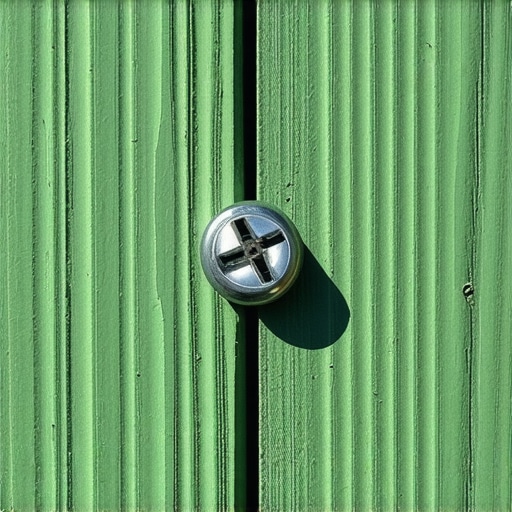
I still remember the sinking feeling in my stomach when I walked across a deck I’d built only two years prior and felt a board wobble. I knelt down, poked at a screw head with my utility knife, and the head simply flaked off like charred toast. I’d made the classic rookie mistake: I assumed that because the box said ‘exterior,’ it was tough enough for modern pressure-treated wood. I was wrong. The high copper content in today’s lumber is chemically aggressive, and it will devour standard zinc or thin-galvanized fasteners before the wood even has time to weather. Today, I’m going to save you from that same structural heartbreak by breaking down exactly which fasteners can actually survive the chemical bath of modern timber. [image]
Why Your Deck is Quietly Eating Its Own Screws
Modern lumber isn’t what your grandfather used. Back in the day, we had CCA (Chromated Copper Arsenate), which was effective but nasty for the environment. Since the early 2000s, we’ve shifted to ACQ (Alkaline Copper Quaternary) and Copper Azole. While safer for us, these treatments are incredibly corrosive to metal. If you aren’t careful, you’ll end up needing the best tool for removing a single stripped deck screw sooner than you think. My biggest early-career blunder was using standard galvanized nails because they were cheap and available. Within eighteen months, the ‘bleeding’—those ugly black streaks—started, and the structural integrity followed suit. This is exactly why I never nail deck boards anymore; you need the withdrawal resistance and specialized coatings of high-quality screws to handle the movement of wet, treated wood. According to the American Wood Protection Association (AWPA), fasteners in contact with UC4A treated wood must meet specific G185 galvanized or stainless steel standards to prevent premature failure. That isn’t just a suggestion; it’s the difference between a deck that lasts thirty years and one that becomes a liability in five. When you are building, don’t forget to paint the cut ends of pressure treated lumber to seal in those chemicals and protect your hardware. Have you ever noticed those weird rust stains on a deck that’s supposed to be ‘new’?
Is the Premium Price Tag for Stainless Steel Actually Worth It?
Many homeowners balk when they see the price of 304 or 316-grade stainless steel screws compared to ceramic-coated options. I get it. It feels like a gut punch at the checkout counter. However, if you are within five miles of the coast or building a pool surround, anything less than stainless is a ticking time bomb. For inland projects, a high-quality polymer-coated screw is often enough, but you have to check the rating. If you make the wrong choice, you’ll quickly learn why you should never use indoor-rated screws for an outdoor deck. It isn’t just about the screw failing; it’s about the wood around it rotting faster because of the galvanic reaction. We’re going to look at the specific brands I trust after two decades in the mud.
Look for the G185 Label or Go Home
I once spent three days in the Missouri humidity backing out nearly a thousand ‘exterior rated’ screws because I realized—halfway through the second day—that they were only rated for older wood treatments. The homeowner was watching from the window, and I felt like a total amateur. If you’re using galvanized hardware, you need a minimum of G185 plating. Think of the G185 as a thick winter coat for the metal; anything thinner and the copper in the wood will treat the screw like a snack. If you’re working with choosing the right composite decking for durable low-maintenance outdoor areas, the game changes. You aren’t just fighting corrosion; you’re fighting the massive expansion and contraction of the boards throughout the seasons. 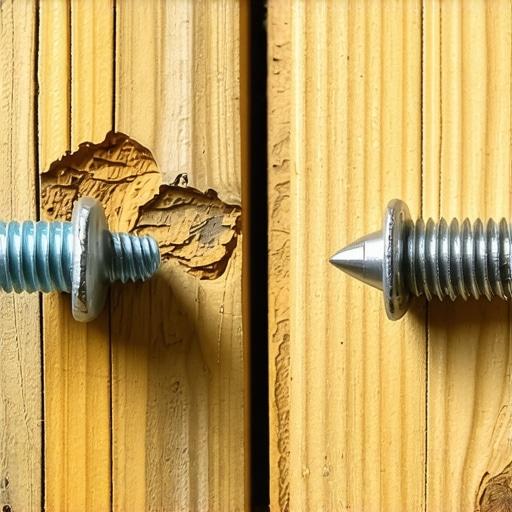
Avoid the Hidden Clip Nightmare
When I first started using hidden fasteners, I thought I’d found the holy grail of ‘clean’ looks. But I missed one tiny detail: the thermal gap. If you don’t use the specific spacers or clips recommended by the manufacturer, you’ll end up with the hidden clip mistake that leads to buckling deck boards. It’s a painful lesson to learn when your expensive composite surface starts looking like a wavy ocean in the heat of July. For the structure itself, especially the posts, always use the post base trick that prevents rot at the concrete line. Raising that wood just an inch off the wet concrete with a proper standoff base is the difference between a post that lasts forever and one that turns to mush in a decade.
The Depth Trick for a Smooth Walkway
One of the most common complaints I hear from clients is that their deck feels ‘scratchy’ on bare feet. This usually happens because the builder over-torqued the screws, mushrooming the wood or composite around the head. I always tell my crew to use the screw depth trick for a perfectly smooth deck surface. It involves setting your drill’s clutch or using a depth-sensing bit so the head sits exactly flush or slightly below the surface without tearing the wood fibers. This is especially critical on stairs. If your fasteners are protruding even a fraction of an inch, someone is going to trip or snag a sock. While you’re at it, make sure why your deck stairs need a concrete landing pad at the bottom is part of your plan. Fastening stringers directly to dirt or gravel is a recipe for a structural pull-away because those fasteners will eventually wiggle loose in the soft ground. If you’ve ever wondered why your deck stairs feel like a ladder and how to fix the rise, it often starts with a foundation that has shifted because the hardware wasn’t anchored to something solid. Use structural screws for your stringers, not just common deck screws; they have the shear strength to handle the weight of a crowd during a backyard party.I see guys on job sites all the time going full throttle with their impact drivers, hammering away until the screw head is buried deep. It’s a mistake that looks productive but is secretly sabotaging the project. While it’s satisfying to hear that rhythmic ‘rat-tat-tat,’ you’re likely creating micro-fractures in the ceramic or polymer coating of those expensive fasteners. Once that barrier is compromised, the copper in modern treated lumber starts its slow-motion feast on the steel core. This is the ‘Oops’ factor that leads to those ugly black streaks or, worse, heads snapping off three years down the line. I’ve learned the hard way that slowing down and using a drill with a properly set clutch is much faster than coming back in five years to replace a failing frame.
Stop Snapping Heads with Your Impact Driver
Most builders will tell you that a half-inch lag bolt is the ‘gold standard’ for securing a ledger board to a house. I used to be one of them, lugging around a heavy impact wrench and a box of galvanized bolts. But I’ve changed my mind. This is why I use structural screws instead of lag bolts for ledgers almost exclusively now. Unlike lags, these engineered screws don’t require pre-drilling, which means you aren’t removing vital wood fiber from the very joist you’re trying to secure. They also have a much higher shear strength-to-diameter ratio. According to a technical report from the USDA Forest Products Laboratory, modern structural fasteners demonstrate superior lateral resistance in wet-service conditions compared to traditional bolts that can loosen over time as the wood shrinks and swells. 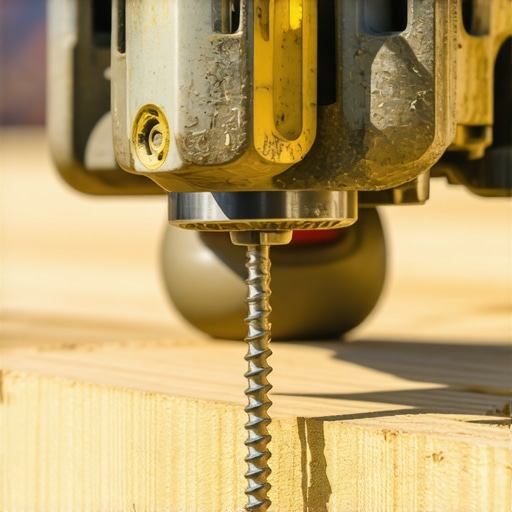
Can Your Fastener Choice Actually Rot Your Wood Faster?
It sounds counterintuitive, but the answer is a resounding yes. When you drive a fastener into a board, you are creating a direct straw for moisture to travel into the center of the wood where the chemical treatment might not have fully penetrated. This is exactly the hidden cost of skipping joist tape on a new build. Without that butyl or acrylic membrane sealing around the screw, water sits in the hole, creates a rot pocket, and eventually turns the wood around the fastener into mush. Even the most expensive stainless steel screw won’t hold if the wood it’s biting into has lost its structural integrity.
Fixing the Bounce Without Tearing it Down
If your deck feels ‘spongy,’ people often assume they need more posts. Usually, the issue is at the connection points. If you are dealing with the hidden flaw in pre-built deck stairs from big-box stores, you’ll see they rely on light-duty nails that pull out under the weight of a person. When I am creating seamless transitions with stairs as key elements in outdoor living, I treat the hardware as a bridge. If that bridge is weak, the whole structure feels unstable. You need to know how to fix a bouncy deck without adding new posts by looking at your joist hangers and stringer attachments first. Use structural screws to cinch those connections tight. For the finishing touch, why your deck stairs should have closed risers for a modern look isn’t just about style; it actually protects the stringer-to-tread connection from the elements, doubling the life of your hardware. Have you ever fallen into this trap or noticed your ‘treated-wood’ screws rusting way too early? Let me know in the comments.
I’ve seen fifty-thousand-dollar projects look like scrap wood in under three years because the builder or the homeowner skipped the final ten percent of the job. It’s a tragedy I see far too often. Beyond the screws and the lumber, the tools you use for the finish work and the way you handle ongoing care determine if your space remains a luxury retreat or becomes a chore. For example, I never step onto a job site without my Camo Marksman Pro tool for side-fastening. It’s the only way I’ve found to ensure every board has the exact same gap, which is vital because you need to know why your composite boards need extra space to breathe. If you cram them together, you’re asking for drainage failure and trapped debris that will eventually rot your frame from the top down.
The Gear That Separates Pros from Weekend Warriors
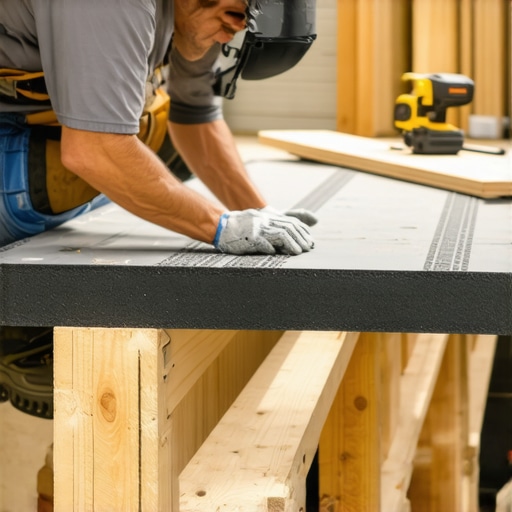
People always ask me why I carry a specialized impact driver and a separate low-torque drill. It’s because precision matters more than power when you are doing the final trim. When I am creating seamless transitions with stairs as key elements in outdoor living, I use a scribe tool to ensure the wood meets the house perfectly. If you want that high-end look, you have to learn how a skilled deck builder can turn your garden into a private oasis by focusing on the micro-details. I also swear by butyl-based joist tapes. Knowing how to choose the right joist tape for your specific climate is the single best insurance policy you can buy for your deck’s skeleton. It stops the ‘black rot’ that occurs when water gets trapped between the deck board and the joist, effectively doubling the lifespan of the pressure-treated frame.
How do I keep my outdoor living space pristine for decades?
Maintenance isn’t just about a yearly power wash; in fact, I tell most of my clients to keep the power washer far away from their composite boards. High pressure can etch the surface of cheaper composites, leaving permanent scars. Instead, focus on chemistry. If you just finished a big summer cookout, you need to know how to get grease stains off your composite deck before the sun ‘bakes’ the oil into the material. According to the 2024 North American Deck and Railing Association (NADRA) Safety Inspection Manual, the most common point of failure is actually the ledger connection being compromised by moisture. To combat this, I check my clients’ flashing and sealant every two years. For those who want the absolute minimum amount of work, I’ve found that choosing the right composite decking for durable low-maintenance outdoor areas usually means opting for a PVC-capped product that doesn’t absorb organic matter as easily as older wood-plastic composites.
The Future of Decks is Mineral-Based
If you’re looking at composite decking trends for 2025, you’ll notice a massive shift away from wood fibers entirely. We are moving toward mineral-core technology. This stuff is a game-changer because it has virtually zero thermal expansion. I’ve started recommending it for every project near water, which is why I choose mineral core decking for every poolside build now. It doesn’t get as hot, it doesn’t move, and it won’t rot even if it’s submerged. As we see more innovative outdoor living ideas with composite decking in 2025, expect to see integrated smart lighting and cooling systems built directly into these mineral-based structures. My advice? Grab a roll of high-quality joist tape and apply it to just one section of your existing deck frame this weekend to see how it sheds water—you’ll never build without it again.
Lessons From Twenty Years in the Sawdust
After thousands of square feet of decking, I’ve realized that the ‘hidden’ parts are the most important. First, always assume the wood is going to move. If you don’t use the hidden clip mistake that leads to buckling deck boards as a cautionary tale, you’ll fight gaps forever. Second, structural screws aren’t just a luxury; they are the insurance policy for your ledger. I’ve seen too many DIYers skip the prep and then wonder how to fix a bouncy deck without adding new posts later. Finally, remember that even ‘low maintenance’ doesn’t mean ‘no maintenance.’ Keeping organic debris out of the gaps is non-negotiable to prevent rot.
The Only Tools You’ll Find in My Truck
If you want to do this right, start with the 2024 NADRA Safety Inspection Manual—it’s the professional deck builder bible for structural safety. For the actual work, I never go without a high-quality butyl joist tape; it’s the only way to prevent frame rot. I also highly recommend looking into composite decking trends 2025 to see how mineral-core products are replacing older, heavier materials. These resources have saved me more time and money than any ‘cheap’ hardware ever could. For those tricky areas, I always keep the best tool for removing a single stripped deck screw in my pocket because, despite our best efforts, things happen.
Building Something That Actually Lasts
Your outdoor space is more than just boards and screws; it’s where memories are made. Whether you’re creating seamless transitions with stairs as key elements in outdoor living or just building a small platform for a grill, the effort you put into the details pays off every time you step outside. A professional deck builder knows that a solid foundation and the right fasteners are the keys to a stunning result. Don’t be afraid to take your time—you’re building for the next twenty years, not just for next weekend. Have you ever had a deck screw snap on you or noticed those ugly black stains on your boards? Let me know in the comments below!