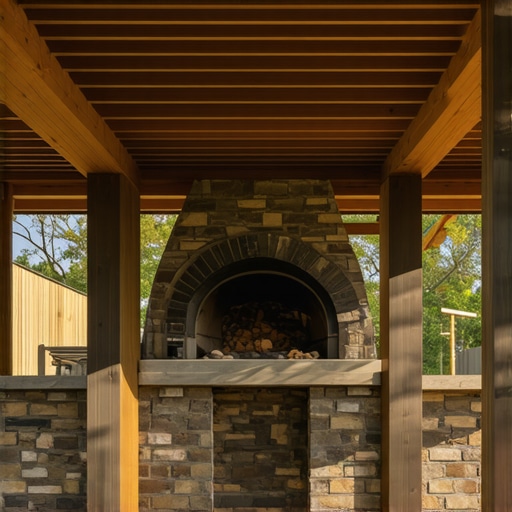
I still have a slight twitch in my eye when I think about the afternoon I heard my first sharp ‘crack’ coming from the backyard. I had just finished installing a beautiful, 400-pound wood-fired oven on my old cedar deck, thinking my standard 2×8 joists were more than up to the task. I was wrong. I was very, very wrong. Watching several thousand dollars of masonry and imported stone slowly sink into the wood was the kind of wake-up call that leaves a pit in your stomach. If you’re planning to join the outdoor pizza revolution, you need to realize that these ovens aren’t just heavy appliances—they are concentrated structural loads that can easily compromise your entire outdoor living space if the framing isn’t handled correctly. Today, I’m going to share exactly how to beef up your substructure so your deck stays level and your crust stays crispy. [IMAGE_PLACEHOLDER]
Don’t Let Your 500-Pound Oven Turn Your Deck Into a Trampoline
Most people assume that because a deck can hold a dozen party guests, it can handle a pizza oven. However, guests move around; a pizza oven sits in one spot forever, exerting constant pressure on just a few square inches of your deck boards. I learned the hard way that why your deck feels bouncy is often the first warning sign of insufficient joist support under these massive loads. According to the American Wood Council’s Span Tables, standard residential decks are usually designed for a 40 psf (pounds per square foot) live load. But a high-end oven like a Mugnaini or a Gozney on a stand can easily double or triple that in a localized zone. This is exactly why your outdoor kitchen needs its own structural support—you simply cannot treat a piece of heavy equipment like it’s just another patio chair. I’ve seen decks where the ledger board started pulling away because the homeowner didn’t account for the added weight of the hearth. It’s not just about the boards not breaking; it’s about the whole structure not shifting over time. Working with a seasoned deck builder can provide the insights needed to plan for these heavy additions before the first post is even set.
Is this extra framing really worth the extra cost?
I get it. Pressure-treated lumber isn’t exactly cheap these days, and adding extra posts and double joists feels like an expensive overkill when you just want to start cooking. But have you ever tried to level a deck after it’s already started to sag? It’s a specialized, back-breaking nightmare. When I finally rebuilt my setup, I made sure to protect the deck frame from rot by using joist tape and doubling up the framing directly beneath the oven’s footprint. If you’re investing in the latest composite decking trends for 2025, the last thing you want is a permanent, ugly dip in those premium boards. Have you ever noticed your deck boards groaning or noticed a slight slope under the weight of a grill or a heavy planter? Let me know in the comments, because catching those signs early is the only way to save your framing before it’s too late. I’m going to walk you through the exact bolt patterns and blocking techniques that turned my ‘sinking’ deck into a rock-solid foundation for the best Neapolitan pies in the neighborhood.
Double Up Your Joists or Watch Them Bow
The first thing I do when preparing for a heavy hearth is throw the standard 16-inch-on-center rule out the window. If you want a floor that doesn’t flex, you need to tighten that spacing to 12 inches, or better yet, double the joists directly beneath the oven’s footprint. Think of your joists like the strings on a guitar; the further apart they are, the more they vibrate and bend under pressure. When I worked on a project in Branson West, the homeowner had a massive cast-iron oven that made the whole deck feel like a trampoline. We didn’t just add wood; we used double joists under every composite seam and point load to create a rigid spine. This ensures that the weight is distributed across multiple members rather than crushing a single piece of lumber. By tightening the joist spacing secret for a solid feeling composite surface, you eliminate the ‘bounce’ that leads to cracked grout in your oven’s masonry.
Why Solid Blocking is Your New Best Friend
Doubling the joists is only half the battle; you also have to stop those joists from rolling or twisting under the weight. This is where solid blocking comes in. I install short pieces of joist material perpendicular between the main spans, creates a ‘ladder’ effect. It’s the same logic behind why we always double block the middle of a long stair run for stability. Without this lateral support, your joists can actually pivot slightly under a heavy load, causing the deck boards to separate or the oven to lean. I remember a messy afternoon spent crawling under a low-profile deck to retroactively install blocking because the owner’s new stone pizza station had caused the rim joist to rotate outward by half an inch. It was a nightmare to fix after the fact, so do yourself a favor and over-build the blocking before the oven arrives.
Transfer the Load All the Way to the Dirt
You can have the strongest frame in the world, but if it’s supported by weak posts, the whole thing will eventually sink. For heavy outdoor kitchens, I always upgrade from 4×4 to 6×6 pressure-treated posts. There is a huge difference in compressive strength, and why we prefer 4×4 posts for short decks but 6×6 for tall ones often comes down to this ability to handle vertical weight without buckling. Furthermore, you must ensure your footings are deep enough and wide enough to act as a proper ‘snowshoe’ for the weight. Avoid the post base mistake that causes modern decks to sink into the mud by using elevated pier blocks or wet-set brackets that keep the wood out of the dirt. If you are working on a slope, knowing how to level a deck frame on uneven ground is crucial because even a two-degree tilt can cause your pizza dough to slide off the stone or, worse, cause your expensive oven to slowly migrate toward the railing over several seasons.Once you’ve anchored those posts, you might think you’re out of the woods, but here’s where most DIYers—and even some pros—get tripped up. Everyone tells you that composite decking is ‘bulletproof,’ but they rarely mention the thermal expansion issues when you place a massive, heat-radiating oven on top of it. In my years as a deck builder, I’ve seen boards buckle and pop because they had nowhere to go. You see, why dark brown decking gets significantly hotter is a major factor in how much it moves. If you pin those boards down with the wrong fasteners under a heavy oven, the heat creates ‘creep’ that can literally shear screws off. I’ve had to show homeowners how to stop composite boards from expanding into their siding because they didn’t leave the proper gaps near the thermal source.
Heat Creep is the Silent Enemy of Your Outdoor Kitchen
The ‘Oops’ factor here is simple: if you use standard hidden clips in a high-heat zone, you’re asking for trouble. The clips allow for some movement, but under the weight of a stone hearth, the friction increases and the boards can’t slide as intended. Instead, they bow upward. This is a nuance most people miss when following composite decking trends for 2025. You need to use a specific screw-and-plug system in the immediate vicinity of the oven to lock those boards in place while allowing expansion at the perimeter.
Why Your Stair Stringers Snap at the Throat
If your pizza oven project involves a multi-level design, your stairs are going to take a beating from the increased traffic and the heavy ingredients you’ll be lugging up and down. A common myth is that adding more stringers will fix a bouncy staircase. But the real failure point isn’t the number of stringers; it’s the ‘throat’—the amount of solid wood left after you cut the steps. This is why your deck stair stringers are cracking at the throat over time. To prevent a catastrophic failure, I always use the bracket that makes your deck stairs feel rock solid to reinforce those cut points. According to the North American Deck and Railing Association (NADRA), stairs are one of the most common failure points in residential decks, and adding a heavy outdoor kitchen nearby only increases that risk.
Does Steel Framing Actually Make Sense for Heavy Masonry?
This is the million-dollar question for advanced builds. While wood is traditional, the 2021 International Residential Code (IRC) section R301.5 emphasizes that concentrated loads must be supported by members capable of resisting the specific stress. Steel doesn’t shrink, rot, or warp, making it the ultimate foundation for a 600-pound oven. If you’re building a ‘forever’ deck, wood might actually be the mistake. Have you ever fallen into this trap of over-building the surface but under-building the skeleton? Let me know in the comments.If you are ready to stop guessing and start building like a pro, you need to upgrade your toolbox beyond the basic hammer and level. When I’m securing a massive pizza oven station, I reach for a high-torque impact driver and specifically avoid old-school lag bolts. This is why I use structural screws instead of lag bolts for stairs and heavy framing; they have higher shear strength and don’t require the tedious pre-drilling that often leads to split wood in our Missouri humidity. I’ve found that using 5-inch structural fasteners to tie my double joists together creates a single, monolithic beam that simply doesn’t deflect. According to the American Wood Council’s Wood Frame Construction Manual (WFCM), lateral load connections are just as vital as vertical ones when you have an elevated mass like a masonry oven. If you don’t secure the frame against swaying, that 600-pound weight becomes a pendulum every time the wind kicks up or a group of people gathers near the hearth. 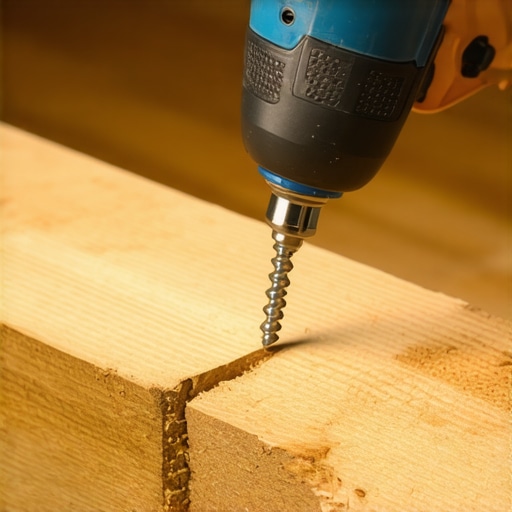
How do I keep my heavy outdoor kitchen from aging prematurely?
Maintenance for a heavy-duty deck isn’t just about aesthetics; it’s about monitoring the ‘invisible’ stress points. I recommend a semi-annual inspection of your hardware. Look for any signs of ‘bleeding’ around your fasteners—that dark staining that indicates moisture is sitting inside the wood. To prevent this, I always emphasize how to protect your deck frame from rot by using butyl joist tape over every single framing member before the boards go down. When it comes to the surface, why you should never use a pressure washer on composite decks becomes even more critical around a pizza oven. The high pressure can etch the boards, making them more porous and prone to absorbing grease or ash stains. Instead, use a soft-bristle brush and a pH-neutral cleaner. If you do get an accidental grease spill from a stray pepperoni, knowing the best way to clean bird droppings off dark brown composite boards—which involves gentle agitation and warm water—is actually the same protocol for food oils.
The Future of High-Load Outdoor Living is Moving Toward Metal
As we look toward composite decking trends for 2025, I predict we will see a massive shift toward light-gauge steel framing for any deck supporting a kitchen. Steel allows for much longer spans without the need for forest of posts underneath, giving you more room for storage or seating. This is part of the deck builder insights that are changing how we plan these complex backyards. For now, if you are sticking with wood, make sure you are using the bracket that makes your deck stairs feel rock solid to ensure the entire path to your oven is as safe as the foundation itself. My advanced tip for you today: Take a flashlight and check your ledger board—the part where the deck meets the house—for any gap larger than a nickel. If you see light between the house and the wood, your heavy oven is pulling the deck away, and you need to call a pro immediately.
The Hardest Lessons I Learned About Heavy Deck Loads
Looking back at my first few masonry projects, I realized that I was focusing far too much on the ‘pretty’ boards and not nearly enough on the skeleton beneath. The biggest lightbulb moment for me was realizing that a pizza oven isn’t just a static weight; it’s a heat-radiating anchor that changes how wood and plastic behave over time. I learned that a skilled deck builder doesn’t just look at the oven’s weight, but at how that weight interacts with the house ledger and the footings. I also discovered that composite decking trends 2025 are pushing us toward heavier, more elaborate kitchens, making the structural integrity of the frame more critical than ever. Finally, never underestimate the power of lateral bracing; a deck that is rock-solid vertically can still feel ‘shaky’ if you haven’t accounted for the side-to-side sway that a 500-pound oven introduces. This is exactly why your outdoor kitchen needs its own structural support to ensure long-term safety.
The Gear That Actually Holds Up the Weight
If you want to build a foundation that won’t sag, you need to step away from the standard hardware bin. I personally trust Structural Screws over everything else; specifically, why I use structural screws instead of lag bolts for stairs applies even more to heavy hearth framing because of their superior shear strength. I also recommend using Butyl Joist Tape on every double joist to prevent moisture from getting trapped between the boards, which is a key part of how to protect your deck frame from rot. For your stairs, don’t just rely on wood—use the bracket that makes your deck stairs feel rock solid to ensure they can handle the constant foot traffic of hungry guests carrying heavy trays.
Ready to Start Your Outdoor Pizza Revolution?
Building a space for a wood-fired oven is one of the most rewarding upgrades you can make, but it demands a ‘safety-first’ mindset. By over-engineering your frame today, you ensure that your innovative outdoor living ideas with composite decking remain a source of joy rather than a structural headache. You have the tools and the framing logic to do this right—so get out there and build a foundation as strong as your sourdough game. What’s the heaviest piece of equipment you’re planning for your new deck layout? Let me know in the comments below!