
I was standing on my brand new modern outdoor stairs, admiring the sunset, when the sharp, sulfurous smell of rotten eggs hit me. My ‘genius’ plan to shove the spare propane tanks into the tight, unventilated crawl space under the landing was backfiring—literally. I thought I was being a tidy homeowner by getting those ugly white cylinders out of sight, but I was actually creating a gas-filled bomb right under my feet. It was a classic rookie move. I spent thousands on high-end custom composite decking only to risk the whole thing for the sake of ‘visual clutter.’ Today, I am going to show you exactly how to tuck those tanks away so your yard stays beautiful, but more importantly, so you do not violate the fire codes that keep your family safe. We are going to look at the physics of propane, the specific rules for enclosures, and some clever ways any skilled deck builder can integrate storage into your layout.
Why Your Hidden Tank is a Ticking Time Bomb
The biggest mistake I made early on was treating a propane tank like a lawnmower or a bag of mulch. It is not. Propane is heavier than air. If a valve has the slightest leak, that gas does not just float away into the breeze; it sinks and pools in the lowest point it can find. If you have not learned how to vent the space under your deck properly, that gas stays there, trapped against your home’s foundation. According to the National Fire Protection Association (NFPA), gas grills are involved in an average of 10,600 home fires per year, and a significant portion of these incidents involve leaks or improper storage of the cylinders. When I finally called a professional to look at my setup, he pointed out that my ‘hidden’ spot had zero cross-ventilation. I was essentially building a combustion chamber. If you are currently hiding a tank in a spot where you would not want to sit for an hour due to the heat or lack of air, you are doing it wrong.
Is All This Worry Actually Worth the Hype?
You might be thinking, ‘I have stored my tanks under the porch for a decade and nothing happened.’ I get it. We all think we are the exception until the day a stray spark from a fire pit or a discarded cigarette finds that invisible pool of gas. Fire codes like NFPA 58 are not just ‘suggestions’ meant to annoy you; they are written in the aftermath of actual tragedies. My neighbor once tried to mask a propane tank by building a solid wooden box around it without any gaps. It looked great for two weeks until the pressure relief valve popped on a hot day and the concentrated gas had nowhere to go. Have you ever felt like you were cutting corners on safety just to make your outdoor living space look a little more ‘Pinterest-perfect’? I certainly have, and it took a serious wake-up call to realize that a beautiful deck is worthless if it is a hazard. Let’s talk about the specific framing moves and ventilation gaps that satisfy the fire marshal while keeping your tank out of the spotlight.The fix isn’t as complicated as I first feared, but it does require moving beyond the ‘tuck it and forget it’ mindset. To get this right, you need to think like a fluid dynamics engineer—or at least someone who knows that gas likes to pool. First, you must prioritize cross-ventilation. If you are building an enclosure, it cannot be airtight. I learned this the hard way when I built what I thought was a sleek, solid cabinet. After a week of summer heat, opening that cabinet felt like stepping into a chemical plant. Now, I always recommend using a lattice or a series of spaced slats. If you are working with a skilled deck builder, ask them to implement the drainage trick for creating a dry storage space under your deck, which often involves subtle slopes and gaps that help air (and gas) move out rather than staying trapped.
Stop Hiding Tanks and Start Housing Them Safely
The rule of thumb is to have at least two vent openings on opposite sides of the enclosure, preferably near the bottom since propane is heavy. When I was refining my own setup, I used leftover scraps from my custom composite decking to create a matching ‘vent box.’ By gapping the boards exactly 1/4 inch, I maintained the aesthetic of the deck while ensuring the tank had a constant supply of fresh air. This is especially critical if you are trying to find the best way to mask a propane tank on a low-profile deck where there isn’t much vertical space for air to circulate naturally. 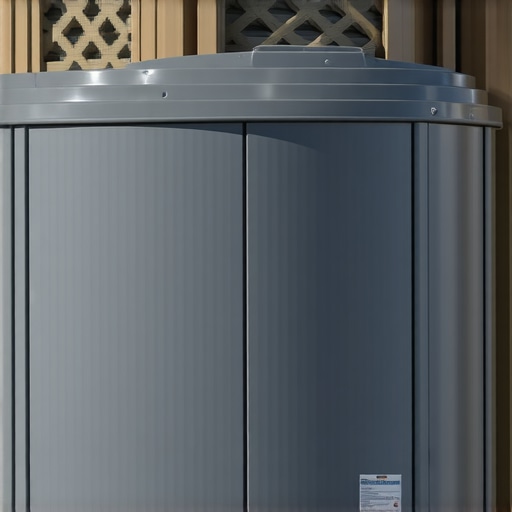
The Access Panel That Does Not Break Your Back
Let’s talk about the ‘Finger-Pincher 3000.’ That was my nickname for the first trap door I built into my deck boards to reach the tanks. It was a heavy, 4-foot section of framing that required two people and a crowbar to lift. It was a total disaster and a safety hazard in itself. Instead, you should focus on the best way to frame a trap door for crawl space access using lightweight materials or gas-strut hinges. Better yet, build a side-access drawer. I eventually swapped my trap door for a slide-out tray mounted on heavy-duty outdoor drawer slides. It allows me to pull the tank out into the open air for easy swapping without ever having to crawl under the joists or risk a back injury.
Frame for Stability and Longevity
Finally, you have to consider the weight. A full 20lb tank isn’t just heavy; it’s concentrated weight. If your enclosure sits on the deck surface, you need to ensure the framing underneath can handle the localized load. This is where why picture framing your deck is more than just a style choice—it provides the extra joist support needed to keep those storage areas from sagging over time. I once saw a deck where the homeowner simply sat four tanks in a corner; over two winters, the boards warped so badly the ‘hidden’ door wouldn’t even shut anymore. A little extra blocking in the frame goes a long way toward keeping your structure level and your family safe.Many homeowners assume that once they’ve hidden the tank, the job is done. But here is the nuance that most DIYers—and even some pros—miss: the micro-climate inside that enclosure. Everyone tells you to match your enclosure perfectly to your deck, but I’ve found that using the exact same tight spacing is a recipe for disaster. If you do not account for the fact that your composite boards are expanding more than expected in the midday sun, your beautiful ‘hidden’ door will eventually bind and warp. I once saw a gorgeous cedar-wrapped enclosure that literally pushed itself off the frame because the builder did not leave a proper expansion joint. This isn’t just an aesthetic issue; it is a structural one.
How Much Weight Can Your Stair Landing Actually Support?
This is the advanced question that keeps structural engineers up at night. A standard deck is typically built for a 40 psf (pounds per square foot) live load, but a storage box filled with three full propane tanks creates a massive ‘point load’ on a very small area. According to the International Residential Code (IRC), concentrated loads require specific joist reinforcement that goes beyond standard spacing. This is why we always double block the middle of a long stair run for stability and apply the same logic under any heavy storage unit. If you just set that weight on a standard span without extra blocking, you will notice the ‘oops’ factor within a year: your stairs will feel like they are leaning or sagging toward the weight. 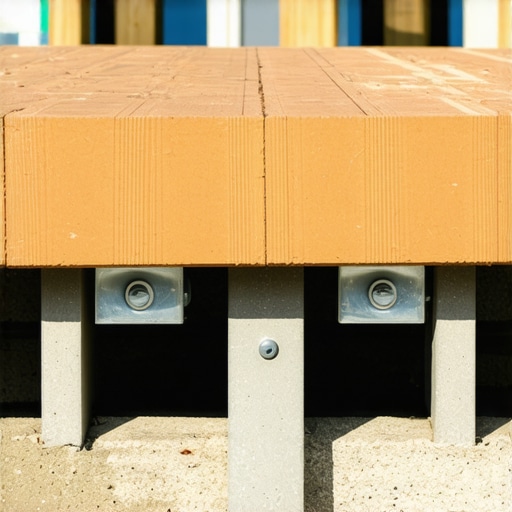 Another common myth is that standard fasteners are ‘good enough’ for these enclosed spaces. Because these enclosures trap humidity differently than the open deck, I have seen galvanized screws snap like twigs after just five years due to concentrated corrosion. It is why the only fastener we trust for coastal decks exposed to salt spray—high-grade stainless steel—is also my go-to for any ‘hidden’ storage framing. You are building a high-moisture environment, whether you live by the ocean or not. If you do not use strategies like how to protect your deck frame from rot for thirty years as your baseline standard, you are just building a future repair bill. Have you ever fallen into this trap or noticed your storage door sticking after a hot summer? Let me know in the comments.If you are planning something complex like a hidden tank enclosure or an integrated storage bench, you absolutely need to see it in three dimensions before you buy your first joist hanger. I have transitioned away from hand-drawn sketches entirely because why I never start a complex deck project without a digital 3D walkthrough first is simply about managing risk and visualizing clearance. You can spot a potential venting issue with a propane tank or a tight radius on your stairs in a 3D model that you would never see on a flat piece of paper. This is not just for pros anymore; modern digital tools allow you to ‘walk’ under your deck to see exactly where the ventilation gaps will fall.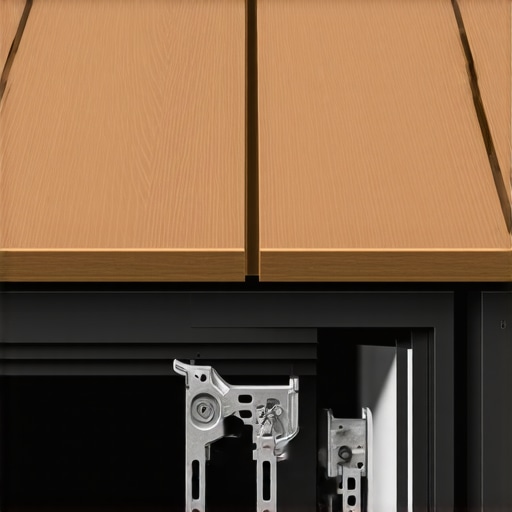
The Hardware That Stops Your Stairs from Sagging
Even the best design will fail if you use the wrong hardware. I have seen beautiful composite stairs start to bounce and groan because the builder used old-school nails. That is the reason we use structural screws instead of old-fashioned lag bolts for every critical connection. These screws are heat-treated and thinner, meaning they do not split your wood but provide twice the shear strength. This is how you ensure that why your deck stairs squeak and how to silence them forever isn’t a search term you have to use three years from now. As noted in the American Wood Council’s (AWC) DCA6 – Prescriptive Residential Wood Deck Construction Guide, the attachment of the ledger to the house is the single most important connection on any deck. If you are adding the concentrated weight of hidden storage boxes near the house wall, you have to be obsessive about how that load transfers through the ledger and into your home’s rim joist.
How do I keep my deck’s structural integrity over time?
Once the deck is built, your priority shifts from construction to inspection. Once a year, take ten minutes for the simple way to check if your deck ledger is pulling away from the house. Look for gaps, rust on the flashings, or any signs that moisture is getting trapped behind your composite fascia. If you find a grease spill from the grill near your tank storage, knowing how to clean grease stains off composite without ruining the finish will save your boards from permanent discoloration. I predict that in the next five years, we will see ‘smart’ ventilation systems—small, solar-powered fans integrated directly into deck storage enclosures to ensure active airflow. Until then, you have to rely on good old-fashioned physics and the right spacing. My challenge for you this weekend: crawl under your deck with a flashlight and check for any spots where debris or moisture is pooling against your framing. It is the best way to catch rot before it starts.
The Hardest Lesson I Learned About Mixing Fire and Framing
After a decade of building, I have realized that the most ‘Pinterest-perfect’ decks are often the most dangerous if they ignore basic physics. When you are choosing the right composite decking for durable low-maintenance outdoor areas, you have to think about more than just the color; you have to think about how that material interacts with the air and the heat around your fuel sources. Here are the truths I live by now: First, if you cannot smell fresh air inside your enclosure, it is not vented enough. Propane is essentially a fluid in gas form; if you do not give it a drain, it will fill your structure like a bathtub. Second, a heavy tank needs a heavy-duty frame—never skip the extra blocking. Third, safety is a design feature, not a compromise. Incorporating these deck builder insights designing your dream outdoor space ensures your backyard remains a sanctuary rather than a source of stress. The best designs are the ones where safety features are invisible because they were integrated from day one, not tacked on as an afterthought.
#IMAGE_PLACEHOLDER_E#
The Gear That Keeps My Deck Standing
I swear by the DCA6 Prescriptive Residential Wood Deck Construction Guide; it is the absolute bible of deck safety that every homeowner should browse. I also never go to a job site without high-torque structural screws and a reliable digital level to ensure that designing safe and stylish stairs for outdoor decks in 2025 stays accurate to the millimeter. For the DIY enthusiast, a simple handheld gas leak detector pen is the best thirty dollars you will ever spend. It gives you peace of mind that your connections are tight before you seal up that beautiful new storage bench for the season.
Build a Space That Is Both Beautiful and Bulletproof
Your outdoor living area should be a place of pure relaxation, not a mental checklist of worries. By taking the time to frame correctly and vent your storage properly, you are protecting both your financial investment and your family. Remember, details like the stair tread depth that feels safest for kids and the elderly matter just as much as the aesthetics of your hidden tank enclosure. You do not have to choose between a gorgeous backyard and a safe one—you just have to be intentional with your build. Now get out there and build something that lasts for decades, not just until the next inspection. Have you ever discovered a hidden maintenance hazard or a ‘rookie mistake’ under your own deck? Let me know in the comments below.