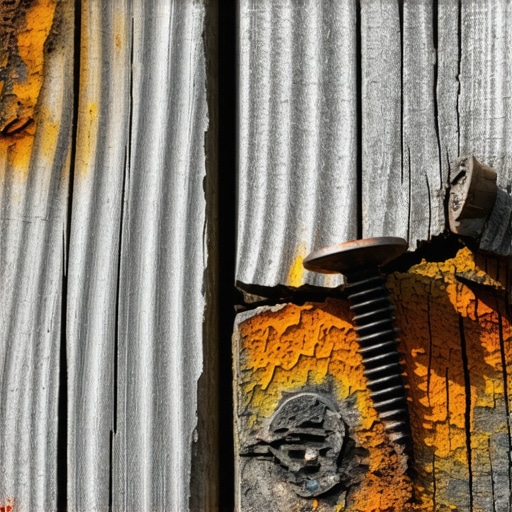
I still remember the sound of that first board snapping loose under my boot like it was yesterday. It was a humid July morning, and I was carrying a heavy tray of burgers out to the grill. Suddenly, my left foot dipped six inches lower than my right, sending the burgers flying into the grass. I hadn’t hit a rotten joist; the screws had simply dissolved. I’d spent weeks perfecting that space, yet I’d tried to save fifty bucks by grabbing a bulk bucket of standard gold-zinc interior screws instead of the proper stuff. It was a mistake that nearly cost me an ankle and definitely ruined my pride. Today, I want to make sure you never have to pick dinner off a dirty lawn because you chose the wrong fastener. We are going to dive into the chemistry of corrosion and why any skilled deck builder worth their salt insists on stainless or galvanized steel for every project.
The Hidden Corrosion Eating Your Deck From the Inside Out
When you are planning custom composite decking ideas, it is incredibly easy to get distracted by the beautiful wood grain or the layout of your modern stairs. But the real work is happening where the metal meets the wood. Indoor screws are usually coated in a thin layer of zinc or phosphate. That’s perfectly fine for your dry living room or kitchen cabinets, but out here in the elements? It’s a death sentence for your structure. Moisture is the obvious enemy, but the real killer is actually the wood itself. Modern pressure-treated lumber is packed with copper-based preservatives designed to ward off rot and insects. According to the American Wood Protection Association (AWPA), these chemicals are highly corrosive to carbon steel through a process called galvanic corrosion. Basically, when that wood gets wet, those indoor screws turn into a battery that slowly eats itself until the head snaps off. I’ve seen homeowners spend a fortune choosing the right composite decking only to have the whole thing start sagging after two winters because the fasteners failed.
Are those few saved pennies really worth a structural collapse?
If you’ve ever seen those ugly black streaks bleeding out from a screw hole, you’re looking at the first stage of failure. That’s the metal oxidizing and reacting with the tannins in the wood. It’s not just an eyesore; it’s a warning sign. I once ignored those streaks on a project early in my career, thinking it was just cosmetic. Six months later, I was back out there replacing the whole ledger board because the fasteners had snapped like toothpicks. Have you noticed any of that dark staining or bleeding on your current deck fasteners? It’s a common sight, but it shouldn’t be. Using the right screw depth trick and the correct metallurgy is the only way to ensure your deck stays safe for the long haul. Let’s look at what actually happens to these screws when the rain starts falling and the chemistry takes over.
Pick the Only Metal That Survives the Wood
If you are standing in the hardware aisle staring at a wall of silver, gold, and green screws, remember this: the wood is actively trying to kill the metal. To fight back, you need either 305 or 316-grade stainless steel, or at the very least, hot-dipped galvanized fasteners. Think of stainless steel like a high-end raincoat; it doesn’t just have a protective layer, it is built to be water-resistant all the way through. Galvanized screws are more like an umbrella with a thick rubber coating. If that coating gets scratched during installation, the steel underneath is exposed to those hungry copper chemicals I mentioned earlier. On a job I did out near the coast, I insisted on using the only fastener we trust for coastal decks because even the salt air can accelerate that battery-like reaction. 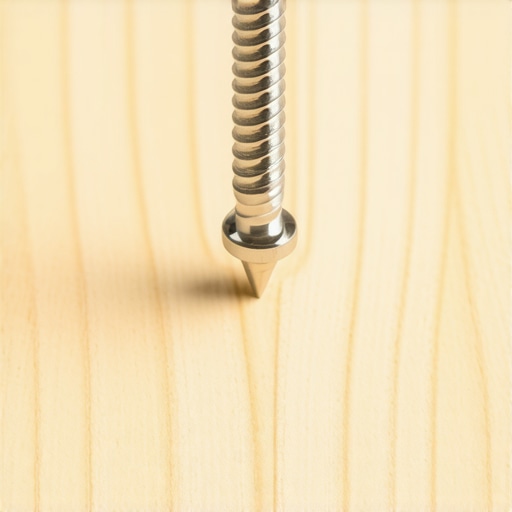
Why You Should Never Pick Up a Hammer
In the old days, everyone used nails. It was fast, cheap, and it worked—until the wood dried out and the nails started popping up like stubborn weeds. I can’t tell you how many times I’ve tripped over a proud nail head while carrying a tray of drinks. That is why I never nail deck boards anymore. Screws provide mechanical pull; they suck the board down to the joist and keep it there. When you are choosing the right composite decking, the manufacturer will almost always specify a particular screw type because the density of that material is much higher than cedar or pine. If you try to nail composite, you’ll likely just crack the board and void your warranty in one swing.
Stop the Mushrooming Before It Starts
One of the messiest mistakes I ever made was on a high-end deck back in 2012. I was in a rush to finish the perimeter and didn’t pre-drill my holes. As the screw head entered the composite board, it pushed the displaced material upward, creating a little volcano of plastic around the screw. It looked terrible, and it was a nightmare to sand down. Now, I always use a smart-bit or a pre-drilling tool that clears out the ‘waste’ material before the screw head seats. Combining this with the screw depth trick ensures that every fastener sits exactly 1/16th of an inch below the surface, creating a finish that is smooth enough for bare feet.
Wrap Your Joists in a Raincoat
While you are focused on the screws, don’t ignore what they are drilling into. Every time you drive a fastener into a wooden joist, you are creating a tiny straw that sucks water deep into the heart of the beam. I learned this the hard way when I had to tear up a five-year-old deck because the tops of the joists had turned into mush. To prevent this, I now apply butyl joist tape to the top of every frame member. It acts as a self-sealing gasket around the screw. Many homeowners realize the hidden cost of skipping joist tape only when they have to replace their entire substructure a decade too early. It’s a simple step that adds years to the life of your custom composite decking ideas and keeps the fasteners locked in tight wood rather than rotting pulp.I still remember the sound of that first board snapping loose under my boot like it was yesterday. It was a humid July morning, and I was carrying a heavy tray of burgers out to the grill. Suddenly, my left foot dipped six inches lower than my right, sending the burgers flying into the grass. I hadn’t hit a rotten joist; the screws had simply dissolved. I’d spent weeks perfecting that space, yet I’d tried to save fifty bucks by grabbing a bulk bucket of standard gold-zinc interior screws instead of the proper stuff. It was a mistake that nearly cost me an ankle and definitely ruined my pride. Today, I want to make sure you never have to pick dinner off a dirty lawn because you chose the wrong fastener. We are going to dive into the chemistry of corrosion and why any skilled deck builder worth their salt insists on stainless or galvanized steel for every project.
The Hidden Corrosion Eating Your Deck From the Inside Out
When you are planning custom composite decking ideas, it is incredibly easy to get distracted by the beautiful wood grain or the layout of your modern stairs. But the real work is happening where the metal meets the wood. Indoor screws are usually coated in a thin layer of zinc or phosphate. That’s perfectly fine for your dry living room or kitchen cabinets, but out here in the elements? It’s a death sentence for your structure. Moisture is the obvious enemy, but the real killer is actually the wood itself. Modern pressure-treated lumber is packed with copper-based preservatives designed to ward off rot and insects. According to the American Wood Protection Association (AWPA), these chemicals are highly corrosive to carbon steel through a process called galvanic corrosion. Basically, when that wood gets wet, those indoor screws turn into a battery that slowly eats itself until the head snaps off. I’ve seen homeowners spend a fortune choosing the right composite decking only to have the whole thing start sagging after two winters because the fasteners failed.
Are those few saved pennies really worth a structural collapse?
If you’ve ever seen those ugly black streaks bleeding out from a screw hole, you’re looking at the first stage of failure. That’s the metal oxidizing and reacting with the tannins in the wood. It’s not just an eyesore; it’s a warning sign. I once ignored those streaks on a project early in my career, thinking it was just cosmetic. Six months later, I was back out there replacing the whole ledger board because the fasteners had snapped like toothpicks. Have you noticed any of that dark staining or bleeding on your current deck fasteners? It’s a common sight, but it shouldn’t be. Using the right screw depth trick and the correct metallurgy is the only way to ensure your deck stays safe for the long haul. Let’s look at what actually happens to these screws when the rain starts falling and the chemistry takes over.
Pick the Only Metal That Survives the Wood
If you are standing in the hardware aisle staring at a wall of silver, gold, and green screws, remember this: the wood is actively trying to kill the metal. To fight back, you need either 305 or 316-grade stainless steel, or at the very least, hot-dipped galvanized fasteners. Think of stainless steel like a high-end raincoat; it doesn’t just have a protective layer, it is built to be water-resistant all the way through. Galvanized screws are more like an umbrella with a thick rubber coating. If that coating gets scratched during installation, the steel underneath is exposed to those hungry copper chemicals I mentioned earlier. On a job I did out near the coast, I insisted on using the only fastener we trust for coastal decks because even the salt air can accelerate that battery-like reaction.
Stop Blaming the Boards for Your Bouncy Deck
Most homeowners think that if their deck feels spongy underfoot, they have simply bought cheap boards. In reality, the culprit is almost always the skeleton hidden underneath. While 16-inch joist spacing is the standard for traditional lumber, many high-end innovative outdoor living ideas with composite decking in 2025 require a tighter 12-inch layout to truly feel stable. According to the International Residential Code (IRC), deflection limits for composite materials are often more sensitive than southern yellow pine. If you skip the joist spacing secret for a solid feeling composite surface, you end up with a deck that sighs every time you walk across it. It is not just about raw strength; it is about the psychology of the walk. A bouncy deck feels unsafe, even if it is technically to code. 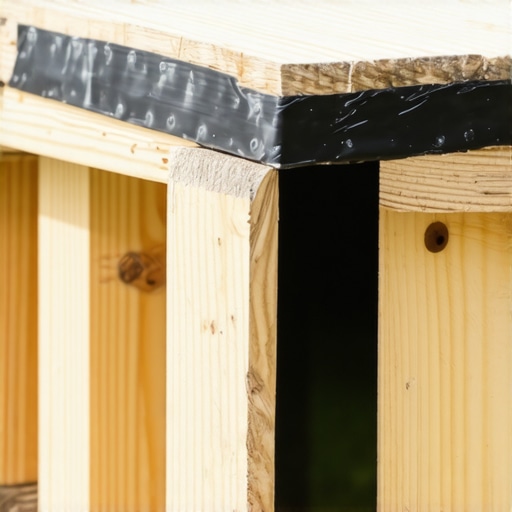
Why do your gaps look different every morning?
Thermal expansion is the hidden nuance that turns a beautiful project into a buckled mess. Composite boards are essentially a cocktail of plastic and wood fiber. In the heat of a July afternoon, an 18-foot board can grow by as much as 3/16ths of an inch. If you butt those boards tight against each other during a cool morning install, they will have nowhere to go but up when the sun hits. This is the hidden clip mistake that leads to buckling deck boards that I see most often in DIY builds. Professional builders use specialized gapping tools that account for the ambient temperature at the time of the install—a level of precision that separates a true professional from a novice. Have you ever noticed your deck boards expanding or shifting during a heatwave? Let me know in the comments.
Master the Rise to Save Your Knees
Stairs are where most outdoor projects fail the final inspection. Everyone focuses on the railing, but the geometry of the stringer is what actually keeps you safe. If your bottom step is even half an inch taller than the rest, your brain won’t register it until you have already tripped. This is the stair stringer measurement mistake that ruins your stride. I always insist on designing safe and stylish stairs for outdoor decks in 2025 by using a concrete landing pad to ensure the first step is perfectly consistent. If you have ever wondered why your deck stairs feel like a ladder and how to fix the rise, you will realize that the fix usually involves more than just a longer board—it involves a rethink of the entire transition. When you are maximizing outdoor space, never sacrifice the ergonomics of your steps for the sake of speed. Dealing with a bouncy deck or a tripping hazard is a high price to pay for skipping these structural nuances.It’s one thing to build a deck that looks great on day one, but it’s an entirely different beast to build one that looks identical on day 3,000. For me, that longevity starts with the hardware. I’ve completely transitioned away from traditional carriage bolts. Nowadays, why I use structural screws instead of lag bolts for stairs comes down to sheer efficiency and holding power. According to the National Design Specification (NDS) for Wood Construction by the American Wood Council, structural screws offer tested, predictable shear values that often outperform old-fashioned bolts without the need for pre-drilling. This isn’t just about saving time; it’s about reducing the risk of splitting your timber. If you’re still messing around with a 1/2-inch drill bit and a mallet, you’re working too hard and potentially weakening the wood before the deck is even finished.
How do I maintain my outdoor living space over time?
The biggest myth in the industry is that ‘low maintenance’ means ‘no maintenance.’ Even the best choosing the right composite decking requires a bit of love. You have to watch out for organic buildup like pollen or fallen leaves which can lead to surface mold. I tell my clients that why you should never use a pressure washer on composite decks is because the high PSI can actually etch the surface of the boards, creating tiny pores that trap dirt and mold forever. Instead, a simple soft-bristle brush and a bucket of soapy water once every spring will do more for your deck’s lifespan than any expensive chemical treatment. This simple routine keeps the protective cap of the composite intact and prevents the ‘faded’ look that many homeowners fear. #IMAGE_PLACE_HOLDER_D#
Why I Paint the Tops of My Joists Black
This is a tip I picked up from a mentor years ago, and it’s the hallmark of a truly professional deck builder. If you are using dark composite boards, the bright green of pressure-treated lumber can peek through the gaps and ruin the aesthetic. That is why I paint the tops of my joists black before installing composite. It creates a shadow line that makes the framing disappear, putting all the focus on your beautiful flooring. While you’re down there, keep the best tool for removing a single stripped deck screw—usually a dedicated screw extractor—in your back pocket. There is nothing that kills your flow like a stripped head when you’re halfway through a board, and having the right extractor saves you from having to pry up and damage a perfectly good piece of material.
Steel Frames are the Future of Outdoor Living
Looking ahead to 2025 and beyond, I predict a massive shift toward light-gauge steel framing. Wood is great, but steel is straight, true, and won’t rot, warp, or twist over the decades. It’s the ultimate partner for innovative outdoor living ideas with composite decking in 2025. If you want a deck that will literally outlive the house, that is where the industry is going. For your next project, I challenge you to try one thing: use joist tape or black paint on your frame. It’s a small investment of time that pays off in a massive way for the final look of your custom composite decking ideas. If you have questions about specific tools or scaling your project, feel free to contact us anytime.
Lessons from the Jobs I Had to Fix Twice
After decades of building, I’ve realized that the shiny top boards are just the distraction. The real deck lives in the dark spaces between the joists. First, never assume ‘outdoor rated’ means ‘pressure-treated rated.’ If a fastener doesn’t specifically mention stainless or hot-dipped galvanized properties, it is a liability in the making. Second, choosing the right composite decking is only half the battle; how you manage the gap for thermal expansion determines if it buckles by August. Finally, the best results don’t come from working faster; they come from mastering the hidden details like joist tape and pre-drilling to prevent structural rot.
The Gear That Lives in My Truck Bed
If you are serious about your project, do not rely on the cheap bits that come in the box. I always keep a high-quality smart-bit for pre-drilling to avoid the ‘mushrooming’ effect that ruins a smooth surface. I also swear by Butyl joist tape—it is the cheapest insurance policy you will ever buy to protect your framing. For cleaning, forget the power washer and grab a high-volume, low-pressure garden hose attachment and a deck-specific soft brush. This is how you stay ahead of composite decking trends 2025 while keeping your manufacturer warranty intact.
#IMAGE_PLACEHOLDER_E#
Build for the Decade Not the Weekend
It is tempting to rush through the framing to get to the ‘pretty’ part, but a deck is a long-term investment in your home. When you take the time to use structural screws instead of nails and protect your timber with the right seals, you are creating a space that remains safe for grandkids and backyard BBQs years down the line. Whether you are doing it yourself or seeing the benefits of working with a professional deck builder, focus on the integrity of the build first. Your future self will thank you when you are relaxing on a rock-solid surface that hasn’t budged an inch. If you ever feel overwhelmed by the technical specs of your project, you can always contact us for guidance on your specific layout.
Have you ever found a ‘mystery screw’ on your patio and wondered where it came from? Let me know about your deck maintenance surprises in the comments below!