I remember the crisp Saturday morning I decided to rearrange my patio furniture. I gripped the corner of my stylish outdoor rug, expecting to see my beautiful cedar boards, and instead, I found a dark, damp, rectangular ghost of a stain. It looked like the deck had aged ten years in just one summer. My heart sank. I’d spent thousands on this deck builder project, only to ruin the finish with a fifty dollar rug. It was a classic rookie mistake, and honestly, one I see homeowners make all the time when they’re trying to spruce up their outdoor living space. That rug wasn’t just a decor piece; it was a giant sponge, trapping every drop of humidity and rain right against the wood grain. If you’ve ever pulled back a rug and felt that sudden pit in your stomach, you aren’t alone. We’re going to fix this today. I am going to show you exactly how to protect your investment so you can have the style you want without the structural heartbreak.
Why That Rug is Secretly Killing Your Deck Finish
The problem isn’t usually the rug itself, but what happens underneath it. When moisture gets trapped between the rug backing and your boards, it creates a perfect microclimate for mold, mildew, and tannins to bleed out of the wood. This is true whether you have traditional wood or even certain types of composite decking. I made the mistake of using a rug with a heavy rubber backing early on, thinking it would ‘grip’ better. Instead, it acted like a plastic wrap, suffocating the wood. According to research from the USDA Forest Products Laboratory, wood decay fungi can begin to thrive whenever wood moisture content stays above twenty percent, a level easily maintained under a non-breathable rug during a rainy week. This is why you often see the wood turning gray or black in those specific spots. It’s also a sneaky way to let rot start, which eventually means you’ll be worried about how to keep your deck joists from rotting earlier than you ever expected.
Is an outdoor rug actually worth the risk to your expensive boards?
I get this question a lot from my neighbors. They see the stains on someone else’s deck and decide to go bare-bones forever. But you don’t have to sacrifice comfort. The secret is all in the breathability and the ‘lift.’ You need a setup that allows air to circulate underneath the rug, drying out the surface after a storm. If you don’t provide that gap, you’re basically asking for a permanent stain. Have you ever found a ‘surprise’ stain under your furniture or decor? I’d love to hear your horror stories—or your wins—because it helps us all build better spaces. Today, we’re going to look at the specific materials and pads that actually work, ensuring your innovative outdoor living ideas don’t turn into a costly repair bill next season.
Stop the Rot with Better Rug Materials
Think of your outdoor rug like a raincoat rather than a bath towel. You want something that lets the water slide through or evaporate quickly, not a heavy fabric that holds onto a storm for three days. When you are choosing the right composite decking or even premium wood, the material of the rug on top is your first line of defense. Stick exclusively to 100% polypropylene. It’s essentially plastic woven into fibers, meaning it won’t absorb water and won’t harbor the fungi that lead to rot. I once tried to cheat the system by using a high-end jute rug because I loved the ‘natural’ look. Within one humid July, the jute started to break down and turned into a soggy, brown mess that actually dyed my cedar boards. It took me a full weekend of scrubbing and re-staining to fix that mistake. Natural fibers like wool, jute, or sisal are basically sponges; they are fine for a covered sunroom, but keep them far away from your open-air custom composite decking ideas.
The Air Gap is Your Best Friend
The secret to keeping your boards healthy isn’t just the rug itself, it’s the ‘lift.’ If your rug sits flush against the deck, surface tension traps a thin layer of water that never dries. You need an open-weave rug pad. These pads look like a honeycomb or a grid and are usually made of polyester coated with a high-grade PVC. This creates a 1/8-inch buffer zone where air can whistle through. This airflow is the same principle used in how to keep your deck joists from rotting; if the wood can breathe, it can dry. Without that pad, the moisture stays trapped, and that’s when you start seeing those ‘ghost stains’ or white patches of mildew. 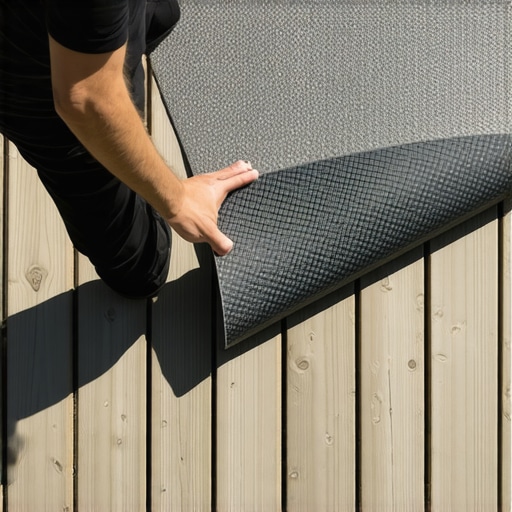
Move Your Decor to Prevent Shadow Stains
Even with the best breathable rug and pad, the sun is still your enemy in a different way. UV rays naturally fade deck finishes over time. If you leave a rug in the exact same spot for three years, you’ll eventually pull it back to find a ‘bright’ spot where the wood hasn’t faded, surrounded by weathered boards. This is especially true if you are managing the maintenance reality of owning an ipe hardwood deck, which darkens and riches with age and sun exposure. I make it a habit to shift my rug and furniture by just a few inches every time I deep clean the space. This slight adjustment helps the wood weather more evenly and prevents any one area from being perpetually shielded from the sun. It also gives you a chance to check for any early signs of board buckling or fasteners that might be popping up. If you notice your furniture catching, you might need to look into how to stop your deck chair legs from catching in the board gaps, which often happens when boards start to shift due to moisture imbalances under heavy rugs.
The Simple Drain Test
Before you commit to a rug placement, perform what I call the ‘bucket test.’ Pour a gallon of water over the area where you plan to put the rug. Watch how it drains. If the water pools and sits for more than twenty minutes, that spot is a drainage trap. You might need to adjust your furniture layout or even look into the joist spacing secret for a solid feeling composite surface to ensure your deck is perfectly level and draining as intended. I once had a low spot on a previous build that I ignored; I put a rug over it, and the standing water underneath actually caused the boards to swell and cup. Now, I always ensure the rug is positioned on a slight incline or over a section with clear, unobstructed gaps between the boards to facilitate immediate runoff.
While the advice on polypropylene and air gaps is solid, I want to challenge a common belief that often leads to even bigger headaches. Most contractors will tell you that if you’re going to put a rug down, you should just ‘slap an extra coat of sealer’ on that specific spot to create a barrier. In my experience, this is a massive mistake. When you over-seal a specific patch of wood, you actually create a vapor trap. Wood needs to move moisture in and out; by creating an impenetrable barrier on the top while the bottom remains semi-permeable, you invite internal rot. I’ve seen boards that looked perfect on the surface but were essentially mush inside because the moisture could get in through the grain ends but couldn’t evaporate through the top. This is the ‘hidden nuance’ of wood science that many DIY guides miss.
The Over-Sealing Trap That Actually Speeds Up Rot
Instead of piling on more chemicals, focus on the structural integrity of the area. If you are choosing the right composite decking for a high-traffic rug area, the issue isn’t rot, but thermal expansion. Composite expands and contracts significantly more than wood. When a rug traps heat in one specific 8×10 area while the rest of the deck is cooler, you risk seeing the hidden clip mistake that leads to buckling deck boards. The uneven heat distribution can actually cause the boards to ‘hump’ or pull at the fasteners. This is why I always suggest lighter-colored rugs for south-facing decks to minimize heat absorption. According to the American Wood Council, consistent moisture levels are key to longevity, and preventing ‘hot spots’ is just as important as preventing ‘wet spots.’
Why does your composite deck feel spongy specifically under the rug area?
If you notice a ‘give’ or a bounce when you step on your rug, it’s rarely the rug itself. Often, the rug has masked a drainage issue that has softened the framing underneath. This is a classic ‘oops’ factor. Homeowners focus so much on the surface aesthetics of composite decking trends 2025 that they forget the skeleton. If water pools under that rug and seeps into the joists, the wood eventually loses its load-bearing capacity. Have you ever fallen into this trap where a decor choice hid a structural problem? Let me know in the comments, because I’ve seen it happen to even the most seasoned renovators.

Don’t Forget the Safety of Your Stairs and Transitions
Finally, we need to talk about the transition points. Often, people run a rug right up to the edge of the steps, which is a major tripping hazard and a moisture trap for the most sensitive part of the build. When creating seamless transitions stairs should be kept clear of any loose coverings. The area where the deck meets the stair stringer is already a high-stress point. I always tell my clients that if they are worried about stability, they should look into why I use structural screws instead of lag bolts for stairs to ensure that even if the wood does get a bit of moisture from a nearby rug, the connections remain rock solid. Protecting your deck is about more than just a pretty rug; it’s about understanding the physics of the environment you’ve built.
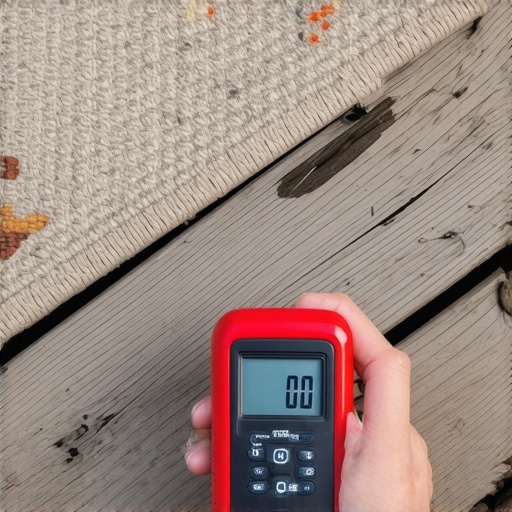
Moving away from the chemical ‘quick fixes,’ let’s get into the actual gear that makes a difference. I’ve found that the most important tool in my kit isn’t a power tool at all—it’s a high-quality moisture meter like the Wagner Meters Orion series. I use this to spot-check the wood density and moisture levels under my rugs twice a year. If the meter reads above 19%, I know I need to pull the rug back for a full week of sun exposure to prevent cell-wall breakdown. It’s a proactive step that helps me understand how to protect your deck frame from rot for thirty years rather than just guessing based on surface color. I also ditched the stiff scrub brushes for a synthetic ‘soft-flagged’ brush. These have split ends that grab debris without scratching the protective cap of high-end boards, which is crucial when you are figuring out the best way to clean bird droppings off dark brown composite boards without leaving dull spots.
How can I actually extend the life of my boards by years?
Consistency beats intensity every single time. My personal routine involves using a cordless leaf blower on low power every Sunday night. It takes five minutes, but it prevents the buildup of organic matter between the gaps. Organic debris acts like a wick, pulling water into the joists and fostering decay. If you missed it during construction, you’re already paying the hidden cost of skipping joist tape on a new build, but you can mitigate the damage by keeping those gaps clear. According to the North American Deck and Railing Association (NADRA), over 40 million decks in the U.S. are past their life expectancy, and poor drainage caused by organic clogs is the leading culprit for structural failure. By keeping those gaps breathing, you ensure your choosing the right composite decking investment stays rigid and safe.
The Future of Low-Maintenance Outdoor Living
As we look toward 2025 and beyond, the industry is moving away from reactive cleaning and toward ‘smart’ surfaces. We’re already seeing self-healing polymers in composite decking trends 2025 that close up small scratches from furniture or rugs using just the heat of the sun. I predict that within five years, we’ll see integrated moisture sensors built into the joists themselves that sync with your phone. Imagine getting a notification that says, ‘Your rug area is too damp; please lift it.’ It sounds like science fiction, but it’s the logical next step for innovative outdoor living ideas. Until then, you are the sensor. My best advice? Grab a simple moisture meter this weekend and check that spot under your rug. It’s a ten-second test that could save you ten thousand dollars in framing repairs.
The Most Expensive Lesson My First Deck Ever Taught Me
If there is one thing years of construction have shown me, it is that your outdoor space is a living, breathing system. One of the biggest misconceptions I see is the idea that modern materials are invincible. I once believed that high-end composite didn’t need airflow, but a warped section under a heavy rubber mat proved me wrong. My biggest lightbulb moment was realizing that protection isn’t about blocking nature out, but about managing how nature interacts with your surfaces. If you treat your deck like a high-performance engine that needs occasional tuning, it will reward you with decades of service. Always trust your eyes over the marketing brochure; if a board looks damp or feels different, it is time to investigate before the damage becomes structural.
My Essential Gear for Keeping Boards Healthy
I never show up to a job site without a few specific tools that help me evaluate deck builder insights for designing your dream space. First, I highly recommend investing in a Wagner Orion moisture meter; it’s a simple tool that removes all the guesswork by telling you exactly what’s happening inside the wood fibers. For the rug itself, I only use high-grade PVC grid pads that provide a clear 1/8-inch of lift for maximum airflow. Lastly, keep a synthetic soft-flagged brush in your storage bin. It’s the best way to clear organic debris from the gaps without marring the finish of your expert deck builder tips for stunning outdoor living project. #IMAGE_PLACEHOLDER_E#
Build a Legacy of Outdoor Comfort
Your deck is more than just a platform of wood or plastic; it’s a place for family gatherings and peaceful evenings under the stars. By applying these benefits of working with a professional deck builder mindset, you’re ensuring that those memories aren’t interrupted by costly repairs. Remember that a little bit of airflow and a monthly check-up can go a long way in your journey of how to protect your deck frame from rot for thirty years. You’ve built something beautiful—now let’s make sure it stays that way for the long haul. Have you ever pulled back an outdoor rug and been surprised by what you found underneath? Let me know in the comments below!