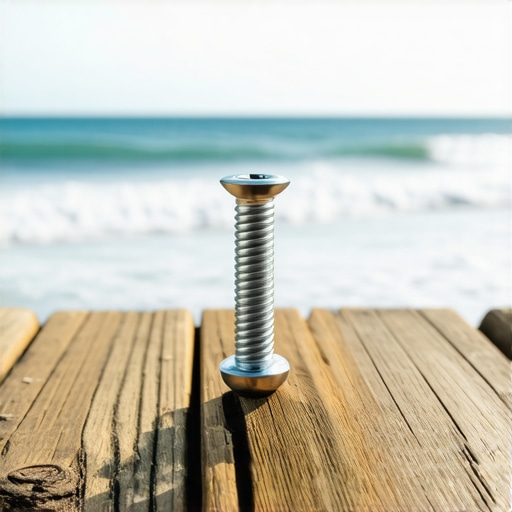
I’ll never forget the sound of that first snap. It was a Tuesday morning, and I was inspecting a beautiful seaside wrap-around I’d finished less than two years prior. As I stepped toward the stairs, a board shifted under my weight. I looked down and saw a streak of rust bleeding into the wood. I tried to tighten the screw, and the head just disintegrated into a pile of orange flakes. My heart sank. I had used high-quality galvanized fasteners, but the salt air didn’t care about the labels. It had chewed through them like they were made of sugar. That was my “lightbulb moment.” I realized that if I wanted to be a successful deck builder in a coastal town, I had to stop trusting the standard hardware aisle. Today, I’m going to share the hard-won secrets I’ve learned about keeping your deck from falling apart in the salt air. We are going to look at the specific materials that actually hold up and why your choice of fasteners is even more critical than the boards themselves.
The Invisible Killer Living in the Sea Mist
Living by the ocean is a dream, but for your deck, it’s a constant battle against chemistry. When you build outdoor living spaces near the water, you aren’t just dealing with rain; you’re dealing with an aerosolized salt solution that never stops attacking every metal surface. Most folks assume that “weather-resistant” means “salt-resistant,” but that’s a costly mistake I made early in my career. I once spent thousands on premium composite decking only to have the structural integrity compromised because the joist hangers were the wrong grade of steel. According to research from the American Galvanizers Association, the corrosion rate in marine environments is exponentially higher than in dry, inland climates, often resulting in metal loss that can happen in just a few short seasons. This is why following the latest composite decking trends 2025 includes a heavy focus on the “bones” of the deck, not just the surface you walk on. [IMAGE_PLACEHOLDER]
Is Stainless Steel Actually Worth the Higher Price Tag?
I get this question from homeowners every single week. “Why am I paying three times more for a box of screws?” The short answer is: because you don’t want your deck to become a safety hazard in five years. Standard galvanized screws rely on a thin layer of zinc. Once that zinc is sacrificial, the steel underneath is toast. Stainless steel, specifically 316 grade, is the gold standard because it’s alloyed with molybdenum to resist chlorides. It is literally the only fastener we trust for coastal decks exposed to salt spray. I’ve seen 304-grade stainless—which is usually fine for most yards—fail within sight of the breaking waves. If you are building a pool deck, the stakes are even higher because you’re fighting salt and chlorine, which is why we always use stainless steel hardware for poolside deck frames. Have you ever noticed those ugly orange streaks on your own deck, or is everything still looking tight and clean? Let me know in the comments because I’d love to hear what’s happening in your backyard. In the next section, we’ll dive into the specific installation techniques that add another layer of protection.
Build a Frame That Defies the Salt Air
Even with the best 316-grade stainless steel fasteners, your deck is only as strong as the wood it’s anchored into. I learned this the hard way on a project in a high-moisture valley where the fog sat heavy until noon every single day. I thought pressure-treated lumber was bulletproof, but I didn’t realize that every screw hole is an open invitation for salt-laden water to pool and rot the joist from the inside out. Now, I never set a single board without first applying butyl joist tape. Think of this tape as a surgical-grade gasket; it seals around the fastener as it enters the wood, creating a waterproof barrier that keeps the ‘bones’ of your structure dry. This is exactly how to keep your deck joists from rotting under the boards for decades rather than years. Additionally, you need to be diligent about the ends of your lumber. Every time you make a cut, you expose the raw, untreated center of the wood. I always keep a small can of preservative on my hip to seal the end cuts of pressure-treated lumber immediately. It’s a five-second step that prevents the wood from wicking up moisture like a straw. [IMAGE_PLACEHOLDER_B#]
Eliminate Bouncy Floors with Structural Double-Blocking
There is nothing that ruins the premium feel of choosing the right composite decking like a floor that feels like a trampoline. In coastal regions, the humidity can cause wood to move more than you’d expect. To combat this, I’ve adopted a strict framing protocol: we use double joists under every composite seam for a flat floor. This provides a wider landing zone for the boards and ensures that when they expand or contract, they aren’t fighting for space on a single two-inch wide piece of wood. It’s about more than just feel; it’s about longevity. When a frame is rigid, the fasteners don’t work themselves loose over time. This foundational stability is the primary way how to protect your deck frame from rot for thirty years because it minimizes the mechanical stress on the wood fibers.
The Pro Method for Fastening and Stair Safety
When it comes to actually laying the boards, the technique is just as important as the metal you use. I generally advocate for a hybrid approach to keep the surface looking pristine while maintaining maximum structural integrity. Specifically, why we use hidden clips for the field but screws for the perimeter comes down to leverage. The perimeter boards take the most abuse from wind and foot traffic, so they need the mechanical bite of a face screw. For the main body, the hidden clips allow the boards to expand and contract freely as the temperature swings.
Stop the Squeak in Your Coastal Stairs
Stairs are often the first thing to fail on a coastal deck because they take concentrated weight and are prone to racking. I remember a wrap-around staircase I built early on that started squeaking after just one summer. The culprit? Standard nails and thin stringers. Now, I always insist on using the bracket that makes your deck stairs feel rock-solid at every connection point. These specialized connectors prevent the stringers from pulling away from the frame. We also pay close attention to the ergonomics of the climb. I’ve found that the stair tread depth that feels safest for kids and the elderly is consistently around 11 to 12 inches, providing enough room for a full foot to land securely even if the surface is a bit damp from the morning sea mist. By combining these structural brackets with deep treads, you create an entry point to your outdoor living space that is both silent and incredibly safe.Most homeowners think that once they’ve picked out their boards, the ‘maintenance-free’ life begins. But here’s the contrarian truth: choosing the right composite decking is only 40% of the battle. The rest is managing thermal expansion. If you don’t understand why your composite boards are expanding more than expected, you are going to wake up one morning to a deck that is literally fighting itself. I’ve seen 20-foot runs buckle like a cheap accordion because the installer forgot that composite is mostly plastic. According to the Forest Products Laboratory, synthetic materials can expand significantly more than natural wood across their length, requiring precise ‘gap-management’ based on the ambient temperature during installation. Have you ever noticed your deck making a weird popping sound on a hot afternoon? That’s the sound of the boards struggling for room, and it’s a sign you need to know how to stop your deck boards from creaking in the summer heat before the fasteners start shearing off. Have you ever fallen into this trap? Let me know in the comments because I see it more often than you’d think.
Stop Your Fascia From Warping Like a Pretzel
The biggest ‘trap’ I see—even with experienced crews—is the fascia. They screw that long rim board down tight like it’s a piece of standard 2×10 lumber. But because fascia is thin and has a high polymer content, it has nowhere to go when it heats up except ‘out.’ This is how to install deck fascia boards so they dont buckle in the heat: you have to over-drill the holes and use a specialized screw that allows the board to slide slightly. It’s a minute detail that separates a pro job from a weekend DIY mess. If you pin it too hard, the board will eventually crack around the screw head, creating an entry point for moisture that will rot your rim joist in a few seasons. It’s one of those hidden nuances that a professional deck builder always accounts for, but the average contractor might overlook in a rush to finish.
Can Your Low-Profile Deck Actually Suffocate Itself?
One of the most common mistakes in outdoor living design is building too close to grade without a plan for air movement. If the ‘bones’ of your deck can’t breathe, they will rot from the bottom up, regardless of how waterproof your boards are. This is why I obsess over how to vent the space under your deck to prevent mold and wood rot. Without that cross-ventilation, you’re basically building a greenhouse for fungus. [IMAGE_PLACEHOLDER_C#] We also have to consider the color of the surface; why dark brown decking gets significantly hotter than light gray boards isn’t just about the comfort of your bare feet—it’s about the massive thermal load being transferred to your frame. A dark deck in full sun can reach 160 degrees, causing the wood joists underneath to bake and lose their natural oils. If you are planning a complex backyard setup, why a digital designer is the best move for planning a complex backyard deck becomes clear: they can model sun patterns and airflow to ensure your investment doesn’t literally cook itself to death.
The high-torque tools that save my wrists and your wood
I stopped using standard drills for heavy framing years ago. When you are driving four-inch screws into dense, pressure-treated lumber all day, a standard drill will either strip the head or burn out the motor. I switched exclusively to high-torque impact drivers because they deliver a rapid-fire internal striking motion that seats the screw without the cam-out that ruins the finish. This is particularly vital because the reason we use structural screws instead of old-fashioned lag bolts is for their superior shear strength and ease of installation. Standard lags often require pre-drilling and a massive wrench, but a modern structural screw with an impact driver sinks like a hot knife through butter. For anyone managing their own build, I recommend a brushless motor platform; the efficiency gain means you aren’t swapping batteries every hour while you’re trying to finish the ledger board.
How do I maintain my composite deck over time?
Maintenance is where most homeowners lose the ‘battle of the beach.’ While composite is marketed as low-maintenance, the environment still wants to colonize your boards with pollen, salt crust, and bird droppings. You have to be careful with your methods; for instance, why you should never use a pressure washer on composite decks is because the high PSI can actually etch the surface and void your warranty. Instead, I stick to a soft-bristled brush and a mild detergent. If you’ve been hosting summer cookouts, you’ll likely need to know how to clean grease stains off composite without ruining the finish—usually, a quick application of a degreaser within the first 24 hours is the only way to prevent a permanent shadow. Contrast this with the maintenance reality of owning an ipe hardwood deck, which requires annual oiling just to keep its color, and you’ll see why I lean toward high-end synthetics for my clients. [IMAGE_PLACEHOLDER_D#]
Why the future of decking looks digital
The industry is moving away from the ‘sketch on a napkin’ phase. These days, I spend as much time on my iPad as I do on my miter saw. This is why a digital designer is the best move for planning a complex backyard deck; we can now run structural simulations to see how the frame will handle a heavy snow load or a 100-mph coastal gale. According to the ICC-ES Evaluation Report ESR-1465, the specific load-bearing requirements for ledger connections are incredibly rigid, and a 3D model ensures every bolt is exactly where it needs to be to meet code. Personally, why I never start a complex deck project without a digital 3d walkthrough first is because it eliminates the ‘I didn’t realize it would look like that’ conversation after the boards are already down. We can even simulate how to pick the right deck lighting color temperature for a cozy feel before we ever pull a single wire.
I predict that in the next five years, we’ll see ‘smart joists’ equipped with embedded moisture sensors that alert your phone if the ledger begins to leak. For now, the best ‘smart’ move you can make is using the right hardware from day one. **Try this:** Next time you’re at the hardware store, grab a pack of structural screws and compare the ‘bite’ to a standard lag bolt; you’ll never go back to the old way of framing.
Lessons from the Brine that Only Two Decades on the Coast Can Teach You
I’ve spent half my life fighting the Atlantic, and if there’s one thing I’ve learned, it’s that the ocean never loses—you just learn how to negotiate with it. My ‘lightbulb moment’ wasn’t about the boards themselves, but the hidden mechanics of the frame. First, never underestimate the power of the sun to warp your trim; this is precisely how to install deck fascia boards so they dont buckle in the heat. Second, ventilation is your best friend. A deck that can’t breathe is a deck that’s rotting from the inside out, which is why I always prioritize how to vent the space under your deck to prevent mold and wood rot. Finally, don’t just guess where your stairs should go; why a wrap-around staircase is the best choice for multi-level-yards often comes down to better airflow and more natural foot traffic patterns. [IMAGE_PLACE_HOLDER]
My Go-To Arsenal for Defeating Salt and Humidity
Building a high-end outdoor living space requires more than just a hammer. I’ve narrowed my toolkit down to the essentials that actually withstand the spray. I never start a project without a high-quality butyl joist tape (like G-Tape) to seal every single screw penetration. For structural integrity, the reason we use structural screws instead of old-fashioned lag bolts is simply that they don’t lose their grip when the wood swells. I also recommend checking the American Wood Council’s span tables; don’t trust your memory with structural safety. For planning, why I never start a complex deck project without a digital 3d walkthrough first is to ensure every line is perfect before we make a single cut.
The Confidence to Build a Deck That Outlasts the Waves
Your backyard should be a place of peace. I haven’t heard that sinking ‘snap’ of a failing fastener in over a decade because I stopped cutting corners on hardware. When you choose to invest in high-quality composite decking and pair it with the right stainless hardware, you aren’t just building a platform; you’re creating a sanctuary. Whether you are tackling this as a DIY project or hiring a professional deck builder, the goal is longevity. Take the time to get the stairs right, seal your end cuts, and respect the power of the salt air. Your future self, sitting on that deck five years from now, will thank you. Have you ever noticed rust streaks on your hardware, or have you already made the switch to 316-grade stainless steel? Let me know in the comments below!