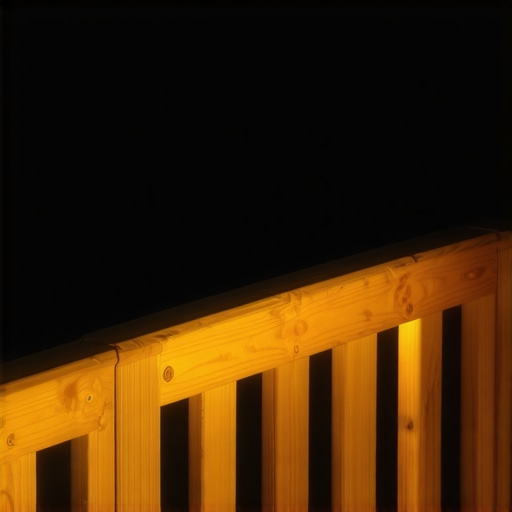
I remember sitting out on my brand-new composite deck last summer, glass of wine in hand, feeling like I was under interrogation by the local police department. I had just installed these massive floodlights, thinking more light meant better safety, but I couldn’t even see the person sitting across from me without squinting. It was a total mood killer. My backyard didn’t feel like a retreat; it felt like a parking lot. That was the ‘aha’ moment when I realized that when it comes to composite decking trends for 2025, the real magic happens in the shadows. I decided right then to tear out the ‘stadium lights’ and figure out how to create a subtle, sophisticated glow that didn’t blind my guests. Today, I am going to show you exactly how to tuck LED strips or puck lights under your handrail to transform your space into a high-end sanctuary. We are solving the problem of ‘light pollution’ on your own property, ensuring your deck builder-level vision actually comes to life after sunset.
Get Rid of Harsh Glare with a Hidden Light Source
To get this right, you have to think like a designer, not just a handyman. The biggest mistake I made early on was not considering the warmth of the bulbs. I bought the first ‘white’ LEDs I saw, and my deck ended up looking like a hospital hallway. You really need to learn how to pick the right deck lighting color temperature to get that golden-hour vibe. I spent an entire weekend once trying to fish wires through a post I’d already capped, essentially turning my expensive railing into Swiss cheese. It was humiliating, but it taught me that the path of the wire is just as important as the light itself. If you want a professional look, you have to know how to run wire for deck lights without drilling huge holes that compromise your structure. According to the Illuminating Engineering Society, poorly placed outdoor lighting can actually decrease safety by creating ‘glare-induced’ temporary blindness, making it harder for your eyes to adjust to the dark spots on your stairs. By mounting lights under the handrail, the source remains invisible while the light washes down the balusters, providing safety without the squinting.
Is This Just Another Expensive DIY Project That Ends in Frustration?
I get the skepticism. Wiring sounds hard, and the fear of ruining your expensive railing is real. But honestly, once you find the best low voltage transformers, the rest is just like putting together a Lego set. Have you ever spent a fortune on your outdoor space only to realize you can only enjoy it for 12 hours a day? That’s the real waste of money. Let’s get into the nitty-gritty of the tools you’ll need so you don’t repeat my ‘Swiss-cheese post’ disaster.First, you need to anchor your system with the right power source. I learned the hard way that picking a transformer isn’t just about finding the cheapest option at the hardware store. If you want your lights to actually turn on at dusk and stay on without flickering, you have to know how to choose the right deck lighting transformer. Think of the transformer as the heart of your outdoor living space; if it’s too weak, the extremities—those furthest lights on your stairs—will look dim and sickly. I once tried to overload a budget transformer with too many puck lights and it hummed like a disturbed beehive for twenty minutes before the internal fuse popped, leaving me in the dark. Now, I always calculate the total wattage and add a 20% safety buffer.
Stop Drilling Random Holes and Start Mapping Paths
Instead of treating your deck like a block of wood you can just bore through, treat it like a luxury vehicle. You want the wiring to be completely invisible. The best trick I ever used was utilizing the small gap between the rim joist and the fascia. If you are already looking at how to install deck fascia boards so they dont buckle in the heat, you can kill two birds with one stone. Leave a tiny 1/8-inch channel behind that fascia to act as a wire chase. This keeps the cables protected from both the sun and your guests’ eyes.
Mount Under the Rail for a Professional Finish
Most modern composite decking trends for 2025 emphasize clean, minimalist lines. This means your LED strips shouldn’t just be slapped on with sticky tape that will inevitably fail by mid-July. Use a small router bit to create a shallow groove on the underside of the top rail. I once tried to skip this step and just used plastic clips. Three weeks of humidity later, the wires were sagging like old clotheslines, and I had to spend a whole Saturday morning recabling the entire perimeter. Tucking the lights into a routed groove keeps them protected from the elements and completely hides the hardware.
Light the Path Without Blinding Your Guests
Stairs are the most dangerous part of any deck, but they are also the best place to show off your deck builder skills. Instead of putting lights on the front of the steps which can be distracting, focus on the handrail. By following the best way to light stairs for safety without creating a glare, you ensure that the light points straight down at the treads. This highlights the edge of each step, which is exactly where your feet need to land.
Fix the Wobbly Post Problem Before You Wire
When you are running wires through posts, you are often loosening the very thing that keeps you safe. I’ve seen homeowners drill massive holes through their support posts just to get a wire through, only to find the railing starts to shake a month later. You need to use the bolt pattern that finally stops railing post wobble for good to ensure that even with internal wiring, your structure remains rigid. If you find things are already moving, you can learn how to fix a loose railing post without tearing up the deck boards.
Use Hardware That Doesn’t Rust in Two Years
Finally, do not settle for standard screws. Even for internal wiring, moisture finds a way in. This is why we always use stainless steel hardware for poolside deck frames and any other high-moisture outdoor project. Regular screws will bleed rust stains down your beautiful new composite boards, creating streaks that are nearly impossible to remove. Use stainless staples or clips to keep your wires taut and your deck looking pristine for a decade, not just a season.It’s a common misconception that once you switch to composite, your maintenance days are over. Everyone says ‘set it and forget it,’ but in my experience, that attitude is exactly why most decks fail prematurely. The biggest lie in the industry is that the surface is the only thing that matters. If you don’t know how to protect your deck frame from rot for thirty years, you’re just putting a $20,000 suit on a skeleton with osteoporosis. Moisture gets trapped between the non-breathable composite and the wooden joist, creating a rot-accelerating ‘sandwich.’ This is why I always insist on joist tape; it’s a tiny expense that prevents a total structural collapse ten years down the line.
Why Do Your Stairs Feel Like They’re Giving Way?
It’s usually not the boards; it’s the geometry. I’ve seen so many DIYers—and even some ‘pros’—make the stair stringer measurement mistake that ruins your stride. They forget that the first and last steps need to account for the thickness of the decking material itself. If you get this wrong, your brain’s muscle memory trips you up every single time. It’s not just about comfort; it’s about liability.
Stop Chasing the Zero-Gap Look
I’ve had clients beg me to butt the boards tight together because they hate the look of gaps. This is a massive trap. Unlike wood, which mostly shrinks across its width, composite is a thermal beast that expands significantly in length. If you don’t understand why your composite boards are expanding more than expected, you’ll watch your beautiful perimeter boards buckle and pop their fasteners during the first 90-degree day. According to the North American Deck and Railing Association (NADRA), thermal expansion can move a 20-foot board by as much as half an inch depending on the temperature swing. If those boards have nowhere to go, they will find a way out—usually by warping upward or snapping clips.
The Real Reason for That Annoying Bounce
If you’ve ever walked across a high-end deck and felt like you were on a trampoline, it’s not because the boards are thin. It’s because the joist spacing was set for wood, not composite. Composite is naturally more flexible than cedar or pressure-treated pine; it usually requires 12-inch centers for a truly solid feel, especially on stairs or diagonal patterns. If you’re already dealing with this, you need to find why your deck feels bouncy and the affordable fix to stiffen it up before you start replacing hardware. Another ‘oops’ factor I see constantly is forgetting the ‘hidden’ ventilation. If you box in your deck with solid fascia and no airflow, you’re essentially building a mold incubator. Have you ever fallen into this trap? Let me know in the comments.Speaking of the community, one thing that always comes up is the ‘gear’ list. I’ve seen guys try to cut high-end boards with a dull 24-tooth framing blade, and the result looks like a beaver chewed through the edge. To get those crisp, factory-finish lines, I swear by a 60-tooth carbide-tipped blade specifically engineered for synthetics. It prevents the ‘mushrooming’ effect where the plastic burrs up around the screw head, which is a common nightmare for even a seasoned deck builder.
Invest in These Few Pro Tools for a Zero-Error Build
Beyond the saw, the most underrated tool in my arsenal is a digital angle finder. When you’re trying to figure out the trick to cutting perfect deck stringers on the first try, being off by just half a degree at the top means a massive gap at the bottom of your stairs. I also never step onto a job site without a high-quality impact driver and a dedicated depth-setter bit. If you over-drive your fasteners, you break the ‘cap’ of the board, allowing moisture to seep into the core—exactly what you’re trying to avoid for long-term durability.
How Do I Maintain My Composite Decking Over Time?
People think ‘low maintenance’ means ‘no maintenance,’ but that’s a dangerous path. If you just finished a summer of grilling, you probably have a few invisible grease spatters. If you don’t know how to clean grease stains off composite without ruining the finish, they will bake into the grain under the sun and become permanent ‘shadows.’ Similarly, local wildlife can be a nuisance; I’ve found that knowing the best way to clean bird droppings off dark brown composite boards saves you from using abrasive chemicals that strip the UV coating. According to the American Wood Protection Association (AWPA), even ‘treated’ frames require specific ventilation and moisture barriers to reach their full thirty-year lifespan. That’s why I’m so obsessed with knowing how to keep your deck joists from rotting under the boards. You should be doing a visual inspection every spring, looking for any signs of the ledger pulling away or fasteners that have worked themselves loose due to the thermal expansion we talked about earlier.
Smart Decks Are the Next Big Thing in 2025
Looking ahead, the future of our backyards isn’t just better boards—it’s intelligence. We are moving toward ‘living systems’ where your deck lighting, sound, and even irrigation are controlled by a single hub. I’m already seeing innovative outdoor living ideas with composite decking in 2025 that include integrated sensors that dim the lights when no one is using the access points to save power. We’re also seeing a huge shift toward better tech, like learning how to install solar lights that actually last more than a season instead of the cheap plastic ones that die after three rains. If you’re planning a big project, why a digital designer is the best move for planning a complex backyard deck cannot be overstated—it lets you see the shadows and the pedestrian flow before you ever buy a single board. I challenge you to try one thing this weekend: get a roll of butyl joist tape and apply it to just one section of your frame. Once you see how it seals around the screw, you’ll never build a deck without it again.
What Most Professionals Forget to Mention About Composite Life
It took me three failed attempts to realize that the ‘low maintenance’ label on composite boards doesn’t apply to the frame underneath. If you ignore the substructure, you’re essentially building a luxury house on a swamp. Always prioritize keeping your deck joists from rotting under the boards because that is the one thing you cannot fix without tearing everything up. Another epiphany? Your lighting should never be an afterthought. If you do not plan the how to run wire for deck lights before the boards go down, you will spend twice as much time retrofitting it later. Finally, remember that dark brown decking gets significantly hotter than lighter shades, so if you are building a south-facing retreat, choose your palette based on barefoot comfort, not just the catalog photos.
The Gear That Actually Stays in My Truck
I never start a job without my 60-tooth carbide blade for those clean composite edges; it is the difference between a project that looks DIY and one that looks like it was handled by a professional deck builder. I also swear by a digital angle finder for cutting perfect deck stringers on the first try—eyeballing angles on stairs is a recipe for a squeaky mess. Lastly, for the power side, I only use the best low voltage transformers because cheaper units simply cannot handle the long-term demands of a fully lit outdoor living space. #IMAGE_PLACEHOLDER_E#
Take the First Step Toward Your Private Oasis
Your backyard should not just be a place to store a grill; it should be an extension of your home that works for you at 2:00 PM and 10:00 PM. By focusing on these hidden details—from the joist tape to the amber glow of a hidden LED—you are creating a space that will truly last for decades. Whether you are doing it yourself or hiring a skilled deck builder, do not be afraid to demand quality in the places no one sees. Your future self, sitting on that durable composite decking years from now, will thank you for the extra effort today. Have you ever tried to retro-fit lighting on an existing deck, or are you planning a fresh build for 2025? Let me know your biggest struggle in the comments below!