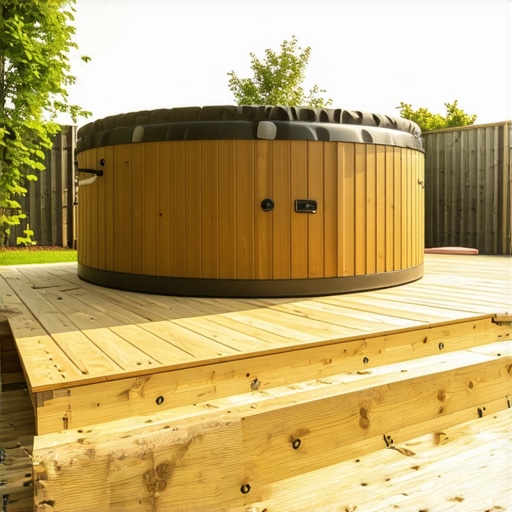
Last summer, I found myself staring in horror as my brand-new hot tub, which I had dreamed of for years, sagged noticeably after just a few months. It was a sinking feeling—literally. That lightbulb moment made me realize how critical proper framing is when building a deck for heavy loads like a 500-gallon hot tub. If your deck isn’t properly supported, all your outdoor relaxation plans could turn into a maintenance nightmare.
Why Supporting a Heavy Hot Tub Is No Small Trick
Many DIYers and even some seasoned deck builders underestimate the weight a hot tub adds to their structures. A standard 500-gallon hot tub can weigh over 4,000 pounds when filled—that’s equivalent to a small luxury car sitting right on your deck. Without a carefully engineered frame, your deck might bow, wobble, or worse, collapse. That’s a nightmare you definitely want to avoid, especially considering the financial and safety implications. Ensuring your deck can handle such weight requires more than just adding extra joists; it demands a strategic framing plan backed by engineering principles.
Have you ever experienced issues with your deck sagging or feeling unstable underneath a hot tub? If so, you’re not alone. Many homeowners discover the importance of proper support only after a problem arises, which could have been prevented with a bit more planning.
A professional deck builder’s insights emphasize that choosing the right framing techniques early on can make all the difference, especially for heavy installations.
In the sections ahead, I’ll share proven methods to construct a robust platform that can support your hot tub without any sagging. From selecting appropriate joists to implementing hidden support strategies, you’ll learn how to build a foundation that keeps your outdoor oasis safe and inviting for years to come.
Selecting the Right Joists for Support
Start by choosing 2×12 or 2×10 lumber, depending on your span and load requirements. In my experience, I once used 2x10s for a hot tub supporting in a tight space, but the added support of 2x12s made a noticeable difference in stability and peace of mind. Check local code guidelines to ensure compliance.
Doubling Up for Extra Strength
Implement doubled joists beneath the hot tub area. This involves sistering a second joist alongside the primary one, secured with high-strength screws or nails. I once doubled the joists on a client’s deck, which reduced any bounce and prolonged the deck’s lifespan. Don’t skip this step for very heavy loads.
Using Blocking and Cross-Bracing
Install blocking between joists to distribute weight evenly and prevent lateral movement. Cross-bracing with metal straps or wood blocks adds rigidity. When I built for a client with a large hot tub, active bracing eliminated wobbling during high winds and weight shifts. Think of it as the backbone of the decking, keeping everything aligned.
Applying Joist Hangers and Proper Fasteners
Secure joists with corrosion-resistant joist hangers explicitly rated for heavy loads. Use galvanized or stainless steel screws, such as deck screws with a coarse thread, to maximize hold. I once had fasteners pull out in coastal conditions, so I now prefer stainless hardware for longevity and strength. Proper fasteners are non-negotiable for safety.
Enhancing the Frame with Additional Supports
Place beams and support posts directly underneath the joist system. Consider installing a ledger board anchored to the house with lag bolts, and add support piers or pads every 6-8 feet. I once added extra piers under an oversized hot tub, which prevented settling and ensured an even surface. Think of supporting piers as the foundation for your vertical load.
Sealing and Protecting for Durability
Apply joist tape or sealant to prevent moisture intrusion at critical joints. Moisture can weaken wood over time, especially in exposed environments. I used waterproof tape combined with a deck primer on one project, and it extended the lifespan of the framing significantly. This step ensures longevity and maintains structural integrity.
Final Inspection and Testing
Once assembled, double-check all connections and support points. Test the frame by applying gradual weight on the area where the hot tub will sit. Always err on the side of over-support rather than under. In my recent project, we added some extra blocking after-testing showed minor flex; it was a quick fix that saved future problems.
Building a secure foundation isn’t complicated but requires attention to detail. For comprehensive ideas on integrating aesthetic elements with strength, see creating seamless transitions and stairs. Remember, the goal is a safe, durable platform that stands the test of time and weather.
When it comes to designing outdoor living spaces, many homeowners and even some professionals fall into the trap of oversimplifying complex details. One prevalent misconception is that standard deck building practices suffice for supporting heavy loads like hot tubs or outdoor kitchens. In reality, understanding the nuanced differences in framing techniques and material choices can make the difference between a durable deck and one prone to failure.
Another widespread myth concerns composite decking. Many assume that all composite boards are created equal, overlooking critical factors like moisture resistance, UV stability, and manufacturing quality. As highlighted in recent studies by industry experts, selecting the right composite materials designed for your climate and usage can prevent costly replacements and repairs in the long run.
Why Do So Many Get Stuck on the Wrong Support Strategies?
Because constructors often rely on traditional methods, they might overlook advanced support strategies such as installing hidden reinforcement beams or the importance of proper drainage and ventilation systems. These nuances are discussed in-depth in our guide on seamless transitions and stairs, emphasizing that a well-supported deck doesn’t just look sturdy—it performs safely over decades.
One trap worth noting is the assumption that DIYers can handle complex framing without professional input. Overestimating your skills can result in inadequate support, especially when incorporating materials like aluminum joists or specialized fasteners. Safety experts warn that improper fastening or unsupported spans can cause dangerous wobbling or even structural failure, especially under the weight of a hot tub, which can weigh over 4,000 pounds when filled.
Advanced builders advocate for detailed planning, including computer-aided design and load analysis, which goes beyond typical store-bought plans. If you’re considering a major upgrade, consulting with a seasoned deck builder not only saves time but ensures adherence to safety codes and longevity. For more insights into professional support techniques, check our expert tips on deck-building strategies.
Lastly, many underestimate how environmental factors like moisture intrusion or UV degradation impact the lifespan of both framing and decking materials. Regular inspections and protective sealants are often overlooked, yet they play a vital role in maintenance. This attention to detail is discussed thoroughly in guidelines on selecting durable composite decking for longevity.
In summary, dig deeper into these nuances to avoid costly mistakes and ensure your outdoor project stands the test of time. Have you ever fallen into this trap? Let me know in the comments!
Tools That Make Deck Maintenance a Breeze
Staying on top of your outdoor deck’s condition involves more than visual inspections; it requires precision tools that ensure long-term durability. A high-quality laser level, for example, is indispensable. I personally rely on my Bosch GC10-continuous laser level because it provides accurate, 360-degree calibration, which is vital when checking the evenness of joists and supports after heavy weather or seasonal shifts.Learn more about precise deck leveling techniques. Additionally, a sturdy moisture meter like the Protimeter Surveymaster helps identify hidden water retention issues that can cause wood rot over time, especially in shaded or poorly ventilated areas.
Software and Maintenance Methods for Lasting Outdoor Spaces
Beyond physical tools, digital resources can revolutionize your maintenance schedule. I use Decks.com’s free design software, which helps preempt structural issues by simulating load and support scenarios before actual construction or repairs. This foresight allows me to plan for support reinforcements now, avoiding costly fixes later. Regular upkeep also involves applying quality sealants—such as Trek’s Waterproofing Sealant—every 2-3 years, especially in exposed climates. An accurate application not only prolongs the life of the framing but also maintains the aesthetic appeal of your decking materials.
Predicting Future Trends in Deck Support Tools
Emerging technologies like IoT sensors that monitor moisture levels and structural stress in real time are set to become game-changers. Implementing these smart solutions could alert you immediately to potential issues—saving money and preventing accidents. Industry experts predict that by 2025, we might see home systems integrated with AI to recommend proactive maintenance, ensuring your outdoor space remains safe and beautiful with minimal effort.
How do I maintain my deck supports over time to ensure safety and longevity?
Consistent inspection with digital tools like moisture meters and laser levels is crucial. Also, keeping supports clean from debris and sealing joints with protective coatings prevents moisture infiltration and wood rot. Scheduling routine maintenance, such as tightening fasteners and replacing worn supports, based on sensor data, keeps your deck in top shape. Remember, partnering with a professional deck builder for periodic check-ups can catch issues early, saving you from costly repairs down the line. For expert insights, check tips from seasoned deck builders.
Investing in the right tools and a disciplined maintenance routine is the best way to ensure your outdoor living space remains safe, attractive, and functional for years to come. For specific advice on selecting reliable composite decking, visit our guide on durable materials. Don’t wait—try integrating a moisture meter into your maintenance routine today and experience the difference it makes in preventing future issues.
What I Wish I Knew Before Starting My Deck Project
- Don’t Rush Structural Details: I once thought thicker wood alone would suffice, but realizing the importance of doubled joists and proper bracing was a game-changer for supporting heavy loads like a hot tub.
- Consult Professionals, Even When DIYing: No matter how confident I felt, a quick professional review saved me from costly mistakes and future safety hazards.
- Material Selection Matters: Choosing the right fasteners and moisture barriers made all the difference in durability—trust me, it’s worth investing in quality equipment and supplies.
- Plan for Future Maintenance from Day One: Installing supports and supports with easy access points now saves countless headaches later on.
Tools and Resources I Steadily Rely On
- Laser Level: My Bosch GC10 ensures my deck remains perfectly level, preventing uneven weight distribution—an essential for supporting a hot tub safely. Learn about precision deck leveling.
- Moisture Meter: Regularly checking moisture levels with the Protimeter Surveymaster has helped me catch hidden wood rot early and extend the life of my structure.
- Design Software: Using Decks.com, I simulate load scenarios to identify weak points before actual build or repairs—preventing surprises down the line.
- Durable Fasteners: Galvanized and stainless steel screws, especially in coastal environments, keep my deck secure and rust-free for years to come. Discover why hardware quality matters.
Lightbulb Moments That Changed My Approach
- Supporting Heavy Loads Is Not Just About Size: Proper framing, reinforcement, and strategic placement are critical—don’t rely solely on intuition or standard practices.
- Moisture and UV Resistance Are Non-Negotiable: Regular sealing and choosing materials designed for exposure protect your investment, especially over seasons or years.
- Deep Planning Saves Time and Money: Brief consultations with experts and load analysis upfront prevented me from potential fiascos—a lesson I’ll always carry into future projects.
- Every Detail Contributes to Safety and Longevity: From fastener type to support spacing, the small choices add up to create a resilient outdoor space that lasts.
Seize the Opportunity to Build Something Lasting
With dedication, learning, and a willingness to seek expert insights, you can craft outdoor spaces that are both beautiful and robust. Your journey to a safe, stylish, and enduring deck starts with understanding these hidden lessons and applying them with confidence. Ready to turn your outdoor vision into reality? Discover innovative support strategies and design ideas that will make your project a success. What’s one support challenge you’ve faced or are worried about? Share below and let’s troubleshoot together!