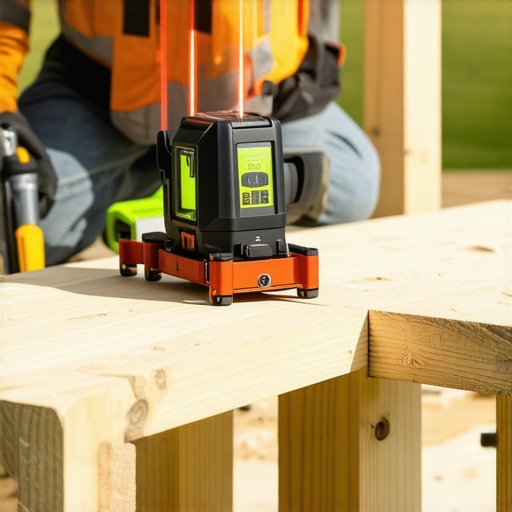
I vividly remember the first time I attempted to set deck posts without a laser level. The frustration was real—posts uneven, measurements off, and a deck that didn’t look as polished as I envisioned. It was a lightbulb moment for me. I realized that relying solely on traditional tools like story poles or measuring tapes often invites inaccuracies, especially when working outdoors where terrain can be uneven. Since then, I’ve made it a rule to always use a laser level, and it’s transformed my approach to deck building.
The Power of Precision in Outdoor Living Projects
Setting the correct height for deck posts isn’t just about aesthetics; it’s crucial for safety and longevity. A slight miscalculation can lead to uneven decks, unstable steps, or even structural issues down the line. The problem is, traditional methods might seem straightforward but can be surprisingly unreliable, especially over larger spans or sloped terrains. That’s where a laser level truly shines. It provides the kind of accuracy that makes a noticeable difference, ensuring each post is perfectly aligned and your deck’s foundation is solid.
Is All the Hype About Laser Levels Really Justified?
In my early days, I made a costly mistake—measuring multiple times but still ending up with crooked posts—mainly because my tools weren’t precise enough, or worse, because I misread the measurements. I asked myself, “Is a laser level just another fancy gadget, or does it genuinely bring value in the field?” The answer became clear as I watched my projects improve and the need for corrections decrease. Studies indicate that laser levels can improve accuracy by up to 80% compared to traditional methods, saving time and reducing material waste (source: Contractor Magazine, 2024).
If you’ve ever struggled with uneven posts or second-guessed your measurements mid-way, you’re not alone. Many DIYers and pros alike find that embracing laser technology can be a game-changer. I promise that once you get accustomed to the tool, setting up your deck becomes less stressful and more rewarding. Next, I’ll dive into how to pick the right laser level for your project and share practical tips to get those perfect measurements every time. Curious if this investment is worth it? Keep reading; I’ll help you decide!
Mark Your Foundation Precisely
Start by laying out the entire deck perimeter using stakes and a chalk line, ensuring your outline matches your design. During my first attempt, I drew the outline and realized I mismeasured a corner, resulting in a misaligned post. To prevent this, I now measure multiple times and mark where each post will go, using the laser level for accuracy.
Set Your Laser Level Properly
Place your laser level on a stable surface or tripod at a central point of your deck area. Turn it on and ensure it is self-leveling or manually level the device until the laser line is perfectly horizontal. During my first setup, I overlooked the importance of surface stability; a shaky tripod threw off my measurements, so I switched to a tripod with a bubble level to guarantee straight lines.
Align the Post Heights
Power on your laser level and adjust the beam to project a straight line across your marked locations. Use a grade rod or measuring stick to confirm the height at each point, matching the deck’s foundation height or railing height. I once tried to eyeball the height visually, but the laser makes this process straightforward and precise, saving hours of adjustments later.
Transfer the Laser Line to the Ground
Position a target or stick at each post location and adjust it so that the laser line hits the target at your desired post height. Mark the spot on the ground with spray paint or a chalk line. This technique ensures all posts are consistent, especially on uneven terrain. An early mistake I made was measuring each post individually; using the laser connection between points maintains uniformity across the entire deck frame.
Dig and Prepare Post Holes
Using the ground marks as guides, start digging your post holes. Ensure the depth is consistent, typically one-third of the post length. During my initial project, I underestimated the depth and ran into issues with stability. Setting the holes with a post-hole digger, aligned with laser marks, guarantees the posts will be level and straight.
Install and Plumb the Posts
Set your posts in the holes, insert braces for stability, and use a level to check for vertical alignment. Cross-reference the laser line at each post to verify height. I found that adjusting the post slightly until the laser line hit the marked height on the post resulted in a perfect fit, eliminating the need for extensive shimming later.
Final Checks and Adjustments
Once all posts are in place and secured, run the laser level’s beam along the tops of the posts to ensure uniform height. Make small adjustments as necessary. I once overlooked this step, leading to a wobbly deck frame. The laser level simplifies this process, allowing for instant corrections before proceeding to framing.
Utilizing a laser level transforms what used to be a tedious, guesswork-filled task into a precise, efficient process. Accurate post placement lays a solid foundation for your entire deck, influencing safety, durability, and visual appeal.
While many outdoor projects start with enthusiasm, professionals and DIY enthusiasts alike often overlook nuanced details that can make or break the longevity and safety of a deck. A common misconception is that selecting materials like composite decking automatically guarantees durability without considering proper installation and design intricacies. For example, improper joist spacing or neglecting ventilation can lead to warping, mold, and decay despite high-quality materials. As an expert in outdoor living solutions, I can attest that understanding these subtleties is essential for achieving stunning and lasting results.
Myth: All Composite Deckings Are Created Equal
Many believe that choosing any composite decking brand will provide similar performance. However, the reality is that not all composites are engineered for the same outdoor conditions. Some variants may absorb heat excessively, leading to discomfort underfoot or faster degradation, especially in south-facing or exposed areas. Examining trends for 2025,
[composite decking trends](https://deckdesignbuild.com/composite-decking-trends-2025-the-ultimate-guide-for-outdoor-enthusiasts) emphasize that selecting the right composition and installation methods can significantly impact your deck’s lifespan. Always consult with a professional to navigate these choices and avoid common pitfalls.
Is Proper Ventilation as Critical as Material Choice?
Absolutely. Neglecting adequate airflow beneath your deck can trap moisture, accelerating rot and mold growth—even with composite boards that resist decay. Advanced builders incorporate design features like hidden vents and proper spacing at footings, which are often overlooked by amateurs. Ensuring that your substructure accommodates airflow is a nuanced detail that experts pay close attention to, enhancing durability without adding significant costs. For detailed insights, see [how a skilled deck builder can turn your garden into a private oasis](https://deckdesignbuild.com/how-a-skilled-deck-builder-can-turn-your-garden-into-a-private-oasis).
Misjudging Stairs: The Overlooked Safety Element
Stairs are more than mere access—they are critical safety features. Many homeowners and builders assume standard measurements suffice, but overlooked nuances such as stair riser height consistency or handrail placement can compromise safety and aesthetics. Advanced solutions involve precise calculations for ergonomic comfort and compliance with local codes, which not only prevent trips but also create a welcoming atmosphere. Check out [designing safe and stylish stairs](https://deckdesignbuild.com/designing-safe-and-stylish-stairs-for-outdoor-decks-in-2025) for expert guidance on elevating your stairs’ functionality and visual appeal.
Why Do Small Details Matter for Longevity?
Seemingly insignificant elements like proper flashing, sealants, and fastener choices have a compounded effect over time. For instance, improper sealing at ledger boards can lead to water intrusion, causing structural damage that is costly to repair. Industry studies highlight that neglecting these details results in early failures, often mistaken for poor material quality. That’s why investing in professional consultation or reading comprehensive guides on [outdoor living](https://deckdesignbuild.com/transform-your-outdoor-living-with-custom-composite-decking-ideas) can save you money and frustration in the long run.
Understanding these hidden nuances is a mark of a seasoned builder, and recognizing common mistakes helps you make smarter decisions. Have you ever fallen into this trap? Let me know in the comments, and I’ll help you navigate the path to a flawless outdoor space.
Keeping Your Decks in Top Shape with Reliable Tools and Routine Care
The longevity and functionality of your outdoor living spaces hinge on using the right tools and adopting a proactive maintenance mindset. As someone passionate about building and maintaining decks, I rely on specific equipment that guarantees precision and efficiency. For instance, I swear by my laser distance meter, such as the Bosch GLM 50 C, which provides quick, accurate measurements without the fuss of traditional tape measures. It’s invaluable when measuring for new composite decking or adjusting stair stringers that require millimeter precision. Pairing this with my trusted cordless drill—preferably one with a brushless motor like the Makita XDT14—ensures fast screwdriving and drilling, reducing fatigue during long projects.
Another tool I consider indispensable is an angle grinder fitted with a diamond blade, which I use sparingly to make clean cuts on composite boards or to remove stubborn old paint. Regular inspections, supported by my digital moisture meter, help identify hidden issues like early rot or trapped moisture beneath the deck, allowing timely interventions before problems escalate.
Beyond hardware, software plays a crucial role in planning and long-term management. I utilize deck design software such as RoomSketcher or SketchUp to visualize layouts, ensuring optimal space utilization and adherence to safety codes. These tools help in making informed decisions about stair placement, railing heights, and even lighting integration. In the future, I predict a rise in AI-assisted maintenance alerts that can monitor environmental conditions and predict when parts of your deck need attention—making upkeep more predictive than reactive.
How do I maintain outdoor structures over time?»
Maintaining your deck involves a combination of routine inspections, cleaning, and protective treatments. I recommend annually checking for loose fasteners, which can be tightened with an impact driver. Regularly cleaning the surface with a gentle, composite-specific cleaner—like the one recommended in this guide—removes debris that can cause mold or degradation. Applying a high-quality, water-repellent sealant designed for composite or pressure-treated wood extends the deck’s life and keeps it looking fresh. For structural elements exposed to weather, inspecting and repairing flashing or drainage systems prevents water damage—a lesson I learned the hard way after neglecting this aspect on an early project.
Investing in maintenance tools like a cordless leaf blower greatly simplifies the cleaning process, especially for removing accumulated dirt and leaves from joints and corners. I also recommend visual inspections after storms for any signs of movement or damage, addressing issues promptly. As the trend toward low-maintenance outdoor living persists, choosing durable, weather-resistant materials combined with diligent upkeep can result in decades of enjoyment from your investment.
Looking ahead, I believe automation will play a bigger role in maintenance, with smart sensors monitoring moisture levels and detecting structural shifts. For now, however, sticking with proven tools and consistent care will keep your outdoor spaces safe and stunning. If you’re ready to take your maintenance routine to the next level, try integrating an impact driver with adjustable torque settings and set a monthly inspection schedule—these simple steps can save you costly repairs and preserve the beauty of your decks for years to come.
The Hardest Lesson I Learned About Stairs and Decks
One crucial insight I gained is never underestimate the importance of precise stair measurements; small miscalculations can lead to safety hazards or an unbalanced look, which I experienced firsthand. It taught me that attention to detail, especially when it comes to riser heights and tread depths, makes all the difference in creating a safe, cohesive outdoor space.
My Favorite Tools That Elevate Deck Building
Beyond laser levels, I rely heavily on a high-quality digital angle finder for stair framing accuracy and a moisture meter to detect hidden issues beneath composite decking. These tools have saved me countless hours and headaches by catching problems early, ensuring long-term durability for outdoor projects. To see a curated list of tools I trust, check out this guide to essential deck-building tools.
Embrace the Details That Turn a Good Deck Into a Showstopper
One emotional takeaway I want to share is how embracing small details—like proper flashing, ventilation, and fastener choices—not only extends your deck’s lifespan but also provides peace of mind when hosting family or friends. It’s these nuances that forge a connection between craftsmanship and heart, making your outdoor space truly special. Remember, investing a little extra in these details now prevents costly repairs later, like water intrusion or warping.
Transform Your Outdoor Space with Confidence
Now that you’re equipped with these insider lessons and expert suggestions, I encourage you to approach your next outdoor project with confidence and patience. Your deck can become a sanctuary or an entertainer’s paradise—it’s all within your reach. If you’re ready to elevate your outdoor living, consider reaching out for professional guidance or exploring trusted resources like custom deck design ideas.
Have you ever struggled with perfecting stair rises or leveling your deck posts? Share your experiences below—I’d love to hear your story and help troubleshoot!
,