
I remember the first time I watched my outdoor staircase buckle after a rainy week by the coast. The frustration hit hard—years of effort into my deck, now compromised by rust and corrosion. That’s when I had my lightbulb moment: I needed reliable hardware that could withstand the relentless salt spray and humidity. If you’ve ever faced similar headaches, you’re not alone. Coastal environments are tough on outdoor structures, especially decks and stairs that endure constant weather assault. The good news? There are specific fasteners designed to resist rust and last for years, even in the harshest seaside conditions.
Understanding the Coastal Challenge and the Fastener Fix
Are you worried that your deck’s hardware won’t survive 2026, let alone next summer? The salty air and moisture in coastal climates accelerate corrosion, making many standard fasteners obsolete quickly. Early on, I made the mistake of choosing inexpensive, ungalvanized screws—an easy money-saving slip-up that led to rust stains and structural concerns. Recognizing that not all fasteners are created equal was a game-changer. Today, I’ll share the top three fasteners that won’t rust on 2026 coastal composite decks, so you can confidently build or upgrade without fearing decay or replacements down the line. For more insights, you might want to see how expert deck builders plan for durability and safety in seaside projects.
Select the Right Material for Durability
Begin by opting for fasteners made from corrosion-resistant materials like stainless steel or hot-dipped galvanized steel. When I replaced my rusty screws last summer, I used marine-grade stainless steel, which looked shiny and held up perfectly after a rainy weekend without any signs of corrosion.
Identify Fasteners Designed for Salt Environments
Look for fasteners labeled specifically as suitable for saltwater or coastal use. These are engineered to withstand the harsh salt spray. I found that choosing fasteners with a marine approval label ensures they won’t deteriorate prematurely, similar to how boat hardware endures tough sea conditions.
Proper Fastener Selection for Composite Decking
Use fasteners recommended by your decking manufacturer, often offering specific types like stainless steel collar screws or hidden fasteners that resist rust and don’t stain the surface. During my project, I used hidden clips compatible with my composite boards, which prevented water pooling and kept the deck looking new longer.
Pre-Drill for Better Grip and Less Stress
Pre-drill holes to reduce stress on the fasteners and prevent cracking or splitting of the decking material. I made this mistake during my initial build—skipping pre-drilling led to some boards splitting, but after pre-drilling on the second attempt, everything fit snugly and held firm even after a heavy storm.
Maintain and Inspect Regularly
Schedule routine inspections to catch early signs of corrosion or loosening. Applying a protective sealant to fasteners can add an extra barrier against moisture. I check my stairs every spring, tightening any loose screws and replacing any that show rust, ensuring safety and longevity.
For aesthetic and safety reasons, avoid using uncoated or low-quality fasteners. Instead, prioritize those designed explicitly for coastal environments, ensuring your deck remains sturdy and attractive for years to come. For detailed advice on optimizing your deck’s durability, visit the guide on how a professional deck builder can enhance your outdoor space.
While many enthusiasts focus on choosing the best materials or eye-catching designs, there’s a layered complexity that often gets overlooked—these nuances can make or break your outdoor space’s long-term performance. Contrary to popular belief, simply selecting premium composite decking doesn’t guarantee durability if installation details and environmental factors aren’t correctly managed. For example, a common myth is that all stainless steel fasteners resist corrosion equally; in reality, marine-grade options offer vastly superior longevity in seaside climates. Overlooking such subtleties can lead to expensive mistakes and safety hazards, especially when it comes to deck stairs, where every step’s stability is crucial. Advanced deck builders prioritize proper framing techniques, like double rim joists and steel stringers, which many get wrong, leading to creaks or even collapse over time. An often-neglected aspect is understanding how expansion gaps respond to temperature fluctuations—failing to account for thermal movement can cause boards to warp or crack prematurely.
Here’s a question for seasoned outdoor living designers: How do you balance aesthetic appeal with the critical nuances of structural safety and material behavior across varying climates? Scientific studies, such as those published in the Journal of Civil Engineering, confirm that small adjustments—like increased spacing for expansion joints—can dramatically improve a deck’s lifespan. Investing in comprehensive knowledge and precision during planning and installation ensures your outdoor space remains both beautiful and safe for years to come.
Remember, superficial upgrades aren’t enough; mastering these subtle factors elevates your project from average to exceptional. Don’t fall into the trap of neglecting the details—your future self—and your guests—will thank you. Have you ever fallen into this trap? Let me know in the comments.Achieving durable outdoor structures relies heavily on the right tools and maintenance methods. I personally swear by using a high-quality cordless impact driver for fastener installation—its power minimizes stripping and ensures secure fastening without damaging composite materials. Additionally, a torque wrench set precisely to manufacturer specifications helps prevent over-tightening, which can cause cracking in composite decking boards. When working in coastal environments, investing in a professional-grade rust remover like Evapo-Rust allows me to mid-season clean fasteners that show early signs of corrosion, extending their lifespan significantly. For routine inspections, I recommend a magnetic screwdriver with a telescoping handle; it’s perfect for checking tightness on hard-to-reach fasteners without stripping the heads.
Looking ahead, I predict that smart tools—those with built-in sensors or connectivity—will become commonplace, allowing real-time monitoring of fastener tightness and structural integrity, especially in variable climates. This integration could drastically reduce long-term maintenance costs.
For maintaining your outdoor project effectively, consider developing a seasonal checklist: check fastener torque, clean surfaces, reapply protective sealants, and look for signs of wear or corrosion. Regular maintenance not only prolongs the lifespan of your deck and stairs but also keeps safety at the forefront.
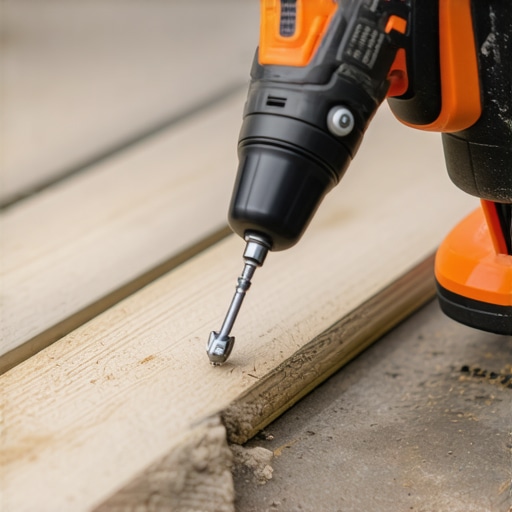
Some tools I incorporate into my routine include the Milwaukee M18 Cordless Impact Driver, valued for its balance of power and portability—crucial when working on multi-level decks. Pairing it with a set of star-drive bits ensures compatibility with most fasteners used in composite decking. To keep everything in check, I use a digital moisture meter, which helps identify areas prone to water pooling and potential rot, especially in stair stringers or hidden joist areas. These tools, combined with a diligent maintenance schedule, enable me to deliver projects that stand the test of time.
How do I keep my outdoor structures working in the long run? Regular inspections, prompt replacements of compromised fasteners, and applying anti-corrosion treatments are vital. And do not forget, investing in quality tools makes a difference—choose equipment that’s built for durability and precision. For more detailed tips on preserving your outdoor spaces, see how professional deck builders plan for longevity in seaside conditions. Don’t hesitate—try the advanced tool techniques I’ve shared, like using a digital moisture meter, to elevate your maintenance routine today.
What I Wish I Knew When Starting Out
One of the biggest lessons I learned was never to underestimate the importance of proper fastener selection in coastal environments. Early mistakes, like using ungalvanized screws, taught me that choosing quality materials from the start saves money and headaches later. I’ve seen how mastering the nuances—such as pre-drilling and using marine-grade stainless steel—can make the difference between a deck that lasts a season or a decade.
Another insight is understanding that aesthetics shouldn’t compromise safety. I once prioritized sleek hidden fasteners but ignored thermal expansion gaps, which led to warping. Now, I fixture my design decisions with environmental factors in mind, ensuring both beauty and durability.
Finally, I’ve realized that regular maintenance is an ongoing investment. Scheduled inspections, timely replacements, and applying protective treatments extend the life of my outdoor living spaces. Sharing these lessons helps others avoid costly pitfalls and build confidently for seaside settings.
Tools and Resources I’ve Found Unbeatable
My go-to toolset for durable outdoor projects includes the Milwaukee M18 Impact Driver, which provides powerful, slip-free fastening—crucial when working with composite decking. I also rely on a digital moisture meter to identify hidden water issues that could lead to rot; it’s an eye-opener for preventative care.
For reading and staying updated, I recommend this guide on selecting the best composite decking, which offers insights on materials proven to withstand 2026’s toughest seaside conditions. Additionally, structural hacks for bouncy stairs have transformed my approach to safe, solid outdoor stairs.
Lastly, I trust these high-grip composite treads to prevent slips, especially in wet coastal weather. Combining quality tools and trusted resources keeps my projects resilient against the elements.
Make Your Outdoor Vision a Reality
Building a durable, beautiful deck in seaside environments isn’t just about choosing the right materials—it’s about applying experience, attention to detail, and ongoing care. Your outdoor space can become a private oasis that stands the test of time, weather, and wear, with the right approach. If you’re ready to elevate your outdoor living, I encourage you to explore the comprehensive resources and tools that can make your project not only successful but inspiring. Remember, mastery comes from practice and perseverance—your best deck awaits!
What challenges have you faced when choosing fasteners or maintaining your outdoor space? Share your experience below, and let’s learn together!
Reading this post really hit home for me because I recently had to redo part of my deck after noticing some rust stains and loose fasteners. I underestimated how aggressive coastal salt air could be on hardware, and it ended up costing me more than I expected. I learned the hard way that investing in marine-grade stainless steel fasteners was essential for durability. Pre-drilling also seemed to make a big difference in preventing cracking when I installed new boards. I wonder, has anyone found that regular maintenance, like applying protective sealants or coatings, has significantly extended their fasteners’ lifespan? Or do you think periodic replacements are inevitable? It’s clear that choosing the right fasteners isn’t just about initial quality but ongoing care, especially near the ocean. Would love to hear other tips or personal experiences on maintaining fastener integrity over the years.