
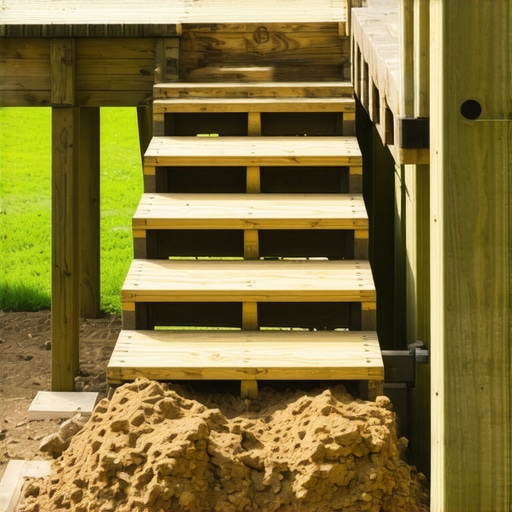
It wasn’t long ago I watched my brand-new deck stairs lean and wobble—like they were about to give way into the soft earth below. That sinking feeling wasn’t just from the wobble; it was the realization that I’d overlooked a crucial detail: the soil’s softness and how it can wreak havoc on your outdoor stairs if you’re not careful. If you’ve ever spent time out on your deck, enjoying the summer breeze, only to notice your stairs gradually sinking or becoming unstable, you know exactly what I mean. It’s frustrating and, honestly, a bit embarrassing when guests start asking about the wobbly steps.
Why Your Deck Stairs Are Getting Soft and Sagging
The main culprit is often the soil underneath. Soft, clay-like earth or recent landscaping can settle unevenly over time, leading your staircase structure to shift and sink. I learned this the hard way—my early mistake was ignoring the importance of proper footing and soil stabilization. I thought a simple concrete pad would do the trick—but I was missing a critical step. Properly prepared ground isn’t just about poured concrete; it’s about ensuring your foundation can withstand the weight and regular usage. You can explore more about how a skilled deck builder can turn your garden into a private oasis, preventing many common issues like this, at [this helpful guide](https://deckdesignbuild.com/how-a-skilled-deck-builder-can-turn-your-garden-into-a-private-oasis).
Now, I want to walk you through the practical, no-nonsense steps to keep your stairs steady and secure, so your outdoor space remains a safe, beautiful retreat rather than a shaky hazard. But before we dive into solutions, let’s consider a common skepticism.
Is Reinforcing Deck Stairs Actually Worth It?
You might be thinking: “Is investing time and money into reinforcing my stairs really necessary?” Believe me, I’ve been there. Early on, I thought a quick fix or some cheap materials would suffice. Turns out, that was a mistake. Reinforcing your deck stairs isn’t just about peace of mind; it’s about safety and preserving your investment. Neglecting this can lead to more costly repairs down the line, and nobody wants their outdoor gatherings interrupted by wobbly steps or, worse, accidents. I’ve learned that with proper planning and some simple materials—like helical piles or toughened bracing—you can prevent many sinking issues altogether.
Getting your stairs right now can save you a headache later. Ready to ensure your deck stays sturdy and dependable? Let’s walk through the key strategies to make that happen. For more insights on how to elevate your outdoor space, check out [modern stairs designs for outdoor spaces](https://deckdesignbuild.com/elevate-your-home-top-stairs-designs-for-modern-outdoor-spaces). It’s easier than you think when you know what to do.
Pour a Solid Concrete Footing
Start by excavating around your staircase area to a depth at least 12 inches below the frost line—think of this as giving your stairs a sturdy backbone. Mix high-quality concrete following manufacturer instructions, and pour into this prepared trench—imagine you’re creating a strong foundation for a sculpture. Wait at least 24-48 hours for it to cure before proceeding, ensuring it gains maximum strength.
Install Steel Anchors for Stability
Once the concrete is set, embed steel post anchors into the footing. These act like pins holding your stairs firmly in place, preventing any wobble. Use a drill and concrete screws to secure them. Picture this step as giving your staircase a skeleton—rigid and unbreakable.
Secure Stringers to Foundations
Attach the stair stringers to the steel anchors with heavy-duty bolts. Use a level to confirm the stringers are perfectly vertical—accuracy here is crucial. This attachment is equivalent to anchoring a sailing mast; it keeps everything aligned regardless of weather or soil movement.
Evaluate Soil Stability Before Backfilling
Before filling the excavated area, check the soil’s firmness. If the ground remains soft or prone to settling, add a layer of gravel or crushed stone beneath the footing for enhanced drainage and compaction. Think of this as leveling a wobbly table by placing shims—eliminating the unevenness at its source.
Backfill and Compact for Longevity
Fill around the concrete footing with soil, tamping it down in layers to eliminate air pockets. This process, akin to packing a box tightly, prevents future settling that could destabilize your stairs. Finish by spreading gravel over the soil to promote proper drainage and guard against erosion.
Apply Protective Sealant and Regular Checks
Seal the concrete with a weather-resistant coating to extend lifespan. Schedule periodic inspections to spot any shifting early—think of it as health check-ups for your outdoor stairs. Prompt maintenance keeps your steps safe and sturdy for years to come.
Many homeowners assume that choosing popular materials like composite decking guarantees durability and style, but let’s dig deeper into the nuances most overlook. A common misconception is that composite decking is entirely maintenance-free; however, not all brands perform equally in heat resistance or colorfastness. For instance, some popular brands might fade or warp faster than expected, especially in 2025 heatwave conditions. This is why collaborating with a professional deck builder not only ensures proper installation but also that you select the right materials for your climate, as explained in [this guide](https://deckdesignbuild.com/choosing-the-right-composite-decking-for-durable-low-maintenance-outdoor-areas). Moreover, many forget that the structural framing underneath your stairs needs careful attention—using steel joists instead of traditional wood can prevent sagging and rot, especially in humid climates. A troubling myth is that all outdoor stairs can rely solely on wood supports; experienced builders know that integrating double-rim joists and steel reinforcement dramatically improves longevity, which you can learn more about at [designing safe and stylish stairs](https://deckdesignbuild.com/designing-safe-and-stylish-stairs-for-outdoor-decks-in-2025). Another often overlooked aspect is the importance of proper drainage around your stairs and deck. Failing to incorporate adequate slope or guttering can lead to water pooling, soil erosion, and eventual instability—an issue that can be avoided with detailed planning and soil stabilization techniques. Also, don’t fall into the trap of underestimating the significance of hidden lateral bracing; it keeps stairs and decks from wobbling over time. This advanced nuance is vital, especially for larger outdoor setups, and is covered in [this comprehensive article](https://deckdesignbuild.com/why-your-2026-deck-stairs-need-a-7-inch-riser-for-maximum-safety). Finally, a crucial mistake is neglecting regular inspections and maintenance. Even the best materials degrade faster without proactive care. Scheduling annual checks can catch early signs of rot, wobbling, or soil settling, saving you money in the long run. Remember, expertise isn’t just in installation; it’s in crafting a resilient outdoor living space that stands the test of time. Have you ever fallen into this trap? Let me know in the comments.Maintaining your outdoor deck and stairs isn’t a set-it-and-forget-it task — it requires the right tools and routines to ensure long-term performance and safety. One essential instrument I rely on is a high-quality cordless power drill with a torque setting. It allows me to tighten fasteners securely without damaging the composite materials, especially when installing or resecuring railings and brackets. I prefer brands like Makita or DeWalt for their durability and battery life, which ensures I’m not stalled midway through a project. For measuring, I use a digital laser level; this tool makes verifying the plumb and level alignments effortless, preventing future wobble or uneven stair risers. Incorporating these precise measurements early on saves significant frustration later. When inspecting and maintaining, I always keep a good set of corrosion-resistant screwdrivers and a hygrometer to monitor moisture levels in the wood framing—important in humid climates where rot can sneak in unnoticed. As composite decking trends evolve in 2025, understanding the latest materials becomes crucial. Consulting manufacturer specs is vital; for example, some modern composite boards include UV stabilizers and non-slip treatments, which could extend your deck’s lifespan. An insightful tip is to schedule a regular inspection every year, focusing on areas prone to water pooling or soil erosion, and to reapply sealants or coatings as needed. In the future, I predict tools like drone-mounted cameras will become more prevalent for inspecting hard-to-reach spots, making maintenance more thorough and less labor-intensive. So, I challenge you to try using a digital laser level for your next deck project—precision is key to avoiding issues like wobbly stairs or uneven surfaces down the line. Want to get even more expert insights? Reach out through our contact page to discuss your outdoor living goals or visit the [deck design](https://deckdesignbuild.com/how-a-skilled-deck-builder-can-turn-your-garden-into-a-private-oasis) guide for tailored advice.
Over the years, I’ve realized that the real secret to maintaining beautiful and safe outdoor stairs isn’t just about choosing the right materials—it’s about understanding the ground beneath and investing in proper foundation techniques. One lightbulb moment came when I discovered that failing to account for soil conditions can turn a well-built staircase into a wobbling hazard, regardless of how stylish the design looks. It’s tempting to ignore the soil and just pour concrete, but my experience has shown that soil stabilization and proper drainage are game-changers. If you want your deck and stairs to withstand the test of time, prioritize ground preparation—it’s the backbone of a stable outdoor space. For tips on elevating your backyard, visit this guide.