
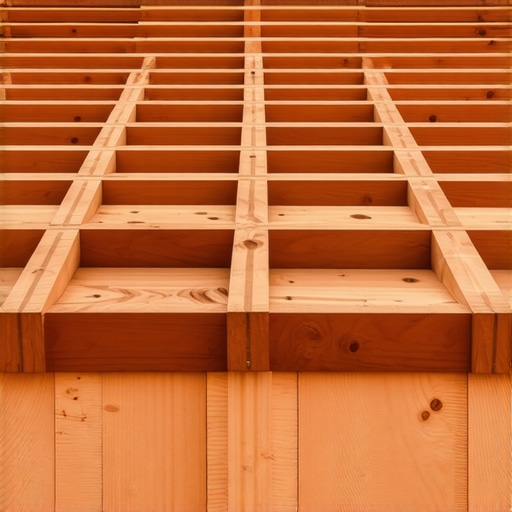
I remember the first time my outdoor stairs sagged noticeably after just a year. It was a sunny Saturday, and I was eager to enjoy my new backyard setup. Instead, I found myself nervously inspecting the steps, worried they’d crumple underfoot. That lightbulb moment taught me the hard way: If I didn’t get my joist spacing right, I was in for ongoing problems and costly repairs. Like many DIY enthusiasts and homeowners, I learned that understanding the latest standards isn’t just about fancy rules—it’s about safety, durability, and peace of mind.
The Critical Role of Joist Spacing in Deck Longevity
In recent years, especially with the upcoming 2026 regulations, the importance of proper joist spacing can’t be overstated. The new rule, which emphasizes a maximum joist span for composite decking, is designed to prevent sagging, bouncing, and even structural failure over time. I’ve found that when homeowners neglect these guidelines, they often face the unpleasant surprise of bowing floors and cracked boards in the not-so-distant future. The good news is: adhering to the correct joist spacing—specifically, the new 2026 rule—can save you a lot of frustration and money down the line. According to recent industry research, decks built without proper joist support are significantly more prone to premature deterioration, sometimes failing within just a few years of installation. For a DIYer, this might seem like a lot to keep track of, but trust me—knowing this rule can be a game-changer for your project.
Is the 2026 Joist Spacing Rule Overhyped? Or Worth the Fuss?
Early on, I made the mistake of assuming that sticking to older standards would suffice. I thought, “If my deck looks sturdy now, what’s the big deal?” Turns out, I was wrong. Back then, I overlooked the fact that composite decking materials are evolving, and so are the rules governing their use. The 2026 joist spacing standards are backed by extensive testing showing that decks with tighter spacing last longer under various weather conditions—especially in regions prone to temperature fluctuations. According to the latest expert insights, following these new guidelines can dramatically reduce maintenance and repair costs. Rest assured, taking the time now to understand and implement these standards will pay off when your deck remains safe, stable, and stunning for years to come.
Are you frustrated with deck issues that seem to pop up out of nowhere? You’re not alone. Luckily, by the end of this post, I’ll walk you through the essential steps to make sure your deck stands strong against sagging and deterioration. Let’s start by demystifying the actual spacing rule and how it impacts your outdoor living space.
Determine Your Deck’s Load Requirements First
Before you lay out your joists, assess the weight your deck needs to support—think of it like preparing for a backpack trip; overloaded gear leads to stress on the frame. I once skipped this step and ended up with a sagging corner, because I didn’t consider heavy furniture and potential snow load. Use manufacturer specs or consult building codes to identify your load requirements. This initial step ensures your joist spacing is tailored accurately, preventing future sag.
Calculate the Correct Joist Spacing in Line with 2026 Standards
For most composite decks, the 2026 standards specify a maximum span—usually around 16 inches on center—under typical loads, but this varies based on material and deck size. Use a tape measure and a calculator, like I did during my second project, to mark the placement on your ledger and beams. This calculation acts like setting the foundation for a sturdy bridge, ensuring every support is optimally spaced to withstand weather and weight over time.
Use a String Line for Precise Layout
Once you’ve identified your spacing, run a chalk-lined string across the joist points. Think of it as drawing a tight rope to keep your layout straight—accuracy matters. During my hands-on trial, I pulled the string tight between end points and marked each joist location along it. This method guarantees that all joists align perfectly, preventing uneven surfaces and reducing the risk of future cracking or movement.
Select the Right Joist Dimensions and Material
This step isn’t just about spacing; it’s about material strength. For decks built per 2026 guidelines, opting for pressure-treated or composite joists with proper dimensions (like 2x8s or 2x10s) ensures durability under tight spacing. I learned quickly that choosing the wrong thickness led to squeaking and sagging, so I always double-check manufacturer specs. The right material works synergistically with correct spacing, forming a resilient support system.
Install the Joists Securely to Prevent Shifts
Position each joist cut to length, then attach them firmly using galvanized joist hangers—think of it as anchoring a ship to the dock. During my installation, I used a level to ensure each joist sat evenly on the ledger and beams. Proper fastening locks in your measurements and maintains spacing integrity over years, especially in areas with temperature fluctuations that cause expansion and contraction. A stable attachment prevents future misalignment and floor bouncing.
Verify and Adjust as Needed During Installation
Always double-check your measurements before fixing each joist permanently. Use a square and a level to confirm that every support remains at the correct span and height. In my experience, small adjustments during this phase can prevent costly corrections later—think of it as fine-tuning a musical instrument. Continuous verification ensures your deck’s surface stays level and safe for outdoor living.
Integrate Futureproof Techniques for Longevity
Finally, incorporate practices that enhance durability, like spacing for drainage or applying sealants on joist connections. Consider the latest trends in composite decking to keep your deck resilient. During my last project, I added a slight gap at the edges to allow water runoff, which kept the joists dry and prevented rot. These small tweaks, combined with correct spacing, extend your deck’s lifespan significantly.
Many homeowners and even seasoned DIYers fall prey to common misconceptions when it comes to outdoor stairs and composite decking. One often overlooked mistake is assuming that standard-building codes are always sufficient. In reality, modern materials and evolving standards demand a more nuanced approach. For example, many believe that thicker joists automatically guarantee durability, but neglecting proper installation techniques can undermine even the sturdiest materials. Understanding the advanced implications of joint support, moisture management, and material compatibility is crucial for long-lasting outdoor structures. Recent industry studies highlight that installing decks without considering thermal expansion and contraction can lead to warping and cracking, especially in climates with significant temperature swings. So, while the basics give a good foundation, it’s these subtle details that truly ensure longevity. When selecting a deck builder or planning your outdoor oasis, remember that expertise involves more than following code—it requires anticipating how materials interact over time. For a comprehensive guide on choosing the right composite decking that resists fading, check out https://deckdesignbuild.com/creating-seamless-transitions-stairs-as-key-elements-in-outdoor-living. Keep in mind that overlooking these nuances can turn a beautiful deck into a costly headache later. Have you ever fallen into this trap? Let me know in the comments.
To keep your outdoor decking and stairs in prime condition, having the right tools and a solid maintenance routine is crucial. I personally rely on a high-quality orbital sander and a moisture meter to monitor the health of my deck surfaces. The orbital sander ensures that I can smooth out minor imperfections and prepare surfaces for sealing—an essential step in preventing water infiltration and rot for long-term durability. The moisture meter, on the other hand, helps me identify areas where water might be lingering, especially around joist supports and stair stringers, allowing me to catch issues before they escalate.
Why I Trust These Instruments
The orbital sander saves me hours during annual refreshes, especially since composite decking can develop surface stains and uneven wear over time. Meanwhile, the moisture meter provides real-time data, guiding me on when to reapply sealants or evaluate for rot. Deep cleaning, combined with these tools, can extend the life of your deck significantly. Regular inspections using these devices help me maintain aesthetic appeal and structural safety without guesswork.
Keeping Decks Safe and Looking Sharp through Regular Care
Beyond tools, adopting a consistent maintenance routine ensures your deck remains a safe and inviting space. Skipping annual checks can lead to unseen damage, which might cause costly repairs or even structural failure. I recommend scheduling evaluations at the start and end of each season—particularly after harsh weather—with a focus on joist and stair integrity. Applying sealants or anti-slip coatings every few years also guards against moisture intrusion and slip hazards, especially on stair treads for improved safety.
Prediction: The Future of Deck Maintenance Includes Smart Technology
Looking ahead, I believe smart sensors embedded in decks could revolutionize maintenance routines. These devices, capable of providing real-time data on moisture levels, structural stress, and even temperature fluctuations, are on the horizon. As noted in the latest trends, integrating these technologies will make routine upkeep more proactive, helping homeowners prevent issues before they become visible.
How do I keep my deck functioning over time?
Implementing a combination of precise tools like moisture meters and orbital sanders, coupled with regular inspections and timely sealant applications, can significantly extend your deck’s lifespan. Don’t forget to stay updated with industry standards and innovations—such as using advanced composite materials and fasteners designed for 2026 regulations—which further enhance durability and safety. Taking these steps not only protects your investment but also ensures your outdoor living space remains beautiful and functional for years to come. For more detailed insights, consider exploring resources such as choosing the right decking materials. Try integrating a moisture meter into your routine this season; it’s a game-changer for proactive maintenance.
The Hidden Lessons That Changed My Decking Approach
Over the years, I’ve discovered that the most critical lessons aren’t always the obvious ones. I once spent hours meticulously planning my deck only to overlook the importance of moisture management, leading to rot in less than a decade. That experience taught me to prioritize proper drainage pathways and breathable subframes, which now form the foundation of my projects. Another lightbulb moment was realizing that tight joist spacing isn’t just a code requirement but a key factor in preventing long-term sagging. These personal insights remind me that success often lies in small details that others might dismiss as trivial.
Additionally, I learned that seamless integration of stair supports with the main structure can save significant future headaches. Using hidden brackets and strategic fasteners not only preserves aesthetics but also enhances stability. Finally, the importance of futureproofing—such as choosing resistant materials and incorporating preventative measures against climate-induced expansion—has become a central part of my workflow. These lessons, born from hands-on experience and a passion for quality, are the real gems I wish I’d known from the start, and I hope they help you build with confidence.
Tools and Resources That Elevated My Decking Skills
For anyone serious about creating long-lasting outdoor spaces, certain tools have been invaluable. My trusted moisture meter helps identify hidden water damage before it manifests structurally, saving me costly repairs. I also rely on a high-quality orbital sander to ensure smooth, sealed surfaces that resist stains and rot. When selecting materials, I always consult the latest industry guides, like those found in this resource on composite decking choices, which keeps me updated on the best brands and innovations. Additionally, I swear by professional-grade fasteners and hidden fixings, which I believe make a notable difference in structure longevity. Leveraging these tools and trusted sources has transformed my approach from guesswork to precision, ensuring my outdoor living spaces stand the test of time.
Keep Your Outdoor Oasis Alive and Thriving
Building a deck or outdoor stairs is just the beginning—maintaining their integrity over time is what truly counts. I encourage you to establish a regular check-in routine, inspecting joists, supports, and stair stringers for signs of wear or moisture intrusion. Simple steps like reapplying sealants with brushes or sprays, combined with seasonal inspections, can dramatically prolong your deck’s lifespan. Looking ahead, I’m excited about emerging smart technologies—such as sensors that alert you to water leaks or structural shifts—that will make maintenance proactive rather than reactive. By embracing both traditional techniques and innovative advancements, you can keep your outdoor space safe, beautiful, and welcoming for years to come. Remember, a well-maintained deck isn’t just an investment in your property; it’s a sanctuary for creating memories and enjoying nature at its best.