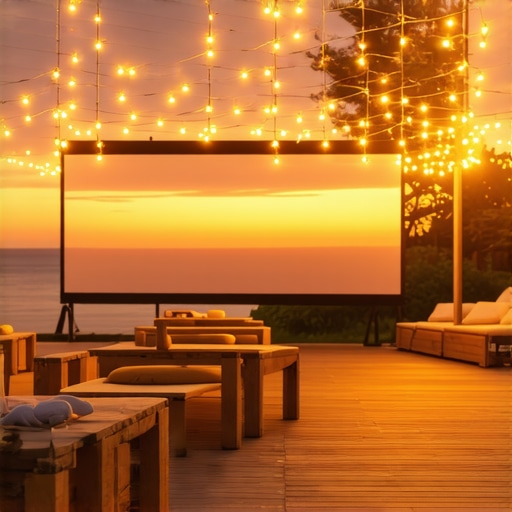
I remember the first time I tried to host a movie night on my old deck; it was a total disaster. I had a white sheet tacked to the siding and a projector balanced on a precarious stack of milk crates, but the real killer was the light. My neighbor’s motion-activated floodlight kept snapping on, washing out the screen every time a stray cat walked by, and my own deck lights were so harsh they made the whole experience feel like a midnight interrogation rather than a cozy screening. It was embarrassing, and my friends eventually gave up and went inside to watch the rest of the film on a standard TV. That failure sent me down a rabbit hole of outdoor lighting design because I realized that the magic of a cinema isn’t just about the screen—it’s about how you manage the shadows around it. [image_placeholder_1]
How I Fixed the Lights That Kept Ruining Movie Night
To get that immersive theater feel, you have to stop thinking about lighting as a way to see the floor and start thinking about it as a way to set a mood. My biggest mistake early on was using high-wattage bulbs that created massive glare. I’ve since learned that choosing the right color temperature for a cozy feel is the difference between a sterile backyard and a warm, inviting theater. You want warm yellows, not clinical blues. I also spent way too much time tripping over extension cords before I finally looked into low-voltage transformers for large outdoor projects to power a permanent, dimmable system. Now, instead of fumbling with plugs, I just hit a switch. If you are still in the planning stages of your build, I highly recommend talking to a professional deck builder about integrated lighting before the boards go down. It makes hiding the wires so much easier. Have you ever spent an hour setting up a projector only to realize your own security lights make the movie unwatchable?
Does professional lighting really make that much of a difference?
Skeptics often tell me that they can just turn the lights off, but you still need to see your snacks and find the stair treads without breaking a toe. The key is subtlety. According to the American Lighting Association, layered lighting is essential for outdoor spaces because it provides safety without overwhelming the environment. I used to worry that a ‘cinema’ setup would be too complex or expensive, but it’s really about placement. For example, if you are mounting a TV on your outdoor deck, you need to ensure no lights are reflecting directly off that glass. Another thing I learned the hard way? Your movie marathon will be cut short if you don’t address why your outdoor lighting is attracting too many bugs. Nothing ruins a dramatic climax like a swarm of moths in your face. By using dimmable LEDs and strategic positioning, you can create a perimeter of light that keeps the deck safe while keeping the ‘theater’ area perfectly dark.
Keep the Screen Dark and the Path Clear
To transform a standard backyard into a theater, you have to separate your lighting into distinct zones. I used to think a single toggle switch for the whole deck was enough, but that’s the fastest way to kill the cinematic vibe. You need a ‘dark zone’ around the screen and a ‘dim zone’ for the seating and traffic areas. I learned this the hard way during a birthday screening when my brother-in-law tripped over a cooler because I had turned every single light off to get the black levels right on the screen. Now, I focus on the best way to light stairs for safety without creating a glare. By using recessed ‘eyebrow’ lights that point directly down at the tread, you can see exactly where you are stepping without any light spilling onto the projection surface. It’s like the floor lighting in a real movie theater—it’s there if you need it, but you don’t notice it once the opening credits roll.
Light the Stairs So Nobody Trips on the Popcorn
Safety doesn’t have to be bright. When you are looking at innovative stairs solutions for safe outdoor deck access, think about using low-voltage LED strips tucked under the nosing of each step. This creates a soft glow that defines the edge of the stair without blinding anyone walking up. On my current setup, I even used the glare-free way to light your deck stairs for safety by installing tiny side-marker lights into the stringers. It’s subtle enough that it doesn’t attract bugs but bright enough to prevent a trip to the ER.
How to Run Wires Without Leaving a Rat’s Nest
Nothing ruins the aesthetic of a high-end deck like a tangled web of black extension cords. When I first started, I had wires taped down with duct tape, which looked terrible and eventually peeled up in the sun. The pro move is to plan your routing before the deck is even finished. If you’re retrofitting, you need to know how to run wire for deck lights without drilling huge holes that compromise the wood. I found that using the gap between the house siding and the deck ledger is a lifesaver for hiding 12-gauge wire. I use small, stainless steel cable clips to tuck the lines along the underside of the joists. If you are dealing with a screen setup, you also need to consider the best way to mount a tv on a screened in porch for glare free viewing to ensure your power and HDMI cables aren’t dangling in mid-air.
Why a Good Transformer is Your Best Friend
You can’t just plug twenty LED lights into a standard outlet and hope for the best. You need a dedicated power source. I upgraded to one of the best low-voltage transformers for large outdoor projects because it allowed me to use a phototransistor and a timer. This means my ‘pathway’ lights come on at sunset automatically, but I can manually override the ‘theater’ zone when it’s time for the movie.
Choose Materials That Wont Distract You
Your deck surface actually plays a role in the viewing experience. High-gloss finishes or very light-colored boards can reflect light back up at the screen, washing out the picture. When choosing the right composite decking for durable low-maintenance outdoor areas, I recommend a matte finish in a mid-tone gray or brown. I once helped a neighbor set up a screen on a bright white PVC deck, and the glare from the floor was so intense we had to lay down a dark outdoor rug just to see the movie. Picking a board with a natural, wood-like texture helps diffuse any stray light, keeping the focus exactly where it belongs: on the film.People often tell me they want composite decking because it is zero maintenance. That is the biggest myth in the industry. It is actually low maintenance, and if you treat it exactly like wood during the build, it will bite you. One major nuance most folks miss is thermal expansion. I have seen beautiful, expensive decks literally buckle because the installer did not account for why your composite boards are expanding more than expected. When the summer sun hits those boards, they grow in length. If they are installed tight against the house without a gap, they will bow upward or pop their fasteners. This is why learning how to stop composite boards from expanding into your vinyl siding is a skill most weekend warriors overlook until the siding starts to warp. Then there is the heat factor. Everyone loves the look of a rich, dark espresso color, but why dark brown decking gets significantly hotter than light gray boards is a physical reality you will face every July. If you are planning a theater area where kids might be lounging on the floor with blankets, those dark boards can become a literal griddle. 
How do I stop my deck stairs from shaking when I walk up?
If your stairs feel like a diving board every time you carry a tray of snacks out, it is usually because of the throat of the stringer. I see this mistake all the time: builders cut too deep into the wood to get the right rise, leaving a thin, weak strip of lumber that flexes under weight. You need to recognize why your deck stair stringers are cracking at the throat before the structure fails completely. To fix this, I always recommend using the bracket that makes your deck stairs feel rock solid. It provides the lateral stability that standard toe-nailed screws just cannot provide. According to a structural safety report by the North American Decking and Railing Association (NADRA), the majority of deck failures occur at the stairs or the ledger connection, usually due to improper fastener use or undersized supports. Another trap is thinking a 4×4 post is a universal solution. While they work for why we prefer 4×4 posts for short decks but 6×6 for tall ones, using them for a second-story deck is a recipe for a bouncy, swaying sensation. You want that structure to feel like a fortress, not a trampoline. Have you ever fallen into the maintenance-free trap only to find your boards warping a year later? Let me know in the comments. If you are feeling overwhelmed by these structural nuances, it is always worth checking out deck builder insights designing your dream outdoor space or reaching out to a professional through their contact us page to ensure your cinema stays safe for years to come.After the projector is stored away and the guests are gone, you are left with the reality of a high-traffic entertainment area. I have seen people host one big movie night and then realize their brand-new surface is covered in burger grease and spilled soda. If you are like me and love a good BBQ screening, you need to know how to clean grease stains off composite without ruining the finish. It is not just about aesthetics; organic matter left in the grain can lead to issues if you do not vent the space under your deck to prevent mold and wood rot. I also make it a habit every spring to perform a quick safety audit. I check the house connection because the simple way to check if your deck ledger is pulling away from the house is just a five-minute visual inspection that could prevent a catastrophic failure during your next gathering. 
How do I maintain my outdoor theater deck over time?
Maintaining the structural integrity is just as important as keeping the boards clean. According to the International Residential Code (IRC) Section R507.9.2, lateral load connections are mandatory for deck safety. This is why I always check that your deck ledger has a tension tie to stay secure. Beyond the bones of the structure, you should be looking at your hardware. I have completely switched over to the reason we use structural screws instead of old-fashioned lag bolts because they do not back out over time and they offer superior shear strength. If you notice any wobbles, you can often fix a loose railing post without tearing up the deck boards by simply upgrading the fastener pattern.
The Tools That Make My Job Possible
I never start a season without my impact driver and a high-quality 12-gauge wire stripper. When you are scaling your setup, you will eventually want to move away from temporary cables and look into how to wire a deck for sound without leaving visible cables. This level of finish is what separates a DIY project from a professional-grade retreat. For those planning a massive upgrade in 2025, I highly recommend using a digital 3D walkthrough first. It allows you to see where the shadows will fall from your screen before you ever drive a single screw.
Where Backyard Cinema is Headed Next
I predict we are going to see a massive shift toward fully integrated ‘smart decks’ where the lighting, sound, and even the screen deployment are controlled via a single app. We are already seeing innovative outdoor living ideas with composite decking in 2025 that include built-in heating elements and weatherproof storage for AV gear. If you want to stay ahead of the curve, focus on maximizing space with modern designs for composite decks that prioritize hidden utility over bulky, surface-mounted boxes. Try this advanced tip: Next time you are inspecting your sub-structure, look for the lateral tension ties. If they are missing, adding them is the single best way to stiffen up your deck for large groups. If the technical side feels daunting, reaching out to an expert through a contact us page can save you a world of headache later.
What the High-End Photos Forget to Tell You
After years of tweaking my own setup, I have realized that the most beautiful outdoor theaters are often the most structurally sound ones. One major lightbulb moment for me was realizing that expansion gaps are non-negotiable; if you do not understand why your composite boards are expanding more than expected, your beautiful cinema floor will buckle the first time the sun hits it. Another lesson? Audio is half the experience. If you do not plan how to wire a deck for sound without leaving visible cables, you will end up with a tripping hazard that ruins the mood. Finally, never underestimate the importance of the stair glow. Standard lighting is too harsh, so I always recommend using the glare-free way to light your deck stairs for safety to keep the focus on the screen while ensuring guests can move around securely.
The Gear That Keeps My Projects on Track
I do not just wing it anymore; I rely on specific tools and resources to ensure every movie night is a success. First, I never start a build without a digital 3D walkthrough. It is the only way to see exactly where shadows from railings will fall on your projection screen before you ever drill a hole. For structural reliability, I have ditched old lag bolts for structural screws because they provide the tension needed for a rock-solid feel that doesn’t vibrate when the subwoofer kicks in. Lastly, I keep a link to innovative outdoor living ideas with composite decking in 2025 bookmarked to stay inspired by new layouts that prioritize social flow and media integration. [image_placeholder_5]
Your First Screening is Closer Than You Think
The transition from a basic backyard to a luxury cinema space does not happen overnight, but every small upgrade brings you closer to that perfect evening. Whether you are maximizing space with modern designs or finally fixing a bouncy floor to support heavy theater seating, your commitment to quality outdoor living will pay off in years of relaxation. Do not be afraid to reach out to a professional deck builder if the technical side feels daunting. The stars are waiting—go build your theater. What is the one movie you have always wanted to watch under the stars on your own deck? Let me know in the comments!