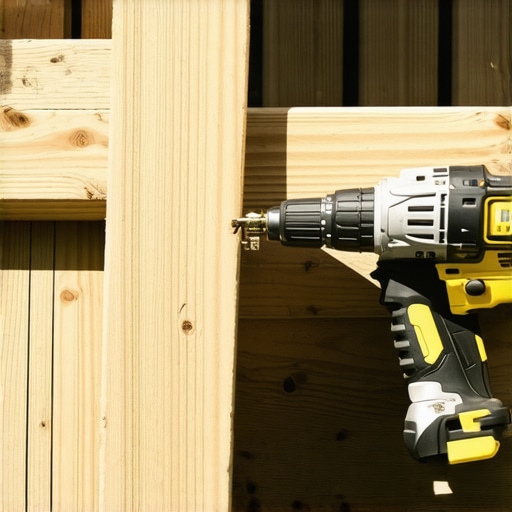
Every single time my mother-in-law visited, she’d take that first step down to our backyard patio, and the deck would emit a high-pitched, agonizing shriek. It wasn’t just embarrassing; it felt like a flashing neon sign pointing out my failure as a homeowner. For months, I tried the usual quick fixes. I drove random nails into the tread, wedged wood shims into the gaps, and even tried to ignore it, hoping the wood would expand in the summer humidity. Nothing worked for more than a week. I had built a beautiful outdoor living area, but those noisy steps made the whole project feel cheap.
The Annoying Creak That Ruins Your Outdoor Peace
Our back decks are supposed to be our personal sanctuaries, a place to unwind after a chaotic week. But a persistent squeak underfoot shatters that peace instantly. Over time, as natural wood or composite decking boards expand and contract with the changing seasons, the fasteners holding your stair treads to the stringers inevitably loosen. When you step down, the wood rubs against the metal shafts of loose nails or screws, creating that fingernail-on-a-chalkboard sound. If you’ve been putting off fixing this because you’re worried about tearing apart your beautiful staircase, I have great news. You don’t need to be a professional deck builder to restore peace and quiet to your steps. Today, we are going to permanently silence that noise using three strategically placed screws, a fix that takes less than ten minutes per step.
Is a quick screw fix actually going to hold up over time?
I get the skepticism. When I first heard about this method, I assumed it was another internet band-aid that would fail after a few heavy rainstorms. Early on in my DIY journey, I made the classic mistake of using standard drywall screws for outdoor structural fixes, only to watch them snap under pressure within a year. According to structural engineering reports from the American Wood Council, standard interior fasteners lack the shear strength and corrosion resistance required to handle dynamic foot traffic loads outdoors. That is why choosing the right hardware is non-negotiable. If you use the correct structural fasteners, this simple mechanical pivot works beautifully because it targets the exact friction point where the squeak originates. Have you ever stepped on a deck stair and felt that tiny, annoying dip followed by a loud creak? Let me know in the comments if you are dealing with a single squeaky step or an entire noisy flight of stairs.
Before you run to the garage to grab your drill, it helps to understand why those stairs started protesting in the first place. Often, the issue stems from how the stairs were originally put together—such as using cheap pre-made components. Many builders cut corners by installing pre-built steps from big-box stores, which frequently suffer from hidden structural flaws that guarantee noise down the road. Furthermore, if your stairs lack a solid foundation, they will shift constantly, which is why your deck stairs absolutely need a concrete landing pad at the bottom to stay stable and silent. By securing the tread firmly to the underlying stringer with three targeted points of contact, we eliminate the microscopic vertical movement that causes the wood-on-metal friction. Let’s look at how we can apply this straightforward fix to get your deck back to being the quiet oasis it was meant to be.
I remember the first time I attempted this fix on a blistering July afternoon. My buddy’s deck stair felt like a trampoline and sounded like a haunted house. I confidently grabbed some leftover interior screws from his garage, drove them in, and stood back to admire my handiwork. By late August, those screws had snapped under the weight of a heavy cooler, and the squeak returned with a vengeance. That was the day I realized why you should never use indoor rated screws for an outdoor deck. They simply cannot handle the shear stress of shifting wood. To make this repair permanent, you must use heavy-duty, epoxy-coated structural wood screws or stainless steel deck screws that pull the joist and tread together like a vice.
Locate the Friction Point Before Driving Screws
Before you pull the trigger on your drill, you need to pinpoint exactly where the wood is rubbing. Think of your deck stairs as a mini-bridge; they only squeak when there is a gap that allows for movement. Grab a partner and have them step on the offending tread while you look closely at the connection points. You are looking for a microscopic dip where the tread meets the underlying vertical stringer. Once you spot that movement, you have found your target area.
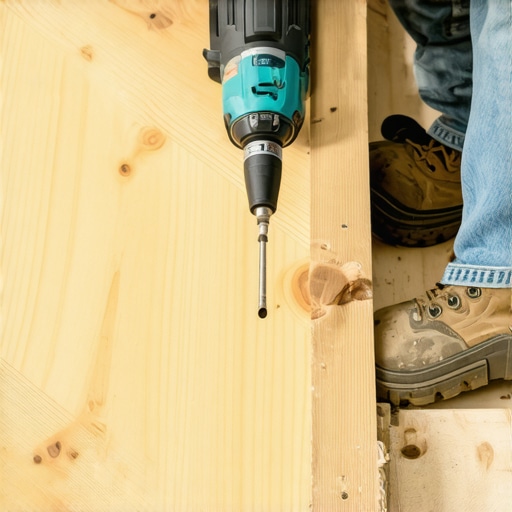
If you have a modern outdoor setup featuring composite decking, you must handle this step with care. Unlike traditional pressure-treated lumber, composite boards can “mushroom” if you drive a standard screw straight through them, leaving an ugly plastic lip around the screw head. If you are working with these materials on your stunning outdoor living space, use screws specifically designed for composites, which push the excess material back down into the hole for a completely flush finish.
The Three Screw Triangulation Method
To eliminate the squeak permanently, we are going to use a three-screw triangular pattern. A single screw acts as a pivot point, and two screws can still allow the board to rock side-to-side over time. But three screws arranged in a tight triangle completely lock the wood fibers in place, preventing any microscopic rocking. It is the same reason a tripod never wobbles on uneven ground.
Drive your first screw directly into the center of the squeaking zone, sinking it about a quarter-inch below the surface of the wood. Next, drive the second and third screws about two inches to the left and right, but offset them slightly higher and lower than the first screw. This offset creates a counter-acting tension that clamps the stair tread flat against the stringer. If you want to keep the surface pristine, you can use the screw depth trick for a perfectly smooth deck surface, ensuring nobody stubs a toe on a protruding fastener during barefoot summer days.
What to Do When the Underside is Completely Blocked
Sometimes you cannot access the back of your stairs because of decorative solid risers or framing. Do not worry; this fix is designed to be executed entirely from the top down. However, if your stairs feel structurally bouncy rather than just squeaky, the issue might go deeper than a loose fastener. You might be dealing with wider spans that require a professional deck builder to add a mid-span support stringer to stop the flexing altogether.
For minor squeaks, driving the screws from the top is incredibly effective. If you are worried about seeing the screw heads, look for a color-matched plug system. You pre-drill a hole, drive the screw deep using a special bit, and tap a small wood or composite plug over the hole. It makes the repair completely invisible, maintaining the high-end look of your stairs while restoring the absolute peace and quiet you deserve.
While the three-screw triangulation method is a phenomenal quick fix for immediate relief, we need to talk about the deeper, often misunderstood mechanics of staircase movement. Many homeowners—and quite a few general contractors—believe that once a stair tread is locked down, the battle is won forever. But if you are working with modern synthetic materials, there is a hidden physical trap waiting to spring when the seasons change.
The Thermal Expansion Trap That Ruins Beautiful Carpentry
Everyone in the DIY community tells you to clamp your boards down as tightly as humanly possible to prevent movement. In my experience, treating composite materials the exact same way you treat traditional pressure-treated lumber is a recipe for warped boards and sheared fasteners. Wood expands and contracts primarily across its width as it absorbs moisture. Composite decking, on the other hand, expands and contracts along its length due to temperature fluctuations. According to testing guidelines from the North American Deck and Railing Association (NADRA), a twelve-foot composite board can expand or contract by as much as a quarter-inch between a freezing winter night and a scorching summer afternoon.
If you pin both ends of a composite tread with absolute, uncompromising rigidity, that thermal energy has nowhere to go. The board will buckle upward in the center, or worse, pull clean through the screw heads. This is precisely why your composite boards need extra space to breathe. When fixing a squeak on a composite staircase, you must allow for this linear movement. I always recommend using a slip-joint fastening approach on the outer stringers while anchoring the board firmly only at the center stringer to keep the tread aligned without restricting its natural thermal breathing cycle.
Why do plastic shims fail so quickly under heavy foot traffic?
When leveling an uneven stair stringer, the temptation to slide a cheap plastic or cedar shim into the gap is incredibly high. It is fast, cheap, and immediately satisfying. However, this is the classic “oops” factor that professional builders dread. Over a single season of heavy summer foot traffic, the immense dynamic load of people walking up and down creates a microscopic hammering effect. Plastic shims will slowly deform, crack, and spit themselves out of the joint, leaving your stair tread bouncy and louder than before. This structural degradation is why I never use plastic shims for stair stringers. Instead, I always use solid wood sister blocks cut directly from pressure-treated framing lumber, securely glued and structurally screwed to the face of the stringer to create a permanent, non-yielding bearing surface.
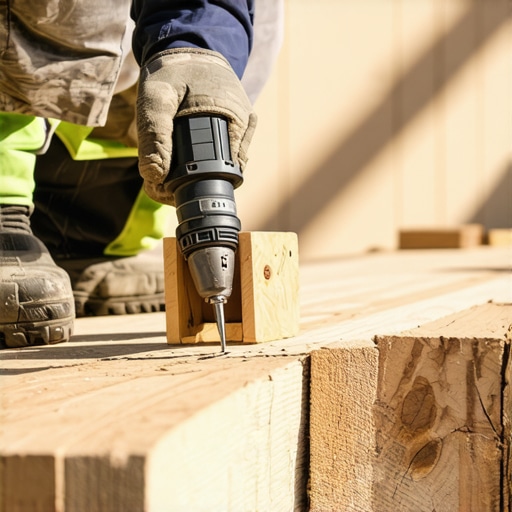
If you find that your stairs are still protesting despite your best efforts, look closer at how the entire system connects to your home and the ground. Often, a squeak is just a symptom of a shifting deck frame. If your stairs were built without a proper foundation, the frost heave or soil settlement will constantly twist your stair stringers out of alignment. If you want to elevate your entire backyard game and eliminate these structural headaches, you might want to look into top stairs designs for modern outdoor spaces that incorporate heavy-duty steel framing or integrated concrete landings. Have you ever fallen into this trap of over-tightening your fasteners or using quick-fix shims only to have the squeak return? Let me know in the comments below how you solved it!
While understanding materials and thermal expansion keeps your structure from tearing itself apart, execution on the job site comes down to having the right physical gear. Over the years, I have seen many enthusiastic homeowners attempt precision repairs with cheap, underpowered drills or incorrect drive guides, leading to stripped screws and immense frustration. If you want a silent staircase that lasts for decades, you need to transition from basic DIY gear to the specialized tools that a seasoned deck builder relies on every single day.
The Essential Toolbox for Noiseless Stair Repairs
The single most important tool in my kit for silencing deck stairs is a dedicated impact driver, not a standard drill. A drill-driver applies constant rotational force, which easily slips out of the screw head when you are trying to drive thick structural fasteners into dense treated lumber. An impact driver uses rapid rotational blows to seat the fastener, giving you maximum torque without stripping the drive recess. Specifically, I recommend using a high-quality star-drive (Torx) bit system. Star-drive heads distribute the rotational force evenly across six points of contact, virtually eliminating the dreaded slippage that ruins composite board finishes.
For composite decking applications, you will also need a specialty depth-setting tool. I personally use the Smart-Bit Depth Setter, which features a free-spinning stop collar with a rubber O-ring to prevent marring the deck surface. According to the manufacturer’s technical documentation from Starborn Industries, maintaining a precise, uniform fastener depth is critical for protecting the core integrity of co-extruded composite materials. This tool ensures that every single fastener is driven to the exact depth required to hide the head without crushing the surrounding synthetic fibers. If you run into a stubborn screw that simply will not cooperate during your project, having the best tool for removing a single stripped deck screw on hand will save you hours of claw-hammer frustration.
How do I maintain quiet outdoor stairs over time?
Keeping your staircase silent is not a “one-and-done” task; it requires a proactive maintenance mindset. Every autumn, before the freezing winter wetness sets in, I perform a rapid diagnostic walk-through of my stairs. I step heavily on each tread, listening for the slightest squeak, and visually inspect the connection points. If you spot a screw head that has started to back out due to seasonal timber movement, do not simply tighten it into the same worn-out hole. Back the screw out completely, slide a thin sliver of copper wire or a sliver of exterior wood glue-coated toothpick into the hole to give the threads new wood fibers to bite into, and then re-drive the fastener flush. Additionally, make sure you clean out the gaps between your composite stair treads and risers. Debris like small pebbles, pine needles, and dried leaves can wedge into those expansion gaps, creating a grinding friction noise when the stairs flex under your weight.
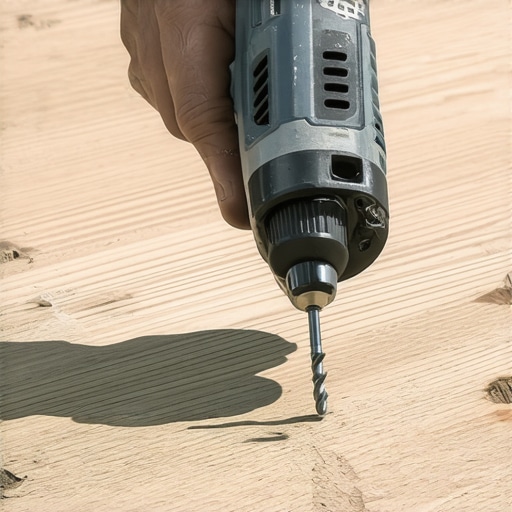
As we look toward the future of outdoor construction, the methods we use to assemble stairs are rapidly evolving. I predict that within the next five years, traditional top-down screwing will become entirely obsolete for premium stairs. We are already seeing a massive industry shift toward advanced underside bracket systems and specialized side-clip fasteners. These modern engineering solutions allow the composite stair treads to float slightly, completely eliminating the need to pierce the upper weather-resistant barrier of your boards while naturally accommodating thermal expansion. By embracing these smarter, modern structural designs, you can create gorgeous, cohesive stairs as key elements in outdoor living spaces that remain whisper-quiet for twenty-five years or more. If you are tired of listening to your stairs complain with every step, grab your impact driver this weekend and try the three-screw triangulation method on your nosiest step—you will be amazed at how a ten-minute fix can restore your outdoor peace of mind.
When you step out onto your porch on a quiet evening, the last thing you want is a noisy reminder of loose fasteners. Over the years, I have helped countless homeowners reclaim their peace of mind by silencing squeaky stairs, and I have learned that a few smart adjustments make all the difference.
The Hardest Lesson I Learned About Composite Stair Maintenance
When I first started working with composite decking materials, I assumed they behaved exactly like natural pressure-treated lumber. They do not. Treating synthetic materials with a one-size-fits-all approach is a recipe for warped boards and sheared fasteners. The biggest revelation for me was understanding how thermal expansion works along the length of a composite board rather than its width. If you pin both ends of a stair tread with absolute rigidity, the heat of July will cause those boards to buckle, while the winter cold will snap your screw heads clean off. Giving your boards that critical room to breathe is the difference between a silent staircase and an expensive, warped mess.
My Essential Toolkit for Silent Stairs
To get professional results that stand up to years of heavy foot traffic, you need to look beyond the basic tools in your junk drawer. Here are the items I carry to every stair repair job:
- A Dedicated Impact Driver: Avoid using a standard drill-driver, which easily slips and strips heads. An impact driver provides the rapid rotational force needed to sink structural screws smoothly.
- Smart-Bit Depth Setter: This tool is essential for composite decking, preventing you from crushing the synthetic fibers or leaving ugly “mushroomed” plastic edges.
- Solid Wood Sister Blocks: If you need to level or support a weak stair stringer, skip the plastic shims. I cut custom support blocks from pressure-treated framing lumber to create a permanent bearing surface.
- Star-Drive Structural Screws: These offer superior torque transfer and won’t rust out after a single wet winter.
Bring the Quiet Back to Your Outdoor Haven
You do not have to live with a deck that shrieks every time you step outside. By taking ten minutes to target the friction points and applying the three-screw triangulation method, you can restore your staircase to a state of absolute, whisper-quiet stability. Building a beautiful backyard is all about enjoying the quiet moments, and fixing those noisy steps is the perfect place to start. If you want to take your outdoor renovations a step further, look into top stairs designs for modern outdoor spaces to see how integrated landings and modern framing can completely transform your home’s entrance.
Have you ever struggled with a stubborn squeak that returned weeks after you thought you fixed it? Let me know in the comments below!