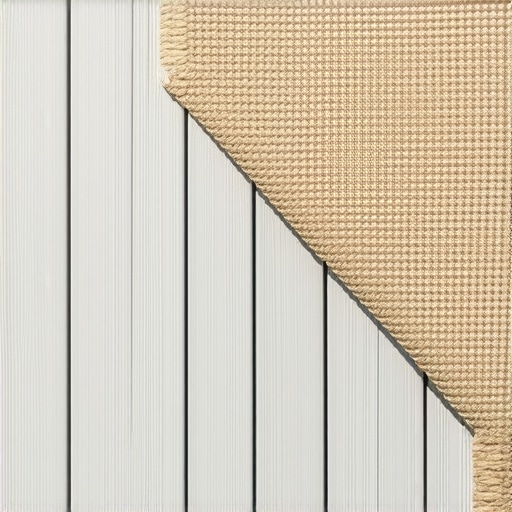
I remember the specific morning I decided to rearrange my patio furniture. I gripped the edge of my $60 navy-blue rug and gave it a tug. As the rug slid back, my stomach dropped. There, etched into my premium slate-gray PVC boards, was a hideous yellowish rectangle. It wasn’t dirt. It wasn’t pollen. It was a permanent chemical “burn” right in the middle of my expensive outdoor living space. I’d spent months designing my dream outdoor space and thousands of dollars on materials, only to have a cheap rubber-backed rug ruin the finish in a single season. If you’ve ever felt that pit in your stomach, you know exactly why I’m writing this today. Have you ever pulled up a piece of patio furniture only to find a permanent mark staring back at you?
What I Learned After Ruining My Own Slate-Gray Boards
We often think of PVC as being bulletproof. We buy it because we want durable low-maintenance outdoor areas that don’t require staining or sanding every two years. But here is the hard truth: PVC is sensitive. When you trap moisture or heat under a non-breathable rug, you aren’t just decorating; you’re creating a chemical oven. My mistake was simple—I chose a rug with a “non-slip” latex backing. I thought I was being smart by preventing my kids from sliding near the stairs as key elements of the deck, but that latex reacted with the plasticizers in the boards. This process, known as plasticizer migration, is essentially the two materials trying to become one, and the result is a stain that no amount of scrubbing can fix. [image]
According to the Vinyl Institute, certain chemical antioxidants used in rubber backings are fundamentally incompatible with the vinyl compounds found in high-end decking. This isn’t just a “cleaning” issue; it’s a structural color change. Today, I’m going to show you how to avoid this heartbreak and keep your outdoor rug from staining your deck boards once and for all, even if you’ve already bought your decor for the season. We’ll look at the specific liners that act as a shield and why your choice of rug material matters more than the color or the pattern.
Can You Really Trust “Outdoor-Safe” Labels?
The skepticism is real. You see a rug at a big-box store labeled “Outdoor-Safe,” and you assume it’s safe for your specific deck. But those labels are often meant for concrete or wood, not the high-tech polymers we see in composite decking trends for 2025. Many homeowners assume that “weather-resistant” means “surface-neutral,” but that’s a dangerous gamble. If the rug doesn’t allow for airflow, you’re trapping dew and rain against the PVC, leading to mold growth or white, hazy spots that are nearly impossible to remove. When I first started working on outdoor projects with a professional deck builder, I realized that the material science of what sits on the deck is just as important as the frame underneath.
We are going to dive into the exact rug materials that work—and the ones that are basically acid for your PVC. We’ll look at why breathability is your best friend and how a simple $20 accessory can save you from a $5,000 board replacement project. Trust me, I’ve done the wrong thing so you don’t have to. It’s time to stop worrying about your floor every time it rains and start actually enjoying the space you built.
Stop the Chemical Reaction with Polypropylene
Flip your rug over. If it looks like the bottom of a bath mat—thick, white, and rubbery—keep it away from your PVC boards. The first thing I do now when shopping for durable low-maintenance outdoor areas is search for ‘woven’ backings. You want a rug that looks the same on the top as it does on the bottom. These are typically made of 100% polypropylene, which is essentially the same family as your deck boards. Because they share a similar chemical DNA, they don’t fight each other or cause that nasty plasticizer migration I mentioned earlier. I once tried to cheat this rule by using a ‘protective’ spray on a latex rug, thinking it would create a barrier. It didn’t. Within three weeks of Missouri humidity, the spray broke down, and the rug started sticking like glue to my expensive boards. It was a mess that required a professional deck builder to assess if I’d compromised the board’s structural integrity.
The Shield Your Deck Actually Needs
If you absolutely love a rug that has a questionable backing, you must use a specific type of liner. Forget those cheap rubber waffle pads you find in the kitchen aisle. You need a breathable, non-solvent-based rug pad made specifically for outdoor use on polymer surfaces. These pads act like a spacer. Think of it like the gap in a double-pane window; it provides a thermal and chemical break. This is the only reliable way to keep your outdoor rug from staining your deck boards. These pads allow the boards to ‘breathe,’ preventing the heat buildup that causes the yellowing effect. 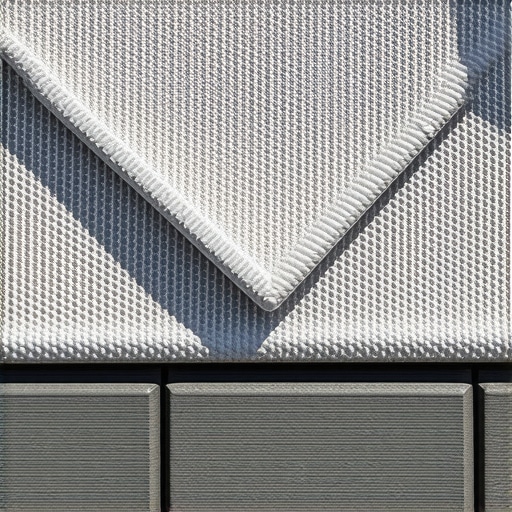
Create Airflow to Prevent Mold Spots
Moisture is the silent killer of a beautiful finish. Even with the right rug and pad, if water gets trapped between the rug and the board for weeks, you’re going to see white, hazy spots. This is usually trapped moisture vapor that has nowhere to go. I learned this the hard way after a particularly rainy April. I left my rug down for the whole month without checking under it. When I finally lifted it, the boards looked like they had a layer of frost on them. To fix this, you need to ensure you vent the space under your deck effectively, but you also need to physically lift that rug after a heavy downpour. It sounds like a chore, but letting the boards dry out for a few hours prevents that hazy oxidation from ever forming. This is especially true if you are following the latest composite decking trends for 2025 which favor darker, more matte finishes that show every single water mark.
Don’t Skip the Cleaning Routine
Finally, treat the area under your rug like a high-traffic zone. Every time you sweep your deck, roll the rug back. Dust and grit act like sandpaper between the rug and the PVC. When people walk over the rug, they are effectively sanding the fine finish of the boards with that trapped grit. It’s a simple five-minute task that saves the surface from micro-scratches that eventually make the deck look dull and aged. I now make it a habit every Sunday morning while the coffee is brewing. Roll, sweep, and let the boards see the sun for a bit.
While many ‘pros’ will tell you that a breathable rug is the end of your worries, they’re often missing a critical piece of the physics involved. In my experience, even the best polypropylene rug can cause ‘ghosting’ if it sits on a deck with high solar exposure. This isn’t just about chemicals; it’s about heat differentials. When your deck is baking in the 90-degree sun, the exposed boards expand and surface-temper at a different rate than the boards under the rug. This thermal differential can cause subtle, permanent variations in the sheen of your finish, making the area under the rug look ‘fresher’ or more matte than the rest of the floor. According to the North American Deck and Railing Association (NADRA), improper ventilation and extreme thermal cycling are leading causes of surface degradation in synthetic materials. It’s not just the rug’s backing that matters; it’s the lack of heat dissipation. This is why choosing the right composite decking for durable low-maintenance outdoor areas requires looking at the heat-retention specs before you even think about decor.
Beyond Breathability: The Thermal Shift Problem
The ‘Oops’ factor often comes from the things we can’t see, like the micro-sanding effect. You might think your rug is soft, but if you live in a dusty area, that rug is essentially a giant piece of 220-grit sandpaper. Every step you take on it pushes microscopic particles into the wood-grain texture of the boards. If you’ve noticed your boards looking cloudy or dull after a few seasons, this is likely the culprit. I’ve seen homeowners try to fix this with a pressure washer, which is a huge mistake. You should never use a pressure washer on composite decks because it can widen those micro-scratches, making the board even more susceptible to future staining. This is the hidden nuance that separates a ten-year deck from a thirty-year deck.
Does the Rug Near Your Stairs Create a Hidden Trip Hazard?
One of the biggest mistakes I see in innovative outdoor living ideas with composite decking in 2025 is running a rug too close to the transition zones. If you have a rug near stairs as key elements in outdoor living, the rug pad choice becomes a life-safety issue, not just a cosmetic one. A pad that shifts even a quarter-inch can create a lip at the top of a flight of stairs. I always recommend working with a professional deck builder to ensure your layout doesn’t compromise the ergonomics of your stylish stairs for outdoor decks. Safety should always dictate the design, not the other way around. 
The Micro-Sanding Trap You Probably Don’t See
We often treat rugs as permanent fixtures, but they are actually dynamic filters for debris. Even if you use the right liner, organic material like pollen and fine silt can settle through the weave and become trapped. Over time, these materials can rot, creating localized spots of high moisture that encourage surface mold. To prevent this, I tell my clients to do a ‘flip and sun’ at least twice a season. Lift the rug entirely, flip it over, and let both the rug and the deck boards bake in the direct sun for a full day. This kills any lingering mold spores and allows the boards to reach a uniform temperature. Have you ever pulled up a rug and found a surprise underneath? Have you ever fallen into this trap? Let me know in the comments.
I’ve learned that the secret to a long-lasting deck isn’t just about what you buy; it’s about the data you gather. For example, I always carry an infrared thermometer in my maintenance kit. It might seem like overkill for a backyard, but knowing the exact temperature difference between the sun-baked boards and the shaded area under your rug tells you exactly how much thermal stress your PVC is under. If that delta exceeds 30 degrees, I know it’s time to pull the rug for the day. This level of precision is how you ensure you are choosing the right composite decking for durable low-maintenance outdoor areas and then actually keeping it that way. 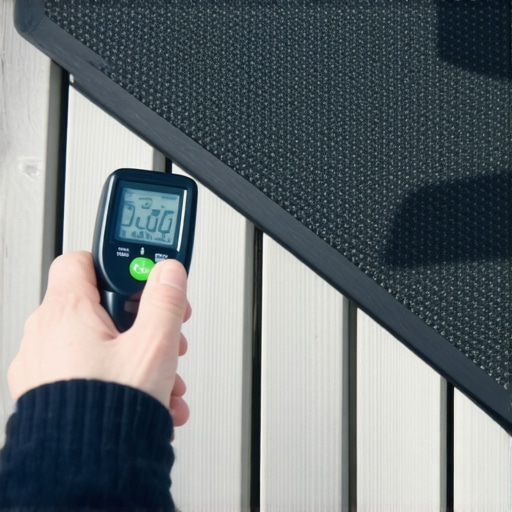 When it comes to cleaning, I avoid the ‘all-purpose’ jugs under the sink. Sodium hypochlorite (bleach) is the enemy of high-end polymers. It can wash out the UV inhibitors and leave your boards brittle. Instead, I stick to pH-neutral cleaners or even just a simple mix of Dawn dish soap and warm water. If you ever have a spill during a BBQ, knowing how to get grease stains off your composite deck immediately with a soft-bristled brush—never a metal one—is what keeps those stylish stairs for outdoor decks looking crisp for years. The AZEK Building Products Technical Bulletin specifically warns that certain acidic cleaners can permanently etch the surface of capped polymer boards, a mistake that often leads to a ‘ghosting’ effect that mimics rug stains.
How do I maintain my deck’s luster over time?
Consistency beats intensity every single time. You don’t need a massive weekend overhaul; you need a ten-minute ‘check-up’ once a month. I check for loose fasteners and specifically keep the best tool for removing a single stripped deck screw handy if I notice a board starting to wiggle. Addressing a small issue like that prevents the deck from developing a ‘bounce’ later on. If things already feel a bit soft, you might need to learn how to fix a bouncy deck without adding new posts by checking your joist spans. Looking forward, I predict we’ll see ‘intelligent’ deck boards by 2030—materials with built-in sensors that alert your phone when moisture is trapped too long under a rug or when the surface heat reaches a critical threshold. Until then, we are the sensors. If you really want to level up your outdoor game, I challenge you to do this one thing: Get a small bottle of pH-neutral soap and a soft brush this weekend. Move every piece of furniture, including the rug, and give the entire surface a gentle manual scrub. You’ll be shocked at the fine silt you find hiding in the grain, and your deck will look five years younger instantly.
Why My Most Expensive Mistakes Are Your Best Assets
I used to think that ‘waterproof’ was the gold standard for any outdoor accessory. I was wrong. The single biggest lightbulb moment I had was realizing that ‘breathable’ is actually the king of deck longevity. If air cannot move between your rug and your boards, you are essentially suffocating the material. I also learned that the orientation of my deck—specifically my South-facing exposure—meant that my dark gray boards were hitting temperatures nearly 20 degrees higher than my neighbor’s North-facing deck. This extra heat accelerated the chemical breakdown under my old rubber rug. Don’t underestimate the value of expert deck builder tips when it comes to layout; sometimes simply shifting a rug six inches every few weeks can prevent a permanent ‘shadow’ from forming on the surface.
My Recommended Toolkit for High-End Decks
To avoid the heartbreak I faced, I have narrowed down my maintenance kit to four essential items that every homeowner should have. First, I only use **Eco-Preferred Rug Pads** that are explicitly labeled as safe for vinyl and polymer surfaces; these prevent that dreaded plasticizer migration. Second, I keep an **Infrared Temp Gun** handy to check for hot spots during the peak of July. Third, I frequently reference the **NADRA Maintenance Guide**, which is the industry standard for keeping durable low-maintenance outdoor areas looking pristine. Finally, a simple bottle of **pH-neutral dish soap** is my only defense against spills, as it cleans without stripping the protective UV layers of the boards.
Your Deck Deserves Better Than a Mystery Stain
You have put an incredible amount of effort and investment into your outdoor sanctuary. By taking these small, deliberate steps to keep your outdoor rug from staining your deck boards, you are protecting more than just a floor; you are protecting your peace of mind. Whether you are experimenting with innovative outdoor living ideas with composite decking in 2025 or just enjoying a quiet morning coffee, your focus should be on the view, not the floor. Have you ever pulled up a rug and found a surprise waiting for you, or did you catch the damage just in time? Let me know your experience in the comments!