
I walked out onto my deck that morning with a steaming cup of coffee, ready to enjoy the “outdoor living room” I’d staged the night before, but my heart immediately sank. That gorgeous, navy blue velvet armchair—the one that tied my entire indoor aesthetic together—looked like it had been fished out of a lake. It wasn’t just wet; it was heavy, distorted, and already smelling slightly like a wet dog. I’d made the ultimate homeowner mistake: I treated my open deck like it was protected by four walls and a roof. [image_placeholder]
Your Favorite Armchair is a Sponge in Disguise
We all want that indoor room feel when we step outside, but the physics of furniture construction simply don’t allow for shortcuts. When I was first starting out as a DIY enthusiast, I thought the warnings about “outdoor-rated” furniture were just marketing ploys to get me to buy expensive patio sets. I was spectacularly wrong. Indoor furniture is built with kiln-dried woods and open-cell upholstery foams designed to stay in climate-controlled environments. Once they hit the brutal humidity of a Missouri summer or a surprise spring shower, they become a breeding ground for unseen problems. Even if you have the best composite decking underfoot, it won’t save a sofa that is literally rotting from the inside out. I’ve seen beautiful stair ideas and deck layouts completely ruined because the homeowner tried to save a few bucks by dragging the dining room chairs outside. It doesn’t just look “off”—it actually damages the deck surface when the dyes from the indoor fabrics bleed into your boards.
Is It Really That Bad to Leave a Chair Outside for One Night?
Yes, and the damage is often permanent. It isn’t just about the fabric getting damp; it’s about the microscopic battle happening inside the cushions. According to the American Society of Home Inspectors (ASHI), mold and mildew can begin colonizing organic fibers in as little as 24 to 48 hours when humidity levels exceed 60%. Beyond the health risks, the internal framing of indoor furniture is often held together by water-soluble glues and staples that rust instantly. One heavy dew and your “sturdy” chair starts to wobble, losing its structural integrity forever. Have you ever tried to dry out a thick foam cushion? It’s nearly impossible without it turning into a lumpy, smelly mess that you’ll eventually have to toss. If you are working with a professional deck builder to create a high-end space, you owe it to your investment to use materials that can actually survive the elements. I learned my lesson with that navy armchair, which ended up in a dumpster three days later. Have you ever had a “boho” decor dream turn into a moldy nightmare after a backyard party? Stick with me, because I’m going to show you how to get that luxury look using expert designer insights without sacrificing your furniture to the rain gods.
Buy Furniture That Actually Loves the Rain
Think of your outdoor furniture like high-performance hiking gear. You wouldn’t wear a cashmere sweater to climb a mountain in a thunderstorm, right? Indoor furniture is that cashmere—beautiful, but structurally fragile when exposed. To get that indoor room feel without the mold, you must prioritize solution-dyed acrylic fabrics. These materials, like Sunbrella, are saturated with UV-stable pigments before the fiber is even spun, meaning they won’t fade or become a breeding ground for bacteria. When choosing the right composite decking, you are already investing in a 25-year foundation; don’t undercut that value by placing cheap, open-cell foam cushions on top that trap moisture against your boards. Stick to frames made of powder-coated aluminum or Grade A teak, which naturally resists pests and rot. 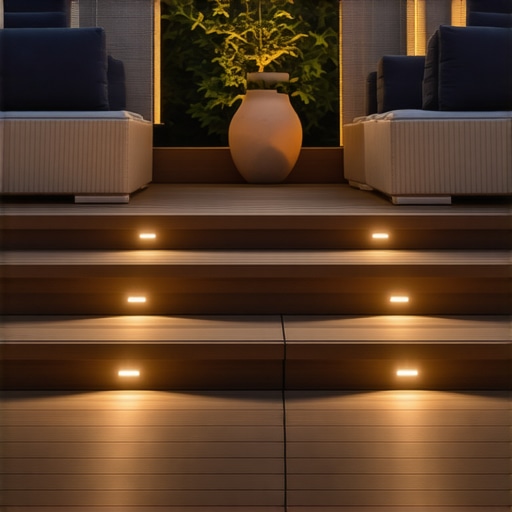
Map Out Your Floor Plan Before You Shop
The biggest mistake I see homeowners make is a failure of scale. I once tried to wedge an oversized six-piece wicker sectional onto a modest 12×12 deck because I loved the look in the showroom. In reality, my guests had to shimmy sideways like crabs just to reach the grill, and the narrow chair legs were constantly snagging. If I had known how to stop your deck chair legs from catching back then, I would have chosen furniture with sled bases or wider feet. Before you buy, use painter’s tape to mark the footprint of your potential furniture on your deck boards. Ensure you have at least 36 inches of clear ‘traffic lane’ for movement. If you’re working with limited square footage, the best layout for a small deck often involves using the perimeter for seating, which keeps the center open and airy.
Treat Your Stairs Like the Entrance to a Gallery
We often view stairs as a simple utility—a way to get from point A to point B—but they are actually the most important tool for creating seamless transitions between your home and your yard. When I revamped my own backyard, I realized the original stairs felt like a dark, steep ladder. By incorporating glare-free stair lighting, I transformed the entire evening vibe. It wasn’t just about safety; it was about defining the space. Using custom composite decking ideas, such as picture-framing the steps with a contrasting color, makes the transition feel intentional and high-end. If your layout feels complicated or your yard has a steep slope, working with a professional deck builder can help you design wide, cascading steps that double as extra seating during a party. A well-placed set of stairs pulls people out of the house and into the landscape, making the deck feel like a natural extension of the earth rather than a floating box.I’ve heard it a thousand times from well-meaning DIYers: “The stairs are just the exit; don’t overthink them.” But here is the contrarian truth that separates a hobbyist from a master: Your stairs shouldn’t just be an exit; they should be the structural anchor of your entire outdoor living space. Most people assume that if the steps aren’t falling off, they are fine. In reality, poorly designed stairs act like a lever, slowly pulling your deck away from the house every time someone walks up them. When I talk to a professional deck builder, we don’t just talk about wood; we talk about load paths and lateral tension.
Why do your stairs feel like they are leaning or shifting?
If you’ve ever felt that slight ‘sway’ when walking up to your deck, you’re likely experiencing a failure in lateral bracing. This is the ‘Oops’ factor most people miss until it’s too late. The most common trap is over-notching the stringers. If you cut too deep into the wood to create a step, you leave a tiny ‘throat’ of material that eventually snaps under the weight of a heavy cooler or a group of guests. This is why your deck stair stringers are cracking at the throat, and it’s a safety hazard that a coat of stain won’t fix. According to the North American Deck and Railing Association (NADRA), nearly 40% of deck failures are related to rail and stair collapses due to improper fastening. To prevent this, I always recommend the bracket that makes your deck stairs feel rock-solid rather than relying on nails alone. 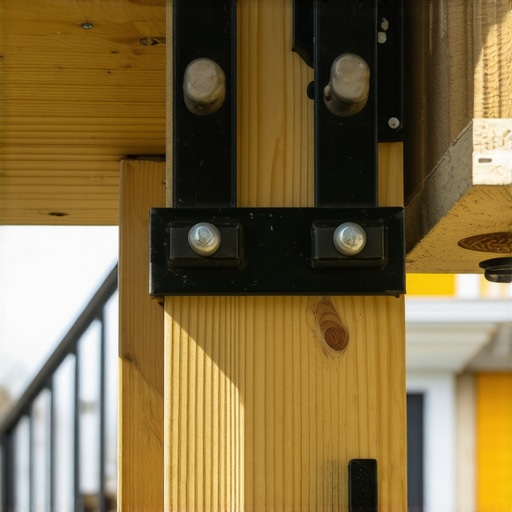
The Myth of the Maintenance-Free Composite Deck
We love composite decking trends because they promise an end to sanding and staining, but there’s a hidden nuance: the boards might not rot, but the frame underneath absolutely can. I’ve seen homeowners spend $20,000 on high-end boards only to have the structure fail in seven years because they didn’t use joist tape or proper ventilation. If you are maximizing space with modern designs, you have to account for the fact that composite expands and contracts much more than wood. If you don’t understand the spacing secret for installing composite decking in winter, your boards will buckle and ‘mushroom’ when the summer heat hits. This is why I advocate for why I never start a complex deck project without a digital 3D walkthrough first; it allows you to see how the expansion joints and stair landings will interact before a single board is cut.
Stair Treads Are More Than Just Flat Boards
Another advanced mistake is choosing the wrong tread depth. While standard code might allow for narrow steps, the stair tread depth that feels safest is usually much deeper than what you’ll find on a budget build. Deep treads allow for a natural gait, making the transition from the yard to the deck feel effortless rather than like a mountain climb. Additionally, why stair treads need more than just screws to stay quiet often comes down to using high-quality subfloor adhesive. Without it, the friction between the wood and the stringer will create a persistent squeak that ruins the luxury vibe. Have you ever fallen into this trap of prioritizing the ‘pretty’ boards while ignoring the skeleton underneath? Let me know in the comments.
Stop Guessing and Start Visualizing with 3D Tech
Before I ever lift a hammer or order a single board for a new project, I spend hours in a virtual environment. I used to think my hand-drawn sketches were enough, but modern 3D digital walkthroughs changed everything. These aren’t just pretty pictures; they are diagnostic tools. When I’m working through a digital 3D walkthrough first, I can spot where a stair landing might feel cramped or where the sun will hit that dark brown board at 4:00 PM. If you are planning a layout that involves multiple levels or complex angles, skip the graph paper. This software allows you to ‘walk’ the space, ensuring your expert designer insights actually translate to a comfortable, functional reality before you spend a dime on materials.
How do I keep my composite looking brand new for decades?
The beauty of composite is the low maintenance, but ‘low’ doesn’t mean ‘none.’ The most common killer of that luxury look isn’t the sun; it’s neglect. For my own deck, I keep a dedicated soft-bristle brush and a bottle of pH-neutral soap specifically for cleaning grease stains off composite after a Sunday BBQ. If you let bird droppings or tree sap bake into the grain, you’re asking for trouble. I’ve found that cleaning bird droppings off dark composite immediately with warm water prevents the oils from etching into the finish. To keep the structure as healthy as the surface, I recommend checking your ledger flashing and joist integrity every spring. According to the American Wood Council’s (AWC) DCA 6 manual, the connection between your deck and the house is the most critical failure point; ensuring that connection remains dry is your number one maintenance priority. 
The Hardware Upgrade Your Contractor Might Not Mention
If you want your deck to feel like a rock for thirty years, you have to stop using old-fashioned lag bolts. I made the switch to structural screws years ago and never looked back. These screws are heat-treated for incredible strength and, unlike lags, they don’t require pre-drilling, which means less chance of splitting the wood and inviting rot. When you are maximizing space with modern designs, you need the frame to be as tight as possible. These fasteners pull the wood together with a clamping force that bolts just can’t match, eliminating that annoying ‘creak’ when you walk across the floor.
The Next Era of Outdoor Living
As we look toward composite decking trends for 2025, I predict we will see a massive shift toward ‘smart’ decks. We are already seeing integrated sensor-driven lighting and built-in climate control features becoming standard in high-end builds. The line between ‘outside’ and ‘inside’ is blurring even further, with weather-resistant tech allowing for full outdoor theaters. If you’re currently in the planning phase, I strongly encourage you to try one advanced move: swap out your standard galvanized hardware for stainless steel structural screws on your next repair or build. It’s a small price increase that effectively doubles the lifespan of your frame.
What I’ve Learned from Twenty Years of Missouri Humidity
Reflecting on that navy velvet chair reminds me that the most expensive mistakes are often the ones made with the best intentions. If you take anything away from my experience, let it be this: The bones of your deck are more important than the boards. I spent years chasing aesthetic trends only to realize that the real magic happens in the details of the frame. When you are transforming your outdoor living with custom composite decking ideas, you are building a legacy, not just a floor. I learned that ventilation is the unsung hero of deck longevity, and skipping joist tape is a recipe for heartbreak. Most homeowners underestimate how much the soil moves, which is why I now insist on deeper footings and reinforced stringer attachments. [image_placeholder]
The Pro-Grade Essentials That Saved My Sanity
Through trial, error, and several dumpster loads of ruined lumber, I’ve curated a short list of tools and resources that I trust implicitly. First, I never touch a project without starting with a digital 3D walkthrough first; it removes the ‘I hope this looks good’ anxiety and replaces it with mathematical certainty. Second, I’ve completely abandoned cheap fasteners in favor of structural screws instead of old-fashioned lag bolts because they provide a clamping force that keeps the structure silent and steady. For maintenance, keep a bottle of pH-neutral soap handy to master cleaning grease stains off composite quickly. Finally, if your project involves complex topography, the benefits of working with a professional deck builder cannot be overstated; their specialized tools for leveling and lateral bracing are worth every penny.
Ready to Build Your Outdoor Sanctuary?
Your deck shouldn’t be a source of stress or a list of weekend chores; it should be the place where you exhale after a long week. By focusing on creating seamless transitions with stairs and investing in high-quality materials, you are setting the stage for years of memories. As we move into the era of innovative outdoor living ideas with composite decking in 2025, the possibilities for customization are truly endless. Don’t be afraid to dream big, but build solid. Have you ever found a surprise structural issue while trying to ‘beautify’ your deck? Let me know in the comments below.