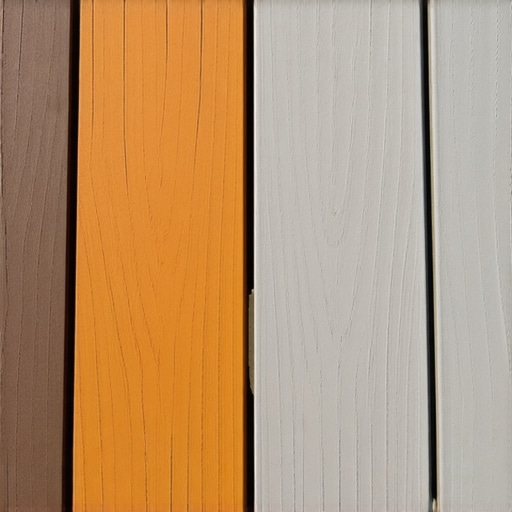
I’ll never forget the sound of my five-year-old’s feet hitting the deck boards that first July afternoon. It wasn’t the pitter-patter of play; it was a frantic, high-pitched yelp followed by a desperate sprint toward the nearest rug. I had just finished installing a gorgeous, deep chocolate-colored masterpiece, thinking I was the king of innovative outdoor living ideas. But as I stepped out barefoot to comfort her, I realized my mistake immediately. It felt like I was walking on the surface of the sun. I’d spent months obsessing over wood grain and hidden clips, but I completely ignored the physics of thermal absorption. Today, I want to save your soles—literally—by explaining why that trendy dark brown finish might be the one thing keeping you inside all summer. We’re going to look at the real numbers behind heat retention and how choosing the right composite decking can make or break your backyard experience.
Dark Boards Are Natural Heat Magnets
My biggest mistake early on was prioritizing my indoor-outdoor aesthetic over the actual path of the sun. I wanted the deck to match the mahogany floors in my living room, so I went dark. I learned the hard way that dark surfaces are basically heat sponges. This isn’t just a hunch; it is basic thermodynamics. According to the EPA’s research on the Heat Island Effect, dark-colored surfaces can reach temperatures significantly higher than the surrounding air—sometimes up to 50 to 90 degrees Fahrenheit hotter. When you apply that to a dense material like composite, you’ve essentially built a giant radiator in your backyard. I’ve even seen cases where dark grey decking creates the same miserable experience for homeowners who didn’t plan for a west-facing exposure. Have you ever had to run for your life across your own patio because the floor was too hot to stand on?
Is the temperature difference really that noticeable?
It’s more than noticeable—it’s the difference between a barefoot-friendly oasis and a shoes-required zone. Light gray boards reflect a much higher percentage of solar energy compared to their dark brown counterparts. When I finally compared the two side-by-side on a 90-degree day, the dark brown board was nearly 30 degrees hotter than the light gray one. This is one of those maintenance-free decking claims people often overlook; sure, you don’t have to stain it, but you might have to hose it down just to walk on it. Before you commit to that deep espresso shade, you need to understand how your specific backyard’s microclimate will interact with these materials.
Test Your Samples Before the First Hammer Swing
One of the most effective things I did after my “sun-surface” disaster was the ‘Toasted Toe’ test. I grabbed a few cutoffs of durable composite decking and placed them in the exact spot where the new deck would go. I let them bake from noon until 4 PM. Instead of just looking at the colors, I walked on them. The difference was staggering. A tan board was warm but walkable; the dark charcoal was physically painful. When you are gathering innovative outdoor living ideas, don’t just look at Pinterest photos. Dark boards look incredible in professional photography taken at dusk, but they are thermal batteries in real life. If you have a west-facing yard with zero shade, you have to prioritize high-reflectivity colors or you will find yourself confined to the air conditioning all July. 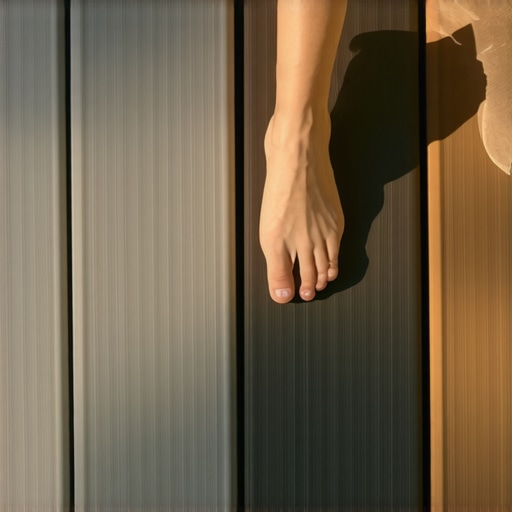
Turn Your Deck Frame Into a Natural Cooling System
Think of your deck like a giant radiator. If the heat has nowhere to go, it stays trapped in the dense plastic and wood fiber core of the boards. When I was digging into deck builder insights, I realized many DIYers overlook the importance of airflow. By using the spacing secret for installing composite decking, specifically leaving that 3/16th or 1/4 inch gap between boards, you are creating a series of tiny chimneys. As the air underneath the deck warms up, it rises and escapes through those gaps, pulling cooler air in from the sides. This convective cooling is why a deck built with proper gaps and a bit of elevation will always feel cooler than a low-profile deck sitting directly on a concrete slab. If you are building a ground-level deck, consider adding decorative lattice or open-work skirting to keep that breeze moving beneath your feet.
Build Buffer Zones Where the Boards Meet the Grass
The most dangerous part of a hot deck is the surprise factor. When my daughter ran from the cool lawn onto that dark brown board, her feet were not prepared for the 60-degree temperature jump. Now, I always recommend creating a ‘warning track’ using a lighter color for the perimeter. Beyond the aesthetic appeal, picture framing your deck with a heat-resistant shade provides a physical transition zone. It gives your brain—and your nerve endings—a split second to register the change. This is especially critical when you are designing safe and stylish stairs for your backyard. Since stairs are often the first point of contact, using a lighter tread color ensures that the journey from the yard to the grill does not end in a frantic sprint for the garden hose. For families with pets or small children, these cooling ‘landing pads’ are the difference between a usable space and a backyard obstacle course.
Most homeowners assume that because composite decking is ‘engineered,’ it remains perfectly static. This is perhaps the biggest lie in the industry, and believing it is the fastest way to ruin your investment. In reality, composite boards are constantly ‘breathing’—expanding and contracting with every temperature swing. I’ve seen countless DIY projects where the boards were installed bone-dry and jammed tight against the house. By mid-August, those boards had nowhere to go, so they buckled like a cheap tent or, worse, started pulling the deck away from the siding. If you want to avoid this, you have to master the spacing secret for installing composite decking, especially if you are building during the shoulder seasons.
Why do my deck stairs feel like they are leaning?
If you feel a slight sway or ‘give’ when you hit the middle of the flight, it’s rarely the boards—it’s usually a failure in the stringer geometry. A common ‘pro’ mistake is over-notching the stringer, which leaves the ‘throat’ of the wood too thin to support a heavy load. Research from materials scientists at Washington State University, who specialize in wood-plastic composites, emphasizes that these materials require more frequent support than traditional lumber because they are less stiff. This is why your deck stair stringers are cracking at the throat if they weren’t reinforced properly. To combat this, I always recommend double-blocking the middle of a long stair run for stability. It transforms a bouncy, nervous climb into a rock-solid experience.
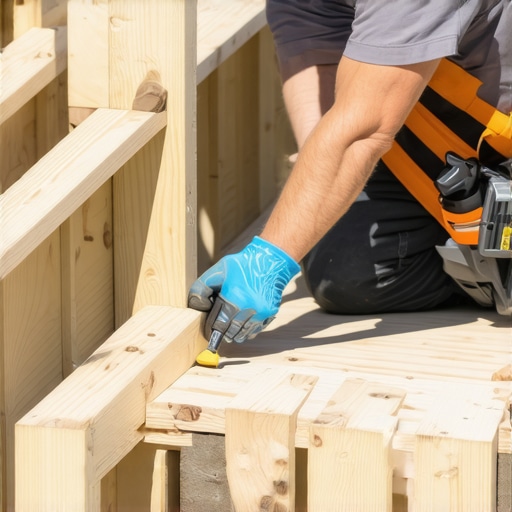
The ‘Oops’ factor that catches even experienced builders is hardware fatigue. I still see people reaching for old-fashioned lag bolts for critical ledger and stair connections. Please, put the impact driver down. There is a significant structural reason to use structural screws instead of lag bolts; they offer superior shear strength and won’t weaken the timber through massive pilot holes. When designing safe and stylish stairs, the magic is in the details you can’t see. For instance, if you want to eliminate that annoying midnight creak, you need to understand why stair treads need more than just screws to stay quiet. Often, a simple bead of subfloor adhesive between the stringer and the tread is the difference between a high-end feel and a noisy nuisance. Have you ever fallen into the trap of over-tightening your fasteners only to have the boards buckle later? Let me know in the comments.
I used to think my eye was good enough to spot a level line across a wide span, but a 40-foot deck has a way of humbling even the most confident builder. After that ‘hot board’ fiasco, I realized that winging the technical details was a recipe for expensive repairs. I eventually stopped relying on luck and started treating my backyard like a high-stakes engineering project. The most significant shift in my process happened when I embraced technology; I now believe that why a digital designer is the best move for planning a complex backyard deck cannot be overstated. Seeing a 3D rendering of how the stairs interact with the slope of the yard saves me from ‘the shrug’—that moment where you realize you’ve cut a $200 piece of composite too short because you didn’t account for the rise and run correctly.
The Invisible Layer That Saves Your Frame From Rot
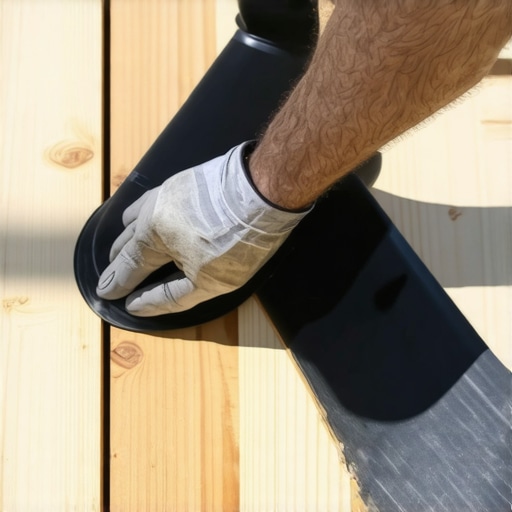
If you want your deck to actually reach that thirty-year milestone, you have to obsess over what happens under the boards. Most people focus on the pretty surface, but the frame is where the real drama unfolds. According to the American Wood Council’s DCA 6 (Prescriptive Residential Wood Deck Construction Guide), moisture trapped between a deck board and the joist is the leading cause of premature structural failure. This is why I never build without butyl joist tape anymore. It creates a waterproof seal over the top of your pressure-treated lumber, ensuring that water can’t sit in the screw holes and rot the wood from the inside out. When you learn how to keep your deck joists from rotting under the boards, you are effectively doubling the life of your investment. It’s a small, tedious step that separates the amateurs from the pros who know how to protect your deck frame from rot for thirty years.
How do I maintain my composite deck over time?
Maintenance for composite isn’t about staining; it’s about preventative cleaning and gap management. I keep a dedicated soft-bristle brush and a mild dish soap handy for seasonal scrubs. You’d be surprised how much organic material—pollen, leaf bits, and dust—can build up in the grain and become a breeding ground for surface mold. And for those of us with feathered neighbors, knowing the best way to clean bird droppings off dark brown composite boards is essential to prevent permanent ‘ghosting’ stains on the finish. Every spring, I also take a thin putty knife and run it through the gaps to clear out pine needles or debris that might be blocking your convective cooling airflow. If you hear a noise, don’t ignore it; usually, it’s just a loose fastener, and finding the simple way to stop deck stairs from squeaking when you step often just requires a quick adjustment of your structural screws.
The Future of Cool-Touch Decking
Looking ahead, I predict that the ‘sun-surface’ problem I faced years ago will be a thing of the past by 2030. We are already seeing composite decking trends 2025 move toward IR-reflective pigments that keep even dark boards 20% cooler than legacy products. We’re heading toward a world where your deck isn’t just a floor, but a smart surface. For now, focus on the fundamentals. My best advice for your next project? Try the ‘double-blocking’ method I mentioned earlier for your stairs. It is the single most effective way to make a DIY build feel like it was done by a master expert deck builder. Go out there and jump on your stairs; if they move even a fraction of an inch, it’s time to add that extra support.
The Expensive Mistakes I Made So You Don’t Have To
Building a deck is a rite of passage, but it shouldn’t be a painful one. After years of trial and error, the biggest lightbulb moment for me was realizing that color isn’t just an aesthetic choice; it’s a lifestyle constraint. If you can’t walk on your deck at 2 PM, it’s not an outdoor living space—it’s a very expensive decorative platform. I’ve also learned that the most important parts of your deck are the ones you can’t see from the street. Don’t cut corners on the skeleton. I once tried to save a few bucks by skipping joist tape, and five years later, I was replacing rotted timber that should have lasted twenty.
Another hard truth? Not all composite is created equal. While the price tag on the budget aisle looks tempting, the truth about cheap composite decking from big box stores is that they often lack the heat-reflective coatings and structural density of premium lines. Finally, remember that your stairs are the ‘handshake’ of your deck. If they feel spongy, the whole project feels cheap. Always prioritize why we always double block the middle of a long stair run for stability to ensure that first step feels as solid as a mountain.
#IMAGE_PLACE_HOLDER_E#
The Shortlist of Tools That Actually Save Time
I don’t believe in buying every gadget at the hardware store, but there are three things I never build without anymore. First, a high-quality digital layout. I’ve found that why I never start a complex deck project without a digital 3d walkthrough first is simply because it catches structural conflicts before they cost me money. Second, ditch the lag bolts. There is a massive structural reason to use structural screws instead of old-fashioned lag bolts: they are faster, stronger, and won’t split your ledger board. Third, keep a bottle of subfloor adhesive in your belt. Using it on stair treads is why stair treads need more than just screws to stay quiet and stay firm over years of heavy foot traffic.
Your Future Backyard Memories Start with These Decisions
At the end of the day, your deck isn’t just about joists, spans, or thermal absorption. It’s about the Saturday mornings spent with a cup of coffee and the late-night dinners under the stars. By taking the time to plan for the heat, the stability of your stairs, and the longevity of your frame, you aren’t just building a structure—you are transforming your outdoor living with custom composite decking ideas that actually work for your family. A little extra effort now means decades of barefoot-friendly relaxation later. Whether you do it yourself or hire a pro, knowing how a skilled deck builder can turn your garden into a private oasis gives you the confidence to start. Have you ever chosen a deck color you later regretted because of the heat? Let me know in the comments below!