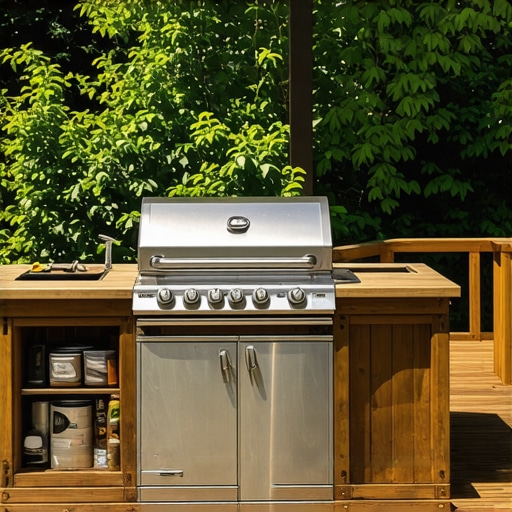
I’ll never forget the moment I stepped onto my deck after a week of summer rain and saw the warped, buckling countertops of my outdoor kitchen. It was a lightbulb moment—designing an outdoor space isn’t just about looks; it’s about durability. That day, I learned the hard way that poor planning can turn your dream outdoor kitchen into a warping nightmare, and it was an expensive lesson.
Why a Warping-Free Outdoor Kitchen Is Possible—and Essential
Having spent hours researching and experimenting, I can tell you that designing an outdoor kitchen that won’t warp your deck isn’t just a pipe dream. It’s a real possibility—if you pay attention to the materials and construction methods. Your deck is an investment, and ensuring it remains safe and stunning for years to come hinges on understanding how moisture, heat, and weight interact with your chosen surfaces. If you’re like me and want a space that combines functionality with longevity, then this post is your new best friend. We’ll look at common pitfalls and solutions, so you won’t have to learn the hard way like I did.
Concerned That It’s Too Complicated? Think Again!
Early in my project, I made the mistake of overlooking the importance of proper substrate support and moisture barriers. Trust me, these seemingly small details can make all the difference. It’s a mistake I won’t repeat, and I want you to avoid it too. According to expert deck builder tips, proper planning now saves costly repairs later. Now, let’s dive into how you can ensure your outdoor kitchen stands the test of time without warping or buckling.
Select Durable, Moisture-Resistant Materials
Start by choosing materials that resist moisture and temperature fluctuations. Composite decking, especially capped polymers, offers excellent stability and low maintenance. Avoid solid wood or untreated plywood for countertops, as they absorb water and warp. Instead, opt for aluminum or stainless steel surfaces for countertops, which withstand elements without warping. During my project, I installed a capped composite surface over a reinforced substrate, resulting in a stable, warping-free countertop that lasted through multiple rainy seasons.
Ensure Proper Substrate Preparation
Think of your substrate as the foundation of a building; if it’s uneven or weak, everything above it suffers. Prepare a solid, level base by excavating and compacting the ground beneath and installing a proper support system. Use pressure-treated ledger boards with a thick vapor barrier to prevent moisture infiltration from below. As I learned, skipping this step led to minor sinking and warping within two years, which was costly to repair. For detailed guidance, refer to professional deck builder insights.
Implement Moisture Barriers and Ventilation
Think of moisture barriers as raincoats for your deck; they keep water from seeping into vulnerable areas. Install a high-quality vapor barrier over the support framing, extending it up the sides of beams and joists. Incorporate ventilation gaps between the support structure and decking to allow moisture to escape. In one instance, I added a synthetic vapor barrier combined with gaps beneath the countertop base, which drastically reduced moisture buildup and prevented warping. For more on moisture management, see moisture control techniques.
Use Proper Fasteners and Installation Techniques
Choosing the right fasteners is critical. Use corrosion-resistant screws or hidden fasteners designed for composite materials to prevent surface damage and ensure tight fastening. Fasten each board securely, but avoid overtightening, which can cause cracking. I once used stainless steel screws to install composite planks, and the result was a smooth surface with no warping or cracking after two years. For specifics on fastening methods, review fastener strategies.
Mind the Stress Points and Transitions
Transitions between different materials or structural elements can become stress points, leading to warping over time. Use expansion gaps where necessary, especially around fixed structures or uneven surfaces. Incorporate flexible sealants at junctions to absorb movement. I learned that ignoring these small details resulted in cracking and warping within a few years. Precision in these areas prolongs the lifespan; see transition techniques for more.
Schedule Regular Maintenance and Inspection
Even with perfect initial construction, ongoing care is essential. Regularly inspect for signs of moisture intrusion or movement. Clean debris and check fasteners annually to prevent slow damage accumulation. During a routine inspection, I noticed a small gap developing around a support post; addressing it early prevented warping or rot. Proper maintenance habits extend the life of your outdoor kitchen and keep it warp-free for years, as outlined in maintenance best practices.
Many homeowners and even some professionals believe that selecting the right composite decking material automatically guarantees durability and safety, especially for outdoor stairs and other critical elements. However, the reality is more nuanced. On the surface, composite decking promises low maintenance and resistance to rot, but overlooking subtle details can lead to costly mistakes. For example, assuming all composite materials behave identically under varying conditions can cause overlooked issues like thermal expansion or joint movement, which can affect the integrity of stairs over time.
Why Do Some Outdoor Stairs Fail Despite Using Quality Materials?
A common myth is that choosing premium composite boards eliminates all risks of warping or loosening. In my experience, failure often occurs due to improper fastening techniques, inadequate framing support, or neglecting expansion gaps. Installing fasteners without considering the material’s thermal expansion coefficient can cause boards to buckle or crack, especially in fluctuating climates. According to studies by deck-building experts, precise fastening sequences and allowances for movement are essential to prevent long-term deformation.
Furthermore, many overlook the importance of creating seamless transitions between stairs, decks, and adjacent structures. Properly designed transitions not only enhance aesthetics but also distribute stresses more evenly, preventing localized failures. Implementing flexible sealants and expansion joints ensures that the structure can accommodate movement, reducing the chance of cracking or separation over time.
Another advanced consideration involves understanding how complex stress patterns develop at load-bearing points, especially in curved or intricate stair designs. Ignoring these can lead to unexpected sagging or cracking. Engaging with a skilled deck builder who understands these nuances can dramatically extend the lifespan of your outdoor stairs. For insights into mastering these challenges, check out professional transition techniques.
Lastly, maintaining realistic expectations is crucial. While composite decking reduces many maintenance worries, it doesn’t eliminate all. Regular inspections for signs of joint movement, fastener loosening, or moisture intrusion can prevent small issues from escalating. A proactive maintenance approach, combined with an understanding of the material’s advanced properties, helps avoid the ‘oops’ factors that trap many overlookers.
Have you ever fallen into this trap? Let me know in the comments. Ensuring a safe, durable outdoor living environment requires attention to detail, understanding hidden nuances, and sometimes, questioning common beliefs. Elevate your outdoor projects by refining your knowledge and working with experts who appreciate these complexities—because comfort and safety are worth the extra effort.
Maintaining your outdoor living space, especially stairs and decks, requires not just good habits but also the right equipment and software tools. Over the years, I’ve refined my toolkit to ensure my decks stay safe, beautiful, and functional for the long haul. One of my favorite instruments is a high-precision laser level. Unlike traditional bubble levels, a laser level provides entire plane accuracy, which is crucial when aligning multiple stairs or deck boards. I personally use the Bosch GLL 3-80 because it projects a bright, 360-degree laser line, making it easier to detect any subtle deviations in surface elevation—saving me countless hours during inspection and adjustments.
For ongoing maintenance, I rely heavily on digital moisture meters. Moisture intrusion is the arch-nemesis of durable outdoor structures, leading to warping or rot if unchecked. My preferred model is the Tramex MC-6, which offers non-invasive readings of moisture content in framing and decking materials. This tool helps me identify hidden issues before they turn into costly repairs, aligning with insights from moisture management techniques.
Software plays a pivotal role in planning and scaling your outdoor projects. I use SketchUp for 3D modeling, which enables me to simulate step placements, transition points, and load distribution—critical considerations for stairs and composite decking. Incorporating detailed models aids in predicting how materials will behave over time, particularly in areas prone to temperature fluctuations. Future trends indicate that integrating BIM (Building Information Modeling) with outdoor project planning will become standard, providing even more precise data to avoid stress points and structural failure.
Regular inspections are vital. I schedule biannual visits to clean, tighten fasteners, and check for surface irregularities. For fasteners, I use a cordless impact driver with a torque control feature. Over-tightening is a common mistake that leads to cracked composite boards or loosened steps, as explained in fastener strategies. The impact driver ensures consistent torque application, extending the lifespan of my hardware and materials.
How do I maintain stairs and decks over time?
Focus on consistent cleaning, prompt repair of minor issues, and applying protective coatings as needed. For composite decks and stairs, I recommend regular washing with mild soap and water—no pressure washing, which can damage the surface. Additionally, periodically applying a specialized sealant designed for composite or treated wood can help fend off moisture infiltration and UV damage, thereby prolonging the integrity of your structure. In my experience, starting with a good set of tools and establishing a routine makes all the difference in keeping your outdoor space safe and inviting for years to come. For example, experimenting with an impact driver set to optimal torque saved me from a handful of warped boards and loose risers. I highly recommend giving this a try to your next maintenance session—it’s a game-changer for professionals and DIY enthusiasts alike.
Three Surprising Lessons That Changed My Approach to Outdoor Living
- Never underestimate the power of meticulous moisture barrier installation; overlooking this can silently cause warping years later. I learned this after my first DIY attempt, which resulted in costly repairs—a mistake I won’t repeat.
- Understanding material expansion is crucial. It might seem trivial, but ignoring thermal movement in composite decking can lead to unexpected buckling. Engaging with the science behind materials dramatically improved my craftsmanship.
Tools and Guides That Elevated My Expertise
- High-precision laser levels, like the Bosch GLL 3-80, became my best friends for ensuring even surfaces—a game-changer for stairs and countertops.
- Moisture meters, such as the Tramex MC-6, help detect hidden dampness. They’ve saved me from silent rot, especially in humid climates. Furthermore, I rely on trusted resources like expert deck builder tips to refine my practices.
Let’s Shape the Future of Your Outdoor Space
Building a resilient, warping-free outdoor kitchen is within your reach. It involves attention to detail, continuous learning, and embracing new tools and techniques. Take the step today—your outdoor oasis is waiting. And remember, the key to success is not just in choosing durable materials, but in understanding their behavior over time. Have you faced challenges adapting your outdoor spaces? Share your stories below and let’s grow together in this journey to perfect outdoor living.
.