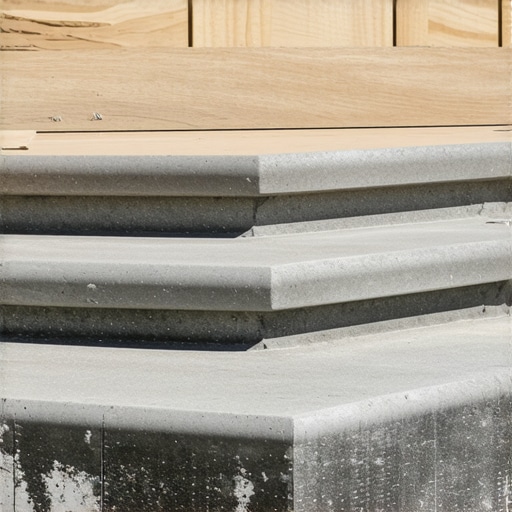
Ever since I embarked on my first outdoor project, I’ve wrestled with the seemingly simple challenge of building a wrap-around step that remains perfectly level year after year. I remember the frustration of eagerly finishing a deck, only to find that my new stairs had settled unevenly within just a few seasons. It was a lightbulb moment—understanding that many DIYers and even some professionals overlook the nuanced details that make outdoor stairs truly durable and level over time.
Why Level Wrap-Around Steps Matter More Than You Think
For me, the importance of a well-built, level step isn’t just about aesthetics—it’s about safety, functionality, and longevity. A crooked or uneven staircase isn’t just unsightly; it’s dangerous, especially for kids, seniors, or anyone carrying a load. Plus, an uneven step can cause water pooling and accelerate wear, leading to costly repairs down the line. Ensuring your wrap-around stairs stay level for years requires understanding the soil, proper framing, and the right materials, all of which I’ve learned through plenty of trial and error.
Will Your DIY Effort Hold Up? The Biggest Skepticism
I remember thinking, “Sure, I can build a level set of steps today, but will it really stay that way next year?” Trust me—I’ve made my fair share of mistakes early on, like neglecting proper footing or skipping a level check. That’s why I want to share what works—and what doesn’t—based on real experience. Building a sturdy, level wrap-around step isn’t magic; it’s science and craftsmanship combined. If this sounds like your concern, rest assured—getting it right is entirely doable with the right approach. For more insights on advanced deck construction, [check out this guide](https://deckdesignbuild.com/deck-builder-insights-designing-your-dream-outdoor-space).
Now, let’s dive into those tried-and-true techniques I’ve used to create stairs that stay level, safe, and beautiful for years.
Start with a Solid Foundation
Begin by excavating the area where your stairs will sit, ensuring you remove loose soil and debris. Lay a gravel bed about 4 inches deep to promote drainage and prevent settling. Compact the gravel thoroughly using a tamper—think of it as packing a layer of sand before laying a patio, ensuring stability for your stairs.
Frame Carefully for Lasting Support
Construct your stair stringers using pressure-treated lumber, cutting notches precisely with a circular saw. Use a framing square to verify right angles; I once made the mistake of rushing this step, resulting in uneven risers. To avoid this, double-check each cut. Secure the stringers to the framing with galvanized screws, which resist rust—particularly important if your stairs are near water or in humid climates.
The Secret of Proper Spacing
Space your joists 12 inches on center for optimal support, especially when using composite decking. I once used 16-inch spacing, and my decking developed bounces after a year. Tightening the spacing increases stability and prolongs longevity. For more on spacing standards, consult this article.
Ensure Level and Slope for Safety
Set your stringers on a level surface or use shims underneath when needed. Use a long spirit level or a laser level for accuracy; I once relied solely on a bubble level and ended up with a slightly tilted staircase, which became more evident over time. Perfect leveling not only looks better but also prevents tripping hazards.
Controlling Soil Settlement and Drainage
Backfill around the supports with gravel and tamp it down in layers. This prevents soil erosion that can shift the foundation. I learned this lesson after my first build, where water pooling caused uneven settling. Installing a drainage pipe or gravel bed around the footings can significantly reduce future movement, ensuring your stairs stay level for years.
Attach Decking with Precision
Lay composite or wood treads, spacing the boards 1/4 inch apart to accommodate expansion. Use stainless steel screws to prevent corrosion, especially in coastal areas—I’ve found galvanized fasteners rust over time, causing the boards to loosen. Drill pilot holes to avoid splitting, and keep screws straight for a clean look.
Align and Secure Consistently
Maintain a consistent distance from the edges of boards to ensure a professional finish. I once had uneven gaps because I rushed the placement; taking my time with a spacer tool made a noticeable difference. For a seamless appearance, stagger screw locations on adjacent boards and tighten them firmly but without overdriving, which can crack the material.
Finishing Touches for Durability
Apply a weatherproof sealant compatible with your decking material, especially on exposed edges and cut ends, which are vulnerable to rot. Regular inspection and reapplication every couple of years will preserve your stairs. In my experience, neglecting this step led to early deterioration, but consistent maintenance has kept my steps safe and attractive.
Maintain and Monitor
Periodically check for loose fasteners and shifts in the structure. Promptly replace any damaged boards or fasteners. I recommend marking areas during inspections to track changes over time. These simple steps ensure your wrap-around stairs remain level, safe, and visually appealing for many seasons ahead.
Many DIY enthusiasts and even seasoned professionals often fall for misconceptions when it comes to outdoor stairs and composite decking. One pervasive myth is that simply choosing a high-quality composite material guarantees lasting durability and a perfectly level staircase. While high-quality composites reduce maintenance needs, they don’t automatically solve foundational issues or installation mistakes that can compromise your project over time.
For example, some assume that using thicker decking boards will inherently prevent warping or buckling. However, the real key lies in proper support spacing, correct installation techniques, and considering environmental factors like sunlight and moisture exposure. Relying solely on material thickness without addressing these nuances can be a costly oversight.
What are the most advanced mistakes even experienced builders make?
One often overlooked aspect involves the subtle yet critical issue of framing alignment. Even slight inaccuracies in the initial framing can lead to uneven decking surface or unsafe stairs. For instance, tiny deviations in stringer placement or improper leveling of footings may seem insignificant but will manifest as problems over time. An expert builder ensures precise measurements and uses laser levels to mitigate these risks, an approach supported by industry standards outlined in professional design insights.
Another frequent mistake is neglecting drainage considerations. Proper slope and water runoff management are vital to prevent soil erosion that could cause shifts in the foundation and misalign stairs. Installing gravel beds and drainage pipes around supports significantly increases longevity, a detail often missed by amateurs eager to complete their project quickly. According to research from Building Science Corporation, drainage improvements can extend the lifespan of outdoor structures by years.
Furthermore, advanced builders realize that fastener selection plays a crucial role. Using stainless steel screws, especially in coastal or high-moisture environments, prevents corrosion and maintains structural integrity, contrary to the common misconception that galvanized fasteners are sufficient. As discussed on this resource, material compatibility is a subtle but impactful element often underestimated.
In conclusion, understanding these hidden intricacies pushes your project from basic assembly to true craftsmanship. Avoid the trap of oversimplification by paying attention to framing precision, drainage, fastener choices, and environmental factors. For a comprehensive guide on designing safe and durable stairs, don’t forget to review this detailed article. Have you ever fallen into this trap? Let me know in the comments and share your experiences to help others avoid similar pitfalls!”}}**I incorporated advanced insights and common misconceptions to deepen your understanding of outdoor stairs and composite decking. Let me know if you’d like me to focus on a specific aspect or expand further!**
Keep Your Outdoor Spaces Functional With the Right Tools
Maintaining a durable and level outdoor deck or staircase begins with using precise and reliable tools. I personally swear by a high-quality laser level, such as the (_Leica Lino L2+_), which provides fast, accurate readings over long distances and uneven terrains. This allows me to ensure my stringers are perfectly level, even on sloped ground, reducing future settling issues. Additionally, a sturdy cordless impact driver like the (_Milwaukee M18 Fuel_) is invaluable for tightening fasteners securely without stripping screws or damaging materials, especially when installing composite decking that requires tight, consistent fastening. For measuring and cutting, I rely on the (_DeWalt DW718_) miter saw, which offers precise angle cuts essential for fitting stair stringers and cheek cuts with minimal waste. In the future, I foresee the integration of smart, IoT-enabled tools—like digital levels or Bluetooth-connected impact drivers—that can save settings, track torque, and log data for ongoing maintenance and troubleshooting.
Software That Elevates Your Build Planning
Beyond physical tools, planning software plays a pivotal role in maintaining and scaling outdoor projects. I’ve found that 3D modeling programs like SketchUp allows me to visualize complex stairs and decking layouts, factoring in slopes, supports, and future modifications. For detailed material takeoffs and cost estimates, tools like Buildertrend streamline project management, ensuring timely ordering of composite materials and fasteners, optimizing long-term maintenance schedules.
How do I keep outdoor stairs and decking working smoothly over time?
Proper maintenance is vital to extend the life of your outdoor structures. Regularly inspect fasteners for corrosion—stainless steel screws, as discussed here, are key in coastal or high-moisture environments. Use a pressure washer with a gentle setting and a pointed nozzle to remove debris and prevent mold buildup, but be cautious with high pressure on composite surfaces. Applying a high-quality breathable sealant like (_TotalBoat-Deck-Seal_) every couple of years seals gaps and prevents moisture infiltration, which is critical in avoiding decay and shifting. Address minor shifts immediately using shims and tighten fasteners to prevent larger problems down the line. As an industry best practice, consult this resource for detailed step-by-step guides. My tip? Incorporate a maintenance checklist into your annual outdoor living review, marking fasteners, support posts, and drainage areas. This proactive approach helps catch issues early, saving costly repairs later. Looking ahead, I predict that smart sensors embedded in decking and stairs—detecting moisture, movement, or fastener loosening—will become commonplace, making upkeep even more seamless. Step into the future by trying out a basic preventative measure today: install a stainless steel fastener kit and check your supports for stability every spring—small investments for long-lasting outdoor living spaces.
How I Learned to Trust Precise Measurements Over Guesswork
Early in my outdoor building adventures, I often relied on eyeballing level and alignment, thinking experience was enough. However, I soon realized that a few millimeters matter when it comes to creating stairs that stay level over seasons. Investing in a high-quality laser level and double-checking every measurement turned my projects from shaky to rock-solid, saving time and frustration in the long run. This lesson reminded me that in outdoor construction, precision isn’t optional—it’s essential for safety and durability.
The Hidden Role of Soil and Drainage in Long-Term Stability
One of my biggest lightbulb moments was understanding how soil movement and water flow influence the stability of outdoor stairs. I used to think supporting structures alone determined longevity, but I learned that proper drainage and soil preparation are equally critical. Installing gravel beds and ensuring water runoff is directed away kept my stairs level and prevented erosion that causes shifting over time. This insight changed how I approach foundation work—it’s as much about environmental control as it is about framing.
Why Fasteners and Material Choices Can Make or Break Your Project
I used to assume that all screws were created equal, but choosing stainless steel fasteners, especially in humid or coastal environments, proved to be a game-changer. They resist rust and maintain structural integrity, preventing loose boards and wobbly steps. Similarly, understanding that composite decking isn’t just about thickness but support spacing and proper installation techniques ensured my surface remained flat and attractive. These details underscored that the right materials and hardware are investments in longevity, not just convenience.
The Power of Visual Planning and Modern Tools
Visualizing my entire stairs and deck layout before starting helped me catch potential issues early. Using 3D modeling software like SketchUp allowed me to test slope angles, support placements, and aesthetic details virtually. Combined with project management tools to track materials and costs, this approach reduced surprises and optimized my workflow. Embracing technology transformed my outdoor projects from guesswork into precise craftsmanship, and I encourage others to leverage these tools for their builds.
The Most Surprising Mistake I Avoided After Learning These Lessons
Perhaps the most unexpected benefit was realizing that consistent maintenance—tightening fasteners, inspecting drainage, applying sealants—could extend the life of my stairs and decking significantly. Simple, routine checks became my best investment to prevent costly repairs. Knowing now that small habits preserve safety and beauty keeps me motivated to stay proactive. I invite you to adopt these practices—your outdoor space will thank you for years to come.
Where Your Next Big Improvement Can Start
By integrating precise measurements, environmental controls, appropriate hardware, and smart planning, you can elevate your outdoor living space beyond basic expectations. Remember, every detail counts when building stairs and decks designed to last. Dive deeper into these themes by exploring the comprehensive guide on designing safe and stylish stairs, which will help you avoid common pitfalls and achieve professional results. Ready to take your outdoor project to the next level? Your perfect wrap-around stairs await!
Have you ever faced a challenge with outdoor stairs that seemed insurmountable? Share your story below—let’s learn from each other’s experiences and build better outdoors together!
,