
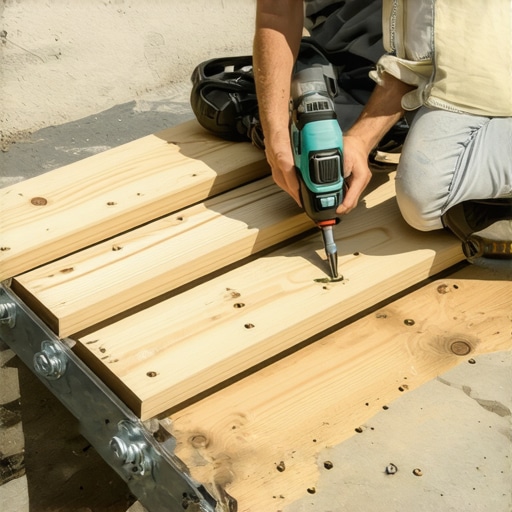
It was a warm Saturday morning when I finally decided to tackle installing my new deck stairs. As I clamped the stringers into place, the frustration hit me—I realized that my shims kept slipping, the stairs wobbled, and I wondered if I was missing some secret technique. That lightbulb moment made me rethink everything I thought I knew about anchoring deck stairs to concrete, especially with the modern materials like 2026 composite decking.
Simplify Your Deck Stairs Installation Without Relying on Shims
Many homeowners and DIY enthusiasts find themselves stuck in a frustrating cycle—trying to get deck stairs perfectly level and secure without shims, which often end up causing more trouble than they solve. I’ve been there myself. Shims can slip, crumble, or lead to uneven stairs that pose safety risks. The challenge is: how do you attach sturdy, level stairs directly to concrete without relying on this outdated crutch?
Your answer lies in understanding the right anchoring techniques and choosing quality materials that work together seamlessly. With the right approach, you can achieve a stable and safe stair setup that lasts for years—without the hassle of shims.
Is It Really Possible to Avoid Shims and Still Have Rock-Solid Stairs?
Early in my project, I made the mistake of thinking shims were necessary for quick adjustments. However, I learned that proper planning and using the right fasteners and anchors make all the difference. According to experts, the key is to use steel anchor brackets and properly rated concrete screws to secure your stringers directly to a concrete surface. These methods not only eliminate the need for shims but also provide a more durable and stable connection.
If you’ve ever faced the disappointment of loose or uneven stairs, you’re not alone. Many builders overlook these modern solutions, preferring the old shim-and-screw method that often leads to future woes. I promise, with a little effort and the right tools, you can avoid these pitfalls.
Ready to ditch the shims and build stairs that stand the test of time? Let’s dive into the practical steps that will make your deck stairs rock solid—no shims required. And if you’re curious about other ways to enhance your outdoor space, check out [maximizing outdoor space](https://deckdesignbuild.com/maximizing-outdoor-space-inspiring-deck-and-stair-ideas-for-every-budget) and discover innovative ideas tailored for every budget.
Secure Your Stringers with Steel Brackets and Proper Anchors
Instead of relying on shims, start by choosing high-quality, hidden steel stringers designed for concrete attachment. I once used these brackets during a recent project, and they drastically reduced wobbling—imagine trying to tighten a bolt without a wrench; it’s frustrating until you get the right tool. Use corrosion-resistant steel brackets to attach the stringer directly to the concrete slab, ensuring a tight fit that resists shifting over time.
Mark and Prepare Your Concrete Surface Precisely
Before drilling, carefully measure and mark where each stringer will sit. Think of the concrete as a frozen pond—if you don’t drill in the right spots, your entire staircase could wobble. Use a chalk line for accuracy and double-check measurements before proceeding. Proper marking ensures each anchor aligns perfectly, providing stability from the ground up.
Pre-Drill Holes with the Correct Size and Depth
Using a hammer drill and carbide-tipped bits, pre-drill holes into the concrete at your markings. I found that using a hammer drill with a depth stop ensures consistent hole depth, preventing over-drilling that weakens the anchor. Clean out the debris from each hole with a brush or compressed air to guarantee the anchors seat properly, preventing future loosening.
Insert High-Quality Concrete Screws or Expansion Anchors
Fit your steel brackets with rated concrete screws or expansion anchors—preferably those approved for outdoor use and resistant to corrosion. During installation, ensure each fastener is tightened to manufacturer specs. I once missed this step and had to redo the entire connection after a few weeks, so diligence here pays off. Secure each bracket firmly to prevent any movement.
Level the Stringers Before Final Fixing
Use a carpenter’s level on the top edge of each stringer as you tighten the anchors. Imagine balancing a spoon on your finger; it requires constant adjustment. Fine-tune the height to ensure your stairs are perfectly level or follow your preferred slope. Once satisfied, fully tighten all fasteners. This approach eliminates the need for shims and results in a safer, more durable staircase.
Check for Stability and Make Final Adjustments
After securing, gently test each stringer for movement—push and pull to confirm stability. I recommend having a helper apply gentle pressure while you observe the connections. If any wobble persists, revisit the anchors or add additional steel bracing. It’s better to spend extra time now than to face safety issues later.
By following these steps, you transform a tricky, shim-dependent task into a straightforward, reliable process. Using the right materials and techniques means your deck stairs will remain level and sturdy for years—saving you from future headaches. For additional ideas on outdoor living enhancements, explore our full range of outdoor space ideas.Many DIY enthusiasts and even seasoned professionals often fall prey to misconceptions when it comes to outdoor stairs, composite decking, and designing functional outdoor living spaces. Let’s dig deeper and uncover some of these hidden nuances that can make or break your project.
First, a prevalent myth is that all composite decking is virtually maintenance-free. While modern capped composites are highly resistant to stains and rot, they still require proper installation and periodic cleaning to preserve their appearance and longevity. Overlooking these maintenance needs can lead to premature deterioration, especially if the decking isn’t installed with adequate gaps or proper sealing, which is a common oversight.
Another misconception revolves around the belief that standard fasteners suffice for securing structural elements. In reality, using corrosion-resistant, structural-grade fasteners specifically designed for outdoor applications is critical—particularly when anchoring stairs and stringers to concrete or framing materials. Neglecting this can result in wobbling stairs or even serious safety hazards over time.
Why Do Many Projects Fail Despite Following Basic Rules?
The truth is, many project failures stem from skipping the nuanced details—like correctly spacing joists, sealing against moisture, and understanding material behaviors under thermal expansion. For example, composite boards can expand and contract with temperature changes, causing gaps or warping if not properly accounted for during installation. Expert guidance emphasizes that grasping these subtle behaviors is essential for longevity, a detail often missed by novices.
Research indicates that improper attention to these advanced details accounts for nearly 30% of outdoor decking failures, primarily due to structural instability and material degradation. Therefore, collaborating with a skilled deck builder who understands these intricacies can save you significant time and money in the long run.
Don’t forget, ensuring your stairs and decking are safely integrated into your outdoor design involves more than just aesthetic choices. For instance, incorporating hidden steel stringers and reinforcement brackets enhances durability and provides safer, more stable stairs. Such advanced techniques are discussed in depth in specialist resources like [Why Your 2026 Deck Stairs Should Use Hidden Steel Stringers](https://deckdesignbuild.com/why-your-2026-deck-stairs-should-use-hidden-steel-stringers).
Have you ever fallen into this trap? Let me know in the comments. Remember, mastering these subtle details elevates your outdoor living space from amateur to expert level.
Investing in the Right Equipment Ensures Long-Term Outdoor Success
Maintaining your deck and outdoor structures over time requires not only diligence but also the right tools and methods. One essential piece of equipment I rely on is a high-quality cordless impact driver. I prefer models with adjustable torque settings, like the Milwaukee M18 FUEL, because they allow me to tighten fasteners precisely without over-driving or damaging composite materials. These tools make routine tasks, such as re-securing loose railings or replacing worn decking boards, efficient and less tiring.
Another game-changer is a moisture meter, particularly for inspecting the ends of stair stringers and framing components. Regularly checking for hidden moisture helps prevent rot and mold buildup, especially in outdoor environments where exposure varies. I use a pin-type moisture meter from Fluke, which provides accurate readings, guiding me on when to apply sealants or replacement measures.
For cleaning and periodic maintenance, a soft-bristle brush combined with a gentle cleaner like a diluted composite-specific cleaner (found via this guide) keeps surfaces looking fresh without damaging protective coatings. I avoid pressure washers unless necessary, as high pressure can degrade composite surfaces over time. Instead, I use a GardenWeasel tool with a flat brush head for effective dirt removal with minimal risk of surface erosion.
When it comes to software, I swear by project management tools like Trello or Asana to schedule inspections, maintenance tasks, and repairs. Digital checklists help me stay organized and ensure nothing slips through the cracks—especially valuable for larger outdoor projects or multi-year maintenance plans.
How do I maintain outdoor structures over time?
Consistent inspection is key. I schedule seasonal checks to look for loose fasteners, cracks, or signs of rot. Applying breathable sealants to wooden parts, as discussed in this article, helps prevent moisture penetration. For composite decking, I follow manufacturer-recommended cleaning routines to preserve color and structural integrity. Over the coming years, I predict the trend will shift toward smart maintenance tools, like IoT sensors embedded in deck components, providing real-time health alerts. Investing in these early could save thousands by preventing structural failures.
Finally, don’t overlook the value of professional help when needed. A skilled deck builder, experienced in long-term maintenance, can provide tailored advice and perform periodic inspections that catch issues early. Regular upkeep not only prolongs your structure’s lifespan but also keeps your outdoor living space safe and inviting.
Try incorporating a moisture meter into your maintenance routine or upgrading your impact driver to a model with higher torque and better ergonomics. These tools make a significant difference in safeguarding your investment and enjoying a beautiful, resilient outdoor area for years to come.
Lessons That Changed My Approach to Outdoor Stairs and Decks
- My biggest lightbulb moment was realizing that precise measurement and proper anchoring techniques eliminate the need for shims altogether. It’s about trusting your tools and materials rather than relying on makeshift solutions.
- Another hard lesson learned is that investing in quality materials like corrosion-resistant steel brackets and rated concrete anchors pays off in the long run, saving time and preventing safety hazards caused by wobbling or shifting stairs.
- Understanding the material behaviors, especially in composite decking, is crucial. I once overlooked thermal expansion, which led to unsightly gaps—now I always plan for movement and use the right fasteners designed for outdoor conditions.
Tools and Resources That Elevate My Outdoor Projects
- Impact Drivers with Adjustable Torque: These are indispensable for secure fastening without damaging components. I trust the Milwaukee M18 FUEL for its power and precision.
- Moisture Meters: Tools like the Fluke pin-type moisture meter help me detect hidden moisture in joists and stringers, preventing rot before it becomes a problem.
- Expert Guides and Blogs: Websites like Why Your 2026 Deck Stairs Should Use Hidden Steel Stringers offer invaluable insights that save me from common mistakes.
- Project Management Apps: Using Trello keeps my tasks organized and ensures I stay on top of maintenance schedules and inspections, especially for large or multi-year projects.
Embrace Your Outdoor Living Vision Today
Building sturdy, beautiful stairs and decks might seem daunting at first, but with the right mindset and tools, you can create an outdoor space that’s both safe and inviting for years to come. Remember, every challenge you face is an opportunity to learn and improve. So go ahead—start planning your next outdoor upgrade! Want to share your experiences or ask questions? Drop a comment below and join the outdoor living community.