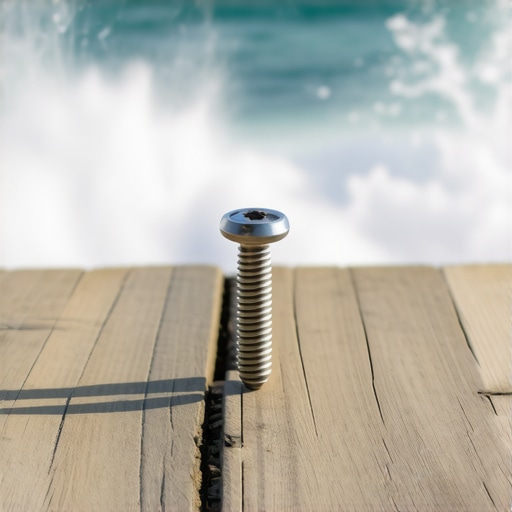
I remember the sound of the waves at that house in Cape May—and the sickening crunch of a board coming loose just three short years after I had finished the build. I had used what the clerk at the hardware store swore were weather-resistant screws. Spoiler alert: the Atlantic Ocean does not care about marketing labels. I looked down and saw screw heads snapped clean off, leaving behind nothing but jagged rust bleeding into the wood. It was a structural nightmare that kept me up at night.
The Salt Air is a Fastener’s Worst Enemy
Coastal building is a completely different beast compared to working inland. When you are a few miles from the coast, standard galvanized hardware might last you twenty years. But once you enter that salt spray zone, everything changes. I learned the hard way that trying to save a few dollars on a box of screws can lead to a massive tear-out and a frustrated client. Whether you are working with a professional deck builder or tackling a weekend DIY, you need to understand that salt air is a catalyst. It doesn’t just sit on the metal; it eats it alive from the inside out. [image_placeholder_1]
Is Spending Extra on Stainless Steel Really Necessary?
I hear this all the time. People see the price tag for 316-grade stainless steel and their eyes go wide. “Can’t I just use the coated ones?” The short answer is no. Even when you are choosing the right composite decking for a low-maintenance life, the boards are only as good as the metal holding them down. I used to think I could cheat the system by using high-end coated fasteners. I was wrong. According to the American Galvanizers Association, chloride ions in sea salt act as a massive bridge for electricity, accelerating the electrochemical process of corrosion by leaps and bounds compared to dry environments. If you want to protect your deck frame from rot and collapse, you have to start with the hardware.
Don’t Let Your Deck Skeleton Crumble
This isn’t just about those ugly orange streaks ruining your outdoor living aesthetic, though those are bad enough. It is about the structural reason your deck feels bouncy or, worse, starts pulling away from the house. When I am designing a dream outdoor space, I tell my neighbors that the hardware is the only real insurance policy they have. We spend weeks obsessing over stairs and railing colors, but we forget the tiny pieces of metal that keep it all safe. Have you ever stepped on a board and felt it “give” because the fastener beneath had simply vanished into dust? It is a terrifying feeling. Today, I am going to explain exactly why I have shifted to using the best fastener for high-moisture areas on every single coastal project I touch.
Stop Corrosion Before It Starts with 316-Grade Stainless
When you are building by the water, salt air acts like invisible sandpaper, constantly grinding away at the integrity of your metal. I once built a small landing in Avalon using standard 304-grade stainless screws. I thought I was being clever and saving twenty bucks, but six months later, the client called me back. Every single screw head had a brown ‘tear’ of rust running down the white fascia. I spent two days hand-scrubbing stains and replacing hardware. That is why I now insist on using 316-grade stainless steel, which is specifically alloyed with molybdenum to resist chloride pitting. It is the best fastener for building a deck in a high-moisture area because it simply refuses to oxidize in environments where other metals dissolve.
Seal Every Vulnerable Edge
Even the best metal cannot save a frame if the wood itself is exposed. When you make a cut on a composite board, you expose the core to the elements. I have seen cores swell like a sponge because someone skipped the sealant. You must use the best way to seal the cut ends of composite boards to keep that moisture out. The same applies to your pressure-treated frame. To truly protect your deck frame from rot for thirty years, apply butyl joist tape over the top of every beam and joist. This creates a waterproof gasket around every screw penetration, preventing the ‘black rot’ that eventually turns your joists into mush.
Secure the Structure from the Inside Out
Most people focus on the boards they walk on, but the safety of your family depends on the hidden connections. For coastal ledgers, skip the old lag bolts that can snap under stress. I have shifted to using modern structural screws, and I ensure why your deck ledger needs a tension tie to stay secure is a conversation I have with every homeowner. These ties literally lock the deck frame to the house’s internal floor joists, preventing the deck from pulling away during a heavy storm or high-capacity gathering.
Master the Hidden Fastening Strategy
In my experience, a ‘clean’ look is also a safer look. For the main surface, why i prefer hidden fasteners for poolside decks comes down to more than just avoiding hot screw heads on bare feet; it is about reducing the number of holes where salt water can pool. However, you cannot use them everywhere. This is why we use hidden clips for the field but screws for the perimeter. The perimeter boards take the most wind and physical abuse, so they need the mechanical ‘bite’ of a through-screw to stay flat. To ensure the floor remains perfectly level even as the wood frame seasons, I why i always use double joists under composite seams. It gives you a wider landing for your fasteners and prevents those annoying ‘lips’ where two boards meet. When it comes to the stairs, don’t just rely on gravity and a few toe-nailed screws. Use the bracket that makes your deck stairs feel rock-solid to tie the stringers directly to the frame. In a coastal environment, that extra bit of steel reinforcement is the difference between a staircase that lasts a decade and one that starts leaning after the first hurricane season.Most homeowners are sold on the idea that composite is a ‘set it and forget it’ product. In my experience, that mindset is exactly how you end up with a failing structure. While the boards themselves don’t rot, they are far more sensitive to thermal movement than pressure-treated lumber.
Maintenance-Free is a Dangerous Marketing Lie
I always have to manage expectations when discussing the truth about maintenance-free decking claims. If you don’t keep the gaps between your boards clear of organic debris, you are creating a petri dish for mold that can rot your joists. Even the most expensive boards require a regular rinse to prevent the accumulation of salt and tannins that can lead to permanent staining.
Why Your Deck Grows an Inch Every Summer
One of the biggest mistakes I see is failing to account for linear expansion. Wood expands mostly in width, but composite expands significantly in length. If you install your boards on a 40-degree morning and do not leave a gap, those boards will buckle like a mountain range by noon in July. This is why your composite boards are expanding more than expected. I have seen 20-foot runs move nearly half an inch over a single season.
Can I build a composite deck directly over concrete?
This is the most common ‘advanced’ question I get. The answer is yes, but only if you have perfect drainage and airflow. A ‘sleeper’ system on concrete is a high-risk move because it traps moisture against the frame. Research from the Forest Products Laboratory highlights that composite materials require air circulation on all four sides to maintain dimensional stability. Without it, the heat buildup from the concrete can actually warp the underside of the boards and accelerate frame rot. This is a nuance many DIYers miss, but any professional deck builder will tell you that airflow is as vital as the fasteners.
Stop the Stealth Rot Hiding Under Your Stairs
We often obsess over the main floor but ignore the anatomy of the steps. I see a lot of contractors over-cutting their stringers to save time, which is why your deck stair stringers are cracking at the throat. When that wood splits, it is not just a squeak—it is a collapse waiting to happen. In a coastal environment, moisture sits in those cracks and rots the stringer from the inside. You should always use double blocking in the middle of a long stair run to keep things rigid and secure. If you have already noticed a slight lean in your steps, you need to look at the structural reason your stairs feel like they are leaning before a guest takes a tumble. Have you ever fallen into this trap or noticed your boards buckling in the summer sun? Let me know in the comments.
Visualize the Build Before the First Board is Cut
I have found that the biggest source of client anxiety—and my own stress—is the fear that the finished product won’t look like the dream. That is why I never start a complex deck project without a digital 3D walkthrough first. It is more than just a fancy presentation; it is a diagnostic tool. By modeling the joists, the stairs, and the railing layout in three dimensions, I can spot structural conflicts before I ever pick up a saw. If you are a DIYer, use a digital designer to map out your dream outdoor space. It ensures that when you start choosing the right composite decking, you know exactly how many linear feet you need, down to the inch.
Stop Relying on Your Eye and Get a Precision Laser
I used to be a ‘string and bubble’ guy. I thought a 4-foot level and some masonry twine were all I needed. I was wrong. A high-end green-beam line laser changed everything. While there is a trick to how to level a deck frame on uneven ground without using a laser, using one allows you to set every single post to within a sixteenth of an inch. When your frame is that level, the structural reason your deck feels bouncy often disappears because the boards are making full contact with perfectly flat joists. Precision at the framing stage means your stairs won’t have that annoying ‘hitch’ in the step, and your railings will sit perfectly plumb. Speaking of railings, I’ve moved away from standard hardware for posts. I swear by the bolt pattern that finally stops railing post wobble for good, which involves specific offset spacing that distributes the leverage more evenly across the rim joist.
How can I keep my deck from looking aged and worn?
This is the maintenance hurdle everyone wants to jump over. The North American Deck and Railing Association (NADRA) emphasizes that an annual safety inspection is non-negotiable, particularly for decks over five years old. Beyond safety, aesthetic maintenance is about the right chemicals. I have seen people ruin their finish by using high-pressure power washers or harsh bleach. If you have a BBQ spill, you need to know how to clean grease stains off composite without ruining the finish—usually involving a soft-bristle brush and a pH-neutral degreaser. Remember, the truth about maintenance-free decking claims is that ‘low maintenance’ still means ‘some maintenance.’ If you ignore the pine needles and dirt that collect in the gaps, you are inviting moisture to sit against your fasteners.
Protect Your Investment with Proper Airflow
As we look toward the future of outdoor living, I predict we will see more integrated technology, like built-in sensors for moisture detection in the frame. Until then, we rely on good old-fashioned physics. Ensure you have at least 50% open area around the perimeter of your deck base for cross-ventilation. This simple move, combined with a professional deck builder approach to joist taping, can double the lifespan of your substructure. My advanced tip for you this week: Before you install your last board, take a photo of the entire open frame with a tape measure visible. It becomes your ‘X-ray’ map for the future if you ever need to mount a heavy planter or repair a hidden connection.
Hard-Won Secrets From Two Decades of Coastal Building
After years of trial and error on the Jersey Shore, I have learned that the invisible components are always more important than the visible ones. First, never underestimate the power of documentation; taking a photo of your framing before the boards go down is the best gift you can give your future self. Second, airflow is your best friend. If you seal off the bottom of your deck completely, you are essentially building a slow-cooker for rot. Finally, remember that ‘low maintenance’ is not a synonym for ‘no maintenance.’ Even the most expensive custom composite decking ideas require a simple seasonal wash to keep salt and grit from grinding down the finish.
My Shortlist for a Bulletproof Build
If you are gearing up for your next project, these are the three things I never step onto a job site without. For framing, I have completely ditched old-fashioned hardware in favor of structural screws instead of lag bolts because they offer superior shear strength and easier installation. To fight the inevitable moisture, I rely heavily on butyl joist tape to protect your deck frame from rot for thirty years. Lastly, keep a bottle of pH-neutral cleaner handy; knowing how to clean grease stains off composite without ruining the finish is a lifesaver when that first summer BBQ gets a little messy. [image_placeholder_e]
Your Backyard Legacy Starts Under the Boards
Building a deck is about more than just square footage; it is about creating a stage for your family’s best moments. Whether you choose to do it yourself or see the benefits of working with a professional deck builder, the goal is to build something that lasts as long as the memories you make on it. Don’t be intimidated by the technical details. Once you master the fasteners and the framing, the rest is just the finishing touches on your dream home. Have you ever pulled up a board only to find the hardware had completely disappeared into a pile of rust? Drop your coastal building horror stories in the comments below!