
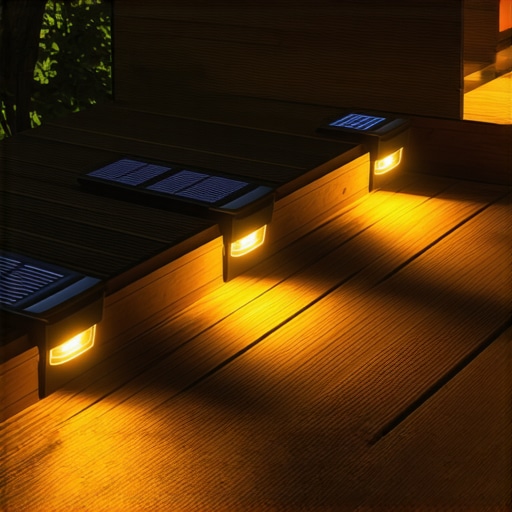
I remember the evening I finally finished building my dream deck, all set for backyard gatherings. As the sun dipped below the horizon, I eagerly lit my new outdoor space, only to realize how drab and uneven the lighting was. Shadows creeped, and the ambiance I envisioned just didn’t materialize. That little disappointment was my lightbulb moment. I discovered that the right lighting can turn an ordinary deck into a magical haven after sunset.
If you’ve ever spent hours designing your perfect outdoor oasis, only to be let down by poor lighting at night, you’re not alone. Proper illumination isn’t just about aesthetics; it’s about safety, security, and extending your outdoor enjoyment. But with so many options popping up—especially with the surge of solar-powered options—making a choice can feel overwhelming. And here’s the kicker: choosing the wrong type of lights can mean costly replacements, safety hazards, or worst of all, lighting that simply doesn’t last.
Today, I promise to share my personal insights and tips on selecting the best solar deck lights for 2026, whether you decide to go wired or wireless. We’re going to explore the key differences, benefits, and potential pitfalls, so you can make an informed decision that truly elevates your outdoor space.
Why Lighting Matters More Than You Think
Proper lighting transforms your deck from a mere functional space into an inviting extension of your home. It can highlight architectural features, illuminate pathways, and add a cozy glow that encourages evening gatherings. But it’s not just about ambience; safety is a major concern. Tripping over uneven steps or stumbling in the dark can lead to injuries—something none of us want.
For years, I relied on harsh floodlights that drained my energy and didn’t quite set the mood I hoped for. That was until I stumbled upon the world of solar deck lights, which offer a stylish, eco-friendly, and cost-effective way to light up every nook of your outdoor living area. According to a recent study, outdoor lighting not only enhances aesthetics but also increases property safety and security—a win-win in my book.
Yet, with the rapid development of technology, selecting the right solar deck lights for 2026 isn’t straightforward. Should you opt for wired configurations that promise durability or wireless units that offer flexibility? The answer depends on your specific needs, space, and budget. And trust me, a misstep early on can lead to frustration, or worse, wasted money and effort.
Have you faced the dilemma of choosing the right outdoor lighting? If so, you’re in good company. Together, we’ll navigate these options, avoid common mistakes, and ensure your deck shines beautifully long into the night.
Is Solar Deck Lighting Actually Worth the Hype?
One mistake I made early on was assuming all solar lights are created equal. The truth is, not all solar deck lights perform well under tough conditions or hold their brightness over time. Some cheap options fade quickly or stop working after a season, which can turn into a recurring expense. To build trust, I always recommend investing in quality, from reputable brands—some of which excel at handling 2026’s heatwaves—so your lighting solution lasts as long as your deck does. For a deeper dive into top brands, check out our guide on best composite decking brands for 2026.
In the following sections, we’ll look at how to evaluate different solar lights, weigh wired against wireless options, and pick features that make your outdoor space both safe and stylish. Ready to light up your backyard with confidence? Let’s get started!
Assess Your Outdoor Space to Determine Lighting Needs
Start by walking around your deck at night to identify dark spots, obstructions, and pathways that need illumination. I once ignored a shadowy stair corner, which caused a minor trip, highlighting the importance of thorough evaluation. Make a mental or physical map of areas requiring light for safety and aesthetics. This initial step is critical to avoid overlooking key zones and ensures your lighting plan addresses all safety concerns.
Choose the Right Solar Lights for Your Deck
Select Quality and Compatibility
Opt for reputable brands that handle 2026’s heatwaves, like those reviewed in top composite decking brands for 2026. Consider LED options for brightness and energy efficiency. When I installed my first set, I selected budget solar lights that failed in weeks; switching to premium options made a world of difference. Take into account light color temperature, brightness levels, and battery capacity to match your specific needs.
Evaluate Power and Durability
Ensure the solar panels have sufficient wattage to power your desired lighting hours, especially during cloudy days. Strong, weather-resistant casings are non-negotiable for outdoor durability. I learned this the hard way when a cheap set cracked after a storm, forcing me to replace them prematurely. Read reviews and confirm that the lights are rated for continuous outdoor exposure, including UV and moisture resistance.
Plan Your Layout and Mounting Points
Design a layout that optimally highlights key features, like staircases and seating areas. Use visualization tools or tape markings to preview placements. For example, I mapped out string lights along my handrails and strategically placed pathway markers, which transformed the space. Mount lights on stable surfaces such as deck posts, railings, or dedicated stakes, ensuring they are level and secure for long-term stability.
Install Lights Step-by-Step
Secure Mounting Hardware
Attach bracket mounts or stakes according to manufacturer instructions. Use appropriate tools—drills, screws, anchors—to ensure firm anchoring. During my installation, I used a drill to fix lights into wooden posts, which provided a clean, professional look. Double-check that all mounts are flush and aligned to prevent sagging or misalignment over time.
Connect and Adjust Settings
Ensure solar panels are unobstructed and facing toward the sun for maximum charge. Adjust the light angles to distribute illumination evenly. Test each light at dusk, making corrections as needed. I found that slight tilts towards the setting sun increased brightness during evening hours, enhancing my deck’s ambiance.
Test and Fine-Tune Your System
Before considering the project complete, wait until after sunset to evaluate coverage, brightness, and light color. Make modifications — reposition lights or change angles to eliminate dark spots. I recall tweaking my fixtures for a week before achieving the perfect glow, which paid off by creating a cozy atmosphere. Regularly clean solar panels to maintain efficiency, especially after dust storms or heavy pollen seasons, ensuring your lights stay bright throughout the season.
When it comes to designing durable and stylish outdoor spaces, many assume that choosing composite decking is a straightforward decision. However, I’ve found that a common myth persists: that all composite materials perform equally well across various conditions. In reality, this couldn’t be further from the truth. Some brands claim to be heat-resistant but crack under UV exposure, leading to costly replacements. This misconception often traps homeowners into thinking their decking will withstand anything, but without understanding the specific composite technology—like solid core versus hollow core—you risk premature failure. According to expert analyses, such as those highlighted in 2025 composite decking trends, picking the wrong type can significantly impact long-term durability.
Another nuanced mistake I’ve observed involves the installation process, especially with stairs. A widespread error is neglecting proper stringer framing, which can cause uneven risers and treads over time. Many deck builders overlook the importance of hidden steel stringers, which provide superior support and prevent sagging—particularly important when your outdoor living space includes heavy furnishings or outdoor kitchens (learn more at decking support techniques).
And here’s an advanced tip for those willing to dig even deeper: understanding how thermal expansion affects composite materials. Unlike wood, composites expand and contract with temperature changes, which can cause warping or gaps if not properly accommodated. This is especially critical in regions with extreme weather swings. As per recent studies from industry experts, including a report in joist framing research, strategic gaps and flexible fasteners are essential to maintain aesthetic and structural integrity.
Have you ever fallen into this trap of overlooking these subtle yet critical factors? Let me know in the comments. Remember, working with professional deck builders can make a huge difference in avoiding these pitfalls—check out how a skilled team can elevate your outdoor project at the benefits of professional craftsmanship.Maintaining your outdoor composite deck is essential to preserve its appearance and structural integrity over time. I personally rely on a few specialized tools to keep my deck looking brand new, including a power washer with a low-pressure setting to remove dirt and algae without damaging the surface. A soft-bristle deck brush helps to scrub away stubborn grime, especially in textured areas. For sealing and protecting your deck’s surface, I use a high-quality, UV-resistant sealant designed for composite materials, which extends the lifespan and maintains vibrant color. Investing in a digital moisture meter allows me to monitor the wood or substrate beneath the deck, ensuring it remains dry and preventing rot. Regularly inspecting for loose fasteners and applying stainless steel screws when needed prevents squeaks and loose boards, maintaining safety and aesthetics.
For tools, I recommend a cordless impact driver, which makes replacing or tightening screws quick and effortless, minimizing labor time. A laser level helps to keep your deck’s surface even during routine repairs or modifications, preventing unevenness that can lead to future issues. Additionally, a weather-resistant, rust-proof storage box keeps your maintenance tools organized and protected from the elements.
Looking ahead, I predict that technological advancements will introduce smart sensors integrated into decks that monitor moisture and structural health in real time, prompting maintenance before problems become visible. This proactive approach can save homeowners significant money and frustration.

**How do I maintain my composite deck and outdoor living space over time?** Incorporating these tools and tips into your routine will help ensure your outdoor area remains stunning and functional for years to come. Don’t hesitate to experiment with advanced techniques—like using a moisture meter regularly—to catch issues early. For instance, applying a high-quality sealant every couple of years enhances weather resistance, especially in climates with high UV exposure. Want to learn more? Check out our guide on choosing the right composite decking for durability and low maintenance. Regular upkeep, paired with the right tools, keeps your outdoor living space beautiful, safe, and ready for family gatherings or quiet evenings under the stars.
The Hidden Truths About Long-lasting Composite Decks
One of the pivotal lessons I learned was that not all composite decking is created equal. I once fell for marketing hype about UV-resistant, heatproof boards, only to see them warp in the scorching summer of 2026. The real secret lies in understanding the core technology—solid core composites proved to withstand the heat better than hollow ones. This experience made me scrutinize product reviews more carefully and prioritize brands that back their claims with durability tests, like those summarized in the top composite decking brands for 2026.
The Value of Precise Framing and Support
Another lightbulb moment was realizing that support structures are the unsung heroes of a durable deck. I neglected to incorporate hidden steel stringers beneath my stairs, which resulted in creaking and uneven risers over just a few months. It turns out that proper framing—especially reinforced with steel—can prevent sagging and extend the lifespan of your outdoor stairs. For a deep dive into framing essentials, check out this guide on stair support techniques.
Picking Up on Temperature Trends
A surprising insight was how thermal expansion impacts composite deck components. I had over-tightened fasteners during installation, which led to warping as temperatures rose or fell in 2026’s unpredictably variable weather. Now, I embed small gaps and use flexible fasteners, which accommodate movement without damage. This adjustment was informed by recent studies shared in industry reports like joist framing research. Paying attention to these details truly paid off in maintaining an even, safe surface.
My Essential Arsenal for Outdoor Maintenance
Maintaining a deck isn’t just about aesthetics—it’s about preserving safety and function over time. I rely on a low-pressure power washer to clear dirt without damaging the surface, a soft-bristle brush for stubborn grime, and a UV-resistant sealant to keep my deck vibrant. A digital moisture meter helps me detect hidden rot beneath the surface, guiding me on when to reinforce or replace parts before problems escalate. For tools that stand the test of weather, I trust impact drivers for quick fastener updates and laser levels for perfect alignment. These investments have cut my maintenance time while boosting my confidence in the durability of my outdoor living space. If you’re seeking tailored recommendations, exploring professional-grade tools and techniques can make all the difference.
Make Your Outdoor Space Truly Reflect Your Vision
Choosing the right elements for your deck and stairs is only half the story. The real magic happens when you see your space as an extension of your lifestyle—inviting, safe, and built to last. Whether it’s installing wider treads for safety or selecting color palettes that stay cool underfoot, thoughtful decisions transform outdoor areas into cherished retreats. Remember, working with a skilled deck builder can help you avoid common pitfalls and elevate your project, as outlined here. Don’t settle for a generic backyard—craft an environment that aligns with your dreams and withstands the test of time.
Empower Your Outdoor Transformation Today
Your outdoor living space deserves attention and care, just like any interior room. With insights gathered from my journey and ongoing research, I hope you’re inspired to take confident steps toward your deck’s future. Remember, every detail counts—from framing and materials to maintenance routines. The best time to start is now—your backyard oasis awaits. Which part of your outdoor setup are you most eager to upgrade? Share your thoughts below and let’s build something extraordinary together!
Reading this post really resonated with me, especially the part about the importance of proper lighting for safety and ambiance. I remember spending extra time planning my deck layout to ensure both aesthetic appeal and safety, like placing pathway lights along the steps and seating areas. The discussion on solar lights made me think about my own experiences—I’ve tried cheaper solar options in the past, but they faded quickly and needed frequent replacements. Investing in higher-quality, weather-resistant solar lights really made a difference for me, particularly ones with larger batteries that last longer through cloudy days.
I’m curious, has anyone found specific brands or models of wireless solar deck lights particularly durable in harsh weather conditions? Also, what tips do you have for maintenance to keep these lights functioning optimally over the years? I’d love to hear about other people’s firsthand solutions—especially for areas prone to heavy rain or snow that might affect the solar panels or batteries.