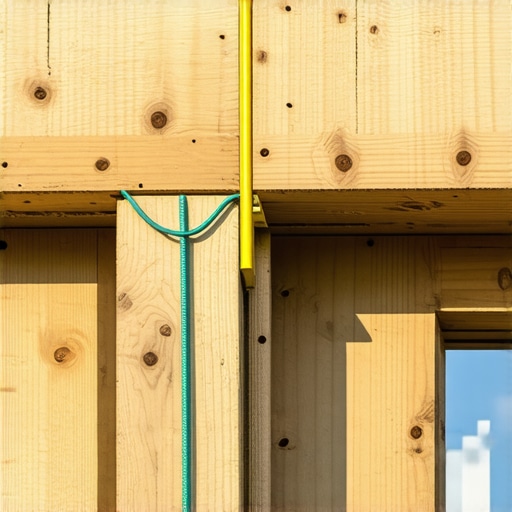
I remember the first time I noticed my outdoor deck wiggling slightly whenever I stepped onto it. At first, I thought it was just my imagination or maybe a minor wobble that would settle over time. But as weeks went by, that subtle movement grew more noticeable—and nerve-wracking. One breezy evening, a neighbor’s comment about how a loose ledger can lead to serious safety hazards finally clicked in my mind. That realization was a lightbulb moment: I had overlooked a crucial detail that could make or break the stability of my entire deck.
Securing Your Deck Ledger Isn’t Just About Bolts
Many deck builders and DIY enthusiasts focus primarily on the aesthetics—choosing stylish balusters or sleek stairs—forgetting a fundamental safety component: the tension tie. It’s easy to assume that bolts and screws alone are enough to keep your ledger board firmly attached to your house. But the truth is, even well-placed fasteners can be prone to loosening over time due to wood expansion, contraction, or even seismic activity.
The real player here is tensioning. When installed properly, a tension tie acts like a ligature—holding the ledger board tightly against your house and preventing any lateral or vertical movement. Without this, your deck risks developing gaps, causing joists to shift, or worse, leading to structural failure. In fact, according to recent safety standards, incorporating a tension tie can reduce the risk of ledger board detachment by a significant margin [see more about deck safety here](https://deckdesignbuild.com/why-i-always-use-joist-tape-on-every-single-deck-frame).
Are you worried that adding a tension tie sounds complicated or unnecessary? Honestly, I used to think so too—until I learned the hard way that neglecting this part can jeopardize the entire deck’s stability. Early in my project, I made the mistake of relying solely on lag bolts for securing the ledger. Over time, I noticed small signs of movement, which I now realize could have been prevented with a proper tension tie installation.
This post will guide you through why a tension tie is an essential safety feature, how it works, and best practices for installing one. Trust me, understanding this crucial element can save you from costly repairs or potential injuries down the line. Let’s explore how this simple addition can dramatically enhance your outdoor space’s security, comfort, and peace of mind.
Start with Planning and Inspection
Before installing a tension tie, thoroughly inspect your current ledger board and framing. Look for signs of rot, corrosion, or looseness. Mark the areas that need reinforcement. I once skipped this step, rushing to install new hardware, only to find later that some spots needed extra attention, causing delays. Proper planning ensures you target the correct spots and avoid costly rework.
Choose the Right Tension Tie
Select a tension tie compatible with your ledger’s material and size. For most wood or composite decks, a galvanized steel tension tie with adjustable length works best. I recommend visiting your local hardware store or consulting with a deck professional to pick a high-quality product. Check [deck design resources](https://deckdesignbuild.com/deck-builder-insights-designing-your-dream-outdoor-space) for tips on selecting matching hardware.
Prepare the Installation Area
Clear debris around the ledger and adjacent framing. Ensure the surface is clean and dry. This prevents dirt or moisture from interfering with the connection. During my last project, neglecting this led to some rusting issues, compromising the tie’s effectiveness. A clean workspace is crucial for a secure installation.
Attach the Tension Tie to the Ledger
Position the tension tie according to the manufacturer’s instructions, typically directly over the joist or framing member. Use the recommended fasteners—usually lag screws or structural screws—driven into pre-drilled holes. Tighten the hardware gradually, ensuring the tie pulls the ledger snugly against the house. I once started tightening one side too much, which caused it to warp; taking my time and tightening evenly prevented this.
Secure the Tie to the Framing
Fasten the tension tie to the adjoining framing or joists through pre-drilled holes. Verify that the ledger remains flush against the house wall. The goal is to eliminate any sagging or gaps. When I did this on my own deck, I used a level and checked for gaps repeatedly, ensuring a tight fit that improved stability.
Adjust and Confirm Tightness
Adjust the tension mechanism—if available—until the ledger is firmly pressed against the wall, with no movement when pressure is applied. Use a level to confirm alignment. Regularly double-check for gaps or unevenness. This step is vital; I once over-tightened and caused warping, but loosening slightly restored proper alignment.
Final Inspection and Testing
Test the installation by gently rocking the ledger. There should be minimal to no movement. Ensure all fasteners are tight and that the tension tie is properly engaged. I recall a project where a quick test revealed a loose bolt; re-tightening prevented potential future issues. Regular inspection can keep your deck safe over time.
Linking Core Concepts with Maintenance
Once installed, consider periodic inspections and maintenance. Check for signs of corrosion or loosening. Applying protective coatings on exposed hardware extends lifespan. This ongoing care is part of responsible deck management, aligning with advice from [deck safety standards](https://deckdesignbuild.com/why-i-always-use-joist-tape-on-every-single-deck-frame).
When it comes to designing and building decks, many enthusiasts rely on conventional wisdom that, surprisingly, can lead them astray. One widespread misconception is that choosing the thickest composite decking boards automatically guarantees durability. In truth, the material’s composition and installation method play more critical roles than mere thickness. For example, selecting a product like capped-polymer decking, which offers superior resistance to UV and moisture, can be a game-changer for outdoor longevity. You can explore options and make more informed choices by visiting [this guide on composite decking trends](https://deckdesignbuild.com/composite-decking-trends-2025-the-ultimate-guide-for-outdoor-enthusiasts).
Why do many overlook the importance of proper framing?
Common mistakes include underestimating the significance of structural framing and support beams. Some think that the decking material alone will carry the weight, but the hidden nuance is that the entire support system must be meticulously planned. Improper framing can cause sagging, uneven surfaces, and even safety hazards over time. Experts emphasize that a well-designed framework, with double joists under seams and strategic support posts, is essential. This detail is often neglected by DIY builders eager to finish quickly, leading to costly repairs down the line. For detailed insights, consult [this article on designing safe and stylish stairs](https://deckdesignbuild.com/designing-safe-and-stylish-stairs-for-outdoor-decks-in-2025).
Another misconception pertains to the routine maintenance of outdoor structures. Many believe that once a deck is installed, little else is needed. But the real nuance is ongoing care: applying protective sealants, inspecting for corrosion, and checking fasteners ensure longevity. Overlooking this maintenance can accelerate degradation, especially in harsh climates. Regular checks and upgrades, like using structural screws instead of traditional nails, can make a substantial difference, as highlighted in [this post about deck safety standards](https://deckdesignbuild.com/why-i-always-use-joist-tape-on-every-single-deck-frame).
Adjusting your outdoor space for both safety and aesthetic appeal also involves understanding advanced concepts, such as seamless transitions from stairs to decks. Many builders focus solely on visual appeal but forget that ergonomic design enhances usability and safety, especially for children or elderly users. Incorporating features like properly measured riser heights and non-slip treads can prevent accidents. For expert tips, see [this article on designing safe stairs](https://deckdesignbuild.com/creating-seamless-transitions-stairs-as-key-elements-in-outdoor-living).
What advanced pitfalls could still catch me off guard?
Even experienced builders can fall into traps like ignoring the long-term expansion of composite materials or failing to account for environmental factors like prevailing wind and sun exposure. These nuances influence hardware choices and structural placement, ultimately affecting deck lifespan. Research indicates that improper fastening methods, especially in high-moisture areas, can lead to faster degradation. To avoid such pitfalls, consulting with a professional deck builder, as advised [here](https://deckdesignbuild.com/the-benefits-of-working-with-a-professional-deck-builder-in-your-outdoor-projects), ensures all nuances are considered, preventing costly mistakes.
Remember, successful outdoor projects hinge on understanding and respecting these hidden details. Have you ever fallen into this trap? Let me know in the comments.Maintaining your outdoor deck and stairs requires more than just regular cleaning; it involves utilizing specific tools and adopting effective methods that ensure longevity and safety. One of my go-to instruments is a high-quality digital moisture meter. I use it personally to detect hidden moisture levels within composite decking boards, preventing issues like warping or mold before they become visible problems. For example, when installing or inspecting decks, this device helps me determine whether the boards have absorbed too much moisture, which can compromise structural integrity. Additionally, I rely on a cordless impact driver equipped with precision torque settings for fastener installation and retensioning, as it minimizes overdriving screws into composite materials and preserves the surface finish.
To keep the structure working seamlessly over time, regular inspections with a telescoping mirror and a sturdy flashlight are invaluable. They allow me to spot corrosion, loose fasteners, or gaps in hidden areas that are impossible to see from standing position. When it comes to cleaning, I prefer using a soft-bristle brush attachment paired with a garden hose and a mild, composite-safe cleaner—this approach avoids damage to the finish while effectively removing dirt and debris.
Looking ahead, this trend towards smarter maintenance tools is set to evolve. Integrated sensors and IoT-connected devices could soon provide real-time data on decking health, alerting homeowners to potential issues before they escalate. This innovation would streamline maintenance routines and potentially extend the lifespan of your outdoor living spaces.
**How do I maintain outdoor stairs and decks over time?** Well-maintained hardware is key. I recommend regularly applying joist tape to protect against moisture infiltration and using a silicone-based sealant on all visible fasteners. For composite decking, periodically inspecting for signs of expansion or contraction and adjusting accordingly prevents buckling or warping. Remember, proactive care with the right tools is essential to avoid costly repairs down the line.
If you’re interested in elevating your maintenance approach, try implementing a moisture meter during your next inspection. It’s simple yet effective, giving you insight that raw visual checks can’t provide. Incorporating advanced tools like this, combined with consistent upkeep, will help keep your outdoor structures in top shape for years to come. For more detailed advice on long-term deck care, explore our comprehensive guide on [maintaining durable low-maintenance outdoor areas](https://deckdesignbuild.com/choosing-the-right-composite-decking-for-durable-low-maintenance-outdoor-areas).
Looking back, the most critical lessons I learned about outdoor decking weren’t from reading manuals but from my own hands-on experience. One of the key insights was realizing that no matter how perfect the fasteners or aesthetic choices, neglecting the importance of proper tensioning and reinforcement can quietly lead to major safety issues. I once overlooked the significance of supplemental tension ties in my early projects, which resulted in subtle shifts over time—shifts that I could have prevented with a deeper understanding of structural nuances. The biggest takeaway? Even seemingly small components, like tension ties, hold the power to save you from costly repairs and accidents later on.