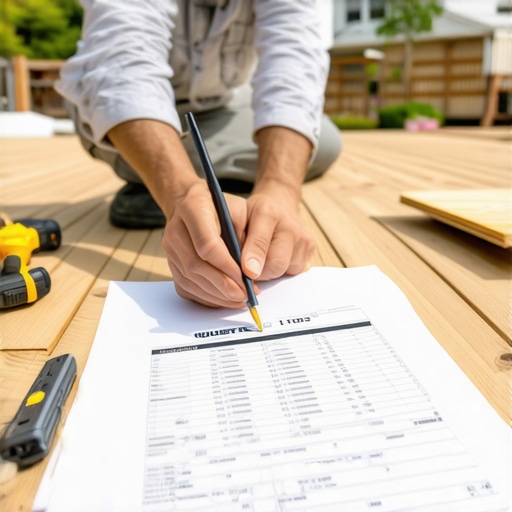
The Real Reason Your Trex Decking Quote Is Higher Than the Board Prices
It happens almost every week. A homeowner calls me, excited about upgrading their outdoor living space. They’ve spent the weekend at a big-box retailer, walking the aisles and spotting a Trex Transcend or Select board priced at maybe $5 to $8 per linear foot. They do some quick “Home Depot math,” multiply that by their deck’s square footage, add a little extra for “screws and stuff,” and arrive at a figure. Then, they receive a professional quote from us at Deck Design Build, and the number is three, four, or even five times what they expected.
I understand the sticker shock. As someone who has spent over 30 years in landscape construction and residential design, I’ve seen the industry evolve from simple pressure-treated platforms to complex, high-performance outdoor environments. The reality is that the “boards” you see on the shelf represent only about 20% to 30% of a professional project’s total cost. When you hire a professional deck and patio builder, you aren’t just buying plastic and wood fiber; you are investing in an engineered system designed to last 25 to 50 years.
If you’re wondering why your Trex decking installation cost seems high, let’s pull back the curtain. I’m going to break down exactly where that money goes, from the skeleton beneath your feet to the precision labor required to make a composite deck look like a piece of high-end furniture.
The Skeleton: What’s Happening Under the Boards
The most common mistake homeowners make is assuming that the “deck” is just the surface they walk on. In reality, the surface is only as good as the substructure supporting it. When we perform a patio renovation that involves a new deck, the framing is where the integrity – and a significant portion of the cost – lies.
Composite decking, like Trex, is heavy. It’s also more flexible than traditional wood. If you install Trex on a frame designed for wood, you often end up with a “bouncy” deck. While building codes might technically allow for 16-inch on-center joist spacing for some materials, The Joist Spacing Truth: Why 16 Inches is Often Too Much is a reality I deal with daily. For a premium, stiff feel underfoot, I almost always recommend 12-inch on-center spacing. This requires more lumber, more hardware, and more labor, but it prevents the “wavy” look that plagues DIY composite installs.
Furthermore, because composite decking lasts so long, the frame needs to match that lifespan. Standard pressure-treated lumber is rated for 10 to 15 years before rot starts to set in. To ensure your frame lasts as long as your Trex boards, Why I always use joist tape on every single deck frame is a non-negotiable standard for my crew. This butyl tape seals the top of the joists against moisture, effectively doubling the life of the skeleton. It’s an added material and labor cost that you won’t see reflected in the price of a single board at the store.
Labor: Why Composite Installation is a Precision Craft
Installing Trex is not the same as “slapping down” pressure-treated 2x6s. If you’re talking to patio contractors who give you a suspiciously low labor price, they are likely treating composite like wood, which is a recipe for disaster. Professional Trex decking installation cost accounts for a level of precision that wood simply doesn’t require.
The Complexity of Hidden Fasteners
Most modern Trex decks utilize hidden fastener systems, such as TC-G clips. These clips fit into grooves on the side of the boards, creating a smooth, screw-free surface. While this looks incredible, it takes significantly longer to install than driving a screw through the face of a board. Every single clip must be set, aligned, and tightened. When you consider Why I Always Use Hidden Fasteners on Modern Deck Designs, you have to account for the 30% to 50% increase in labor time compared to traditional fastening methods.
Thermal Expansion and Precision Gapping
Wood shrinks and expands mostly in width; composite expands and contracts primarily in length. If a contractor doesn’t understand the specific gapping requirements based on the ambient temperature during installation, your deck will buckle in the summer or leave massive gaps in the winter. We spend hours calculating these tolerances and making precision cuts. Scribing boards against irregular stone siding or complex house corners is a master-level carpentry task. It’s the difference between a deck that looks “built-in” and one that looks like an afterthought.
The “Hidden” Material List
When you see a price for a Trex board, you aren’t seeing the mountain of hardware required to actually build the structure. Here is a breakdown of the materials that often surprise homeowners when they see an itemized quote:
- Structural Screws: We have moved away from traditional carriage bolts for ledger attachments and post-to-beam connections. Why I use structural screws instead of carriage bolts comes down to sheer strength and code compliance, but these high-performance fasteners cost significantly more than standard hardware.
- Concrete Footings: A deck is only as stable as the ground it sits on. We dig deep – often 36 to 48 inches depending on the frost line – to ensure the deck doesn’t heave. This involves excavation, gravel, concrete, and heavy-duty post bases.
- Fascia and Riser Boards: To get that clean, finished look, we use Trex fascia boards to cover the pressure-treated rim joists. Fascia boards are thinner and wider than decking boards and are surprisingly expensive. However, without them, your deck looks unfinished.
- Ledger Flashing and Hardware: Protecting your home from rot is our first priority. We use high-grade flashing systems and specialized hardware to ensure the deck-to-house connection is watertight and structurally sound.
Beyond the Flat Surface: Railings, Stairs, and Lighting
If your deck is more than 30 inches off the ground, you need a railing. This is often where the biggest price jump occurs. Homeowners are frequently shocked to learn that a high-quality railing system can cost as much – or more – per linear foot than the decking itself. Whether you are choosing a patio and pergola combination or a standalone deck, the vertical elements are labor-intensive.
Stair construction is another area of hidden cost. Building a set of “wrap-around” stairs or wide, cascading steps requires complex stringer calculations and significantly more framing material than a flat surface. Then there is the matter of integrated lighting. Adding low-voltage LED riser lights or post-cap lights transforms a deck at night, but it requires a dedicated transformer, outdoor-rated wiring, and hours of careful routing and installation by a skilled technician.
Many of our clients also look into adding a patio roof or an enclosed patio feel to their deck. If you are considering an Alumawood cover or a custom timber frame over your Trex deck, the engineering requirements for the deck’s footings change immediately. We have to design the deck to support the “live load” and “dead load” of the roof above, which means beefier posts and larger footings.
Comparison: Trex vs. Ipe vs. Traditional Wood
When evaluating the cost, it’s helpful to look at the alternatives. Choosing the Right Composite Decking for Durable, Low-Maintenance Outdoor Areas is about balancing upfront cost with long-term value.
If you look at Ipe, a premium Brazilian hardwood, the material cost is often higher than Trex, and the labor is astronomical because the wood is so dense it requires pre-drilling every single hole. While Ipe can last 50+ years, it requires annual oiling to maintain its color. Trex, on the other hand, provides a “zero-maintenance” lifestyle. You might pay more upfront than you would for pressure-treated wood, but you save thousands over the life of the deck by never having to sand, stain, or seal it.
According to Composite Decking Trends 2025: The Ultimate Guide for Outdoor Enthusiasts, homeowners are increasingly prioritizing their time. They would rather pay a professional deck and patio contractor for a high-quality Trex install once than spend every third weekend of their summer maintaining a wood deck.
Administrative & Overhead Costs: The Price of Professionalism
Finally, we have to talk about the costs that don’t involve a hammer or a saw. A professional deck and patio builder carries significant overhead that protects you, the homeowner. This includes:
- General Liability and Workers’ Comp Insurance: If a worker is injured on your property or if a deck fails, you are protected. “Chuck in a truck” might be cheaper, but you assume all the risk.
- Permits and Inspections: We handle the entire permit process. The hidden cost of building a deck without a permit can include fines, the forced removal of the structure, or issues when you try to sell your home.
- Waste Removal: Demolishing an old deck and disposing of the debris properly costs hundreds (sometimes thousands) in dump fees and trucking.
When you see a quote from us, it isn’t just a markup on materials. It is a comprehensive price that covers the management of a complex construction project from start to finish.
Conclusion
A Trex deck is a significant investment, often comparable to a high-end kitchen remodel. While “Home Depot math” might make the project seem simple, the reality of engineering, precision labor, and high-performance hardware tells a different story. Quality costs more upfront, but it saves you from the headaches of rot, warping, and constant maintenance down the road.
If you are ready for a transparent, professional estimate for your outdoor living space, contact Deck Design Build today. Let’s build something that lasts for the next 30 years.