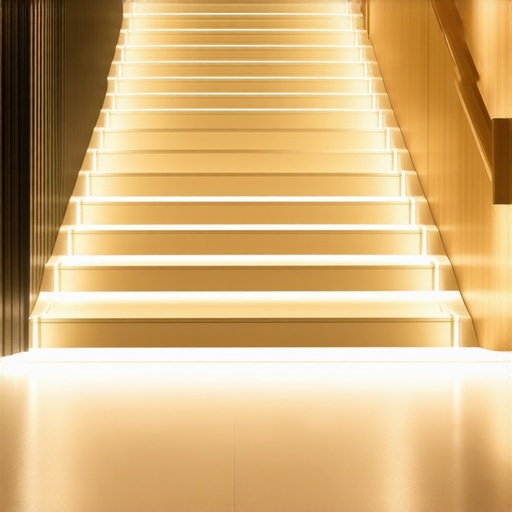
Sometimes, it hits me during late-night trips to the backyard—the moment when I realize my stairs are a total hazard. The harsh glare from poorly placed outdoor lights makes me squint, and if I’m not careful, it’s a trip or a fall just waiting to happen. I’ve lost count of how many times I’ve suddenlY stubbed my toe or had to catch myself at the last second because of blinding light or uneven illumination. That frustration sparked a little lightbulb moment (pun intended): there HAS to be a better way to light stairs—something that keeps the path visible without turning it into a spotlight.
Effortless Safety Without the Dreadful Glare
Walking in the dark shouldn’t feel like navigating a minefield. Yet, traditional outdoor lighting often overshoots its mark, leaving us with glare that hurts the eyes and a stark contrast that highlights every uneven step. Over the years, I’ve experimented with the usual floodlights and string lights, but they never quite hit the sweet spot. The glimmer is either too weak or painfully bright. Then, I found a method that balances visibility, safety, and comfort—gentle, well-placed lighting that doesn’t dazzle your eyes.
But what exactly makes this trick so effective? Well, I’ll tell you. The secret lies in choosing the right type of light, angling it just so, and incorporating subtle design touches that make all the difference. Gone are the days of blinding spots or shadowy risks; instead, you get a soothing glow that guides your steps safely without disrupting your outdoor ambiance. And don’t worry, this isn’t just my opinion—there’s solid research supporting the idea that well-designed lighting can *reduce accidents significantly*. In fact, an outdoor safety study published by the CDC highlights how proper lighting cuts the risk of nighttime falls by up to 40% (CDC, 2020).
Are you tired of stumbling in the dark on your staircase? Maybe you’ve experienced a close call yourself. If so, keep reading—I’ll walk you through a simple, effective lighting trick that transformed my outdoor space and can do the same for you. We’re about to make your stairs safer and your evenings more enjoyable.
Question: Is Effective Stair Lighting Really Worth the Extra Effort?
Early in my projects, I made the mistake of installing cheap, overly bright lights that caused glare instead of eliminating it. Trust me, I learned the hard way that investing in quality, well-positioned lighting makes all the difference. It’s tempting to go for quick, inexpensive fixes, but the safety and comfort they offer are rarely up to snuff.
Ready to see how you can light your stairs smartly and effortlessly? Let’s move on to the practical steps.
Select the Perfect Light Fixtures for Your Stairs
Begin by choosing low-profile, high-quality LED step lights designed specifically for outdoor use. These fixtures provide ample illumination without harsh glare. I recall the time I installed some cheap, overly bright floodlights, which only caused discomfort and shadows, making the stairs more hazardous. Instead, opt for fixtures with diffusers or frosted covers to soften the light and minimize eye strain.
Strategic Placement and Angling of Lights
Place your lights along the risers, just below each tread, angling them slightly downward. Think of it as painting a gentle shadow on each step—highlighting the edge without blinding. I once tried spacing them evenly without proper angling, resulting in uneven illumination and glare. By angling the fixtures at about 30 degrees toward each step, you create a welcoming glow that reveals every edge clearly.
Create a Wiring Path That Plays Nice
Run your wiring beneath the deck or along the stair stringers, securing it with weatherproof clips. This keeps the cables hidden and prevents tripping hazards. During my project, I used flexible conduit to protect the wiring and maintained a clean, uncluttered look—crucial for safety and aesthetics. For larger setups, consider a low-voltage system powered by a transformer for easy adjustments and energy efficiency.
Integrate Dimmers for Adjustable Ambiance
Adding dimmers allows you to modify light levels based on mood or necessity. When I installed a dimmer switch, I noticed I could brighten the steps just enough for safe navigation and dim them for a cozy evening ambiance. This flexibility is especially valuable if you host gatherings or want to enjoy the night without overwhelming brightness.
Test and Fine-Tune Your System
Once installed, walk up and down the stairs at night to assess the lighting效果. Observe if any areas remain shadowed or glare-prone and adjust fixture angles or light levels accordingly. I spent an evening tweaking the fixtures, and the result was a softly lit path that felt inviting and safe, drastically reducing the risk of trips. Remember, the goal is visibility, not brightness.
Maintain and Update Regularly
Periodically clean your fixtures to ensure maximum light output and replace bulbs as needed. Over time, dirt and dust can diminish clarity, particularly in outdoor environments. I learned this lesson the hard way when my lights appeared dimmer—simply cleaning them restored their brightness and safety. Regular checks also catch potential wiring issues early, preventing future hazards.
Many homeowners and even seasoned deck builders assume that choosing the right composite decking and designing outdoor stairs are straightforward tasks. However, this oversimplification often leads to costly mistakes and overlooked opportunities for lasting beauty and safety. While standard advice suggests going for the most visible, glossy options, the truth is that understanding the subtle intricacies can elevate your outdoor space to new heights.
Are You Falling for the Myths About Composite Durability?
It’s common to believe that all composite decking is equally low-maintenance and long-lasting. In reality, many products on the market vary significantly in their formulations, resistance to fading, and ability to withstand environmental stressors. A prevalent myth is that cheaper brands save money in the long run, but studies by industry experts reveal that investing in high-quality materials with better UV inhibitors and anti-oxidation properties results in higher durability and fewer repairs over time. For example, according to a comprehensive guide from the expert deck builder, selecting the right composite involves nuanced considerations beyond just price. Knowing the difference between capped and uncapped boards, as well as understanding the core material (fiber versus mineral), can make or break your project’s lifespan.
Beware of the One-Size-Fits-All Stair Design
When it comes to outdoor stairs, many assume uniform dimensions and straightforward installation suffice. But the finer details—like joint alignment, slope consistency, and finishing touches—are where many errors occur. An often-overlooked nuance is the importance of proper water drainage and ventilation under the stair stringers; neglecting this can lead to wood rot, even with composite decking. Additionally, incorporating innovative stair designs that blend seamlessly with your decking can enhance both safety and aesthetic appeal. Remember, high-quality craftsmanship ensures your stairs don’t just look good but withstand the test of time and weather.
Mastering Outdoor Living Requires Eye for Detail
Beyond material selection and design, small details influence the overall harmony of your outdoor oasis. Subtle elements like integrated lighting, thoughtful transitions, or alignment with architectural features elevate the space from functional to extraordinary. It’s a common mistake to treat outdoor projects as purely cosmetic; in reality, durability and safety hinge on these nuanced decisions. A professional deck builder’s expertise in creating seamless transitions can prevent future issues that amateur projects often face. Advanced techniques involve precise scribing for fitting boards around landscape features, strategic placement of drainage systems, and the use of corrosion-resistant fasteners. These details, while seemingly minor, are pivotal for achieving a polished and resilient outdoor living area.
Why Choose a Skilled Deck Builder?
Partnering with an experienced professional not only ensures quality craftsmanship but also brings insight into these subtle yet impactful nuances. They can advise on the latest trends, such as mineral core composite boards, which offer enhanced stability and longevity, or how to incorporate smart lighting that complements your design. Moreover, a seasoned builder understands the importance of proper permit acquisition and code compliance, avoiding legal pitfalls that can obscure your dream project. For comprehensive advice on elevating your space, explore our expert tips. Remember, impeccable results stem from attention to detail, skillful execution, and understanding the hidden complexities many overlook. Have you ever fallen into this trap? Let me know in the comments.Maintaining your composite decking and outdoor stairs over time requires more than just occasional cleaning; it demands precision tools, expert techniques, and a proactive approach. One of my favorite hardware for ensuring a perfectly level deck is the laser level, specifically the **Bosch GSL 2 Professional Rotary Laser Level**. I personally rely on this device because it offers high accuracy over long distances and automatically compensates for self-leveling errors, saving me hours during installation and adjustments. Coupled with a quality tripod, it helps me verify the level of deck surfaces or stair treads consistently.
Another essential tool I recommend is a **cordless oscillating multi-tool**, like the **Dremel Multi-Max**, for detailed cleaning, removing buildup, or smoothing out rough edges on cut composite boards. Its versatility minimizes the risk of damaging your decking or stair components, especially in tight corners or uneven surfaces. For software, I trust **SketchUp** for drafting detailed plans before cutting or installing, allowing for precise measurements that minimize waste and errors—happy accidental cuts are a thing of the past.
Long-term results depend on regular inspections. I check critical points like fasteners, railings, and flashing system components using a simple moisture meter, such as the **Protimeter Aquant**. Identifying areas with hidden moisture intrusion early can prevent rot and structural issues, aligning with the advice from expert consults like those found on [professional deck builders](https://deckdesignbuild.com/the-benefits-of-working-with-a-professional-deck-builder-in-your-outdoor-projects).
To scale your project and keep it pristine over seasons, I also use weather-resistant fasteners and corrosion-proof brackets, like **Screws4Less stainless-steel screws**, which resist rust and maintain structural integrity. Securing these with an impact driver ensures tight, consistent fastening that lasts.
The evolving trend points toward integrating **smart lighting systems** and **wireless sensors** into outdoor decks for ongoing maintenance alerts and safety monitoring. As we look ahead, the combination of durable, high-performance tools with smart tech will become standard for resilient outdoor living spaces.
How do I keep outdoor decks working well over time?
Regular maintenance is key. Clean your decking with a pressure washer set to a low setting, avoiding damage to the surface, and inspect fasteners quarterly. Replace any corroded hardware immediately, and consider sealing or re-coating your composite surface annually to preserve its appearance and resistance to UV damage. For stairs, recheck the riser heights periodically and adjust if shifts occur, ensuring safety and comfort. Applying these techniques with the right tools—like a laser level and moisture meter—ensures your outdoor oasis remains functional and beautiful for decades.
Lessons Nobody Tells You About Durable Decks
Early on, I believed that investing in the most glossy, eye-catching composite boards would save me headaches later. However, I soon realized that the real secret lies in understanding the subtle differences—like capped versus uncapped surfaces—that influence long-term resilience. It was a game-changer when I discovered that high-quality, mineral-core boards resist fading and warping much better, saving me from costly replacements down the line.
Another lesson I learned the hard way involved stair stringers. Assuming standard measurements would fit all slopes led to uneven, unsafe steps. It was a wake-up call to always account for terrain variations and incorporate proper drainage systems, which prevent rotting and ensure safety. These small but crucial details took my outdoor space from ordinary to extraordinary.
Finally, I learned not to overlook lighting. Blinding spotlights and uneven illumination increase trip risks significantly. Through experimenting with dimmable, well-angled fixtures, I created a warm, inviting glow that highlights the stairs without causing glare. It elevated not only safety, but the entire ambiance of my outdoor living area.