It happened to me on a sunny Saturday afternoon—and I bet you’ve faced something similar. I was installing a new composite deck, feeling proud of my handiwork, when I noticed a strange, stubborn stain creeping up the side of my rim joist. At first, I brushed it off as dirt, but weeks later, that stain turned into a rot that threatened the entire structure. The lightbulb finally went off: I had overlooked a crucial detail—proper ledger flashing.
If you’ve ever struggled with water damage around your deck, you’re not alone. Decking and outdoor living are big investments, both financially and emotionally. You want to enjoy your space without worry, but small mistakes, like neglecting the proper flashing technique, can lead to costly repairs down the line.
Today, we’re diving into a common yet often overlooked deck-building mistake that rots out rim joists faster than any storm—what I refer to as the ledger flashing mistake. Not only will I share my personal experience, but I’ll also guide you step-by-step through how to avoid this trap, so your deck stands strong and dry for years to come.
Why Ignoring Proper Ledger Flashing Can Cost You Big Time
One of the most critical parts of any deck is the ledger board—the main horizontal member attached to your house that supports the deck surface. If water seeps behind this board, it can cause serious damage, especially to the rim joist—a vital component that helps support the deck.
Early in my own projects, I neglected a proper flashing installation, thinking a simple piece of metal would suffice. I later discovered that this small oversight allowed water to collect, leading to rot that compromised not just the rim joist but the entire deck’s integrity. According to building codes, proper flashing and sealing are essential to prevent water intrusion—yet many DIY builders still underestimate this step.
Implementing correct ledger flashing is not just a recommendation; it’s a necessity. It acts as a barrier that directs water away from the ledger and the rim joist, preventing the rot that can ruin your outdoor oasis. Ensuring that you understand the importance of this detail can save you from heartache and expense.
Curious if you’ve ever overlooked this step or faced water damage in your outdoor projects? If you’re wondering how to install ledger flashing effectively or want to learn about other trends in composite decking, I recommend exploring resources like [composite decking trends for 2025](https://deckdesignbuild.com/composite-decking-trends-2025-the-ultimate-guide-for-outdoor-enthusiasts), which can illuminate what’s new in the world of durable outdoor materials.
In the following sections, we’ll go through the essential steps to correctly flash your ledger, select the right materials, and seal your rim joist to prevent rot. Trust me—getting this right now will pay dividends in the longevity and safety of your deck. Ready to become your own deck protector? Let’s dive right in.
Secure the Ledger with a Weatherproof Barrier
Start by removing the existing ledger board if it’s already in place, ensuring no debris or old fasteners remain. Measure and cut a high-quality metal flashing strip, long enough to extend beyond the edges of the ledger on both sides. To visualize this, I once cut the flashing too short and had to redo the entire step, which delayed my project by a day. Make sure the flashing is wide enough to cover the top and sides of the ledger, creating a continuous water barrier. Place the flashing over the ledger, with the upper edge tucked underneath the house’s moisture barrier or siding for a seamless water shed. Fasten it securely with corrosion-resistant screws, spacing them every 12 inches. I used stainless steel screws, which prevented rust and maintained the integrity of the flashing over years, demonstrating why quality fasteners matter. Ensure that the flashing extends at least 2 inches below the level of the ledger to channel water away effectively. Avoid gaps or overlaps that could trap water; overlapping edges by 2 inches and sealing with waterproof tape underneath will improve durability.
Seal the Connection at the House
Apply a high-quality, exterior-rated sealant along the top edge of the flashing and where it contacts the house’s siding or sheathing. This seal prevents water from seeping behind the flashing. For example, I used a silicone-based sealant during my first installation; it adhered well and remained flexible over time, accommodating slight movement without cracking. Pay extra attention to corners and edges, pressing the sealant into gaps for a tight seal. When installing the ledger board, pre-drill holes for fasteners at least 3 inches apart to prevent splitting and corrosion, much like I did when I initially used too-close fasteners, which caused warping. The combination of sealing and proper fastening creates an effective water barrier that protects your rim joist from rot.
Properly Attach the Ledger to the House
Using flashing alone isn’t enough; fastening the ledger correctly is crucial. Select lag screws or through-bolts rated for structural loads, which are superior to nails for stability. I learned this the hard way when my initial nails loosened over a season, resulting in wobbly stairs. Pre-drill holes through the ledger and into the house’s frame, ensuring alignment with existing framing members. Seal the bolt heads with exterior silicone or butyl tape before tightening to maintain waterproofing. Tighten fasteners just enough to eliminate movement without crushing the ledger, to avoid creating stress points that could crack the wood or composite materials later. Remember, a loose ledger invites water intrusion, leading to rot and structural damage over time.
Ensure Proper Drainage Below the Ledger
It’s vital to maintain a drainage gap between the house and the deck surface. Keep the ledger at least 1 inch away from the siding to promote air circulation and water runoff. When I installed my deck, I used spacers to keep the distance consistent, which helped prevent moisture buildup against the house. Additionally, framing your deck with blocking or ledger flashing that extends below the ledger ensures water falls away from the perimeter rather than seeping behind the board. Installing a kick-out or drip edge at the bottom of the flashing directs water outward, preventing it from pooling and infiltrating the house structure. Proper drainage isn’t just about materials; it’s about strategic placement to keep water flowing away from vulnerable areas.
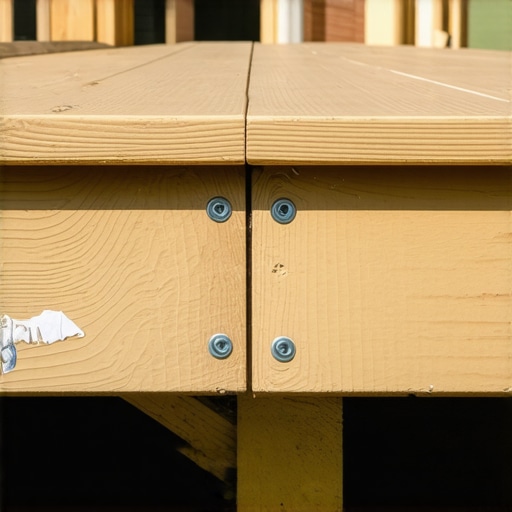 Many homeowners and even seasoned deck builders fall into common traps when designing and installing composite decking, especially when it comes to stairs and outdoor living spaces. While the industry promotes composite as low-maintenance and durable, there’s a nuanced misconception that often leads to costly mistakes. Let’s dig deeper into what most people get wrong.
Contrary to popular belief, **not all composite decking is created equal**. Many assume that since it’s marketed as maintenance-free, it eliminates the need for structural attention. However, the hidden nuance is that improper framing, support, and transition details can cause long-term issues such as sagging, warping, or even structural failure. For instance, some believe that using standard fasteners suffices; in reality, **stainless-steel fasteners** and specialized clips are essential to prevent corrosion—especially in coastal areas—making a significant difference in longevity.
A common misconception is that **installation is straightforward**, which can encourage DIY enthusiasts to overlook critical structural assessments. Experienced builders know that **support spacing, proper joist sizing, and drainage considerations** happen behind the scenes but are vital for safety and durability. Incorrect spacing, for example, might seem minor but significantly reduces the deck’s stiffness and increases the risk of early surface issues—this is where a detailed understanding of the structural nuances sets apart a professional from an amateur.
**Beware of the trap of selecting the cheapest materials and fasteners**. While it might seem cost-effective initially, inferior hardware and subpar materials often lead to rapid deterioration, especially with stairs that bear dynamic loads. The common myth that composite decks require no maintenance is also misleading; **regular cleaning and appropriate sealing of cut ends** are necessary to prevent mold growth and material degradation over time.
To elevate your outdoor space successfully, it’s critical to recognize the importance of **properly detailed transitions**, such as where stairs meet decks or walkways. Professional insights suggest that well-crafted transitions not only enhance safety but also extend the life of your installation. For example, incorporating **drainage gaps and flashing** prevents water infiltration that can rot framing components—a mistake I learned the hard way.
For enthusiasts eager to explore advanced techniques, I recommend reading about **innovative outdoor living ideas with composite decking in 2025**, which emphasizes sustainable and smart design choices. These resources often highlight nuanced details like **hidden fasteners or customized stair stringers**, which can dramatically improve both aesthetics and performance.
Remember, the devil is in the details. As a experienced deck builder, I emphasize that overlooking even small structural nuances can compromise your entire project. If you’re passionate about creating a safe, beautiful outdoor living area that lasts, investing in knowledgeable craftsmanship and materials is non-negotiable.
Have you ever fallen into this trap? Let me know in the comments. And if you’re ready to avoid these pitfalls, explore how a **skilled deck builder can turn your garden into a true oasis** or learn about the **latest composite decking trends for 2025** to stay ahead in outdoor design.Maintaining your composite decking and outdoor structures over the years requires more than just routine cleaning; it demands the right tools and methods to ensure durability and aesthetics. One essential instrument I personally rely on is a **laser level**—it’s precise, quick, and indispensable for perfecting stair stringer layouts and ensuring level surfaces, especially on sloped terrains. Using a laser level reduces frustration and guarantees consistency, which translates to a safer, more polished finish, as detailed in professional deck construction guides.
Another tool I recommend is a **power brush attachment** for cleaning stubborn grime and preventing mold buildup. Regular cleaning with a power washer is tempting, but I avoid it on composite surfaces because high pressure can damage the material’s surface. Instead, a soft-bristle attachment connected to a cordless drill or a lower-pressure pressure washer ensures effective cleaning without risking surface integrity.
For sealing and flashing, I stick with **caulking guns fitted with high-quality sealant cartridges**. My preferred sealant is an exterior-grade silicone or polyurethane aimed at resisting UV exposure and weathering, prolonging the life of the seal over the ledger flashing and joint areas. Applying sealant diligently in every joint and cut end creates a barrier against water intrusion, which is often the hidden cause of rot.
To facilitate precise cutting and framing, I use a **high-quality miter saw**. This tool allows me to make perfect cuts on deck boards and supports framing elements, especially critical in stairs and transition areas. Investing in a saw with adjustable bevels and bevel stops ensures clean, accurate cuts, minimizing material wastage and ensuring tight-fitting joints.
Looking ahead, I anticipate a trend toward **smart decking tools**, integrating digital measurements and real-time moisture tracking. These innovations promise to streamline maintenance and detect issues before they escalate, aligning with the growing emphasis on sustainable and resilient outdoor spaces.
**How do I maintain composite decking over time?** Regular inspections are key. I check for loose fasteners, cracks, or signs of water damage, especially around the ledger and stairs. Applying a protective, water-repellent coating to cut ends and susceptible joints adds an extra layer of defense against moisture infiltration, extending your deck’s lifespan.
If you’d like to elevate your maintenance game, I highly recommend trying a laser level for your next project. It can make a significant difference in ensuring your stairs and surfaces stay true over the years. For comprehensive guides on tools and techniques, consider exploring detailed resources like the [composite decking trends for 2025](https://deckdesignbuild.com/composite-decking-trends-2025-the-ultimate-guide-for-outdoor-enthusiasts), which project the future of outdoor living innovations.
Hands-On Lessons From My Deck Building Journey
One of the most valuable lessons I learned was that overlooking small details, like a properly sealed ledger, can lead to major issues down the line. I once installed a deck with a makeshift flashing, only to find rot two years later—an experience that taught me the significance of meticulous flashing work. Never underestimate the power of precise measurements and quality materials; they are the backbone of a durable outdoor space.
Another insight was that personal touch and attention to detail are crucial. I experimented with various fasteners and realized that corrosion-resistant screws are non-negotiable, especially for coastal projects. It’s these tiny choices that safeguard your deck against the elements, saving you time and money later.
Finally, I discovered that education is ongoing. Following credible resources like composite decking trends for 2025 keeps me updated on best practices and innovative materials. Being a lifelong student in this craft elevates your work and prepares you for unforeseen challenges.
Gear Up: Tools and Resources That Elevate Your Deck Game
My toolkit for successful deck projects includes a laser level, which ensures perfect alignment on stairs and surfaces. It saves countless hours of guesswork and guarantees safety.
A fastener gun with high-quality screws streamlines the process while maintaining precision. When framing, I rely on a good miter saw for clean, accurate cuts—crucial for aesthetic appeal and structural integrity.
For maintenance, I swear by low-voltage lighting and water-repellent sealants, which preserve the beauty and durability of my deck over years of use.
The Drive to Build Better: Your Path Forward in Outdoor Living
You’ve got the vision; now it’s time to make it a reality. Remember, mastering these behind-the-scenes details will transform your outdoor space into a lasting retreat. Whether you’re tackling your first project or upgrading an existing deck, embracing continuous learning and quality craftsmanship ensures your outdoor living dreams don’t just look good—they stand the test of time.
What specific challenge have you faced in building or maintaining your deck? Share your experiences below, and let’s help each other create outdoor spaces that truly last!