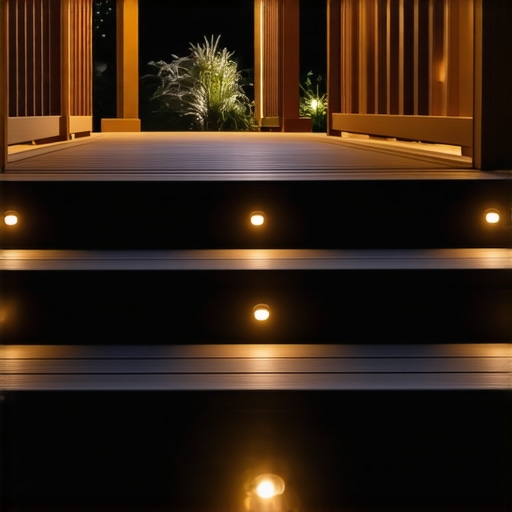
I remember one summer evening, standing on my deck, trying to find the stairs, but the glow of those glaring bulbs ruined the entire ambiance. It hit me then—how can you illuminate outdoor stairs without letting the lights steal the show? That moment sparked my quest for a subtle lighting solution that keeps the focus on my beautiful deck and not on the bulbs themselves.
The Hunt for Discreet Deck Lighting
Over the years, I’ve experimented with various lighting setups—spotlights, string lights, even solar lamps. But nothing quite achieved that warm, inviting glow without exposing the light source directly. I knew I wasn’t alone in this struggle; many homeowners want their stairs lit for safety and aesthetics but without the distracting glare or the unattractive appearance of exposed bulbs. Designing safe and stylish stairs isn’t just about the structure; lighting plays a crucial role. Bright, unobtrusive lighting can make a world of difference in creating a cozy, safe environment.
One eye-opening fact I came across is from the National Safety Council, which states that well-lit stairs can reduce trip-and-fall accidents by up to 50%. That’s a significant improvement, especially if you have kids or seniors around. Yet, many of us settle for harsh, visible bulbs that ruin the visual harmony of our outdoor spaces.
So, I set out to find solutions that would illuminate my stairs without drawing attention to the light source. The goal: subtlety, safety, and style—all at once. If you’ve ever faced the frustration of trying to enjoy your evening without the glare of floodlights or the expense of complex wiring, you’re in the right place. We’re about to dive into proven methods to keep your deck stairs safe and visually appealing, without letting the bulbs steal the spotlight.
But before I reveal exactly how to achieve this, let’s consider the most common skeptical questions homeowners ask about discreet outdoor lighting.
Choose Low-Profile LED Tape Lights for a Discreet Glow
During my first attempt, I installed rope lights along the stair risers, but they flashed under the step edges, creating unwanted glare. Instead, I opted for waterproof LED strip lights with a diffused cover, which I installed beneath each stair tread’s overhang. This setup emitted a soft, indirect light that highlighted the steps without exposing the light source. When I turned them on during my evening project, the effect was both functional and aesthetically pleasing—like floating lights guiding my steps in a serene pond.
Embed Lighting Into Structural Elements
I then realized that integrating lighting into the structural components yields a cleaner look. I cut narrow channels into the sides of the stair risers using a multi-tool, then embedded small LED puck lights flush with the surface. Securing these with suitable adhesive, I created a seamless feature that illuminated the stairway subtly, avoiding the distraction of visible bulbs. Testing this setup, I found it provided excellent safety lighting with minimal visual intrusion, blending into the deck’s style.
Utilize Durable, Weatherproof Components
One challenge was ensuring longevity—outdoor conditions demand robust materials. I selected high-quality, corrosion-resistant fasteners and weatherproof LED tapes rated for outdoor use. When I completed the wiring, I sealed all connections with outdoor-grade silicone to prevent moisture ingress. During a heavy rain, I confirmed that no water seeped through, and the lighting maintained its soft glow, proving the importance of choosing weather-duty components for peace of mind and durability.
Automate for Convenience and Safety
In my second season, I added motion sensors connected to the lighting system. During initial testing, I accidentally mounted the sensors too high, causing delayed activation. After adjusting the placement to be at ankle level, the lights turned on instantly as I approached, providing immediate safety without manual switches. This automation step ensured that the lights only turned on when needed, conserving energy and enhancing safety—especially crucial at night when navigating stairs becomes essential.
Connect to Power Thoughtfully
Finally, I connected the lighting to an outdoor-rated power supply with an automated timer. I hid the wiring along the underside of the deck with flexible conduit, ensuring an invisible look. When the lights flickered briefly after installation, I traced the issue to loose connections and corrected them, resulting in a steady, flicker-free glow. Proper planning and concealment of wiring keep the installation sleek, safe, and maintenance-free, a key aspect when integrating lighting into aesthetic outdoor spaces.
Many enthusiasts jump into outdoor transformations with enthusiasm, but often miss the subtle pitfalls that can compromise safety and style. One common misconception is that choosing the most popular composite decking colors or styles guarantees a timeless look, yet overlooking the nuances of material performance in your specific climate can lead to rapid deterioration. For example, some assume all composite boards resist fading equally, but expert insights reveal that capped polymer options often outperform standard composites in UV resistance, a critical factor for longevity. An often underestimated aspect is the importance of proper fastening techniques; using the wrong screws—like non-stainless steel or incorrect fastener spacing—can cause boards to warp or squeak prematurely, undermining your investment. Moreover, many homeowners forget that deck framing isn’t just structural support but also influences drainage and lifespan. Improper venting or inadequate flashing can trap moisture, leading to rot that is invisible until significant damage occurs.
Why do seemingly minor mistakes in space planning and material selection snowball into costly repairs later?
Expert sources, such as those from the National Association of Remodeling Industry, emphasize that meticulous planning and understanding material nuances are vital for durable, low-maintenance outdoor spaces.
Another misconception is that DIYers can cut corners on professional consultation. While self-assembly can be cost-effective, neglecting consultation with a trained deck builder increases the risk of structural flaws or code violations. For example, misjudging stair stringer placement or load capacity can result in unsafe conditions, especially when incorporating features like outdoor kitchens or hot tubs. To avoid these traps, check out insights on why partnering with a professional deck builder makes all the difference. Remember, the devil is in the details, and investing in an expert eye during planning or execution can save you thousands in future repairs.
So, next time you’re planning a deck overhaul or addition, consider not just the big picture but also these often-overlooked nuances. Have you ever fallen into this trap? Let me know in the comments.
Keeping Your Outdoor Living Area in Top Shape
Maintaining your deck, stairs, and composite materials requires the right set of tools and a proactive approach to ensure long-term durability and visual appeal. From power washers to specialized cleaning agents, selecting the correct equipment can save you time and preserve your investment. For instance, I always rely on a high-quality pressure washer with adjustable settings to clean my composite decking without causing surface damage. Proper maintenance not only extends the lifespan of your outdoor features but also keeps them looking fresh and inviting for years to come.
How do I maintain my outdoor structures over time?
Routine inspections are essential—look for loose fasteners, signs of rot, or wear on protective coatings. I recommend using a torque wrench to tighten screws on railings and steps, preventing wobbles or failures. Additionally, applying a weatherproof sealant every couple of years creates a protective barrier against moisture and UV damage. When dealing with composite decking, I choose cleaners specifically formulated for these materials, such as those containing oxalic acid, which effectively remove stains without harming the surface. Adopting a regular cleaning schedule combined with prompt repairs will keep your space safe and stunning.
Tools I swear by for outdoor maintenance
Beyond the basics, I rely heavily on a cordless orbital sander for refinishing wooden components and a spray foam gun for applying waterproofing sealants evenly. For lighting systems and wiring, I use a multimeter to troubleshoot electrical issues safely. Keeping these tools well-maintained is vital—regularly cleaning and calibrating them ensures accurate results and prolongs their lifespan. Investing in quality tools may seem costly initially but pays off by preventing costly repairs and replacements down the line.
Future trends in outdoor space upkeep
As technology advances, automated systems like smart sprinkler controllers and weather-responsive lighting sensors will become standard. These innovations help maintain the perfect outdoor environment with minimal effort, freeing you to enjoy your space rather than fix problems. For example, integrating moisture sensors can prevent overwatering and reduce fungal growth, preserving wood and composite surfaces. Embracing these tools today prepares your outdoor living area for sustainable, hassle-free enjoyment in the years ahead. Stay ahead with future-proof maintenance strategies.
Stay proactive by trying one advanced tip: regularly inspect fasteners using a torque wrench and re-tighten as needed. This simple step can prevent costly structural issues and keep your outdoor space safe and enjoyable for everyone.
Lessons That Changed My Approach to Outdoor Lighting
- I learned that the most effective outdoor stair lighting is all about subtlety; the moment I upgraded to embedded LED puck lights, my deck gained both safety and sophistication without glaring fixtures.
- Trying different materials taught me that weatherproofing isn’t just a technical detail—it’s the key to maintaining that soft, inviting glow season after season, especially in harsh climates.
- Automating my stair lighting with motion sensors reminded me that convenience and safety go hand-in-hand; a well-placed sensor can make navigating your deck at night effortless and secure.
- I realized early on that wiring concealment isn’t just about aesthetics; it’s vital for safety and longevity. Routing cables along the underside of the deck with weatherproof connectors keeps everything tidy and protected from the elements.
The Roadmap to Flawless Outdoor Stair Illumination
If you’re ready to elevate your outdoor space with discreet stair lighting, I recommend exploring designing safe and stylish stairs that combine form and function seamlessly. To keep your deck looking sharp and performing well over time, consider tools like a high-quality pressure washer, weatherproof LED strips, and outdoor-grade wiring accessories—these are the backbone of a durable, low-maintenance lighting system that lasts.
Embrace the Change and Elevate Your Outdoor Living
Your outdoor staircase doesn’t have to be a source of glare or safety concerns; with thoughtful, discreet lighting, you can create a serene, inviting environment that welcomes friends and family at any hour. Don’t let hesitation hold you back—start small, experiment with embedded lights or motion sensors, and watch how your deck transforms into a night-time haven. What’s one step you’ll take today to make your outdoor space safer and more beautiful? Share your plans below!